bsp News - Page 12 of 14 - CNX Software - Embedded Systems News

Mentor Embedded Linux Kits for BeagleBoard and PandaBoard

Mentor Embedded has recently released free Linux Kits for the BeagleBoard (TI OMAP3) and Pandaboard (TI OMAP4) low cost development boards. Both Mentor Embedded Linux (MEL) kits include: Mentor Embedded Linux Lite, a pre-built Yocto-based distribution, including libraries and headers A Linux Board Support Package (BSP) for your reference board A pre-built filesystem for the target Sourcery CodeBench Lite for application development Installation / Application Development Guides Since Mentor Embedded provides the “Lite” version of their kits, some of the tools mentioned in the diagram above (e.g. Codebench IDE,  System Analyzer…) are not available in the free kits. After free registration, you can download the 2 kits on Mentor Embedded website: PandaBoard Linux Kit BeagleBoard Linux Kit and you’ll have access to 3 downloads: Mentor Embedded Linux Kit Installer Quick Start guides Source files which are optional. You can get support for the kits via Mentor Embedded Linux mailing list. […]

Linux for Cortex M3 & M4 Microcontrollers

There are plenty of low cost Linux development boards based on Cortex A8 or A9 such as the Beaglebone, as well as some devkits based on ARM7 and ARM9 such as SAM9 development kits , but if your application is cost and/or energy sensitive you can also switch to micro-controllers using Cortex M3 or M4 based development boards such as Emcraft SmartFusion devkits. You can run a functional uCLinux system with 1MB of RAM and 1MB of flash including the TCP/IP stack. You need to use uClinux and not directly Linux, because the Cortex M3 doess not have a Memory Management Unit (MMU) and only a Memory Protection Unit (MPU). This can bring some interesting software development challenges such as (apparently random) kernel panics, the lack of fork, memory fragmentation and more. You can check out http://kernel.org/pub/linux/libs/uclibc/Glibc_vs_uClibc_Differences.txt for the main differences between uClibc and Glibc. The instructions to patch and […]

AllWinner A10/A1X Processor Resources, Development Board and SDK

AllWinner A10 (part of A1X series) is an ARM Cortex A8 SoC targetting multimedia products such as tablets, HD STB or digital signage. It is currently found in some low cost Android tablets such as Momo9C and will be used in Rhombus Tech’s Raspberry Pi alternative. The processor features an ARM Cortex A8 clocked at 1.5 Ghz with a Mali-400 GPU. It can support 1080p encoding/decoding, provides HDMI, Component, Composite, VGA and LVDS video outputs,  USB2.0 ports, a SATA 2.0 port and more… Here are the key features of the Allwinner A10: VPU (Video Processing Unit) HD Video Decoding (Super HD 2160P/3D Film) Support all popular video formats, including VP8, AVS, H. 264 AVC, VC-1, MPEG-1/2/4, … HD Video Encoding (H.264 High Profile) Support encoding in H.264 format DPU (Display Processing Unit) MULTI-CHANNEL HD displays Built-in HDMI YPbPr, CVBS, VGA LCD interfaces: CPU, RGB, LVDS up to Full HD Memory […]

5th Linux BSP Release for Snowball Development Board

Igloo Community – the team developing for ST Ericsson Snowball Nova A9500 development board – has released the fifth version of the Linux BSP for the board and this version nearly fully support all features of the board. It can be downloaded at http://igloocommunity.org/download/linaro/images/20111209/. ChangeLog since last release: Based on Linaro Ubuntu 11.11 desktop filesystem Accelerometer and barometer support for all board revisions GPS support Enhancements to the default kernel config (NFS, /proc/config.gz support) Enhanced display support Add support for new connectivity module versions Main supported features: Based on Linux 3.0.0 and the Linaro Ubuntu desktop file system HDMI/DVI-D display support Graphics acceleration with the Mali 400 GPU Bluetooth support GPS support Ethernet and Wireless connectivity microSD card support Sensors (accelerometer, magnetometer, gyroscope, barometer) Limited USB OTG host functionality Features to be included in future releases: Multimedia acceleration Better USB OTG host support Known issues: USB OTG host mode is […]

Embedded Linux Conference Europe 2011

Embedded Linux Conference Europe (ELC-E 2011) will take place on October 26 – 28, 2011 at Clarion Congress Hotel in Prague, Czech Republic. The event will be co-located with LinuxCon Europe 2011 and GStreamer Conference. The day before the official opening of the conference, two tutorials will be offered on Tuesday 25th of October:b Outside the Box: An Introduction to Embedded Linux and Hardware Interfacing Using the Snowball Board – 9:00 – 17:00 – Trainer: Chris Simmonds – Cost: 350 USD. Embedded Android Workshop – 9:00 – 17:00 – Trainer: Karim Yaghmour- Cost: 300 USD. ELCE consists of 3 days of presentations, tutorials and sessions. There will be over 50 sessions during those 3 days. I’ll highlight a few sessions that I find particularly interesting. October 26 10:45 – 11:45 – Linaro’s Android Platform by Zach Pfeffer, Linaro Android Platform team leader. Linaro uses components from the Android Open Source […]

Texas Instruments AM387X Sitara ARM Cortex A8 Microprocessors
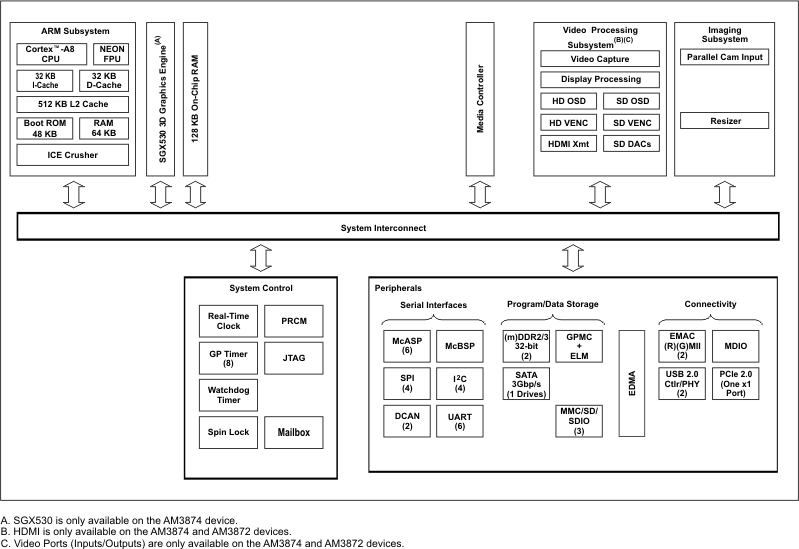
Texas Instruments (TI) has introduced three new AM387x ARM Cortex-A8 microprocessors (MPUs): AM3871, AM3872 and AM3874. TI says these MPUs offer integration of the ARM Cortex-A8 core, peripherals for high-bandwidth connectivity (SATA, D-CAN, PCI Express (PCIe), Gigabit Ethernet switch and more), 3D graphics for enhanced GUIs and display subsystems for camera connectivity and viewing. The AM387x ARM Cortex-A8 MPU can connect to and control IP and CAN networks, HD displays, keyboard, mouse, PC, SD card and various general purpose peripherals, all via one highly integrated processor in an industrial automation application controlling a production line and a high-speed, shared data bus allows for reduced communication overhead and quick access to shared data, which results in reduced chip count, discrete memory costs and printed circuit board (PCB) space compared to separate solutions. Those MPUs are targeted at a variety of fanless applications such as: single board computing, network and communications processing, […]

AMD G-Series SDK and Development Boards

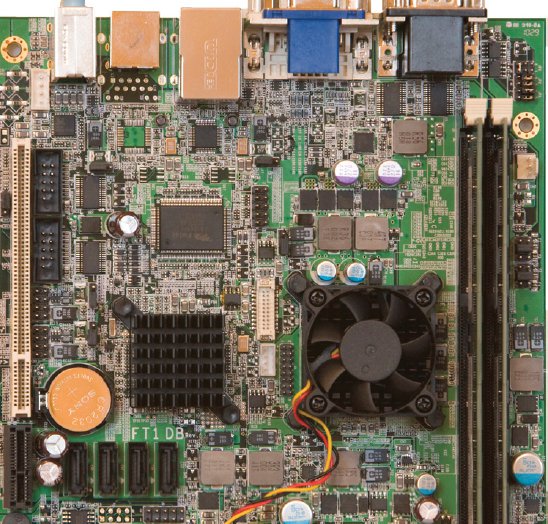
Earlier this year, AMD announced its new Embedded processors G-Series aimed at set-top boxes, smart tv, digital signage, point of sales, media servers and more in order to compete with Intel Atom solutions as well as ARM based processors. Please refer to the link above for an overview and details about the 5 processors of the AMD G-series: T56N – Dual core @ 1.6GHz with Radeon HD 6310 GPU T48N – Dual core @ 1.4 GHz with Radeon HD 6310 GPU T40N – Dual core @ 1.0 GHz with Radeon HD 6250 GPU T52R – Single core @ 1.5 GHz with Radeon HD 6310 GPU Today, I’ll discuss about the development boards and software development kits available for this platform. AMD G-Series Development Boards and Reference Designs AMD Provide two reference designs and one development board: AMD Embedded G-Series Platform Mini-ITX Reference Design. No details are publicly available as this […]

QSeven Form Factor Embedded Boards by Seco

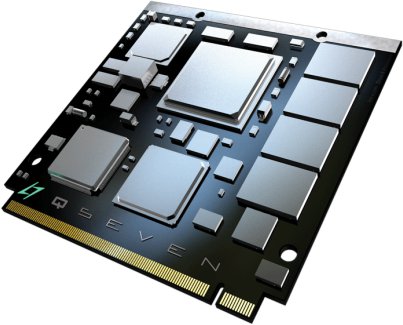
QSeven is a new standard (QSeven Specifications 1.20) that provides pinout, electromechanical description and implementation guidelines so that the main boards (with the MPU) be easily exchanged. So that you can a larger board with all connectors and a QSeven boards based on Intel icore, Atom or other processors based on ARM that simply fits into that larger board. The QSeven concept is defined as follows: Qseven Concept The Qseven concept is an off-the-shelf, multi vendor, Single-Board-Computer that integrates all the core components of a common PC and is mounted onto an application specific carrier board. Qseven modules have a standardized form factor of 70mm x 70mm and have specified pinouts based on the high speed MXM system connector that has a standardized pinout regardless of the vendor. The Qseven module provides the functional requirements for an embedded application. These functions include, but are not limited to, graphics, sound, mass […]