
QNAP TS-x51 NAS Supports Up to 16 Drives, On-the fly HD Video Transcoding, HDMI Output, Virtualization and More

QNAP has introduced their latest TS-x51 NAS family at Computex 2014 with four NAS supporting between 2 to 8 drives, expandable to a total of 16 drives via expansion enclosures. The storage devices powered by an Intel Celeron J1800 dual core processor boast video transcoding capability that’s 18 times faster than earlier Atom based solutions, feature an HDMI port, and support virtualization to allow you to run two operating systems such as Linux and Windows 8. QNAP TS-x51 specifications: SoC – Intel Celeron J1800 dual core processor @ 2.41 GHz (burst frequency: 2.58) with Intel HD graphics System Memory – 1GB SO-DIMM DDR3L-1333 or 4GB SO-DIMM DDR3L-1333 (Each model listed above has 1GB or 4GB RAM options), expandable to 8GB RAM via a second RAM slot Storage 512 MB flash (DOM – Disk On Module) Hot swappable 2.5″ or 3.5″ SATA drives @ 6Gb/s, 3Gb/s. Expansion enclosures – UX-800P, or UX-500P RAID […]

Aaeon AIOT-X1000 Linux Gateway is Powered by an Intel Quark SoC

Intel Quark SoC for low power embedded devices has been seen on platforms designed by Intel themselves, such as Intel Galileo board or Edison wearable development kit, but I had not found Quark SoC in actual products until Aaeon announced their AIOT-X1000 gateway for the internet of things running Linux on an Intel Quark X1000 SoC, and working with a Cloud Service by Asus, Aaeon’s parent company. The solution targets manufacturing, transportation, and energy applications. Aaeon AIOT-X1000 specifications: Processor – Intel Quark X1000-series SoCs @ up to 400 MHz System Memory – 1GB DDR3 800/1066 SODIMM Storage – IDE port, and micro SD slot Connectivity – 10/100M Ethernet USB 4x USB2.0 ports Serial – 1x RS-232/422/485, 1x RS-422/485 Other I/Os — I2C, GPIO, JTAG Mini-PCIe card expansion – 1x full-size and  1x half-size, allowing for WiFi, 2G/3G/LTE cellular, Bluetooth, CAN bus, ZigBee, and RFID add-on boards Power – 5V or 9-24V DC input Dimensions – 146 x […]

Texas Instruments Tiva C Series Connected LaunchPad Unboxing and Quick Start Guide

Texas Instruments Tiva C Series TM4C1294 Connected LaunchPad is an evaluation kit for the Internet of things with a Cortex-M4 MCU (Tiva TM4C1294), an Ethernet port, and USB interfaces for power and debugging. At $19.99 including shipping via Fedex, it’s one of the cheapest ways to get devices online. I’ve purchased one via TI e-Store, and already received it. I’ll post some pictures of the kit, go through the Quick Start Guide, and provides links to resources to go further. EK-TM4C1294XL Connected LaunchPad Unboxing I’ve received the kit in the package below with feature a QR Code linking to http://www.ti.com/launchpad, as well basic specifications (refer to my previous post for specs), list of tools (Code composer studio, Tivaware, Keil, IAR…) and package content. In the box we’ve got the board itself, a retractable Ethernet cable, a USB to micro USB cable for power and debugging, and Connect LaunchPad Quick Start […]

DIY Farm & Garden Automation with Arduino and APDuino Project

APDuino_System_Overview

You would like to start to grow your own vegetables but you don’t really have enough place and/or time to take care of your garden. No problem! Just go vertical and automate your garden with an Arduino Mega, an Ethernet shield, and lots sensors and valves. That’s basically what Rik Kretzinger, who grew up on a Christmas tree farm, and has a major in horticulture, has done at his home. This whole system use a farming technique called aquaponics, mixing aquaculture (raising fish in tanks) and hydroponics (cultivating plants in water), and except planting and harvest, is mostly automatized. The hard part is to set it up. The firmware is based on APduino “Internet-of-growing” open source project that runs on Arduino Mega to gather data from sensors (humidity, temperature, pH, light…) and control the valve. Rik’s system also upload data automatically to Xively cloud so that he can monitor his […]

Fedora 20 “Heisenbug” Release Makes ARM a Primary Architecture

Fedora has been supporting ARM architecture for a while now, but it was only as a secondary architecture without official support. With the recent Fedora 20 release, nicknamed “Heisenbug”, the ARM architecture, more exactly ARMv7 hard float and greater, is promoted to a primary architecture meaning ARMv7 will have the same status as x86 and x86_64 architectures with packages officially build and supported by the Fedora community. What it does not mean however, due to the nature of ARM architecture, is that you can simply download an ISO to install on any ARM platforms, like you would do on an Intel or AMD computer. It’s a little more complicated than that, as it is platform specific, but instructions are available for the Beaglebone Black, Compulab Trimslice, the Wandboard, Calxeda Energycore Midway and Highbank, and Versatile Express in QEMU. You can download images with MATE, KDE, XFCE, LXDE, SOAS desktops, as […]

Faraday Technology SoCreative! IV Kit Facilitates Custom SoC Design and Software Implementation

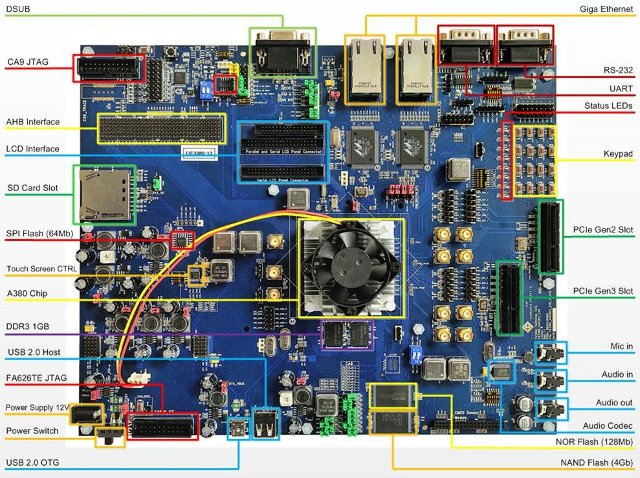
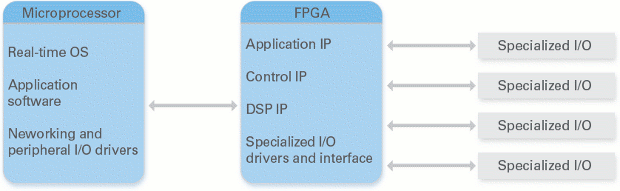
Faraday Technology has unveiled “SoCreative! IV”, a SoC development kit based on Faraday A380 SoC featuring  a dual-core ARM Cortex A9 processor, an ARMv5-compliant core developed by the company, and a high speed expansion bus for interfacing with FPGA daughtercards. A380 SoC has been designed for cloud infrastructure market, including networking, computing, and storage applications. The company has not listed the specifications, but here’s what I could derived from the picture above, and the info found on Linux Gizmos article. SoC – Farady A380 dual core Cortex A9 @ 1GHz, with ARMv5-compliant FA626TE RISC processor @ 500MHz, and 512MB L2 cache. BGA package (31x31mm), 40nm process. System Memory – 1GB DDR3-1600 RAM Storage – 4Gb NAND Flash (512MB), 128Mb of NOR flash, 64Mb of SPI flash, I2C EEPROM, and SD Card slot. Video Output – DSUB for 24-bit LCD I/F up to 1280×1280 Audio – Mic In, Audio In/Out, Audio […]

$79 Plug Makes Creating Your Own Cloud Easy

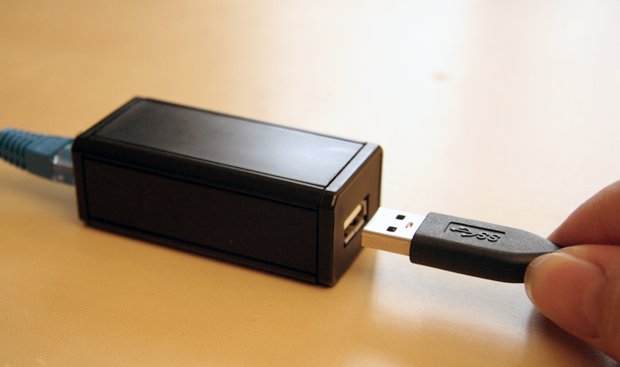
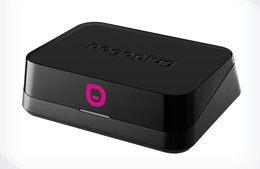
The “Plug” is a device with an Ethernet connection, and a USB port that allows you to connect up to 8 USB drives, and access those in a unified fashion from all your devices. It’s a bit like dropbox, except you are in charge, and the price per GB is much cheaper than cloud services. The Cloud Guys have launched a kickstarter campaign that has already received over $220,000 in pledges after just over two days. The Plug technical specifications are as follows: OpenWRT based Embedded Linux x86 compatible processor Port for your hard drive –  USB 2.0 Port for Internet – Ethernet port 10/100 Mbps Average transfer speed: 30 Mbps Supported file systems: NTFS, HFS+, Ext3/Ext4, FAT32 Number of drives supported (using an external USB hub): 8 LED Display: Power/ Action Dimensions – 270mm (W) x 110mm (D) x 20mm (H) (This must be wrong as it seems way […]

Nvidia GRID Platform, Tegra 4 Processor and Project SHIELD Game Console at CES 2013

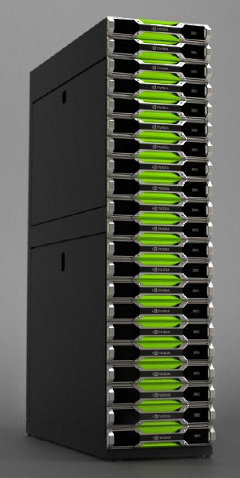
CES 2013 has finally started, and Nvidia has had a pretty amazing keynote with some PC gaming announcements such as “GeForce Experience” which is a piece a software that can configure your games settings automatically based on your PC hardware (e.g. processor and GPU), and 3 cloud and mobile devices announcements: Nvidia GRID Platform – Cloud Gaming Server with 240 Nvidia GPUs. Nvidia Tegra 4 – Nvidia 4 cores Cortex A15 , 72 GPU and SDR modem SoC for tablets and smartphones. Nvidia Project Shield – Game console with a 5″ display powered by Tegra 4 that can also act as a game controller, and play PC games on your TV. Nvidia GRID Platform NVIDIA GRID Cloud Gaming Platform is comprised of 20 GRID server per rack with a total of 240 Nvidia GPU capable of 200 TFLOPS or the equivalent of 700 Xbox 360. Nvidia GRID render 3D graphics […]

Exit mobile version