
Building Kernel Modules for AllWinner A10 Android Devices (e.g. Joystick Support)

Reader JP has enabled Joystick support in Android 4.0.4 on its Mele A1000, this now works with a Playstation2 joystick via USB adapter, a Huskee PC joystick, and 2 other unbranded joysticks. In order to enable Joystick support he had to build a kernel module, and encountered a few issues, so he wrote an how-to which shows what challenges he went through and what solutions he found to those issues.I’m sharing today a slightly edited version of this how-to. This How-to assumes that you have a valid Linux environment where you can build allwinner A10 kernel. The toolchain used was “Sourcery CodeBench for ARM GNU/Linux Lite“ which can be downloaded here: http://www.codesourcery.com/sgpp/lite/arm/portal/package7853/public/arm-none-linux-gnueabi/arm-2010.09-50-arm-none-linux-gnueabi.bin To install it, simply run:

You’ll also need the latest Allwinner A10 kernel source:

Then follow the usual procedure:

I then selected the modules needed for different kind of joysticks namely:

I saved the […]

New Android 4.0.4 Firmwares for Mele A1000 / A2000

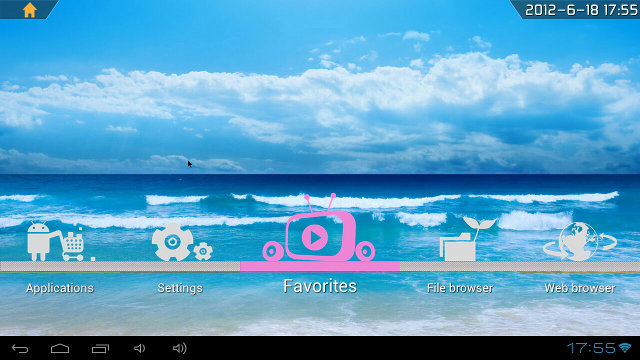
Mele released a new firmware for the Mele A1000, A100 and A2000 Android media players. Here are the download page for Android 4.0 V1.1 (Thanks Fabricio & JP) and the changelog: Update to Android 4.0.4 Fixed problem with Flash Player “black screen” Mouse speed can be set Option to turn on/off the background applications Allowed to set the font size Supports playback of DVD and Blu-Ray ISO files (Files mode) Multiple mouse devices can be used Full-screen playback of online video sources I haven’t had time to try it myself yet, but some people did, and it fixed some of their issues (e.g.  HD multicast video streaming). Tip: Since the whole download process in in Chinese,  “下载” means “download” in Chinese. You’ll have to be patient because the download is slow right now (About 5KB/s on my side). Kimdecent also informed me they’ve released a new firmware for the Mele A1000/A2000 […]

AllWinner A10 Initramfs Support and Linaro 12.07 Image

An initramfs is a minimal root filesystem that is loaded at an early stage of the boot process, before the rootfs partition is mounted. This is optional but is now used by many Linux distributions such as Ubuntu in order to speed up boot time among others things. Up to recently, there was no support for this in the AllWinner A10 nightly builds, and there would be lot of error messages due to ureadahead process with Ubuntu, but I’ve changed that by: Using a boot.scr file (U-Boot Script) for each supported device in order to either follow the default init boot method or do an initramfs boot if uInitrd file is present in the FAT partition. Adding a script (a1x-initramfs.sh) to generate and install uInitrd initramfs in the rootfs. The initramfs can’t be generated at build time since the hardware packs are (mostly) distribution agnostic. If you want an initramfs, […]

Nightly Builds for AllWinner A10 U-boot, Linux Kernel and Hardware Packs
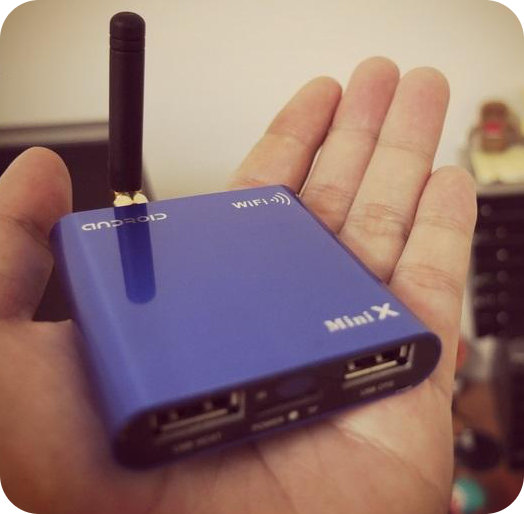
Kent of SCUZ Technologies has graciously provided a build machine (Intel Xeon E5645) for Rhombus Tech (and possibly other) open source projects, and I’ve setup nightly build scripts for AllWinner A10 kernel, bootloader (u-boot) and hardware packs for Mele A1000 (HDMI), Mele A1000 (VGA), A10 mini PCs (using MK802 script.bin) as well as a server build for Mele A1000. The nightlies are built using  a10-hwpack-bld.sh script which is available in github, and can be downloaded from http://dl.linux-sunxi.org/nightly/ The resulting files are copied to a dropbox folder, until a better solution is found. For each build, you’ll find the following files : u-boot.bin – U-boot sun4i-spl.bin – U-boot SPL uImage – Kernel image product_YYYY.MM.DD.log (e.g. mele-a1000_2012.07.20.log) – The build logs whether the build succeeds of fails. One per hardware pack. product_hwpack_YYY.MM.DD.log ( e.g. mele-a1000_hwpack_2012.07.20.7z) – The hardware pack with the kernel, u-boot which can be used with a1x-media-create.sh script to create […]

XBMC for Android on Mele A1000 Media Player (Video)

Following this morning announcement, I’ve started to build XBMC for Android using the instructions on XBMC Android github repository, but it takes hours on my machine. In the meantime, I’ve found a prebuilt apk that I’ve tried on my Mele A1000 and shot a (super blurry) video. This is still a development version, so there are a lot of bugs, but it shows good progress. The user interface renders at 28 fps and it’s very smooth, although CPU usage is about 65%. The remote control can work properly, but XBMC does not respond to mouse clicks and keyboard input. It can find UPNP servers (Windows) and locate your file. SMB client crashes XBMC on my system I’ve tried Big Buck Bunny 480p, 720p and 1080p, and none of the sample can play smoothly, so NEON software decoding does not appear to be fast enough to play videos smoothly. The APK […]

XBMC Media Center Coming to Android

I’ve received a mysterious picture this morning without further details… After a little Google search, it appears XBMC has announced their progress on XBMC for Android. There was already XBMC remote and thin client available on Google Play, but the latest announcement is the real deal, and XBMC can be launched on you Android based devices be it a set-top box, a tablet, a phone, or whatever… It will be the same user experience as on the desktop Have a look at a short (and blurry) teaser video showing XBMC running in Android. “Big Buck Bunny” video is to media player what Angry Birds is to tablet, it has to be shown during demos… XBMC developers explain that most devices only support software decode of audio and video for now, but expect on OpenMAX based player to eventually be available. The main development platform was a Pivos XIOS DS set-top-box […]

List of 39 Low Cost Linux Friendly Boards and Products

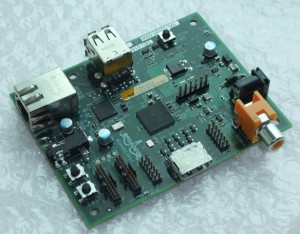
Dmitry (omgfire), one of my awesome readers, compiled a great tabular list of Linux friendly boards and products that sells for less than $300 US (usually less than $200). This list includes technical details such as the processor, GPU, memory, NAND flash, connectivity, ports, supported Linux distributions… as well as availability and pricing information. There are currently 39 Linux devices in total. The vast majority are ARM based boards, but he also included 2 x86 products by VIA, but those are relatively pricey ($265 and up). Here’s a summary list with SoCs used, links to blog posts and product pages (if available), as well as price information. Raspberry Pi Model B – Broadcom BCM2835 (ARM11) – Blog post (That’s my first post about the R-Pi last year, and the board is much different now) –  Product page – Price: $35 + shipping Rikomagic MK802 – Allwiner A10 (Cortex A8) –  […]

Ubuntu 12.04 Server ARMHF Image for Mele A1000/A2000

I’ve seen quite a few people who want to use the Mele A1000 – or its brother the Mele A2000 – media player as a server (Sacrilege!). Since recent ARM servers are running Ubuntu 12.04, and Tom Gall has (conveniently) posted the live-build config necessary to generate Ubuntu 12.04 Server image this week, I thought I’d give it a try on Mele A1000. The image generated is a headless system running Apache 2 and sshd (openssh_server). I’ll detail the steps I followed to generate this image first, so if you just want to try the SD card image, scroll down at the end of the post. The first step is to generate Ubuntu Linaro Server rootfs, by following the Live-Build instructions on Linaro website together with Tom’s live build config. I’ve followed those steps in a machine running Ubuntu 12.04. Let’s install the required packages:

Configure the build and […]

Exit mobile version