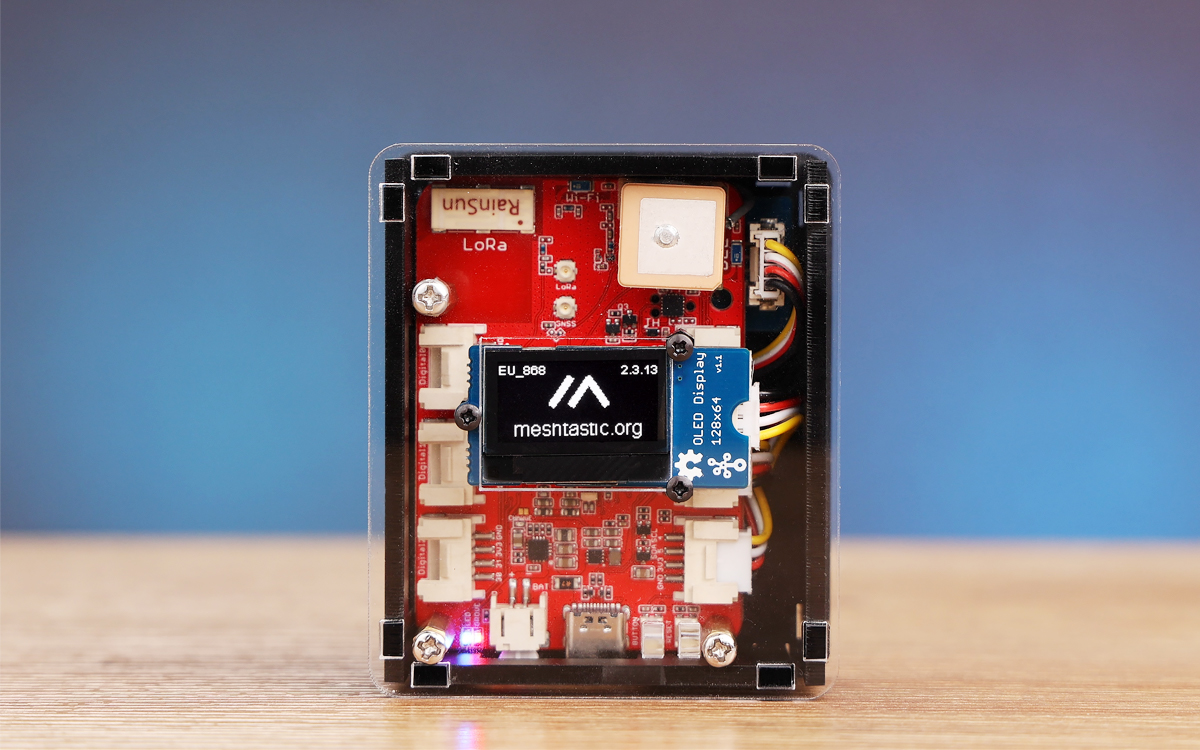
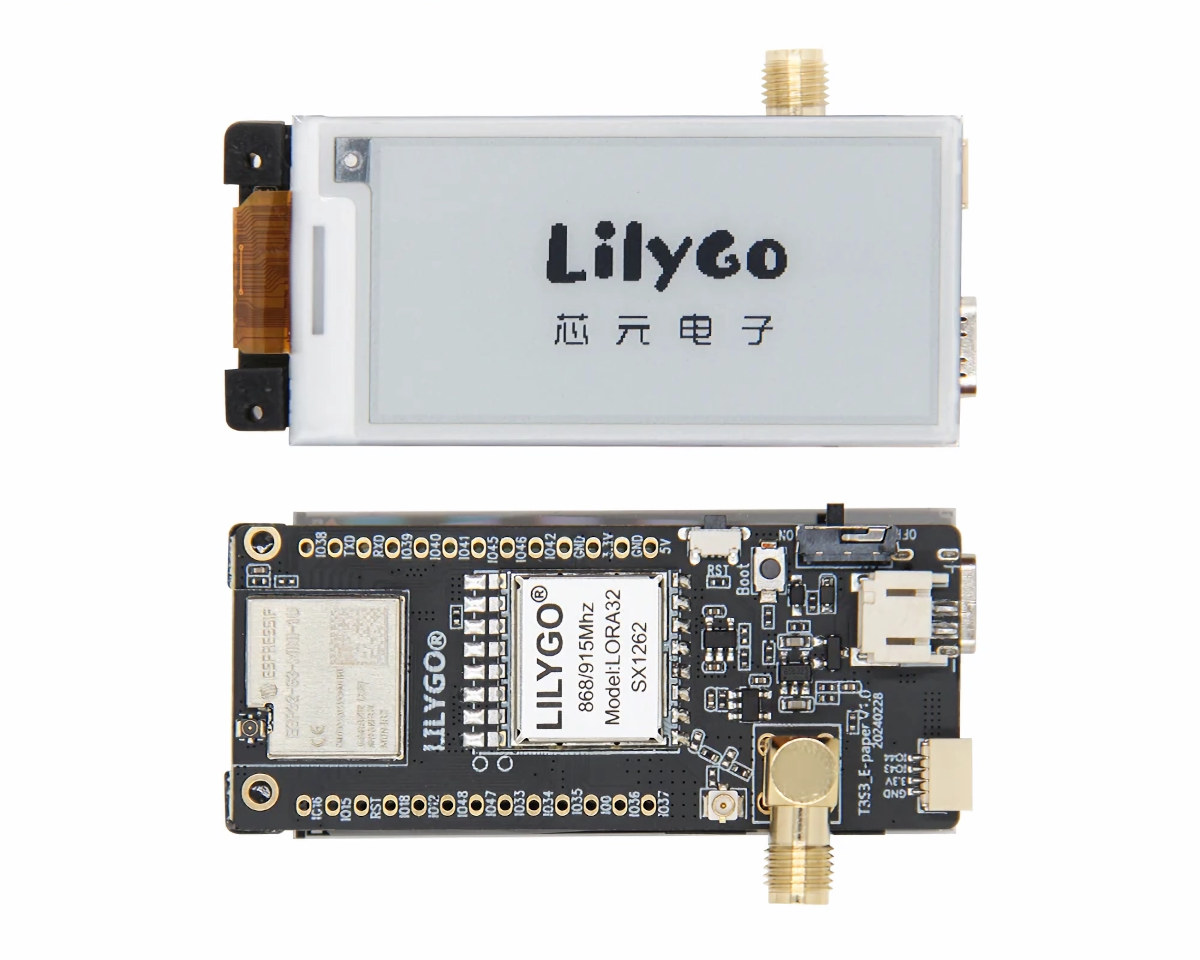
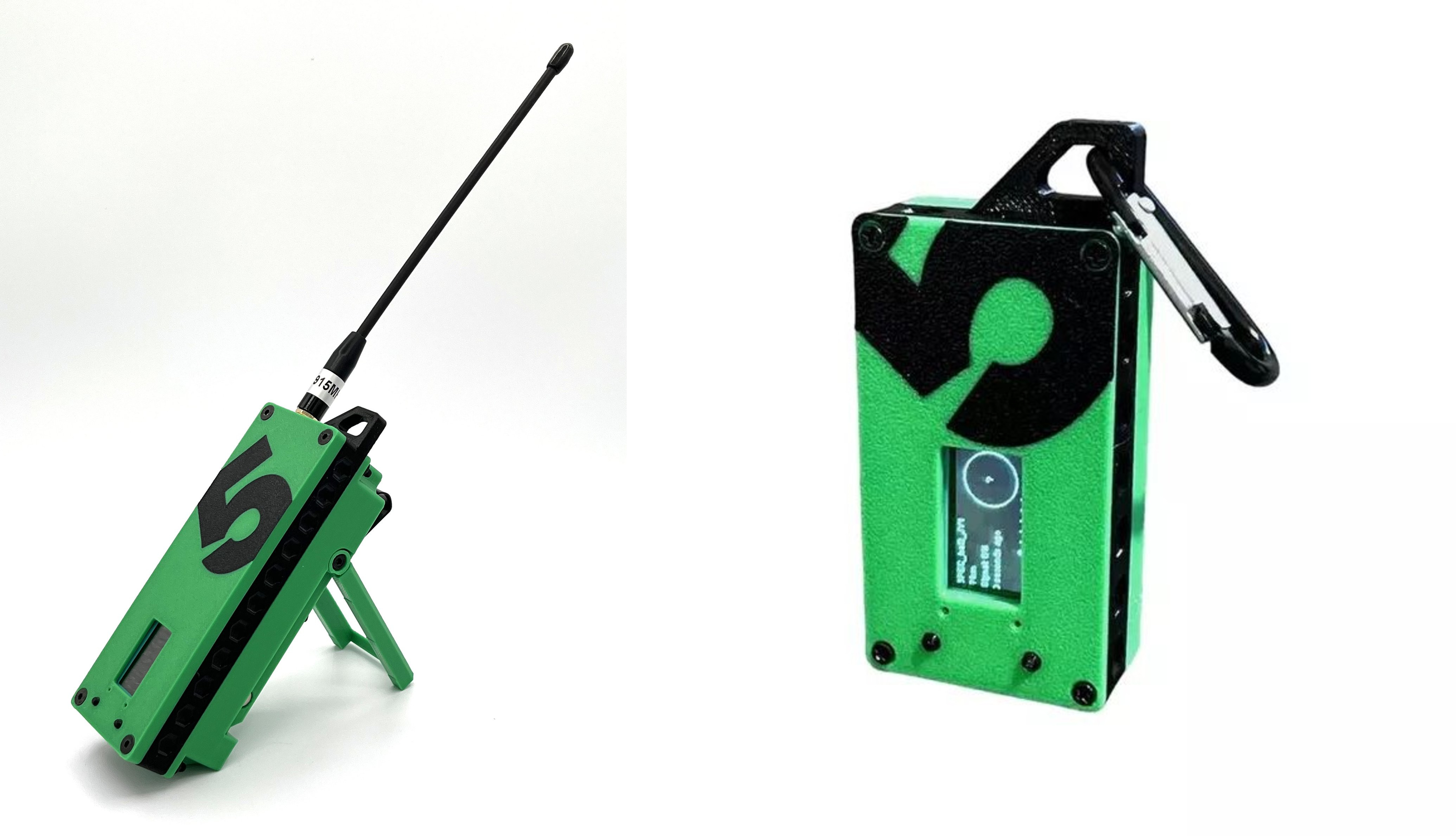
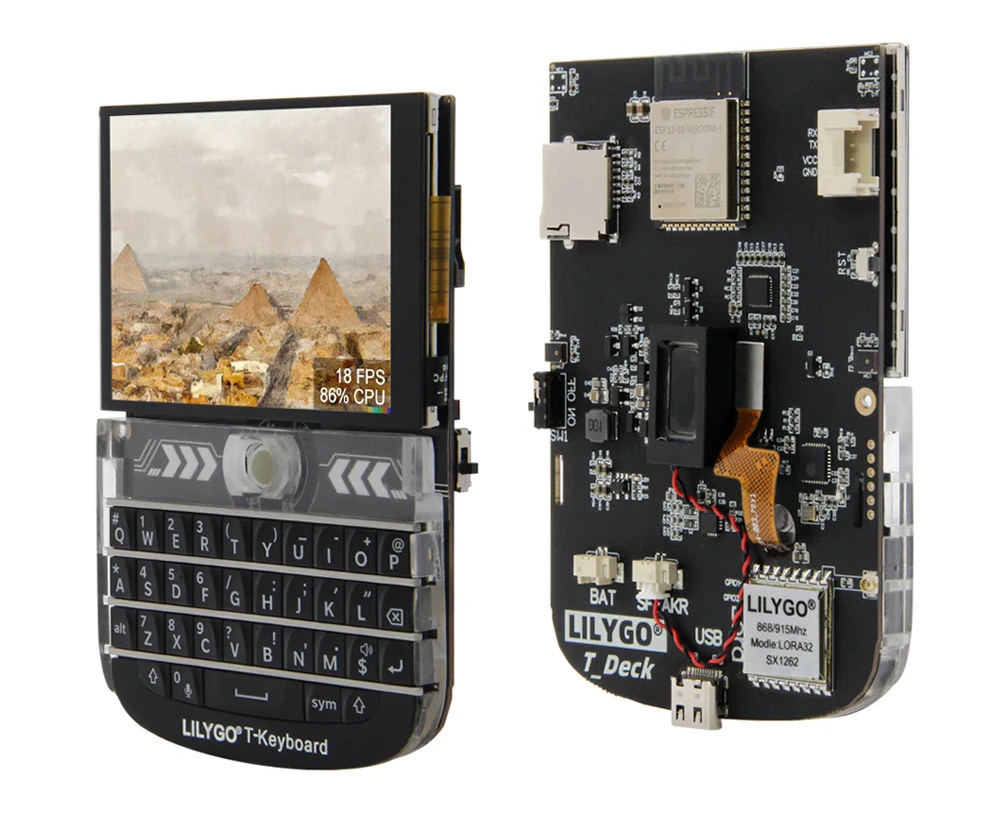
While searching AliExpress, I found the WiFi LoRa 32 (V4) shell set, another ESP32-S3-based off-grid LoRa/Meshtastic communicator designed for long-range wireless applications. Compared to devices like Blackout Comms, Wio Tracker L1 Pro, and ThinkNode M2, this device features built-in solar charging, optional GNSS, a removable battery, and a higher transmit power. The device features a Semtech SX1262 LoRa transceiver, an amplifier delivering up to 28 ± 1 dBm transmit power, along with integrated Wi-Fi and Bluetooth 5/Mesh connectivity. It adds solar charging, an 8-pin GNSS connector, upgraded battery management, gold-plated 40-pin headers, and a fully protected 0.96-inch OLED, as well as a few I/Os for expansion. The USB-C port includes ESD and short-circuit protection, while dual IPEX connectors support both LoRa and 2.4 GHz antennas. Heltec WiFi LoRa 32 (V4) specifications: SoC – Espressif Systems ESP32-S3 CPU – Dual-core 32-bit microcontroller @ 240MHz Memory – 512KB SRAM, 2MB PSRAM Storage – […]
WisMesh Tag – A thin, IP66-rated Meshtastic GPS tracker for outdoor use
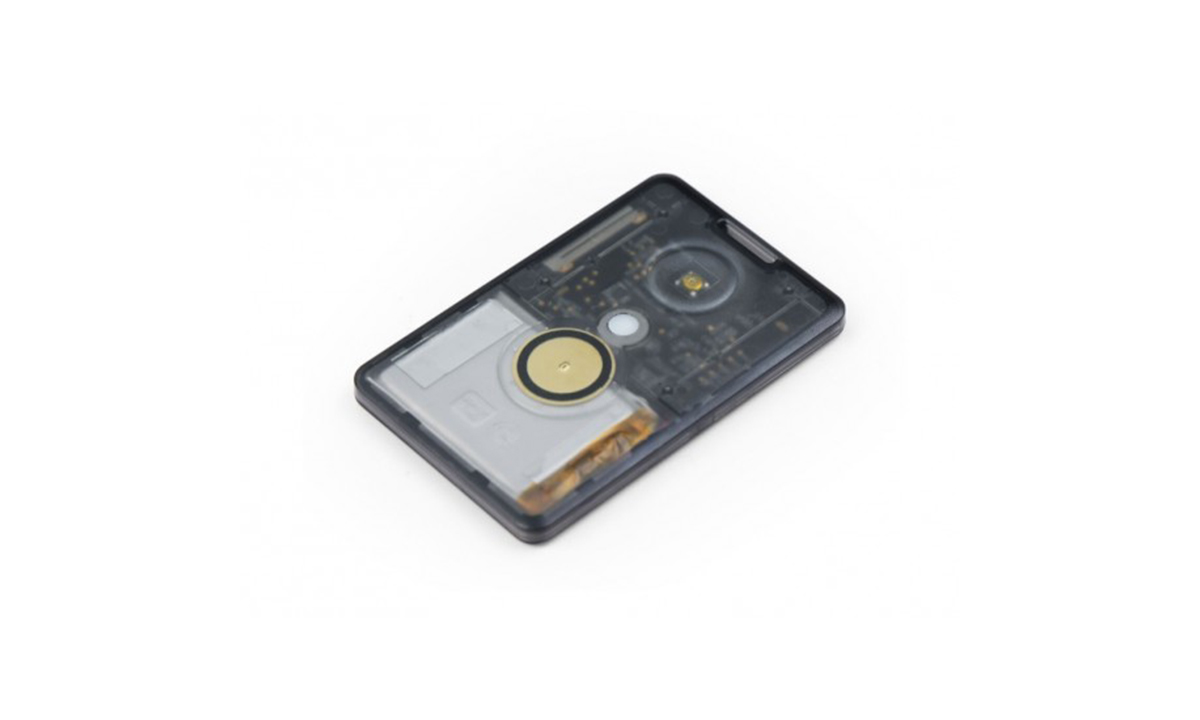
RAKwireless WisMesh Tag is a thin and rugged Meshtastic GPS LoRa tracker designed for off-grid location tracking and messaging. The 7.5mm thick device is pre-flashed with Meshtastic, dust and waterproof (IP66-rated), and powered by a 1,000mAh battery. Internally, it is built around a Nordic Semi nRF52840 wireless SoC and a Semtech SX1262 LoRa transceiver. Contrary to most DIY trackers, the device is fully certified (FCC and CE), so users across Europe and North America can deploy it for personal or professional use. WisMesh Tag specifications: SoC – Nordic Semiconductor nRF52840 CPU – 32-bit Arm Cortex-M4F microcontroller @ 64 MHz Memory – 256 KB RAM Storage – 1 MB flash Wireless – Bluetooth 5, Thread, ANT, Bluetooth Mesh, 802.15.4 (Zigbee), 2.4 GHz proprietary LoRa – Semtech SX1262 RF transceiver GNSS – AT6558R GNSS module Misc Built-in LoRa, BLE, and GPS antennas Reset/Bootloader button User Button for alarms, alerts, or future customization […]
Kode Dot – An easy-to-use, pocket-sized, battery-powered ESP32-S3 devkit (Crowdfunding)
Kode Dot is a pocket-sized ESP32-S3 maker device for prototyping with a built-in 2.13-inch AMOLED, a 500mAh battery, a 9-axis IMU, a microphone and a speaker, an RTC, a few buttons, a GPIO header, and a magnetic connector for expansion. Kode Dot is designed to simplify the prototyping process. Users can still write code using the Arduino IDE, PlatformIO, or ESP-IDF framework and upload it via the kit’s USB-C port, but thanks to kodeOS firmware, each program becomes a standalone app with its own name, icon, and interface, accessible from the graphical user interface. Kode Dot specifications: SoC – Espressif Systems ESP32-S3 dual-core microcontroller with 2.4 GHz Wi-Fi, Bluetooth 5 LE, ESP-NOW peer-to-peer protocol System Memory – 8 MB octal PSRAM Storage 32 MB octal SPI flash microSD card slot Display – 2.13-inch Color AMOLED with 502 x 410 resolution Audio ICS-43434 MEMS microphone 1W MAX98357A speaker amp USB – […]
$200 SpecFive Spectre Pro Android 12 smartphone integrates LoRa Mesh connectivity
LoRa Mesh solutions like Meshtastic or MeshCore enable off-grid messaging, GPS coordinates, and in some cases, audio communication for emergencies, working or hiking in remote areas, or simply to be able to communicate outside of cellular networks. However, adoption is limited, as users need to buy a terminal that costs about the same as an entry-level smartphone, or they may not see any use for it, except for emergencies. Integrating LoRa Mesh into Android smartphones can lower the cost of the feature, since the battery, enclosure, etc… are already there, and you just need to add a LoRa module and an antenna. That’s what SpecFive has done with the SpecFive Spectre Pro 4G LTE smartphone with a LoRa module. The rugged phone runs Android 12 and ships with Meshtastic, Mesh Tic Tac Toe, CheckTastic, and Mesh Chess. Spec5 Spectre Pro specifications: SoC – Unnamed quad-core processor System Memory – 4GB […]
FoBE IDEA Mesh Tracker C1 – An nRF52840-based LoRa GPS tracker with sensors, OLED, knob, and more
Designed by FoBE Studio in China, the FoBE IDEA Mesh Tracker C1 is a LoRa-powered off-grid communication device designed for outdoor GPS tracking, sensor data exchange, and mesh networking in remote environments. Built around the Nordic nRF52840 MCU, it integrates LoRa, GPS, BLE, and motion sensors, making it suitable for location tracking, environmental monitoring, and off-grid communication projects. The device integrates a GPS module, LoRa transceiver, 0.96-inch OLED display, buzzer, a 3-axis accelerometer, and a 3-axis gyroscope. Other ports include a USB-C port, reserved SWDIO/SWCLK headers, an 8-pin GPIO expansion header, and dual IPEX connectors for LoRa and GPS antennas. There is also a rotary encoder and two user buttons, and two indicator LEDs for controls and status feedback. Power input is provided via a 2-pin MX1.25 battery interface for portable, battery-powered outdoor IoT applications. FoBE IDEA Mesh Tracker C1 specifications: SoC – Nordic Semiconductor nRF52840 CPU – 32-bit Arm Cortex-M4F […]
RAK3112 WisDuo LoRa + WiFi + BLE module targets Edge AI and Meshtastic UI
RAKwireless “RAK3112 WisDuo Module for Edge AI with LoRa” combines an ESP32-S3 WiFi and BLE SoC with a Semtech SX1262 LoRa transceiver for Edge AI applications and Meshtastic user interfaces. The 3-in-1 LoRa + WiFi + BLE module is an update to the ESP32-based RAK11200 WisDuo LoRa module, which has limitations in terms of computing power and memory. Those became apparent in more demanding applications such as Edge AI or complex mesh networks. With 16MB of flash and 8MB of PSRAM and a more powerful ESP32-S3 microcontroller, the RAK3112 WisDuo module overcomes those limitations for camera and audio processing, as well as mesh networks like Meshtastic. It also offers a more powerful alternative to the pin-compatible RAK11160 STM32 + ESP32-C2 module that’s better suited for battery-powered sensors. RAKwireless RAK3112 specifications: Main MCU – Espressif Systems ESP32-S3 CPU – Xtensa 32-bit LX7 dual-core CPU @ 240 MHz with vector instructions, AI […]
LILYGO T-LoRa Pager is an ESP32-S3 handheld with support for text messaging, AI motion detection, and NFC
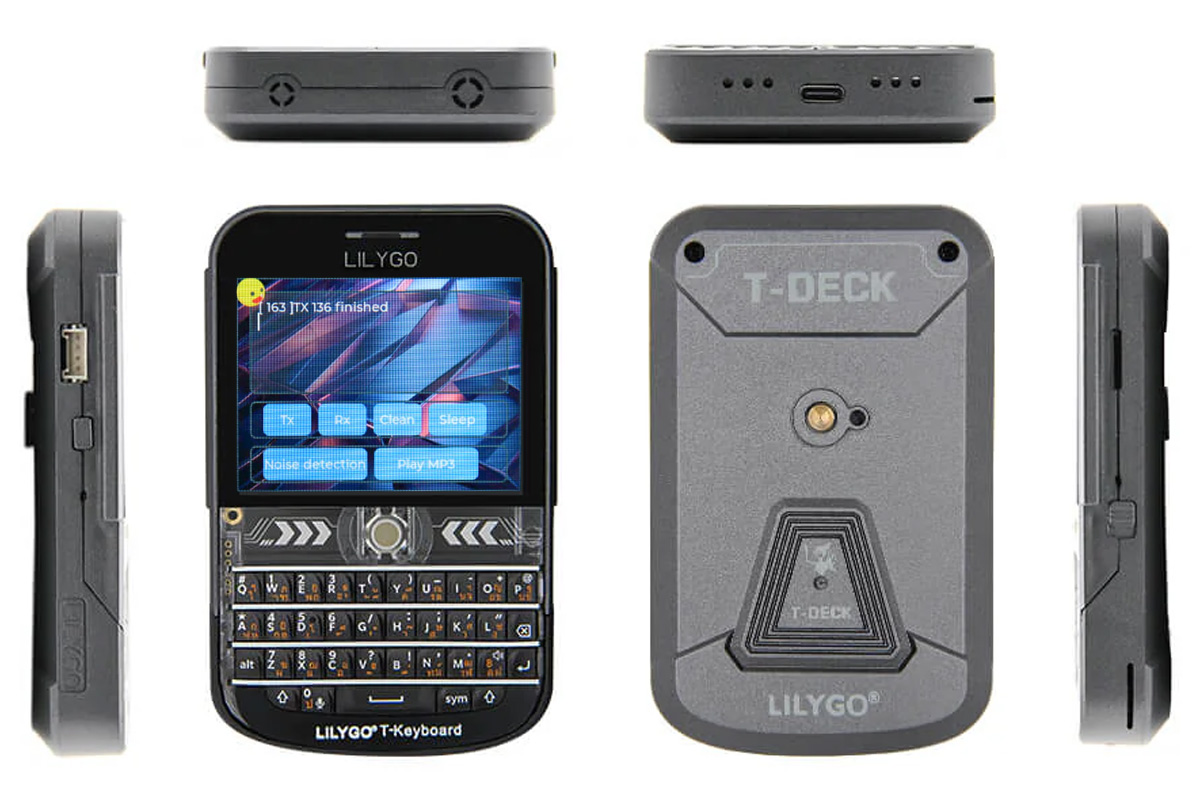
LILYGO T-LoRa Pager is an ESP32-S3-based IoT handheld device that comes in an old pager form factor but relies on LoRa for text messaging, GNSS for positioning, NFC for contactless communication, and features AI-assisted motion detection with a BHI260AP IMU sensor. The device also includes a 2.33-inch IPS display (480×222), a QWERTY keyboard, a rotary encoder, an audio codec, a microSD slot, a battery management system, and a wireless charging pad. These features make this device suitable for portable, remote sensing, asset tracking, field communication, and edge AI projects, where GNSS, LoRa, and/or NFC functionalities are required. LILYGO’s T-LoRa Pager specifications: Wireless SoC – Espressif Systems ESP32-S3 CPU – Dual-core 32-bit LX7 processor running at 240 MHz Memory – 512 KB SRAM, 8 MB PSRAM. Storage – 16 MB Flash Wireless – WiFi 4 and Bluetooth 5.x Storage – microSD card slot for external storage Display – 2.33-inch IPS display (ST7796), […]
MeshCore is a lightweight alternative to Meshtastic LoRa-based off-grid messaging
While Meshtastic is by far the most popular off-grid messaging solution relying on LoRa radios, MeshCore offers an alternative as a lightweight C++ library and firmware designed for multi-hop packet routing and made for developers who want to create resilient, decentralized communication networks that work without the internet. The project’s GitHub repository provides some high-level differences compared to the Meshtastic and Reticulum projects: MeshCore provides the ability to create wireless mesh networks, similar to Meshtastic and Reticulum but with a focus on lightweight multi-hop packet routing for embedded projects. Unlike Meshtastic, which is tailored for casual LoRa communication, or Reticulum, which offers advanced networking, MeshCore balances simplicity with scalability, making it ideal for custom embedded solutions., where devices (nodes) can communicate over long distances by relaying messages through intermediate nodes. This is especially useful in off-grid, emergency, or tactical situations where traditional communication infrastructure is unavailable. MeshCore key features: Multi-hop […]