micropython News - Page 2 of 35 - CNX Software - Embedded Systems News

Inkplate 13SPECTRA 13.3-inch E-ink Spectra smart color display supports Arduino, MicroPython, ESPHome (Crowdfunding)

Inkplate 13Spectra

Soldered Electronics has made ESP32-based e-paper displays for years, starting with the launch of the Inkplate 6 in 2019. The Inkplate 13SPECTRA is their latest model based on an ESP32-S3 WiFi and Bluetooth SoC and a 13.3-inch E-Ink Spectra color display with 1600 x 1200 resolution. More specifically, it’s powered by an ESP32-S3-WROOM-2-N32R16V module with 32MB SPI flash and 16MB PSRAM, features a microSD card slot for data storage, a USB-C port for data and power, a JST connector for an optional 3,000 mAh LiPo battery, and expansion capabilities through three Qwiic connectors and GPIO expander pins. Inkplate 13SPECTRA specifications: Wireless module – ESP32-S3-WROOM-2-N32R16V SoC – ESP32-S3 dual-core Xtensa LX7 processor (up to 240 MHz) with wireless connectivity System Memory – 16 MB PSRAM Storage – 32 MB flash Wireless –  Wi-Fi 802.11 b/g/n (2.4 GHz), Bluetooth 5 (LE), Storage – MicroSD card slot Display 13.3-inch E-Ink SPECTRA color e-paper […]

MicroPythonOS graphical operating system delivers Android-like user experience on microcontrollers

MicroPythonOS user interface

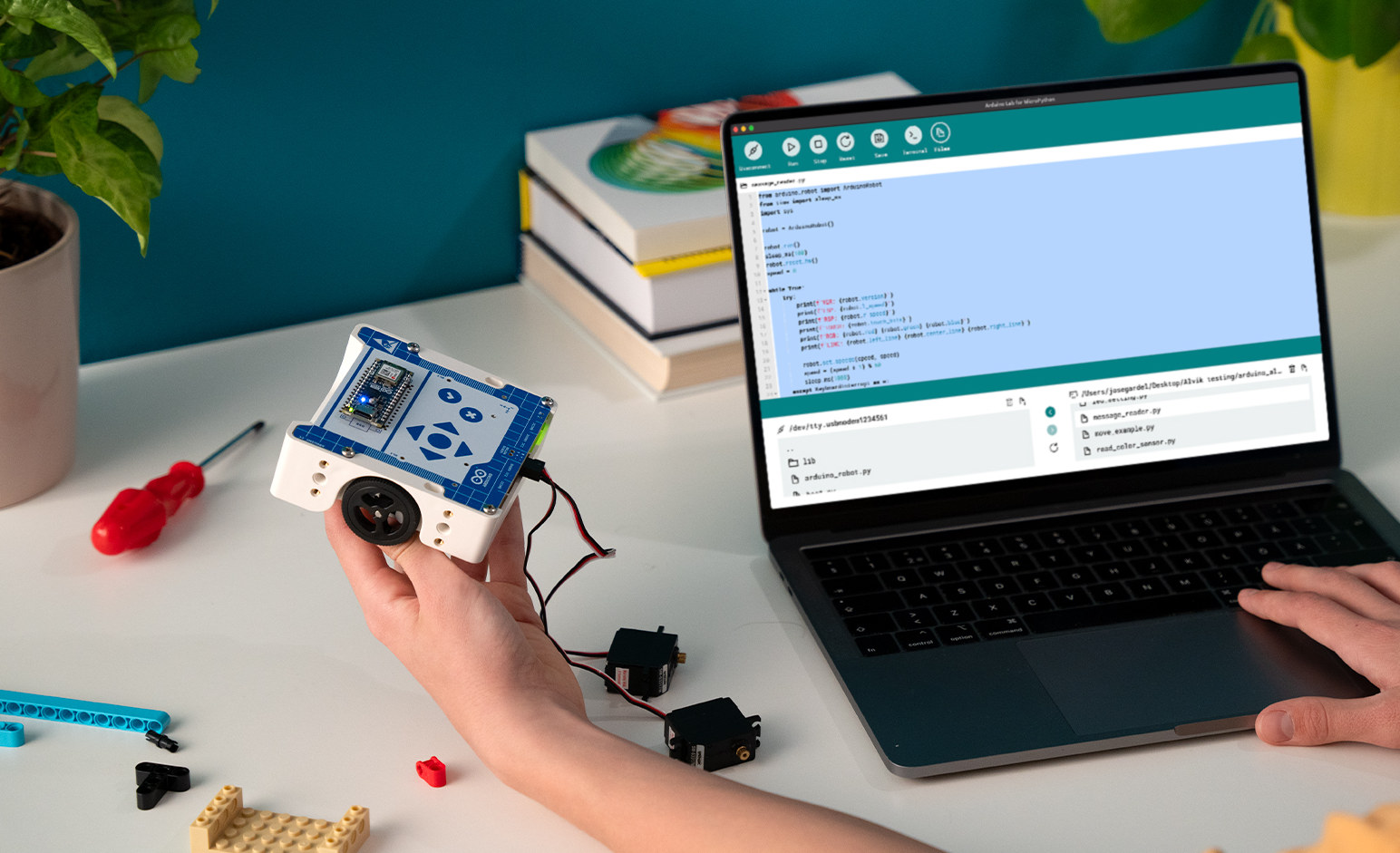
Yesterday, I wrote about Ariel OS RTOS for microcontrollers written in Rust, but there’s another interesting open-source operating system for microcontrollers that will be covered at FOSDEM 2026: MicroPythonOS. While Ariel OS is designed for secure, memory-safe, networked IoT applications on microcontrollers, MicroPythonOS targets applications with graphical user interfaces and is heavily inspired by Android and iOS, with an appstore, an LVGL-based touchscreen and button UI with plenty of widgets, gestures and theme support, and a wifi manager, as well as over-the-air (OTA) firmware updates. You’ll probably be astonished to learn that MicroPythonOS is written in… MicroPython. It’s comprised of a Thin OS which handles hardware initialization, multitasking, and UI, and everything else is an app, including system features like WiFi configuration and OS updates. MicroPythonOS highlights: Native MicroPython foundation Runs on ESP32 microcontrollers, but the FOSDEM 2026 talk mentions that it can run on anything that supports MicroPython, including […]

ACEBOTT QD023 ESP32-based gesture control glove tracks finger movements with potentiometers

ACEBOTT QD023 ESP32 Motion Sensing Glove

ACEBOTT QD023 is an ESP32-based wearable gesture control glove that tracks finger movements with potentiometers instead of more traditional flex sensors. The glove transmits data via Bluetooth Low Energy (BLE) to control various robotics kits, such as bipedal walkers, mecanum-wheeled cars, and robotic arms. The glove integrates five potentiometers for finger bending detection, and a 6-axis MPU6050 IMU for wrist rotation, tilt, and hand posture detection in real time. Other Hardware features include a USB Type-C port for programming and debugging, four AAA batteries for power, buttons, LEDs, and more. Tutorials and assembly guides make it suitable for K-12 education, classrooms, and hobbyist robotics projects. ACEBOTT QD023 specifications: Wireless Module  – ESP32-WROOM-32D (soldered on the backside of the PCB) SoC –  ESP32 dual-core wireless microcontroller CPU – Dual-core Xtensa 32-bit microprocessor @ 240MHz Memory –  520KB internal SRAM Wireless – Wi-Fi 802.11b/g/n, and Bluetooth (4.2 and BLE) PCB antenna USB – […]

FOSDEM 2026 schedule – Embedded, RISC-V, Robotics, Rust, Open Hardware, and more

FOSDEM 2026 schedule

FOSDEM 2026 will take place on January 31-February 1, with thousands of developers meeting in Brussels to discuss open-source software & hardware projects. The free-to-attend “Free and Open Source Software Developers’ European Meeting” gets more traction every year, and in 2026, there will be at least 1,113 speakers, 1,016 events, 70 tracks, and potentially close to 10,000 attendees. As usual, I’ll create a virtual schedule with sessions most relevant to the topics covered on CNX Software from the “Embedded, Mobile and Automotive” and “Open Hardware and CAD/CAM” devrooms, but also other devrooms, including “RISC-V”, “Robotics and simulation”, and “FOSS on Mobile”, among others. I’m aware some of the talks overlap by a couple of minutes or so… FOSDEM 2026 Day 1 – Saturday, January 31 10:40 – 11:15 – RISC-V Vector optimisations in FFmpeg by Rémi Denis-Courmont FFmpeg is the most versatile multimedia codec and format support library, and was […]

XIAO ESP32-C5 – A tiny USB-C IoT board with dual-band WiFi 6, Bluetooth 5.0 LE, Zigbee, and Thread connectivity

XIAO ESP32-C5

Seeed Studio has just added a new member to its XIAO USB-C board family with the XIAO ESP32-C5 offering dual-band WiFi 6 (2.4 and 5.0 GHz), as well as Bluetooth 5.0 LE, Zigbee, and Thread connectivity for IoT projects and products. It still features a u.FL antenna connector, Reset and Boot buttons, two 7-pin GPIO headers, and 8 pads for JTAG or GPIOs on the back. Compared to the earlier XIAO ESP32C6, the new model is clocked higher (240 MHz vs 160 MHz), supports dual-band Wi-Fi, and offers more memory (384KB SRAM + 8 MB PSRAM vs 512KB SRAM) and storage (8MB vs 4MB flash), but exposes fewer analog pins (5 vs 7). XIAO ESP32-C5 specifications: Wireless MCU –  Espressif Systems ESP32-C5HR8 CPU Single-core 32-bit RISC-V processor @ up to 240 MHz Low-power RISC-V core @ 48 MHz acting as the main processor for power-sensitive applications Memory – 384 KB […]

WeAct CAN485 – A low-cost ESP32 board with CAN Bus and RS485 interfaces

WeAct CAN485 Case Terminal Block

WeAct CAN485 is a low-cost ESP32 board with CAN Bus and RS485 interfaces implemented through transceivers with 2.5kV isolation from Shanghai Chipanalog Microelectronics Co., Ltd. or Chipanalog for shorts. The board supports WiFi and Bluetooth LE through the ESP32 microcontroller and also features a microSD card slot, three switches for 120 Ohm termination and pull-up/pull-down resistors, Reset and User buttons, a USB-C port for programming, and a 2-pin terminal block taking 5 to 36V DC input power. WeAct CAN485 specifications: Wireless SoC – Espressif Systems ESP32-DOWD-V3 CPU – Dual-core processor @ 240MHz Memory – 520 KB SRAM, 16 KB SRAM in RTC Storage – 448 KB ROM Wireless – WiFi 4 and BLE connectivity Storage 8MB flash (W25Q64JVSSIQ) MicroSD card slot (SPI); note: the card needs to be removed when flashing the firmware. USB –  USB Type-C port for power and programming ( via CH343P USB to TTL bridge) Serial […]

XIAO ePaper DIY Kit – EE02 – An ESP32-S3 board designed for 13.3-inch Spectra 6 color E-Ink display

XIAO ESP32-S3 13.3-inch E-ink Spectra 6 color display kit

Seeed Studio’s XIAO ePaper DIY Kit EE02 is an ESP32-S3 WiFi and Bluetooth board designed specifically for the 13.3-inch Spectra 6 color E-Ink display provided by the company. It’s based on a similar design as the XIAO ePaper DIY Kit-EE04 (ESP32-S3) and XIAO ePaper DIY Kit-EN04 (nRF52480) introduced last December, which are suitable for smaller 1.54 to 7.15-inch ePaper displays. Like the previous models, the new EE02 model also includes a battery connector with a power switch, a built-in charging IC, and comes with one reset and three user buttons. With support for a larger 13.3-inch color ePaper display, it’s especially well-suited for digital frames and information boards. XIAO ePart DIY kit – EE02 specifications: Wireless board – XIAO ESP32S3 Plus SoC – Espressif ESP32-S3R8 CPU – Dual-core Tensilica LX7 microcontroller up to 240 MHz with vector instructions for AI acceleration Memory – 8MB PSRAM Wireless – WiFi 4 and Bluetooth […]

ESP32-C6 development board features 1.8-inch AMOLED touch display, built-in mic and speaker, IMU, RTC, and more

ESP32 C6 Display Development Board

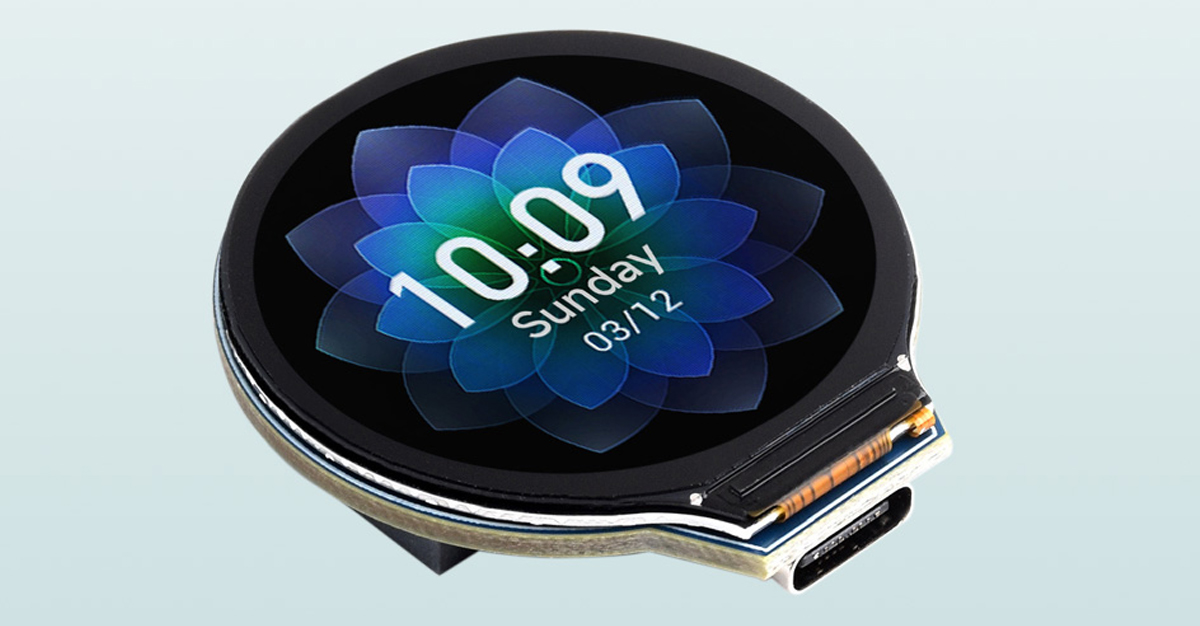
Waveshare ESP32-C6-Touch-AMOLED-1.8 is an ESP32-C6-based touch display development board featuring a 1.8-inch capacitive AMOLED display, a 6-axis IMU, RTC, audio codec, microSD card slot, USB-C for power and programming, power/boot buttons, and various I/Os including I²C, UART, USB, and GPIO pads. Compared to boards like Waveshare ESP32-S3-LCD-1.28, ESP32-S3-Touch-LCD-1.69 (based on ESP32-S3), and ESP32-P4-WIFI6-Touch-LCD-3.4C/4C (based on ESP32-P4), this board is based on the ESP32-C6 wireless SoC with 2.4 GHz Wi-Fi 6, Bluetooth 5 LE, Zigbee, and Thread connectivity. It also includes a 16 MB external flash and a 368 × 448 AMOLED display with 16.7 million colors and capacitive touch support. Power is managed by an AXP2101 PMIC for Li-ion battery support and charging. Typical applications include smart home control panels, wearable and handheld IoT devices, voice-enabled assistants, data loggers, portable dashboards, and HMI-focused embedded prototypes. Waveshare ESP32-C6-Touch-AMOLED-1.8 specifications: SoC – Espressif Systems ESP32-C6 CPU Single-core 32-bit RISC-V clocked up to 160 MHz […]