Yesterday, I mentioned the Nvidia Tegra 3 tablet running Windows 8 which is currently showcased at Build Conference 2011 and they also had a Tegra 3 laptop running Windows 8. But Nvidia was not the only company showing off ARM based processors running Windows 8. There were at least 2 other companies, namely Qualcomm and Texas Instruments. Qualcomm showcased a Snapdragon MSM8660 (Dual core 1.2 GHz) Tablet running Windows 8 and announced that the first batch of Windows 8 PC will be based on the Snapdragon processor. Texas Instruments brought a Windows 8 Tablet based on OMAP4430 (dual core 1 GHz) developed in partnership with Quanta. Jean-Luc Aufranc (CNXSoft)Jean-Luc started CNX Software in 2010 as a part-time endeavor, before quitting his job as a software engineering manager, and starting to write daily news, and reviews full time later in 2011. www.cnx-software.com
Texas Instruments TRF7970A NFC Transceiver
Texas Instruments has introduced the TRF7970A NFC Transceiver ” speeds designs with easy-to-configure software that helps developers bring peer-to-peer, ultra-low-power capabilities to more applications”. Here’s an excerpt from the press release: Raising the standard for ultra-low-power near field communication (NFC) devices, Texas Instruments Incorporated (TI) (NYSE: TXN) today announced the industry’s lowest power contactless short-range communication transceiver. Ideal for infrastructure devices, the new TRF7970A extends battery life up to 2 times longer than competitive products, as it provides eight selectable power modes ranging from <1 uA in power-down mode to 120 mA in full-power mode. The transceiver comes with easy-to-configure software to help developers get started quickly. Royalty-free stacks are compatible across a broad range of ultra-low-power MSP microcontrollers. Additionally, developers are able to directly access all control registers, allowing for easy fine-tuning of various parameters for the highest performance in every application. You can also read the complete TRF7970A […]
Pandaboard Benchmark: Android (Pandroid) vs Linaro Android
Here’s a video with two Pandaboards (powered by TI OMAP 4) running Android. On the right, there’s Google’s Android, built with the gcc 4.4 toolchain provided by Google and the Pandroid kernel. On the left, there is a Linaro build, using Linaro’s gcc 4.5 toolchain and Linaro’s 3.0 kernel for the Panda board. There is a noticeable difference in the time taken by both boards to execute the demo. (Android Linaro being faster). The demo (Benchmark by 0xlab) uses software decode on both boards. They also showcase the Freescale i.MX53 and ST Ericsson Snowball development boards. Jean-Luc Aufranc (CNXSoft)Jean-Luc started CNX Software in 2010 as a part-time endeavor, before quitting his job as a software engineering manager, and starting to write daily news, and reviews full time later in 2011. www.cnx-software.com
OMAP3 / OMAP4 Based Android Reference Designs for Smartphones and Tablets
Elektrobit (EB) announced their Specialized Device Platform (SDP), a reference design based on the Android operating system, targeted to Public Safety, Security and Defense, sectors with stringent compliance and regulatory requirements. The platform consists of form factor hardware that can be tailored to customer requirements. The current SDP has a TI OMAP 3 application processor, a high resolution touch-screen enabled display, Wi-Fi, Bluetooth, GPS, 2G and 3G modems – LTE for Band 14 being an option and runs Android 2.2 (Froyo). A version with TI OMAP 4 processor running Android 2.3 (Gingerbread) will be available in H1 2012. Linux Angstrom will also be provided for the platforms. Here are the details specifications of both reference platforms: OMAP3xxx ARM Cortex-A8 core up to 1 GHz ARM TrustZone compatible security engine NEON™ SIMD coprocessor POWERVR™ SGX graphics accelerator TMS320C64x+™ DSP up to 600 MHz OMAP4xxx Dual ARM Cortex-A9 cores up to 1.5 […]
Archos 80 and 101 G9 are now available on Amazon France
Archos Gen9 Android 3.1 Tablets are now available for pre-order on Amazon France. They come in four versions: Archos – 101 G9 – Tablet PC 10″ – OMAP 4 ARM Cortex Dual Core A9 – 250 Go Turbo – Wifi – Android – 399.99 Euros Archos – 101 G9 – Tablet PC 10″ – OMAP 4 ARM Cortex Dual Core A9 – 16 Go Turbo – Wifi – Android – 349.99 Euros Archos – 80 G9 – Tablet PC 8″ – OMAP 4 ARM Cortex Dual Core A9 – 8 Go – Wifi – Android– 249.99 Euros Archos – 80 G9 – Tablet PC 8″ – OMAP 4 ARM Cortex Dual Core A9 – 8 Go Turbo – Wifi – Android – 279.99 Euros If you are not yet familiar with the generation 9 products, have a look at the official Archos G9 presentation video below. There are also a […]
List of Wireless Standards for Local and Personal Area Networks
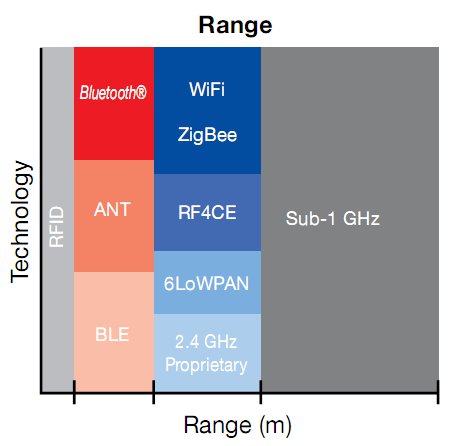
While designing your embedded system, you may have to choose between different wireless standards to match your needs. I’ll provide a list a short and mid-range wireless standards, their description and links to open source software stacks (when available) to help you better understand the different options available. Wide Area Network wireless network such as LTE, Wimax, etc.. won’t be discussed in this blog entry. Mesh and IP Networks: Wifi (IEEE 802.11): Wifi is probably the most used wireless standard in consumer electronics devices today as it allows users to connect their device to their LAN wirelessly. An access point has a typical range of about 20 meters indoors and up to 100m outdoors. There are 4 standards 802.11a 802.11b, 802.11g and 802.11n. The latest has a theoretical throughput of 300 Mbps. Check out Wikipedia Wifi page for details. The Wi-Fi stack is part of the Linux kernel but you […]
Boot Linux in 300 milliseconds
MakeLinux.com managed to boot Linux from the bootloader to console within 300ms using a customized (and minimal) version of Linux running on Beagleboard based on TI OMAP 3530 (Cortex A8) as per their Super Fast Boot project. Here’s the analysis of the boot sequence and timings: Logging starts at 70 ms from reset. Boot time from reset is 300 + 70 = 370 ms. Logging starts at 330 ms from power on. Cold boot time is 330 + 300 = 630 ms. Loading of 1.5 MiB Linux image from NAND takes 237 ms with throughput 6 MiB/s. Code execution takes 60 ms or 43M CPU cycles. (For other CPU frequency execution time is different, but the number of processor cycles is the same) The most time-consuming operation is coping firmware from NAND flash. They used a Linux 2.6.32 kernel from DVSDK 3.01, in a minimal configuration (900KB footprint), the boot […]
Phytec Texas Instruments OMAP4430 Computer Module
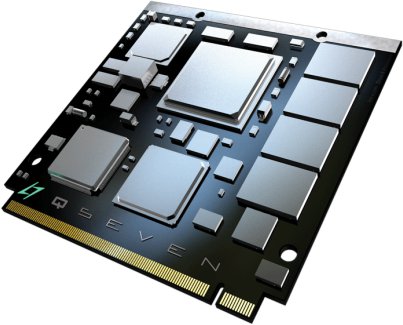
Phytec announced the first system on module based on Texas Instruments OMAP4430. The phyCORE-OMAP4430 features up to 1GB LPDDR2 DRAM, 1GB NAND Flash, one USB Host, one USB OTG port, Ethernet, I2C Interface, DSI and HDMI video output and consumes a maximum of 3 Watts only. Here are the full specifications of the phyCORE-OMAP4430 computer module: Texas Instruments OMAP4430 @ 1GHz PowerVR SGX540 GPU 56 KB On-chip SRAM and 512 MB (default) or 1 GB LPDDR2 DRAM 128, 256, 512 MB (default) or 1 GB NAND Flash 4 (default) or 32 KB EEPROM 2 SD/SDIO/MMC Expansion slot 4 UARTs, 1 RS232, 3 I2C, 1 I2S and 2 SPI/SSP serial connections. 1 USB Host and 1 USB OTG ports. 10/100 MBit Ethernet 2 x DSI, 1 x HDMI video output ports up to 1080p encode/decode and Touch screen support DVI/HDMI, PWM, Camera, Keypad, JTAG and RTC Dimensions: 41 x 51 mm […]