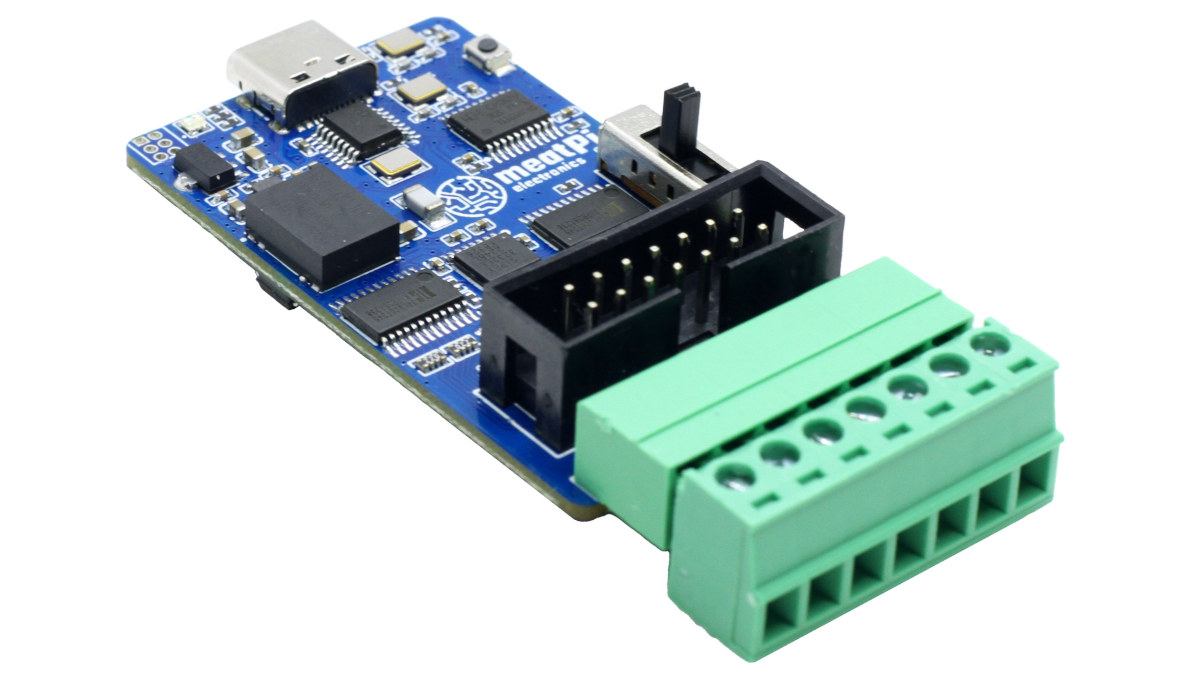
BenchVolt PD is a five-channel, open-source USB-C PD lab power supply that turns any USB Type-C charger/power bank into a compact, portable bench PSU. Designed for makers, engineers, and field technicians, it delivers up to 100 W with fixed, adjustable, and waveform-capable outputs, making it an alternative to bulky lab units. It integrates three low-noise fixed rails (1.8 V, 2.5 V, 3.3 V), two adjustable outputs (0.5–5 V and 2.5–32 V), and supports up to 3A per channel with current limiting. An STM32 MCU handles sequencing, real-time safety checks, and monitoring. The device also features a 1.9-inch display and a rotary encoder for monitoring and control. It also includes protections for overcurrent, temperature, and power budgeting. BenchVolt PD specifications: MCU – STMicroelectronics STM32F030F4 32-bit Cortex-M0 @ 48 MHz with up to 256KB of flash Display – 1.9-Inch TFT display (320 x 170) showing voltage, current, thermal, and PD status Power […]
$69 Sipeed SLogic16U3 low-cost logic analyzer supports 3.2 Gbps bandwidth, 150+ protocols
The SLogic16U3 is a compact, low-cost USB 3.0 logic analyzer with up to 3.2 Gbps bandwidth and 16 input channels, designed for debugging, reverse-engineering, and verifying digital circuits and embedded systems. The device supports sampling rates up to 800MS/s with four channels, 400MS/s with eight channels, and 200MS/s with sixteen channels via a 5 Gbps USB 3.0 interface. On top of that, it supports 0–10V inputs and features adjustable trigger thresholds (0–6V). Housed in a 40×40×10 mm compact aluminum case, it supports over 150 protocols like SPI, I²C, UART, CAN, and JTAG, and provides edge-based triggering with real-time streaming over USB. The device can be extended as an oscilloscope via an optional ADC module and integrates seamlessly with Sigrok and PulseView software for waveform visualization. SLogic16U3 specifications: MCU – TBD Input channels – 16 digital channels Sampling rates 800MS/s @ 4 channels 400MS/s @ 8 channels 200MS/s @ 16 channels […]
Stellar Data Recovery for Tape: Your Reliable Solution for LTO Tape Recovery (Sponsored)
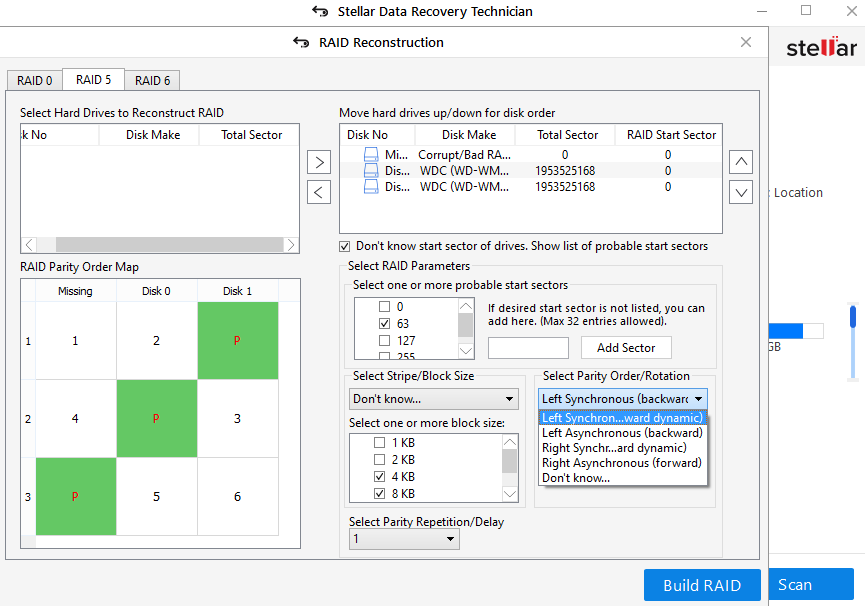
In the world of data archiving, Linear Tape-Open (LTO) tapes continue to dominate for their unmatched capacity and longevity, storing up to 45TB compressed on LTO-9 cartridges with a shelf life of 30 years. Yet, threats like software obsolescence, catalog corruption, or physical wear can lock away irreplaceable files—from databases and emails to videos and documents. That’s where LTO tape data recovery software like Stellar Data Recovery for Tape steps in, offering a standalone, secure way to retrieve data without relying on discontinued backup tools. Designed for IT pros, compliance officers, and enterprises in sectors like finance and healthcare, Stellar Data Recovery for Tape eliminates vendor lock-in. Certified under ISO-27001, ISO-9001, and HIPAA, it ensures 100% safe recovery, preserving originals while parsing diverse formats. Whether auditing legacy LTO-1 tapes or migrating modern LTO-9 archives, this tool restores access swiftly, supporting e-discovery and regulatory needs without downtime. Key Features at a […]
Genesis IoT Discovery Lab is a modular ESP32-S3-based wire-free prototyping platform (Crowdfunding)
Developed by Axiometa in Lithuania, the Genesis IoT Discovery Lab is a modular Wi-Fi-enabled prototyping platform built around the ESP32-S3 and a standardized module with AX22 connectors, designed to replace messy breadboards with a structured, plug-and-play system. Designed to simplify hardware development and education, this prototyping module features eight universal AX22 ports, a USB OTG Type-C port, a battery module with charging, and support for over 50 sensors and peripherals. Modules include sensors, buttons, motors, LEDs, relays, and displays, all secured with robust connectors. With open-source hardware and various expansion add-ons, it’s suitable for education, IoT prototyping, and fast hardware iterations. Genesis IoT Discovery Lab specifications: Wireless Module – ESP32-S3-WROOM-1 SoC – Espressif Systems ESP32-S3 CPU – Dual-core Tensilica LX7 up to 240 MHz with vector extension for AI/ML workloads RAM – 512KB SRAM Storage – 8MB flash Wireless – WiFi 4 and Bluetooth LE 5 Antenna – PCB antenna USB […]
ESP32 Bus Pirate open-source firmware works on off-the-shelf hardware
ESP32 Bus Pirate is an open-source firmware inspired by the original Bus Pirate from Dangerous Prototypes, which turns off-the-shelf (ESP32-S3) hardware into a multi-protocol hacker’s tool. It supports sniffing, sending, scripting, and interacting with various digital protocols (I2C, UART, 1-Wire, SPI, etc.) via a serial terminal or web-based CLI. It’s been tested on Espressif ESP32-S3-DevKitC-1 development board, M5Stack Cardputer, M5StickC Plus2, Atom S3 Lite, M5Stamp S3, and LILYGO T-Embed (CC1101) boards. ESP32 Bus Pirate firmware highlights: Interactive CLI via USB serial – For faster performance and high responsiveness Web interface (over WiFi) – No cable needed to the host, works from any web browser Supported Modes HiZ (default) – High-Z is a safe mode where all outputs are disabled and all power supplies are turned off I2C (scan, glitch, slave mode, dump) SPI (flash, SD card, slave mode) UART / Half-Duplex UART (bridge, read, write) 1-WIRE (ibutton, temp sensor) 2-WIRE […]
GL.iNet Comet (GL-RM1) low-cost KVM-over-IP solution supports up to 2K resolution
GL.iNet has entered the low-cost KVM-over-IP market with the Comet (GL-RM1) remote KVM to remotely control any computer over an Ethernet connection with an HDMI port for video and audio input and a USB-C port for keyboard and mouse emulation. It’s an alternative to the Sipeed NanoKVM (Cube) with a more powerful quad-core processor, 1GB RAM, an 8GB eMMc flash, a gigabit Ethernet port, and support for up to 2K (2160×1440) resolution at 60 FPS. Comet GL-RM1 specifications: SoC – Quad-core CPU @ 1.5 GHz System Memory – 1GB DDR3 Storage – 8GB eMMC flash Video & Audio Input – HDMI port up to 2K @ 60 FPS (2160 x 1440 @ 60 FPS); H.264 encodding with 30 to 60ms latency Networking – Gigabit Ethernet RJ45 port USB USB 2.0 Type-A port to connect peripherals like a Fingerbot or ATX power control board USB 2.0 Type-C port for mouse/keyboard emulation […]
Haasoscope Pro open-source, real-time sampling USB oscilloscope supports up to 2GHz bandwidth (Crowdfunding)
The Haasoscope Pro is an open-source hardware, high-bandwidth, and real-time sampling USB oscilloscope. Building upon its predecessor, the Haasoscope, the new Pro model offers a bandwidth of 2GHz, 12-bit resolution, and a 3.2GS/s sampling rate. The Haasoscope Pro USB oscilloscope is “designed to be low cost, while maintaining super-fast performance.” While it only comes with 2 channels, the flexible design makes it possible to combine and sync multiple devices (using Cat5 cables) to double the sample rate or add more channels. The oscilloscope works with standard x10 passive probes but a custom active probe, the Haasoscope Pro-be, is also offered. It supports the full 2GHz analog bandwidth and is priced much cheaper than similar probes. The Haasoscope Pro USB oscilloscope’s high sampling rate and bandwidth make it ideal for radio frequency signal analysis and high-speed digital debugging. It is similar to the ThunderScope Thunderbolt and PCIe oscilloscope which offers more […]
FlashMyPico – Raspberry Pi Pico / Pico 2 code editing and firmware flashing from a web browser
FlashMyPico website allows you to write C code, build the firmware, and flash it to your Raspberry Pi Pico, Pico W, Pico 2, or Pico 2 W directly from a web browser instead of having to check out the code from GitHub, build it in a terminal, and then manually copy the resulting binary. I’ve given it a quick with a Raspberry Pi Pico 2 board. The first step is to head over to flashmypico.com from your computer or even an Android smartphone. You’ll need a web browser that supports WebUSB, so for example, Firefox is not an option, and I eventually had to use Google Chrome instead. There’s a detect device link on the bottom left, so I clicked on that first, and my Raspberry Pi Pico 2 was detected as “RP2350 Boot” after I put it in bootloader mode. But it just told me that my board is […]