Debashis Das, Author at CNX Software - Embedded Systems News

Anthropic’s open-source Claude Desktop Buddy turns ESP32-S3 devices into interactive AI desk companions

Claude Desktop Buddy on M5StickC Plus

Anthropic has opened its Claude Hardware Interface (Bluetooth API) to developers, enabling an ESP32-S3-based desk companion to connect directly to the Claude desktop app over Bluetooth Low Energy (BLE). To demonstrate this new feature, the company released an open-source reference project called Claude Desktop Buddy. It currently runs on the M5StickC Plus (an ESP32-based board from M5Stack, about $30 on AliExpress and Amazon) and works as a small interactive hardware companion for Claude. Also, during the recent “Build with Claude” event, the company recommended the ESP32-S3-based M5Stack Cardputer as one of the best hardware options for developers who want to build physical devices that interact with AI agents. Designed as a physical companion device for Claude Cowork and Claude Code on macOS and Windows, it stays on your desk and provides real-time updates on the AI agent’s activity. It also lets you respond to permission requests directly using its buttons, so […]

PENOX WristBuds – A Bluetooth 6.0 smartwatch with integrated TWS earbuds (Crowdfunding)

WristBuds 2 in 1 Smartwatch with ENC Earbuds

PENOX WristBuds is a 2-in-1 rugged Bluetooth 6.0 smartwatch with integrated TWS earbuds, eliminating the need for a separate charging case. Designed for outdoor enthusiasts and the “zero-clutter mobility” market. The watch is built around a Bluetrum AB5681G RISC-V smartwatch MCU managing both the smartwatch interface and audio synchronization. The device sports a large 2.1-inch IPS display with a 320×390 resolution and is housed in a CNC-machined zinc alloy body. But what’s interesting about this is its mechanical, spring-loaded “Pop & Snap” design that houses the TWS earbuds inside the watch, and eliminates the need for a separate charging case. PENOX WristBuds specifications: MCU – Bluetooth AB5681G  CPU – 32-bit RISC-V CPU @ up to 140 MHz Memory –  TBC (not mentioned at all in the MCU datasheet) Storage – 128Mbit integrated NOR Flash Display & Graphics – SPI/QSPI display engine with HW acceleration (DMA, rotation, scaling, blending) Audio – […]

PortaRF single board SDR mixes HackRF One and PortaPack H4M hardware, adds AI voice control

PortaRF Front

Designed by OpenSourceSDRLab, the PortaRF is an open-source software-defined radio (SDR) that integrates HackRF One and the PortaPack H4M into a single device. It’s a standalone device that supports transmitting and receiving radio signals from 1 MHz to 6 GHz. Traditionally, a portable HackRF setup meant stacking a PortaPack on top of the main board. PortaRF replaces this with a single PCB, making it more compact, easier to use, and with improved signal quality. It also adds a larger display, more flash, and a bigger battery. PortaRF specifications: MCU – NXP LPC432 dual core ARM Cortex M4/M0 (LPC4320FBD144) microcontroller CPLD Xilinx XC2C64A CoolRunner-II AGM AG256SL100 RF ICs MAX2837 – 2.3GHz to 2.7GHz Wireless Broadband RF Transceiver RFFC5072 – Wideband Synthesizer/VCO with Integrated 30MHz to 6 GHz Mixer Frequency range – 1 MHz to 6 GHz (Transmit and Receive) Storage 2MB SPI Flash (W25Q16DV)  provides more space for the Mayhem firmware MicroSD card slot […]

DEEPX DX-AIPlayer N97 mini PC combines Intel N97 SoC and 25 TOPS DX-M1 AI accelerator

DX AIPlayer N97 AI Edge Box

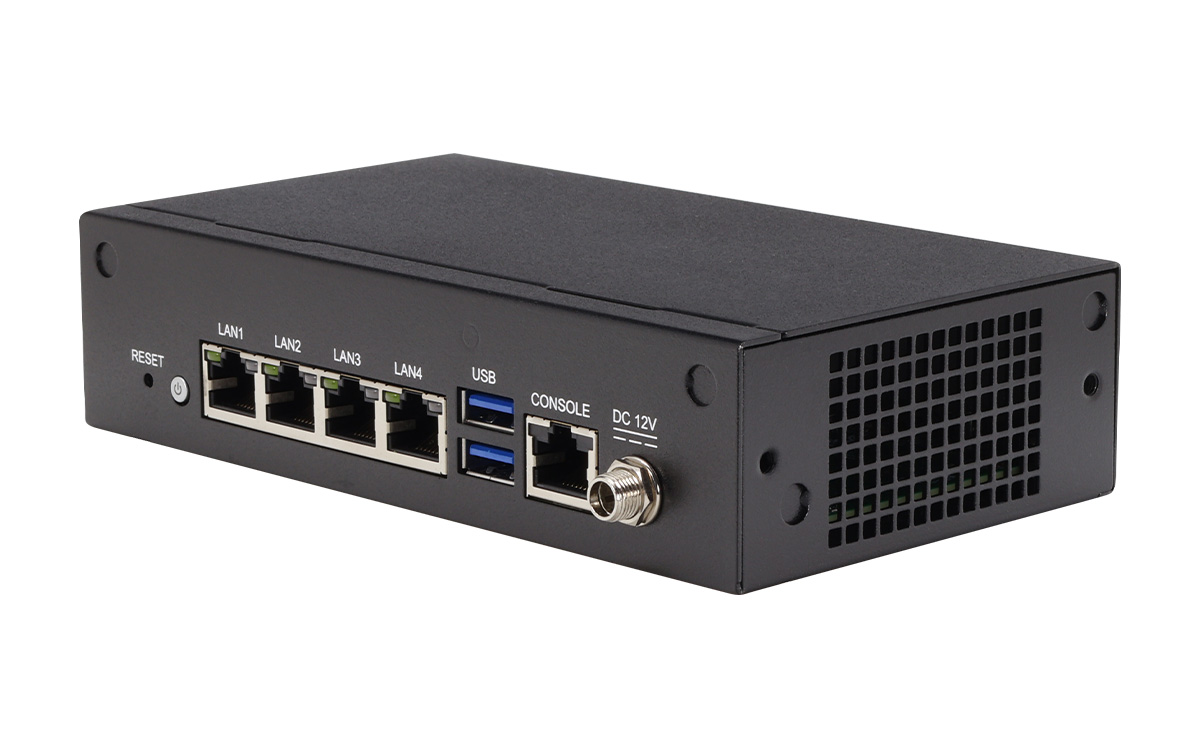
DEEPX has just launched the DX-AIPlayer, an ultra-compact edge AI mini PC with an Intel Processor “Alder Lake-N” N97 SoC and the company’s DX-M1 M.2 AI accelerator module. The system is designed for real-time vision AI applications in robotics, smart cities, and factory automation. We’ve seen plenty of Alder Lake-N mini PCs like the Jetway B420UADN1, the Avalue EPC-ASL, the AAEON UP 710S, and various others, but the DX-AIPlayer N97 is different as it integrates the DX-M1 module via an M.2 2280 M-Key (PCIe Gen 3 x4) slot. The NPU delivers up to 25 TOPS of INT8 AI performance while consuming only 1 to 5 Watts of power, and features 4GB of dedicated LPDDR5 memory to handle larger workloads and multi-model execution without bottlenecking the host system’s RAM. DEEPX DX-AIPlayer N97 specifications: SoC – Intel Processor N97 quad-core processor up to 3.6 GHz with 6MB cache, 24 EU Intel UHD graphics […]

Firefly AIBOX-K3 – An Edge AI mini PC powered by SpacemiT K3 RISC-V SoC

AIBOX K3 High Performance RISC V Edge Box

Back in July last year, SpacemiT unveiled the SpacemiT K3 SoC. After that, we saw some system information and early benchmarks come out around January this year. The company has just officially launched the K3 Pico-ITX SBC, which is now available through various distributors. Firefly has launched its own K3 hardware with the AIBOX-K3, a complete industrial-grade RISC-V edge computing box. The AIBOX-K3 Edge AI mini PC is built around the SpacemIT Key Stone K3 octa-core processor and features an integrated AI engine that delivers up to 60 TOPS of compute performance, making it suitable for local LLM inference and edge AI applications. Firefly AIBOX-K3 specifications: SoC – SpacemiT K3 CPU 8x 64-bit RISC-V X100 “big” cores clocked up to 2.4 GHz, RVA23 compliance; 130 KDMIPS performance (similar to RK3588) 8x RISC-V A100 AI Cores with support for up to 1024-bit RVV1.0 parallel computing, optimized for matrix operations. GPU – Imagination […]

Pi Slate – A Raspberry Pi 5 handheld Linux cyberdeck with a 5-inch 1280×720 touchscreen display

Pi Slate

We previously wrote about Carbon’s CyberT, a Blackberry-style Raspberry Pi CM4 handheld Linux cyberdeck designed for Kali Linux and penetration testing. The company, now operating under the CyberArch/Carbon Computers brand, has introduced the Pi Slate, a more powerful handheld cyberdeck designed for portable computing and security-focused applications. Built around the Raspberry Pi 5, the Pi Slate integrates a 5-inch 1280×720 touchscreen, a backlit RGB keyboard with an integrated cursor, and a 10,000 mAh battery for 3–5 hours of portable use in a compact enclosure. It supports modular expansion for HATs such as LoRa, SDR, AI accelerators, and M.2 storage, and includes cooling support, antenna mounts, and an optional modular back with a kickstand. It targets penetration testers, IT professionals, and field technicians needing a compact, preconfigured system for cybersecurity and field work. Pi Slate specifications: SBC – Raspberry Pi 5 with 2GB, 4GB, 8GB, or 16GB LPDDR4X RAM options Storage […]

6.67-inch flexible AMOLED display works with Raspberry Pi, LattePanda, and other SBCs with HDMI output

6.67-inch flexible display

DFRobot has introduced a 6.67-inch flexible AMOLED display with a 2400×1080 resolution, designed for easy use with single-board computers such as Raspberry Pi and LattePanda. While flexible displays are common in smartphones, they are difficult to interface with SBCs, so DFRobot added a dedicated MIPI-to-HDMI driver board for plug-and-play compatibility with a wider range of platforms. The panel is just 1.2mm thick and bendable, enabling curved and space-constrained designs, while delivering 450 cd/m² brightness and 16.7 million colors. Like typical OLEDs, it offers deep blacks and high contrast without requiring a backlight, making it suitable for applications ranging from wearables and robotics to industrial HMI systems. DFRobot 6.67” flexible AMOLED Display specifications: Compatibility – Raspberry Pi, Banana Pi, Orange Pi, and most devices with an HDMI output. Display Panel Screen Size – 6.67 inches Screen Material – Flexible AMOLED Resolution – 2400 x 1080 (SPR – Sub-Pixel Rendering) Aspect Ratio […]

FalCAN Probe is an open-source, STM32-based USB to CAN/RS-485/RS-422 adapter

FalCAN Probe v0

Most USB-to-bus adapters, including tools like CANTact Pro or MeatPi’s Ollie V1 and V2, typically support either CAN or RS-485/RS-422 as fixed-function serial devices. In contrast, the FalCAN Probe by Anders B. Nielsen is a multi-protocol USB adapter based on the STM32F042 microcontroller. The FalCAN Probe is a compact open-source USB Type-C board that connects a computer to CAN, RS-485, and full-duplex RS-422 networks. Instead of using a fixed USB bridge, it exposes the MCU’s native USB interface along with SWD and GPIOs, and can also be used as a small Arm Cortex-M0 development platform. FalCAN Probe specifications: MCU – STMicro STM32F042C6Tx Arm Cortex-M0 microcontroller @ 48 MHz with 32KB flash, 6KB SRAM Host Interface – USB 2.0 Full Speed via USB Type-C port Interfaces (non-isolated) CAN bus via Texas Instruments SN65HVD230 transceiver; enumerates as a GS_USB CAN device when jumper JP4 is open RS485 and full-duplex RS422 via dual […]