Graphics Category - CNX Software - Embedded Systems News

OpenCV 5 release – New DNN engine with enhanced ONNX and LLM/VLM support, Intel, Arm, and RISC-V hardware optimizations

OpenCV 5

OpenCV 5 open-source computer vision library has recently been released with a brand-new DNN (Deep Neural Network) engine that provides better ONNX coverage and enables LLM/VLM support. The fifth version of the popular CV library also adds support for Intel, Arm, Qualcomm, and RISC-V hardware acceleration, improved 3D vision, and various new core features such as new data types, real N-dimensional and scalar support, and performance improvements. OpenCV 5’s DNN Engine OpenCV 4.x supports about 22% of ONNX operators, and the new DNN engine in OpenCV 5 brings coverage to over 80%.  That means models with dynamic shapes that used to fail on OpenCV 4.x, should now work, as the 5.x engine was rebuilt around a typed operation graph with proper shape inference, constant folding, and operator fusion. The table below shows the main difference between OpenCV 4.x and OpenCV 5 Since it’s quite a big change, to make sure […]

ESPHome 2026.5.0 released with new ESPHome Device Builder (beta), performance/memory optimizations

ESPHome 2026.5.0 release

ESPHome 2026.5.0 has just been released with the beta version of the new ESPHome Device Builder web app that replaces the legacy in-tree dashboard with a real configuration editor, a firmware job queue, multi-select bulk actions, labels and areas, out-of-sync detection, cross-config search, distributed builds, and a proper settings UI. The firmware itself gains optimizations of the main loop, scheduler, and task watchdog to lower CPU and power usage on supported platforms, and a range of other memory/performance optimizations across the API, audio, and helper hot paths. The audio decoder pipeline has been improved and features new microMP3, microWAV, and microFLAC streaming libraries. OTA has also been enhanced with partition-table and bootloader updates, web-server OTA, and soft-brick recovery, and ESP32 MCUs are now handled by up to the ESP-IDF v6.0.1 framework natively, while Zigbee support has been expanded to ESP32 H2 and ESP32-C6, among other features. Key features of the […]

Khadas Mind Graphics 2 review – A powerful NVIDIA GeForce RTX 5060 Ti eGPU dock for the Mind 2 mini PC

Khadas Mind Graphics 2 review

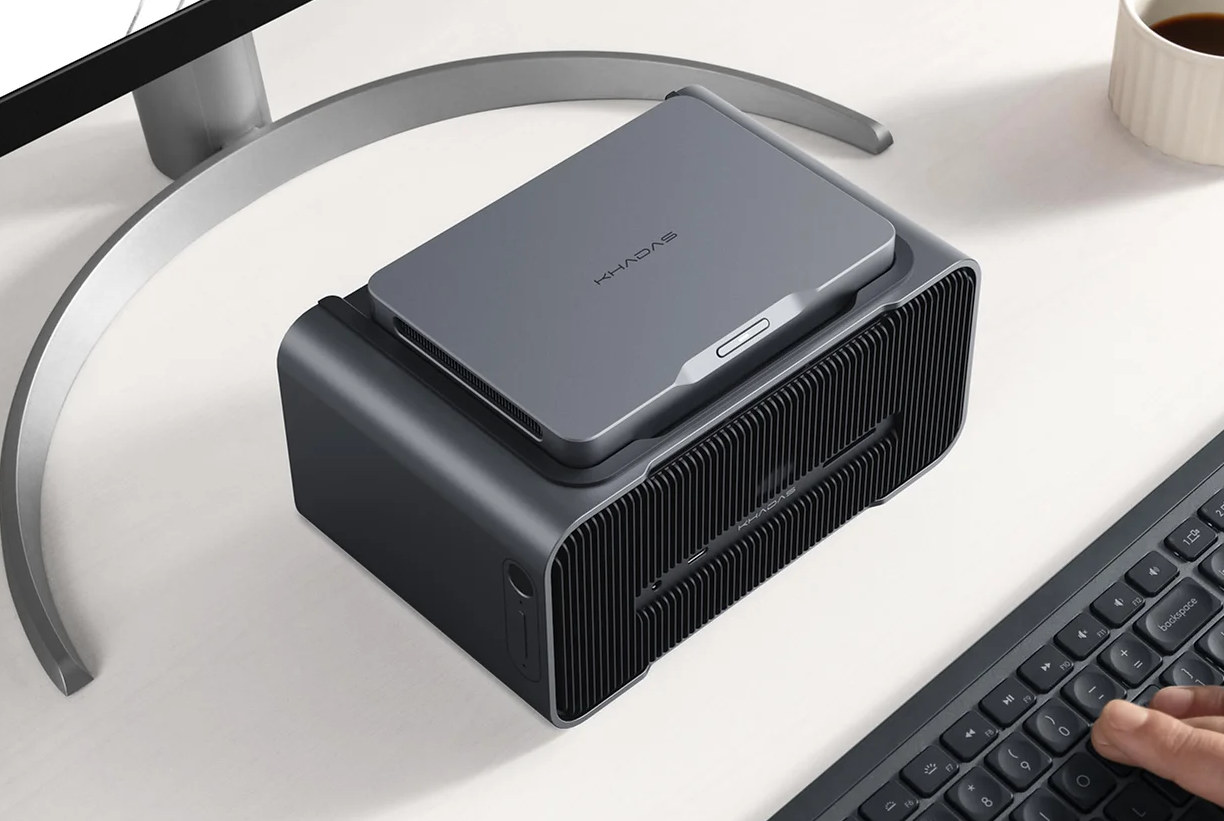
Earlier this month, I received the Khadas Mind 2 (Intel Core Ultra 7 155H) mini PC with two accessories connecting through the Mind Link (PCIe x8) connector: The Mind xPlay Display and Keyboard combo, and the Mind Graphics 2 dock, adding a range of interfaces and an NVIDIA GeForce RTX 5060 Ti GPU with 16GB of VRAM. After going through the specifications, an unboxing, and a partial teardown in the first part of the review, I tested the Mind xPlay using the Mind and Mind 2 mini PCs running Windows 11 and Ubuntu 24.04. I’ve now had time to test the Khadas Mind Graphics 2 dock with the Mind 2 mini PC running Windows 11, so I’ll report my experience with the NVIDIA GPU (3D graphics and AI), and test all features, including 2.5GbE networking, the built-in speakers, microphone array, and so on. A few gremlins and system info When […]

ESP32-S31 development boards unveiled for IoT, Smart Audio, and HMI applications

ESP32-S31 development boards

Two ESP32-S31 development boards are currently in the works, and the documentation is already available. The ESP32-S31 was unveiled last March, and it’s the most feature-rich ESP32 wireless microcontroller so far with two RISC-V cores, Gigabit Ethernet, 2.4 GHz WiFi 6, Bluetooth, and 802.15.4 connectivity, LCD and camera interfaces, and more. The ESP32-S31-Function-CoreBoard-1 development board is based on the ESP32-S31-WROOM-3 wireless module, and offers Gigabit Ethernet, USB 2.0 OTG, and onboard audio peripherals for connected IoT applications. The ESP32-S31-Korvo-1 is a multimedia-focused development board based on the same ESP32-S31-WROOM-3 module, but featuring a dual-microphone array for speech recognition and near/far-field wake-up, two speaker connectors, a 4.3-inch LCD, a 3MP camera module, and a microSD card slot. It targets low-cost, low-power, connected audio/video and HMI applications. ESP32-S31-Function-CoreBoard-1 development board Specifications: Wireless module – ESP32-S31-WROOM-3 SoC – ESP32-S31NRV16 CPU RISC-V HP (High-performance) RV32IMAFCP CPU @ 320 MHz with FPU, SIMD, etc. RISC-V […]

Mind xPlay display and keyboard review using Khadas Mind and Mind 2 mini PCs

Khadas xPlay connected to Crowview USB C display

In this review, I’ll report my experience with the Khadas Mind xPlay display and keyboard using the Mind and Mind 2 mini PCs, as well as a CHUWI CoreBook Air Plus 16 laptop to test it as a standard external display. Using Mind xPlay with the Mind 2 mini PC I received the Mind xPlay with the Mind 2 Meteor Lake mini PC, and I already showed how to connect it and get started in the first part of the review. So I’ll continue the review with it initially. I used the EIZO monitor test website to evaluate the display panel itself. I went through all 13 tests, including dead pixel and gradients tests. The pattern above looks fine too, so I compare the Mind xPlay monitor to the 16-inch display of the ASUS Vivobook 16 to find differences. Both were set to maximum brightness. The xPlay delivers noticeably more […]

Beelink EX Mate Pro – A multi-function USB4 v2 80 Gbps dock with 2.5GbE, M.2 sockets, 140W charger, voice communication system, and more

Beelink EX Mate Pro USB4 v2 dock

Beelink EX Mate Pro is a multi-function USB4 v2 (80 Gbps) dock featuring four PCIe Gen4 sockets for M.2 SSDs, integrating a 140W charger with 96W USB PD charging for a laptop or mini PC, 2.5GbE networking, HDMI and USB4 video output, and a built-in quad-microphone array and speaker for voice interaction. Other features include a second 15W PD USB4 v2 port to connect peripherals like an external GPU (eGPU) or display, Bluetooth connectivity to convert the dock into a wireless speaker, USB 3.0 and USB 2.0 host ports, and buttons for volume control, microphone mute, etc… Beelink EX Mate Pro specifications: Storage – 4x M.2 PCIe Gen4 x1 sockets for NVMe SSDs Video Output HDMI port up to 4Kp60 USB4 v2 port Up to two independent displays Audio Speaker Quad-mic array with 5-meter range connected to B1 AI noise-cancellation chip (likely referring to Alif Semi Balleto B1)  Bluetooth speaker […]

Review of Open Nextion ESP32-S3-based HMI displays with the Arduino IDE and the ESP-IDF framework

open nextion color compare 03

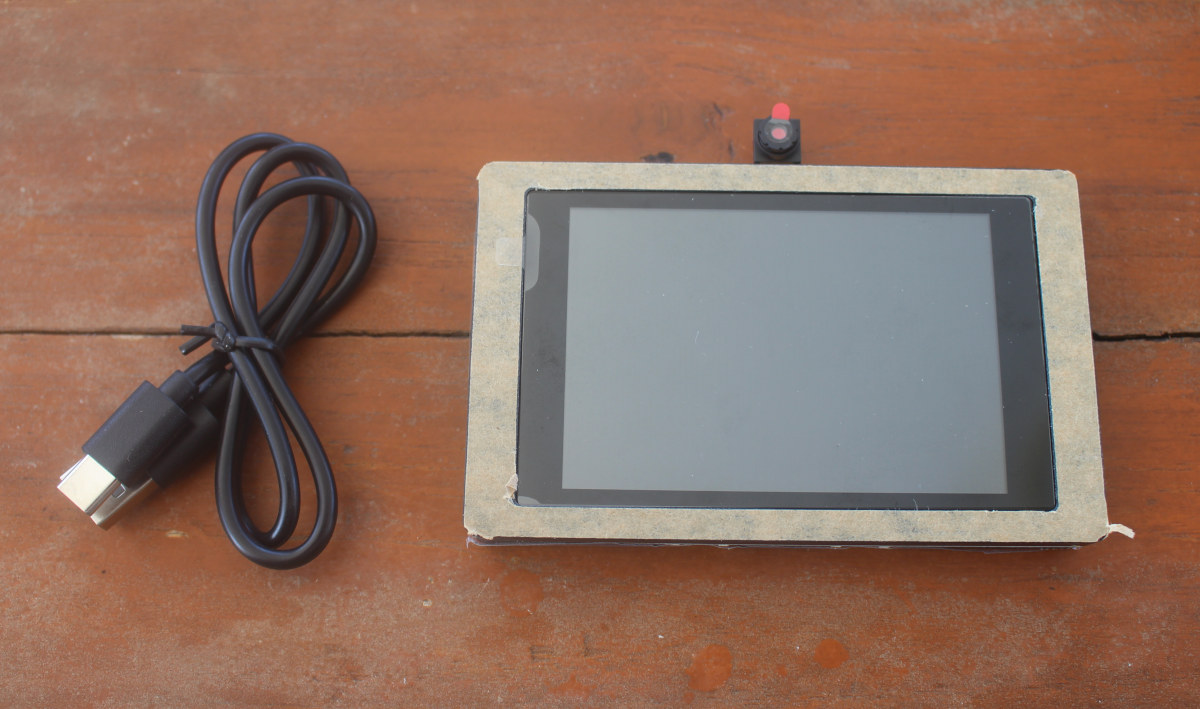
ITEAD has sent us samples of the Open Nextion ONX3248G035 and ONX2432G028 ESP32-S3 HMI displays for review. Open Nextion is a new product line that differs from the original Nextion HMI family, which relies on the Nextion Editor for UI design and UART communication for control. Instead, the Open Nextion features an ESP32-S3 wireless microcontroller handling logic processing, display control, and wireless connectivity, all in one integrated package. ITEAD fully supports the ESP-IDF framework and the Arduino IDE with LVGL graphics library support. The ONX3248G035 model features a 3.5-inch screen, while the ONX2432G028 variant has a 2.8-inch screen. The Open Nextion HMI wireless displays also take accessories such as a dual-microphone array, a speaker, and an I/Os adapter. The new Open Nextion product line is especially well-suited to embedded developers/makers who want an all-in-one board with HMI and wireless capabilities, IoT terminal and Smart HMI panel prototyping, students interested in […]

$199+ M5Stack AI Pyramid Computing Box Linux AI mini PC is based on Axera AX8850 SoC

Axera AX8850 Linux Mini PC 4GB RAM Transparent case

M5Stack has just launched the “AI Pyramid Computer Box” AI mini PC powered by an Axera AX8850 octa-core Cortex-A55 SoC with a 24 TOPS NPU and featuring an unusual design since it’s housed in a pyramidal enclosure. The mini PC features 4GB or 8GB of RAM, 32GB eMMC flash, a microSD card slot, two HDMI 2.0 ports (see specs for details), a 4-mic array, a built-in speaker, two Gigabit Ethernet ports, four USB 3.2 ports, and two USB-C ports for data and power. It serves as a desktop-grade Edge AI computing platform for systems such as AI vision gateways, smart security systems, and local smart photo albums. M5Stack AI Pyramid Computing Box specifications: SoC – Axera AX8850 CPU – Octa-core Cortex‑A55 processor at 1.7 GHz NPU – 24 TOPS @ INT8 VPU Video Encoder – 8K @ 30 fps H.264/H.265 encoding, supports scaling / cropping Video Decoder – 8K @ 60 fps H.264/H.265 decoding, supports 16 channels 1080p parallel decoding, […]