keyboard News - CNX Software - Embedded Systems News

Naya Connect modular mechanical keyboard offers trackball, touchpad, rotary encoder, and spacial controller options (Crowdfunding)

Naya Connect All In One Keyboard Ecosystem

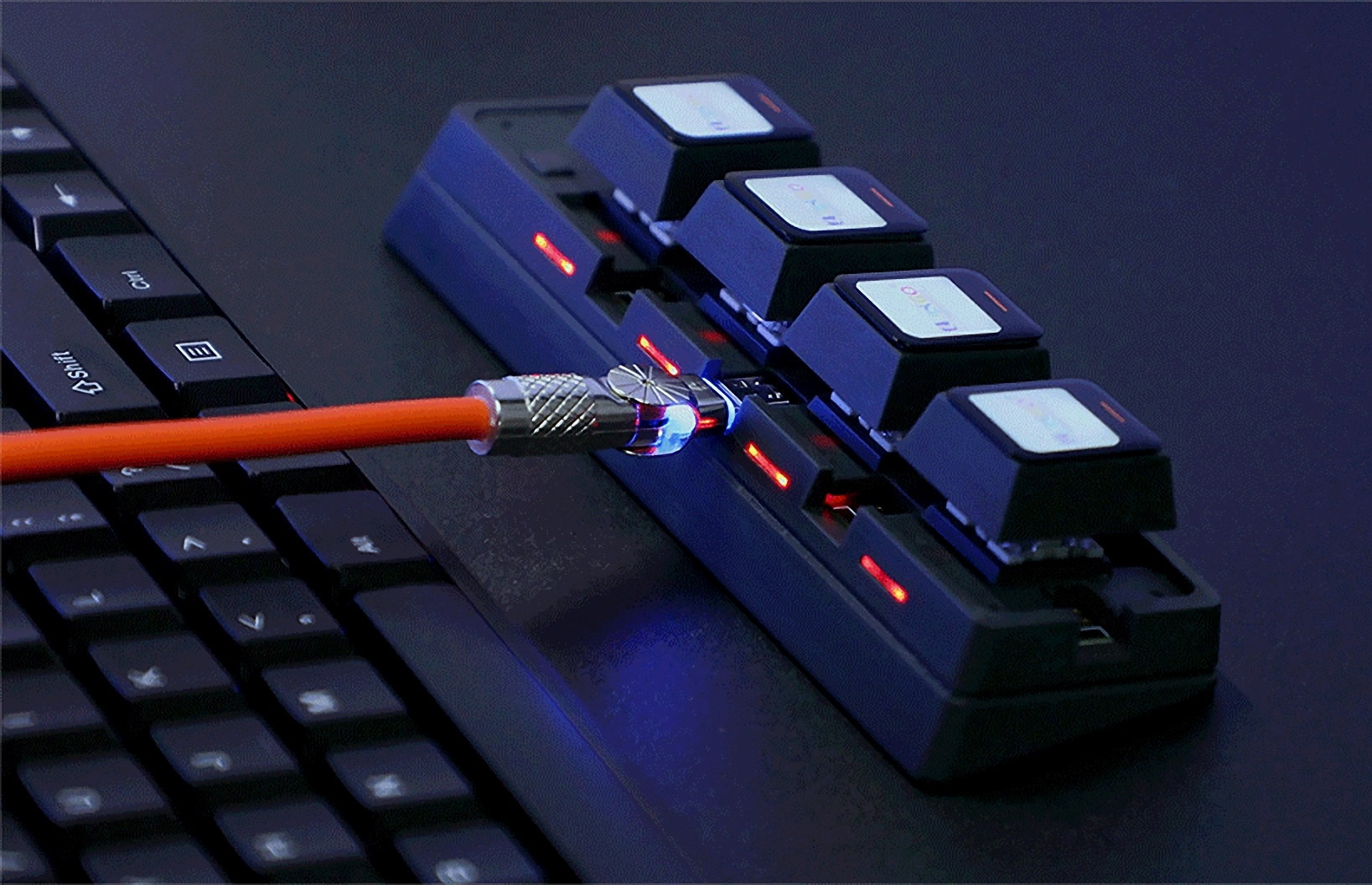
Dutch hardware startup Naya Create has launched the Naya Connect, a modular mechanical keyboard featuring magnetic connectors for additional keypads, and a dock to add a trackball, a multitouch touchpad, a rotary encoder, or a spatial controller. It is designed for 3D artists, video editors, audio professionals, and CAD engineers, as well as finance and business users. The core system, or the brain of the product, is the Naya Type, an 85-key mechanical keyboard in a 75% form factor with a 14.9 mm CNC aluminum unibody. It uses Kailh Choc V2 low-profile mechanical switches mounted on hot-swappable sockets and paired with dished polycarbonate shine-through keycaps with full RGB support. The keyboard supports QWERTY, QWERTZ, Colemak, Dvorak, and fully custom layouts via software remapping, while offering a 1,000 Hz polling rate in wired mode. A configurable spacebar allows users to switch between a standard single bar or a three-key split layout […]

UltraBar X – A high-end modular desktop smart-hub with a 5:1 ultra-wide touch display, magnetic snap-on modules (Crowdfunding)

UltraBar X modular desktop smart hub

The UltraBar X is a modular desktop command center/smart-hub built around an ultra-wide “CoreBar” touch display with a system of magnetically attachable input modules. Designed as an intelligent hub for Windows, macOS, and Linux environments, it also works as a smart home controller. With a 45-degree ergonomic tilt, wireless PC wake, smart-home integration, and modular touch/mechanical inputs, it gives creators, gamers, and power users quick access to all key functions. The whole system is built around the CoreBar hub and modular add-ons like VivoCube, DotKey, SenseCube, and KnobKey, all of which use the QuantumLink magnetic protocol for instant attachment and auto-detection. The CoreBar hub features a 5:1 touch display, LineOS firmware, Bluetooth Mesh, USB/HID connectivity, and an AI-driven SceneShift engine that adapts UI layouts and macros to different workflows. The four optional modules add AMOLED touch controls, Cherry MX keys, rotary knobs, and multi-sensor environmental sensing (mmWave radar, light, temperature, humidity, […]

Using the Raspberry Pi 500+ keyboard PC as a regular Bluetooth keyboard

Using Raspberry Pi 500+ as a Bluetooth Keyboard

While the Raspberry Pi 500+ is a fully functional Linux keyboard PC, it’s also possible to use it as a regular mechanical Bluetooth keyboard. This week, I had a problem with my regular Logitech wireless keyboard and mouse combo, so I sent it back to the shop for repair since it was still under warranty. Then somebody forgot the RF dongle for her own combo at home, so long story short, we ended up with one third spare keyboard for two people. Not ideal. But luckily, we just completed the review of the Raspberry Pi 500+ keyboard PC, so we had a spare mechanical keyboard, and the btferret project allowed us to use it as a Bluetooth keyboard, which I’m using right now to write this article. We could have used the Pi 500+ as a Linux machine directly, but we would have had to reinstall all the software we […]

Raspberry Pi 500+ mechanical keyboard PC review with Raspberry Pi OS “Trixie”

Raspberry Pi 500+ mechanical keyboard PC review

Today, we’ll review the Raspberry Pi 500+ mechanical keyboard PC using the recently released Raspberry Pi OS “Trixie” based on Debian 13.  It’s quite similar to the earlier Raspberry Pi 500 keyboard PC, but comes with more memory (16GB vs 8GB), a 256GB NVMe SSD, and a proper mechanical keyboard with replaceable caps and RGB LED lighting, so we’ll focus on these aspects during our tests, after going through the usual unboxing and teardown process. Raspberry Pi 500+ unboxing We received an early prototype of the Raspberry Pi 500+ keyboard PC with a UK layout, white design in a retail package. The bottom side of the package includes a list of features and confirmation that it’s indeed a UK layout keyboard. Not ideal for Thai users (we usually rely on the US layout), but that was probably the only layout available when Raspberry Pi sent us a sample in mid-September. […]

Waveshare MK20 macro keyboard features twenty mechanical keys with 0.85-inch color LCD keycaps

Waveshare MK20 Multi Functional AI Voice Control Panel

Waveshare MK20 is a multifunctional macro keyboard with twenty mechanical keys featuring 0.85-inch LCD keycaps. As an upgrade to the earlier MK10 model, it adds a 2.8-inch secondary display along with two control knobs. The device supports AI voice interaction, real-time data display, and smart home integration with Home Assistant. Like its predecessor, the MK20 relies on a dual-system architecture: an Allwinner T113-S3 dual-core Cortex-A7 processor runs Linux to drive the displays, and a GD32 microcontroller runs QMK for low-latency keyboard and knob input. Each LCD key offers 128×128 resolution and supports dynamic images, videos, and multi-layer overlays, while the 2.8-inch secondary display (428 × 142 resolution) provides status or customization information. The keyboard also includes two rotary encoders with aluminum caps for volume, playback, or timeline control. The device is built with an aluminum alloy top case and a 2.5D acrylic lens for durability. Waveshare MK20 specifications: Main Controller – Allwinner […]

M5Stack Cardputer-Adv ESP32-S3 computer gains improved antenna, larger 1,750 mAh battery, ES8311 audio codec

M5Stack Cardputer-Adv

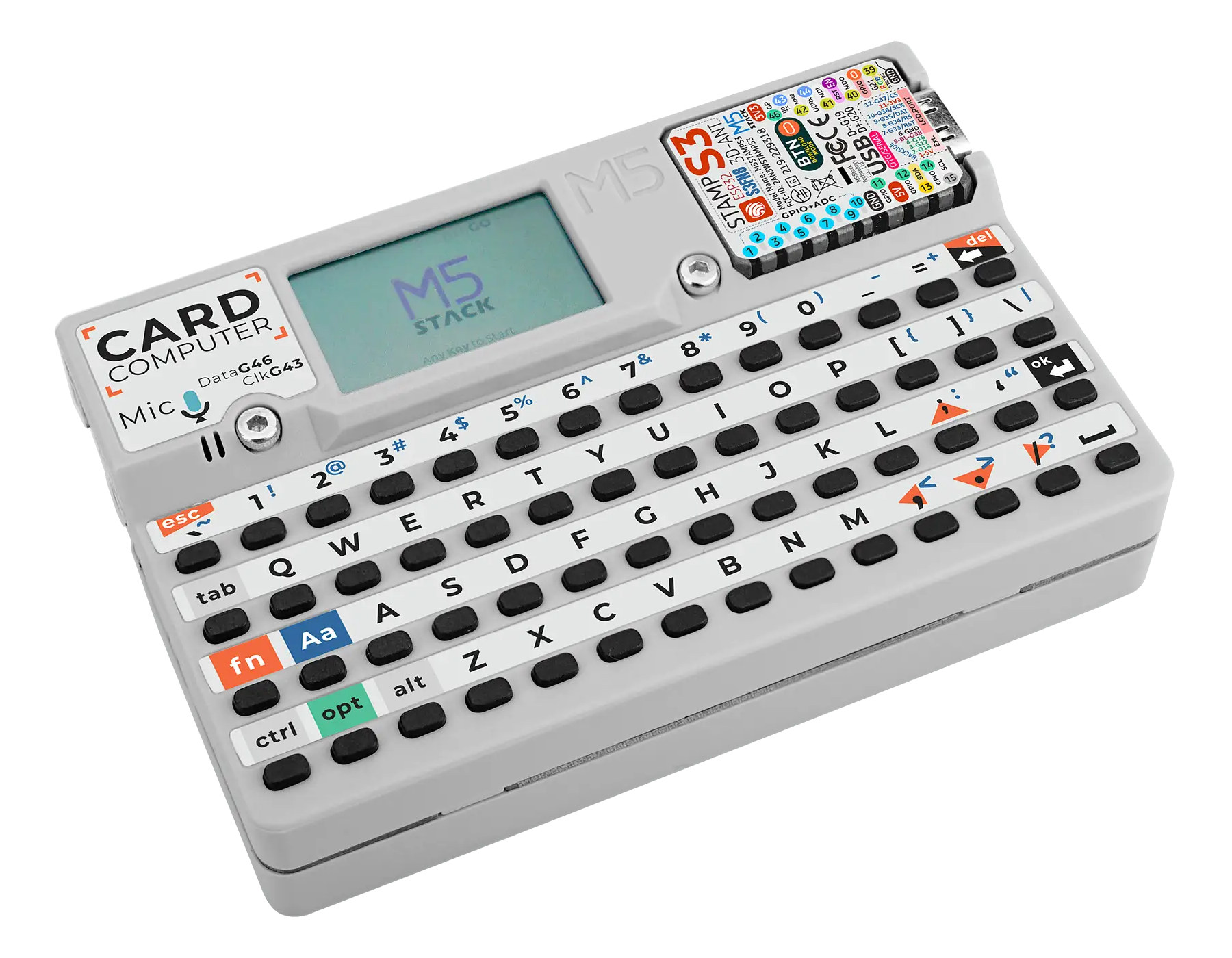
In 2023, M5Stack introduced the Cardputer, a mini portable computer based on an ESP32-S3 module and equipped with a display and a keyboard. The Cardputer-Adv is an update based on the Stamp-S3A core module, with the same 1.14-inch LCD and 56-key keyboard, but featuring a range of upgrades. These include enhanced audio with an ES8311 audio codec, a high‑SNR MEMS microphone, an NS4150B amplifier, a 1W speaker, and a 3.5 mm headphone jack, an improved antenna design, a larger 1,750 mAh battery, and a built-in BMI270 6-axis IMU. M5Stack Cardputer-Adv specifications: (bold highlights show improvements/changes over the original Cardputer) Wireless MCU module – M5Stack M5Stamp S3A with SoC – Espressif Systems ESP32-S3FN8 CPU Dual-core 32-bit Xtensa LX7 microcontroller with AI vector instructions up to 240MHz RISC-V ULP co-processor Memory – 512KB SRAM Storage – 8MB flash Wireless – 2.4GHz WiFi 4 (802.11b/g/n), Bluetooth 5.0 BLE + Mesh 2.4GHz 3D antenna USB […]

DDR4 supply/demand stress leads to Raspberry Pi CM4/CM5 price increases

Raspberry Pi Compute Module 5 price increase

The price of DDR4 memory has increased dramatically in recent months due to limited supply and increased demand for AI workloads. The Raspberry Pi Compute Module 4 and 5 (CM4/CM5) are based on LPDDR4 memory, and Raspberry Pi reports that memory costs are roughly 120% higher than they were just a year ago. So they have no choice but to increase the price by $5 to $10 for the CM4 and CM5, as well as the Raspberry Pi 500 keyboard PC. I assume the $200 price tag for the Raspberry Pi 500+ mechanical keyboard PC released last week already includes this new reality. Product affected: 4GB Compute Module 4 and Compute Module 5 variants increase by $5 8GB Compute Module 4 and Compute Module 5 variants increase by $10 Raspberry Pi 500 unit-only increases by $10 to $100 Raspberry Pi Development Kit for Compute Module 5 increases by $5 to […]

Raspberry Pi 500+ mechanical keyboard PC gets 256 GB NVMe SSD, 16GB RAM, RGB LED lighting

Raspberry Pi 500+ Keyboard PC

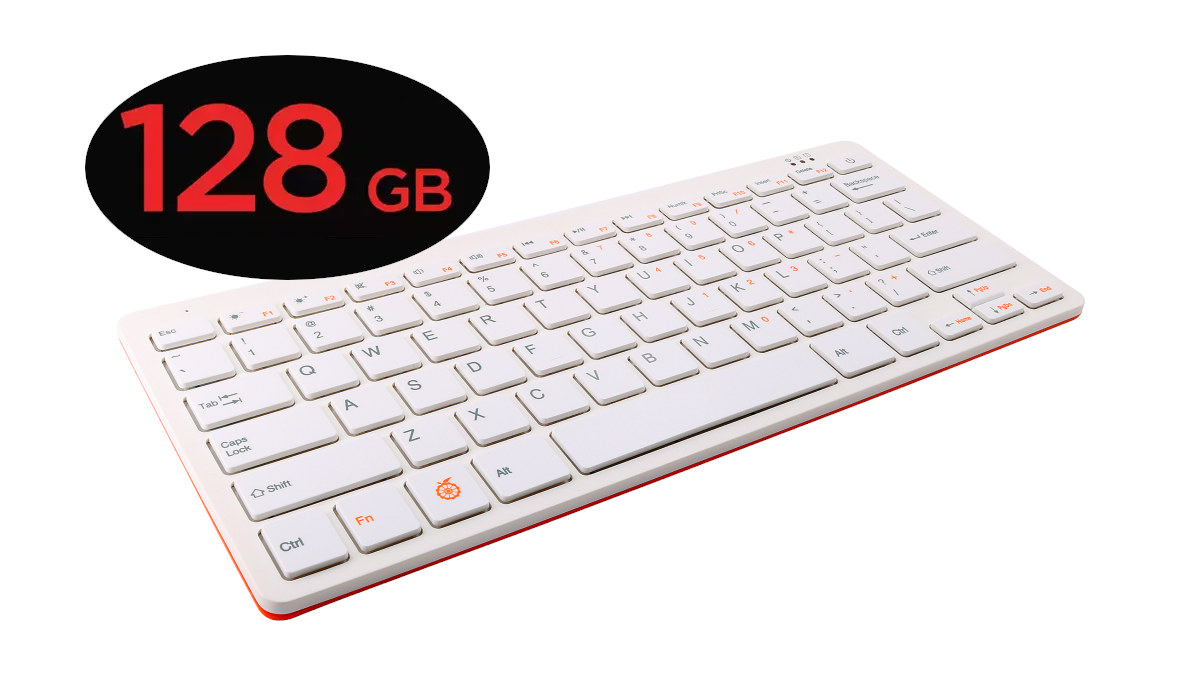
The Raspberry Pi 500+ is an upgrade to the Raspberry Pi 500 keyboard PC, getting a mechanical keyboard with RGB LED lighting, a 256GB NVMe SSD, and 16GB LPDDR4x memory. Apart from that, the rest of the ports and features are exactly the same for the new “Plus” model:  two 4K-capable micro HDMI ports, Gigabit Ethernet, WiFi 5 and Bluetooth 5.0, three USB ports, a microSD card slot, and a 40-pin GPIO header. Raspberry Pi 500+ specifications: SoC – Broadcom BCM2712 CPU – Quad-core 64-bit Arm Cortex-A76 processor @ 2.4GHz GPU – VideoCore VII GPU with support for OpenGL ES 3.1 graphics, Vulkan 1.2 VPU – 4Kp60 HEVC decoder System Memory – 16GB LPDDR4X-4267 SDRAM Storage 256 GB NVMe SSD preloaded with Raspberry Pi OS; connected to M.2 PCIe 2280 socket MicroSD card slot Video Output – 2x micro HDMI ports up to 4Kp60 Networking Gigabit Ethernet RJ45 port Dual-band […]