zigbee News - CNX Software - Embedded Systems News

Telink ML9118A – A 32-bit RISC-V IoT module with Wi-Fi 6, Bluetooth 5.4, and 802.15.4 connectivity

Telink ML9118A WiFi 6 IoT module

Telink ML9118A is a wireless IoT module with Wi-Fi 6, Bluetooth 5.4, and 802.15.4 (Zigbee/Thread/Matter) connectivity designed for smart home, smart lighting, and smart remote control applications. The module also features a 32-bit RISC-V microcontroller clocked at 160 MHz with 576KB SRAM, 4MB flash, and various peripheral interfaces such as SDIO 3.0, 19x GPIOs, I2C, SPI, UART, as well as I2S for audio. Telink ML9118A module (ML9118A-GAIA-M0-PG12) specifications: MCU – 32-bit dual-core RISC-V MCU @ 160MHz Memory – 576KB SRAM Storage – 4MB embedded flash Wireless 2.4 GHz Wi-Fi 6 IEEE 802.11 b/g/n/ax with support for DL/UL OFDMA, RX STBC, TWT, etc… Bluetooth 5.4 LE up to 2 Mbps bit rate 802.15.4 radio for Matter 1.3, Zigbee 3.0 compatible with ZHA and ZLL, Thread 2.4GHz proprietary – Supports Matter over Wi-Fi and Thread Tx Power – 15dBm @ Bluetooth LE mode Rx Sensitivity -88dBm @ 11B CCK 11Mbps -76dBm @ […]

LR2021 LoRa Plus board combines Semtech LR2021 and Nordic nRF54L15 for high-speed FLRC and LoRa connectivity

Semtech LR2021 LoRa Development Board

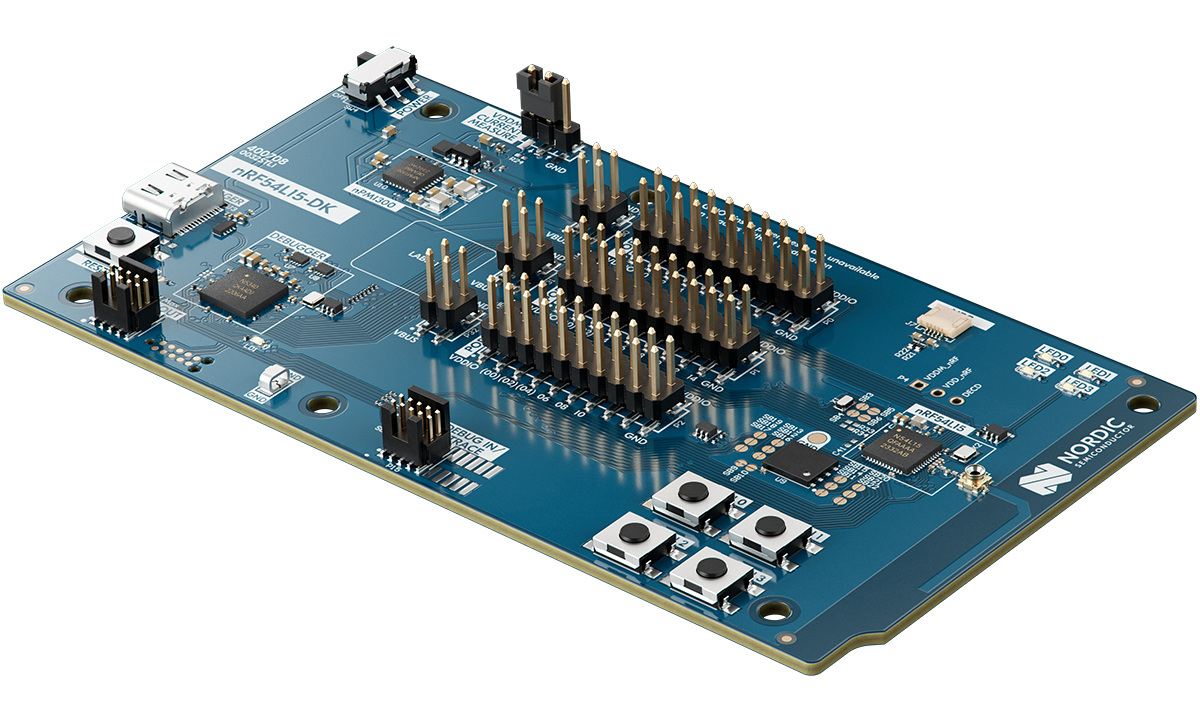
Last year, Semtech released the LR2021 LoRa Plus transceiver chip, designed to address the low data-rate issue associated with LoRa, but surprisingly, they didn’t release a development board for the chip. Now, almost a year later, Seeed Studio and Semtech have partnered to introduce the LR2021 LoRa Plus development kit targeting long-range high-speed LoRa and FLRC applications up to 2.6 Mbps. Not only does the board support LoRa Gen 4 technology, providing Sub-GHz, 2.4 GHz ISM, and S/L-band operation, but a XIAO nRF54L15 board also adds dual-core processing (Arm Cortex-M33 + RISC-V) and supports other short-range protocols, including NFC, Bluetooth LE 6.0, Matter, Thread, and 2.4 GHz proprietary protocols. The development board also features a 0.96-inch 128×64 OLED, three Grove connectors for expansion, a USB Type-C for power, SWD debugging, and two Sub-GHz and 2.4 GHz SMA connectors. It is compatible with Arduino Uno, STM32 Nucleo, and Nordic DK boards. […]

ESP32 Marauder 5G – Apex 5 module for Flipper Zero combines ESP32-C5, two Sub-GHz radios, nRF24, and GPS

ESP32 Marauder 5G

Designed by HoneyHoneyTrading, the ESP32 Marauder 5G – Apex 5 Module is an ESP32-C5-based hacking and penetration testing tool for the Flipper Zero, with dual-band WiFi 6 (2.4GHz and 5GHz), two Sub-GHz radios (868MHz and 433MHz), an NRF24 radio, and a built-in GPS. This new Flipper Zero module can be considered an upgrade from the ESP32 Marauder – Double Barrel 5G, as it does not rely on a dual-chip configuration for 5 GHz operation, leveraging the ESP32-C5 dual-band capabilities instead. A microSD card slot handles storage, and the device can also save data directly to the Flipper Zero’s microSD card. It also features five antennas, including WiFi, Sub-GHz, nRF24, and GPS, along with dedicated LED indicators for the Sub-GHz radios and nRF24 activity. There is also a hardware button to toggle 433 MHz and 868 MHz Sub-GHz operation, a USB-C port, and a side button for power management and firmware […]

Texas Instruments to acquire Silicon Labs

Texas Instruments acquires Silicon Labs

Texas Instruments will acquire Silicon Labs for $231.00 per share, representing a total enterprise value of approximately $7.5 billion. The transaction is expected to complete in the first half of 2027, subject to receipt of regulatory approvals and other conditions. Silicon Labs wireless chips are fairly popular in Smart Home applications with Zigbee, Thread, and Matter connectivity, as well as low-power Bluetooth LE wearables and industrial Sub-GHz or 2.4 GHz IoT applications. I can still remember when Silicon Labs purchased Energy Micro in 2013, taking over the EFM32 Gecko MCU family, and about 13 years later, the company is changing hands again. Texas Instruments explains the rationale behind the solution as follows: The acquisition will create a global leader in embedded wireless connectivity solutions by combining Silicon Labs’ strong portfolio and expertise in mixed signal solutions with Texas Instruments’ leading analog and embedded processing portfolio and internally owned technology and […]

Qualcomm IPQ5424 embedded router board supports 22 Gbps tri-band Wi-Fi 7 and dual 10GbE networking

Qualcomm IPQ5424 router SBC

Wallys Communications’ DR5424 is a new embedded router board powered by a Qualcomm IPQ5424 quad-core Cortex-A55 SoC (aka Dragonwing NPro A7 Platform) and offering tri-band Wi-Fi 7 connectivity up to around 22 Gbps, along with two 10 GbE RJ45 ports and four 2.5GbE RJ45 ports for wired networking. Based on Qualcomm AP.MI01.2 reference design, the board also features 4GB or 8GB DDR4 memory, 256MB NAND flash, and 32MB NOR flash, as well as a USB 3.0 port, a USB 2.0 port, and JTAG and serial debug ports. Target applications include Wi-Fi 7 (802.11be) access points, Internet of Things (IoT) gateways, and HD streaming and gaming.   Qualcomm AP.MI01.2 specifications: SoC – Qualcomm IPQ5424 (Qualcomm Dragonwing NPro A7 Platform / NPA7) CPU – Quad-core Cortex-A55 “Marina” processor @ up to 1.5 GHz (Wallys) or 1.8 GHz (Qualcomm and Compex) Accelerator – Integrated accelerator designed for AI models specific to Wi-Fi and […]

SONOFF Dongle Max (Dongle-M) Review – A Zigbee/Thread PoE, USB, and WiFi adapter tested with Home Assistant

SONOFF Dongle Max Dongle-M review with Home Assistant Zigbee2MQTT ZHA

SONOFF sent us a sample of the SONOFF Dongle Max (also known as Dongle-M) Zigbee/Thread adapter with PoE support for review. It is based on Espressif ESP32-D0WDR2-V3 and Silicon Labs EFR32MG24 SoCs, and can serve as both a Zigbee coordinator and Thread Border Router, with connectivity options including Ethernet, Wi-Fi, and USB. The dongle is specifically designed for popular smart home platforms like Home Assistant, Zigbee2MQTT, ioBroker, and OpenHAB. Key advantages of the Dongle Max over the recently reviewed Dongle Plus MG24 include built-in Wi-Fi and Ethernet support (in addition to USB), Power over Ethernet (PoE), and a convenient Web Console for easier device configuration. It basically provides more flexibility thanks to a wider range of connection options, and it’s easier to place it in strategic locations since it doesn’t need to be connected directly to your Home Assistant server. In this review, we’ll go through the unboxing, initial setup, […]

ESPHome 2026.1.0 optimizes memory usage on ESP32/ESP8266, adds Zigbee support on nRF52, WiFi roaming, and more

ESPHome 2026 1.0 firmware release

ESPHome 2026.1.0 open-source firmware has just been released with new features like automatic WiFi roaming and Zigbee support for Nordic Semi nRF52 targets, as well as memory optimization for ESP32/ESP8266 hardware, among many other changes. Other notable changes include security updates with the project replacing API password authentication with API encryption and requiring SHA256 authentication for OTA updates, better support for non-ASCII configuration, and updates to LibreTiny platforms (BK72xx, RTL87xx, LN882x), which received thread-safe WiFi, atomics, and deep sleep support. ESPHome developers used to advise users not to use ESP8266, not because it was not suitable for the task, but because the runtime heap on ESP8266 routinely dropped below 10k, and devices were unreliable. Since millions of ESP8266 devices were already deployed in homes, they decided to do something about it. The project was greatly helped thanks to increased support from the Open Home Foundation, which allows the project to […]

M5MonsterC5 hacking tool adds ESP32-C5 and 5 GHz Wi-Fi 6 support to M5Stack Cardputer ADV and Tab5

M5MonsterC5 M5Stack Carputer ADV

Developed by Laboratorium in Poland, the M5MonsterC5 is an ESP32-C5-based “Marauder” hacking tool designed to work with M5Stack Cardputer ADV or M5Stack Tab5. It gets connected to the Cardputer ADV or Tab5 via a Grove connector and runs JanOS and Project Zero for wireless security research, experimentation, and rapid prototyping with minimal setup. Built around the ESP32-C5, the device supports dual-band Wi-Fi 6 (2.4/5-GHz) and 802.15.4 (Thread/Zigbee) to the M5Stack devices. Key features include multi-channel deauthentication with 5 GHz support, Evil Twin and phishing captive portals, WPA3 SAE overflow attacks, wardriving with GPS logging and WiGLE-compatible exports, passive sniffing, Karma attacks, whitelist management, and persistent “blackout” modes. The platform uses a two-stage web-based flashing process (JanOS on the Monster board and a Cardputer app flasher), offers microSD card and optional GPS support, and is intended strictly for authorized Wi-Fi auditing, offensive security research, and educational use under the Project Zero […]