Morse Micro MM8108-M20 high-power Wi-Fi HaLow module delivers up to 28.5 dBm Tx output power

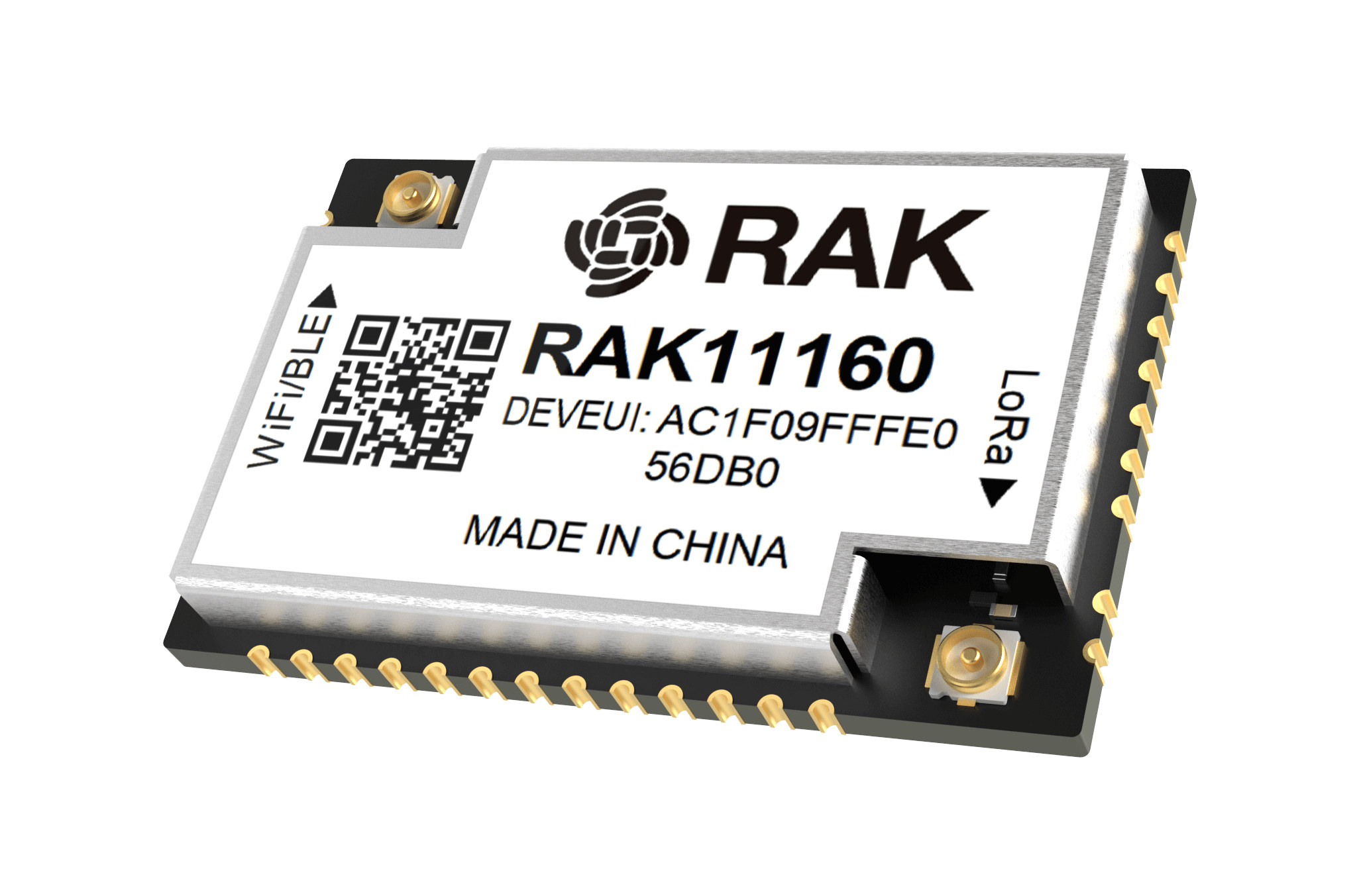
Morse Micro MM8108-M20 high-power WiFi HaLow Module

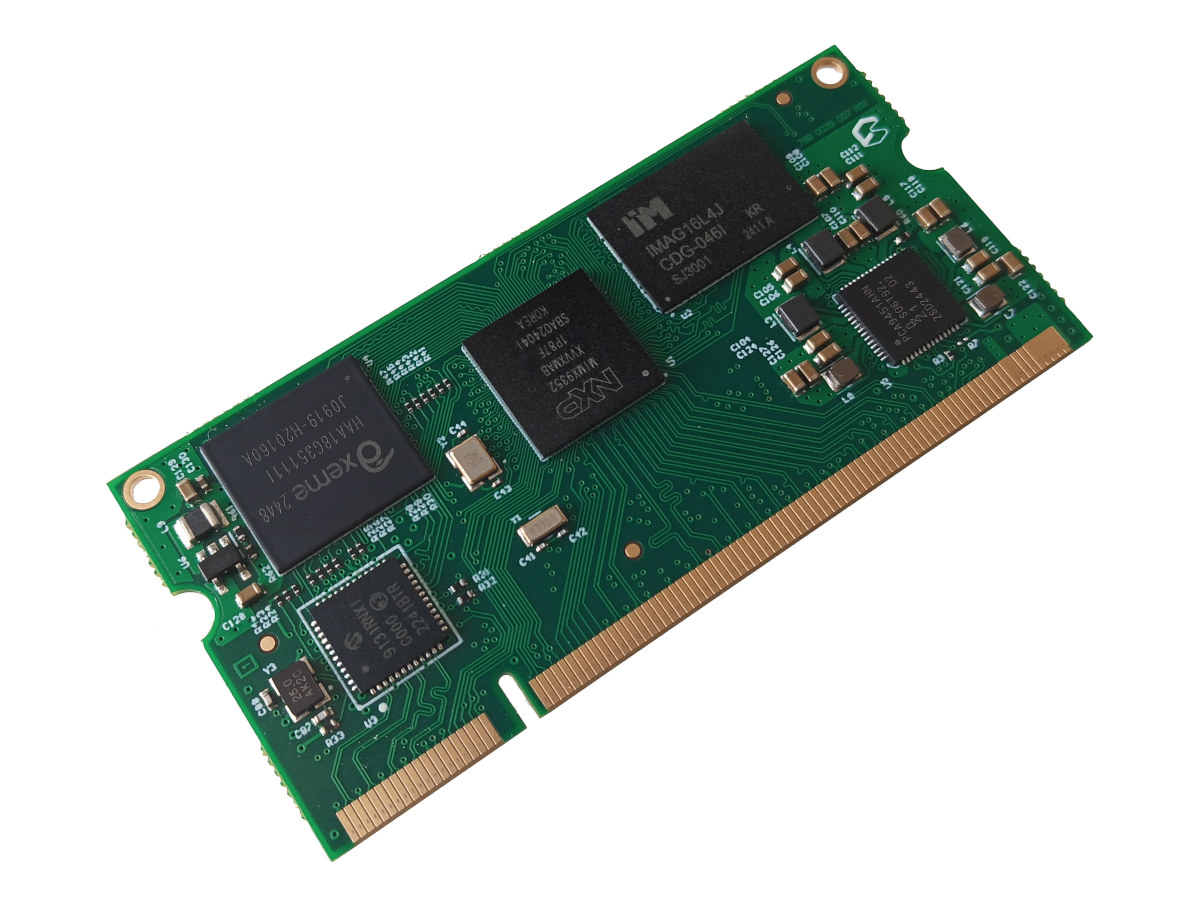
Morse Micro MM8108-M20 is a high-power Wi-Fi HaLow module based on the MM8108 SoC and a high-power amplifier delivering up to 28.5 dBm transmit output power, alongside a surface acoustic wave (SAW) filter tuned for the 902-928 MHz band of the North American market. Other MM8108 modules, such as the Quectel FGH200M Wi-Fi HaLow module, are limited to 26 dBm Tx power, but US and Canada regulations enable higher power transmissions, and by extension longer range. The obvious downside of the MM8108-M20 is that it might be outright illegal or may require a special license in other countries. Morse Micro MM8108-M20 specifications: SoC – Morse Micro MM8108 32-bit RISC-V Host Applications Processor (HAP) Standard – IEEE802.11ah Wi-Fi HaLow Frequency band – 850-950 MHz (Worldwide sub-1 GHz license-exempt range) Operating Modes – Access Point (AP) and Station (STA) Channel Width – 1/2/4/8 MHz Modulation – BPSK, QPSK, 16QAM, 64QAM, 256QAM. Data rate […]

Nordic adds AI-assisted development to the nRF Connect SDK and nRF Cloud

Nordic Semi AI assisted development​

Nordic Semiconductor has added AI-assisted development to its wireless IoT microcontroller, with workflows covering the full life cycle from the first prototype to a deployed fleet. Many developers copy/paste information from LLMs trained on generic data. However, Nordic’s AI solution is specifically trained on the nRF Connect SDK documentation and nRF Cloud data and integrates with a developer’s favorite IDE. It also connects to Claude Code, Cursor, GitHub Copilot, or any other LLM at a much lower token cost thanks to the specialized model. The company says it’s based on an implementation of the Model Context Protocol (MCP), where the Nordic MCP servers give AI assistants access to validated sources from Nordic, including SDK documentation, API references, device configurations, and the customer’s field data from nRF Cloud. Highlights of Nordic’s AI-assisted development Connected to nRF Connect SDK documentation and nRF Cloud data Integrates with AI assistants such as Claude Code, […]

ASUS Ascent QN10 mini PC is powered by Qualcomm Snapdragon X2 Elite 18-core Armv9 processor

ASUS Ascent QN10

ASUS Ascent QN10 is the first mini PC powered by a Qualcomm Snapdragon X2 Elite 18-core Armv9 processor with 80 TOPS of AI performance for Windows CoPilot+ PCs. The powerful Arm computer ships with up to 32GB LPDDR5 memory and a 512GB to 2TB NVMe SSD. It supports up to four video outputs through one HDMI and three USB4 (40 Gbps) ports, and offers 2.5GbE and WiFi 7 networking, an audio jack, and a few extra USB 3.2/2.0 ports. ASUS Ascent QN10 specifications:  SoC – Qualcomm Snapdragon X2 Elite (Glymur 8480B / X2E-88-100) CPU – 18x Armv9 cores with 12 Prime cores up to 4.7 GHz (single/dual core) / 4.0 GHz (multicore), and 6 Performance cores up to 3.4 GHz GPU – Adreno X2-90 @ 1.70 GHz with support for DirectX 12.2 Ultimate, Vulkan 1.4, OpenCL 3.0 VPU Encode: HEVC, AVC: Dual 8K UHD @ 30 FPS, AV1: 8K UHD […]

Sharpa Wave is a high-end dexterous robotic hand with 22 DoF, high-sensitivity dynamic tactile array

Sharpa Wave dexterous robotic hand

NVIDIA just announced the Isaac GR00T Reference Humanoid Robot in a half-baked press release for Computex 2026, with an “available-soon reference workflow” and availability sometime by the end of the year with the Unitree H2 humanoid chassis. One component of the kit that appears to be available now, albeit in limited quantity, is the Sharpa Wave high-end dexterous robotic hand with 22 degrees of freedom (DoF) and a dynamic tactile array (DTA) on each finger, enabling it to feel objects as lightweight as a butterfly. Sharpa Wave robotic hand highlights: 1:1 scale human form – The palm width to hand length ratio is approximately 0.618, enabling the Wave to manipulate the same tools as humans. 22 active Degrees of Freedom – Isomorphic design mirroring the human hand Dynamic Tactile Array (DTA) powered by a proprietary neural network-based algorithm and sensing modules to enable detection of tight objects (like a butterfly) […]

Waveshare RP2350B-Plus-W – A Raspberry Pi Pico 2 W-sized board with 41 GPIOs, 16MB flash, USB-C port

Waveshare RP2350B-Plus-W

Waveshare RP2350B-Plus-W is a development board that follows the Raspberry Pi Pico 2 W form factor, but offers 41 GPIOs thanks to the RP2350B MCU, integrates 16 MB of flash, and includes a USB-C port. So, in several ways, it’s an upgrade over the RP2350A-based official board, which offers only 26 GPIOs via two 13-pin GPIO headers, 4MB of flash, and a micro USB port. Since it’s the same size, where do the extra GPIOs come from? Answer: The company simply added 15 pads to the bottom of the board, not quite as convenient since it’s requires soldering, but it does the job.   Waveshare RP2350B-Plus-W specifications: SoC – Raspberry Pi RP2350B CPU Dual-core Arm Cortex-M33 @ 150 MHz with Arm Trustzone Dual-core RISC-V Hazard3 @ 150 MHz Only two cores can be used at any given time Memory – 520 KB on-chip SRAM Package – QFN-80 Memory – Footprint […]

Radxa’s 2026 Qualcomm hardware: Dragon Q8B and Q5E SBCs, DragonStation and DragonBay NAS systems

Radxa Dragon Q8B

Radxa started its partnership with Qualcomm last with the Dragon Q6A SBC, but it turns out it was just the start, and the company showcased more Qualcomm SBCs and NAS systems at a Radxa + Qualcomm developer day on May 30, 2026. The Radxa Q8B SBC will be based on a Qualcomm Snapdragon 8cx Gen3 octa-core SoC and the Q5E SBC on a Dragonwing QCS6690 octa-core Kryo SoC. The company also teased DragonStation and DragonBay NAS systems, and a 2026 roadmap features a total of 22 Qualcomm systems made by Radxa. Radxa Dragon Q8B Dragon Q8B specifications: SoC – Qualcomm Snapdragon 8cx Gen 3 compute platform Octa-core CPU – 4x 3.0 GHz Kryo Prime cores, 4x 2.4 GHz Kryo Efficiency Cores GPU – Adreno 690 GPU with DirectX 12 (DX12) API support DSP – Qualcomm Hexagon Processor, Qualcomm Sensing Hub AI – Qualcomm Neural Processing Engine SDK support for AI […]

ODROID-H5 Review – Part 2: A dual 10GbE mini PC tested with Ubuntu 26.04

ODROID-H5 review dual 10GbE Ubuntu 26.04

I received a kit for review last week with an ODROID-H5 SBC, a Type1 case, an M.2 10GbE module, and other accessories. In the first part of the review, I went through an unboxing, assembled the kit, and tested whether it could boot an M.2 NVMe SSD with Ubuntu 24.04 and Windows 11. I’ve now updated the system to Ubuntu 26.04, run a few benchmarks, tested the two 10GbE RJ45 ports, as well as other features. I’ll report my experience about all that today. Upgrading from Ubuntu 24.04 to Ubuntu 26.04 The 512GB M.2 NVMe SSD I use in the ODROID-H5 comes from a laptop, which I upgraded with a 2TB SSD. That means the operating systems were not upgraded for a few months. While Ubuntu 24.04 could boot, it would not show the two 10GbE interfaces. That’s because the required drivers were not available in the version of Ubuntu […]

PCMFlow722 library enables two-way real-time HD voice over ESP-NOW with G.722 audio codec

ESP-NOW two-way HD audio communication

Tanaka Masayuki’s PCMFlow722 library enables (half-duplex) two-way real-time HD voice over ESP-NOW on ESP32 boards with a speaker and a microphone, effectively transforming them into walkie-talkies. The library implements a G.722 wideband codec add-on for PCMFlow lightweight audio decode and PCM flow library for Arduino, which already supports uncompressed PCM, MP3, and FLAC audio codecs. PCM and FLAC take too much bandwidth over ESP-NOW, and MP3 is not suitable for real-time audio, so the legacy G.722 audio codec was selected instead. The keyword here is “HD voice,” since two-way audio over ESP-NOW was previously implemented in projects such as Atomic14’s esp32-walkie-talkie (5 years ago) and, more recently, the well-documented Adafruit ESP-NOW Walkie-Talkie project, but these typically rely on lower-quality G.711 audio or compressed audio. The PCMFlowG722 library and G.722 codec enable HD voice with “7 kHz audio at 16 kHz sampling using the same 64 kbps wire budget as G.711 […]

Exit mobile version