AsteroidOS 2.0 Linux-based, open-source smartwatch operating system has just been released with features such as always-on display support, Tilt-to-Wake, a customizable QuickPanel, multiple launcher styles, Nightstand mode, performance improvements, and support for about 30 devices. It’s been a long journey. We first noted the open-source project in 2016 when Florent Revest showcased a basic user experience on the LG G Watch, just before giving a talk at FOSDEM 2016 introducing AsteroidOS. This was followed by the launch of the Connect Watch (crowdfunded) AsteroidOS smartwatch in 2017 by a French company (which didn’t get funded), and AsteroidOS 1.0 was released in 2018. So it’s been ten years since it all started, and the developers have now released AsteroidOS 2.0. AsteroidOS 2.0 highlights: New features Always-on Display, Tilt-to-wake, Palm-to-sleep Heart rate monitor app Initial step counting support Music volume control Compass support Support for Bluetooth HID and Audio Design, Usability, and App Improvements […]
Radxa Orion O6 Review – Part 1: Unboxing, Debian 12 installation, and first benchmarks
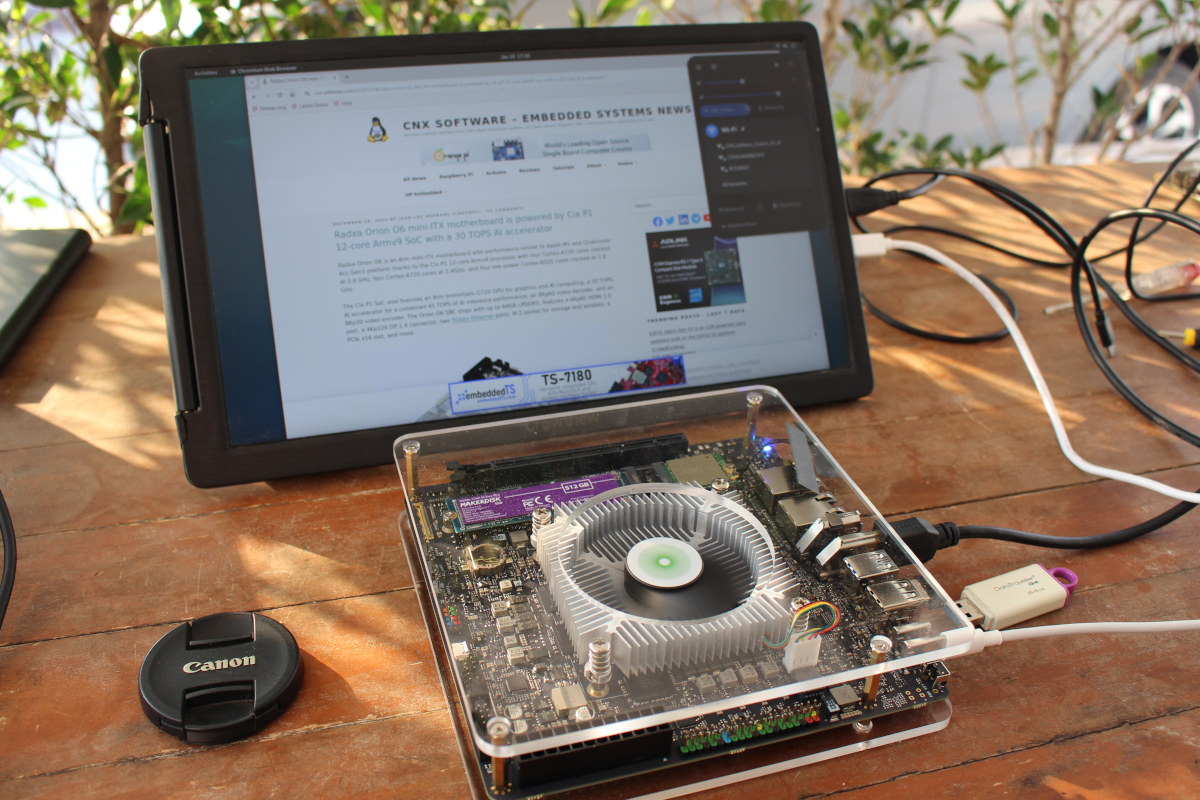
Radxa sent me a sample of the Orion O6 mini-ITX motherboard for review. The system is powered by an CIX P1 (CD8180) 12-core Armv9 processor, equipped with 16GB RAM, and offers features like 5GbE, HDMI and DisplayPort, a PCIe Gen4 x16 slot, and more. It’s one of the most anticipated boards of the first part of 2025 since it’s powerful, offers a good performance/value ratio, and eventually promises to boot any ISO Arm64 image through an open-source BIOS / EDKII bootloader. I’ll start this review with an unboxing, NVMe SSD and WiFi module installation, and a short tutorial showing how to install Debian 12 operating systems before getting some system information and running a few benchmarks. In a few weeks, I’ll publish a more detailed review with features testing and more benchmarks to see what works and what doesn’t at this very early stage. Radxa Orion O6 unboxing I received […]
Disabling VT-d improves Intel Arc GPU Linux performance on Meteor Lake and newer SoCs
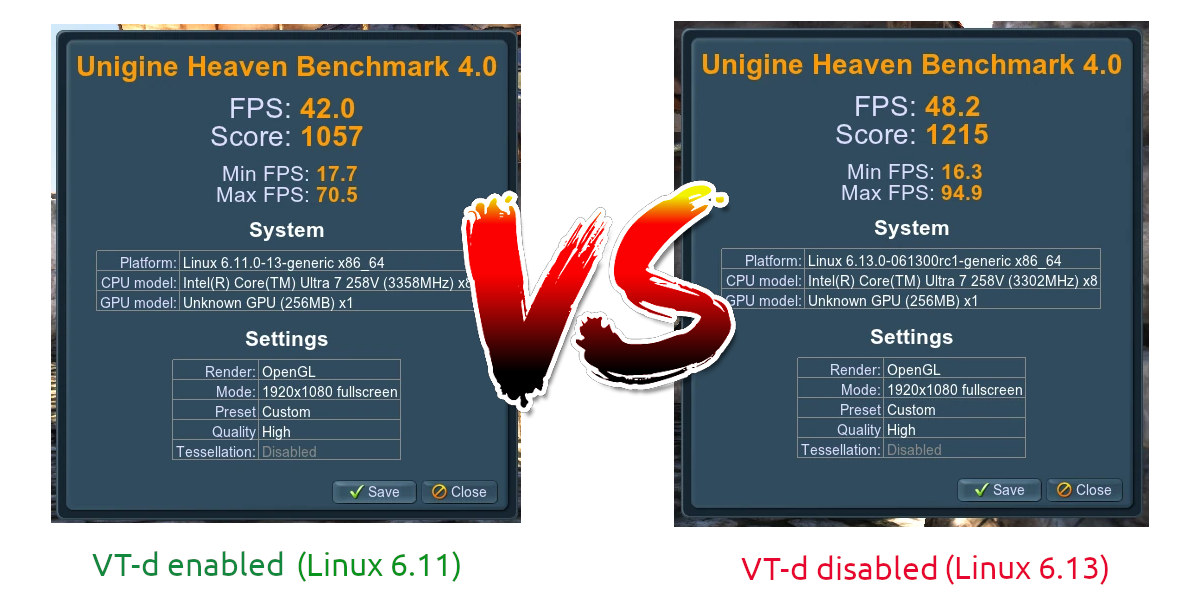
In this post, I’ll check whether disabling VT-d virtualization support may improve the performance of the Intel Arc GPU in recent Meteor Lake or Lunar Lake SoC using a Khadas Mind Maker Kit with an Intel Core Ultra 7 258V CPU with Intel Arc 140V graphics running Ubuntu 24.10. A few days ago, I read a post on Phoronix about Intel publishing tips to improve the performance of Intel GPUs in Linux: Keep the system updated with the latest kernel and Mesa versions. Ensure SoC firmware is up-to-date. These firmware updates currently require installing the Windows graphics driver; firmware updates via fwupd are in progress. Use Wayland where possible, as it supports additional modifiers for better performance. For MTL (Meteor Lake) and newer integrated GPUs, disable VT-d if virtualization is not needed. For discrete GPUs: Enable ReBAR_ Enable ASPM_ I was especially curious about the line about disabling VT-d virtualization […]
SONOFF MINI-D Review – A Matter-enabled dry contact WiFi switch tested with eWeLink, Home Assistant, and Apple Home
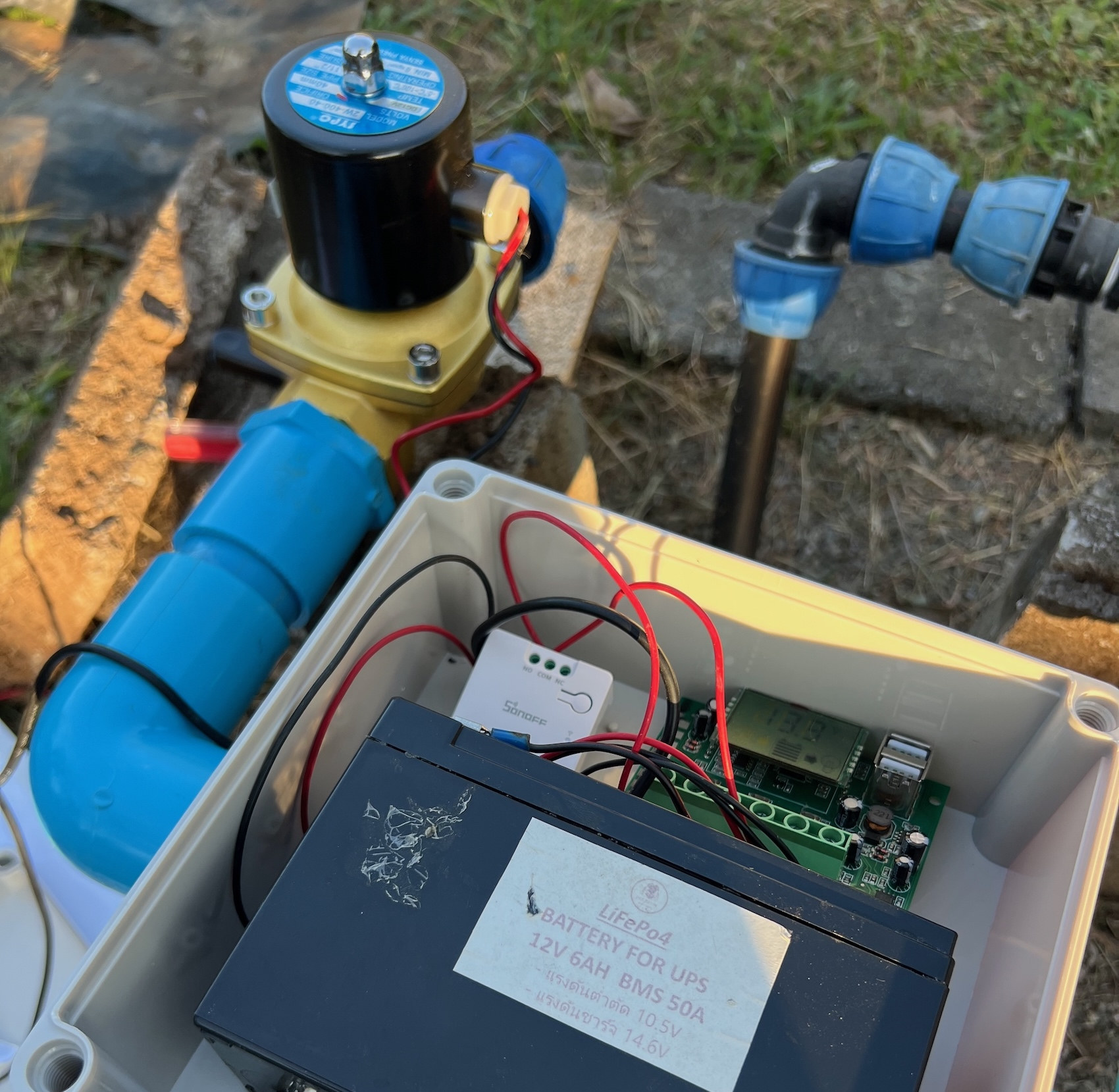
SONOFF sent us a sample of the MINI-D Wi-Fi smart switch with a dry contact design for review. If you’re familiar with the larger SONOFF 4CH Pro model, which features four channels, the MINI-D operates similarly but is smaller in size and comes with the latest software features. The principle of a dry contact is that the relay contacts are not directly connected to the device’s power supply circuit. Instead, the contacts are isolated and require an external power source to supply power to the load. Make it flexible to use the SONOFF Mini-D in various scenarios such as controlling garage doors, thermostats, or high-current electrical devices through a contactor, like water pumps. It can also manage low-power DC devices such as solenoid valves or small electric motors (<8W). Because the power supplied to the MINI-D and the power passed through its relay can come from different sources, it offers […]
Khadas Mind Maker Kit review – Part 2: Windows 11 Home on an Intel Core Ultra 7 258V AI mini PC
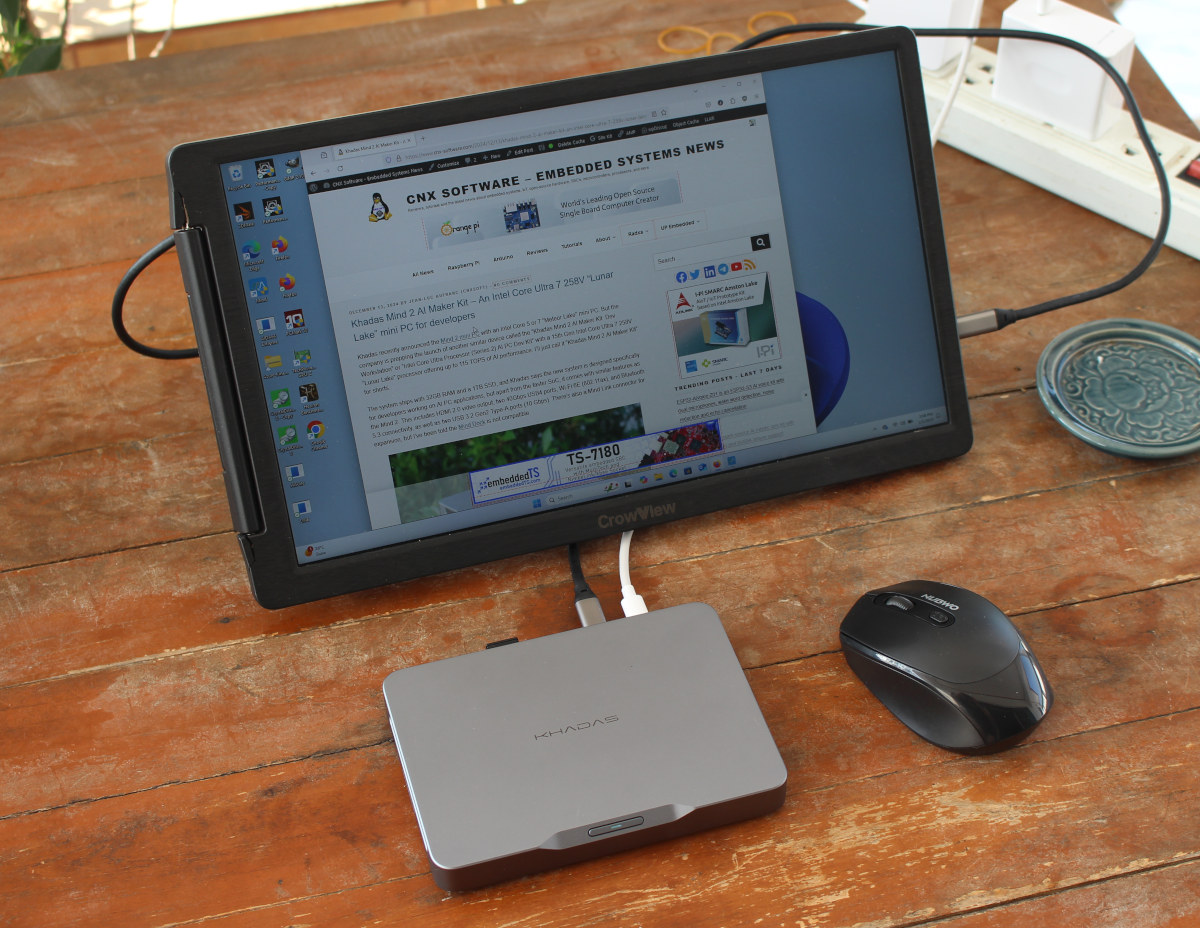
I’ve already gone through the specifications and an unboxing of the “Khadas Mind 2 AI Maker Kit” powered by an Intel Core Ultra 7 258V “Lunar Lake” processor delivering up to 115 TOPS of AI performance and equipped with 32GB LPDDR5X RAM and a 1TB M.2 NVMe SSD in the first part of the review. I’ve now spent time with the mini PC/developer kit which is now simply called “Khadas Mind Maker Kit”, and I will report my experience with the Windows 11 Home 24H2 operating system in the second part of the review testing features, running benchmarks including an AI benchmark, evaluating networking and storage performance, testing the thermal design while under stress, and taking measurements for fan noise and power consumption. It looks like some AI features may finally be usable on Windows, but I’ll test that in a separate post since everything is new and Microsoft Copilot+, […]
Linux 6.10 Release – Notable changes, Arm, RISC-V, and MIPS architectures
Linux Torvalds has announced the release of Linux 6.10 on LKML: So the final week was perhaps not quote as quiet as the preceding ones, which I don’t love – but it also wasn’t noisy enough to warrant an extra rc. And much of the noise this last week was bcachefs again (with netfs a close second), so it was all pretty compartmentalized. In fact, about a third of the patch for the last week was filesystem-related (there were also some btrfs latency fixes and other noise), which is unusual, but none of it looks particularly scary. Another third was drivers, and the rest is “random”. Anyway, this obviously means that the merge window for 6.11 opens up tomorrow. Let’s see how that goes, with much of Europe probably making ready for summer vacation. And the shortlog below is – as always – just the last week, not some kind […]
MediaTek unveils 5G RedCap solutions: M60 5G modem and T300 Arm Cortex-A35 SoC
MediaTek has introduced its first 5G RedCap solutions with the M60 5G modem and the MediaTek T300 Arm Cortex-A35 SoC design to bring 5G-NR to wearables, light-weight AR devices, IoT modules, and consumer and industrial Edge AI devices. 5G RedCap (Reduced Capability), part of 3GPP Release 17, aims to keep some 5G features such as low latency, low power consumption, enhanced security, and network slicing while limiting the bandwidth (to around 85 Mbps) in order to be used in IoT devices and products that may not need the bandwidth required by smartphones and computers, but would benefit from longer battery life and a smaller footprint. MediaTek claims to be the first company to unveil 5G RedCap chips with the M60 modem and T300 SoC. MediaTek M60 key features and specifications: 3GPP Release 17 standard 5G modem R17 UE power saving R17 Coverage enhancement R17 Small data transmission LTE & NR-FR1 […]
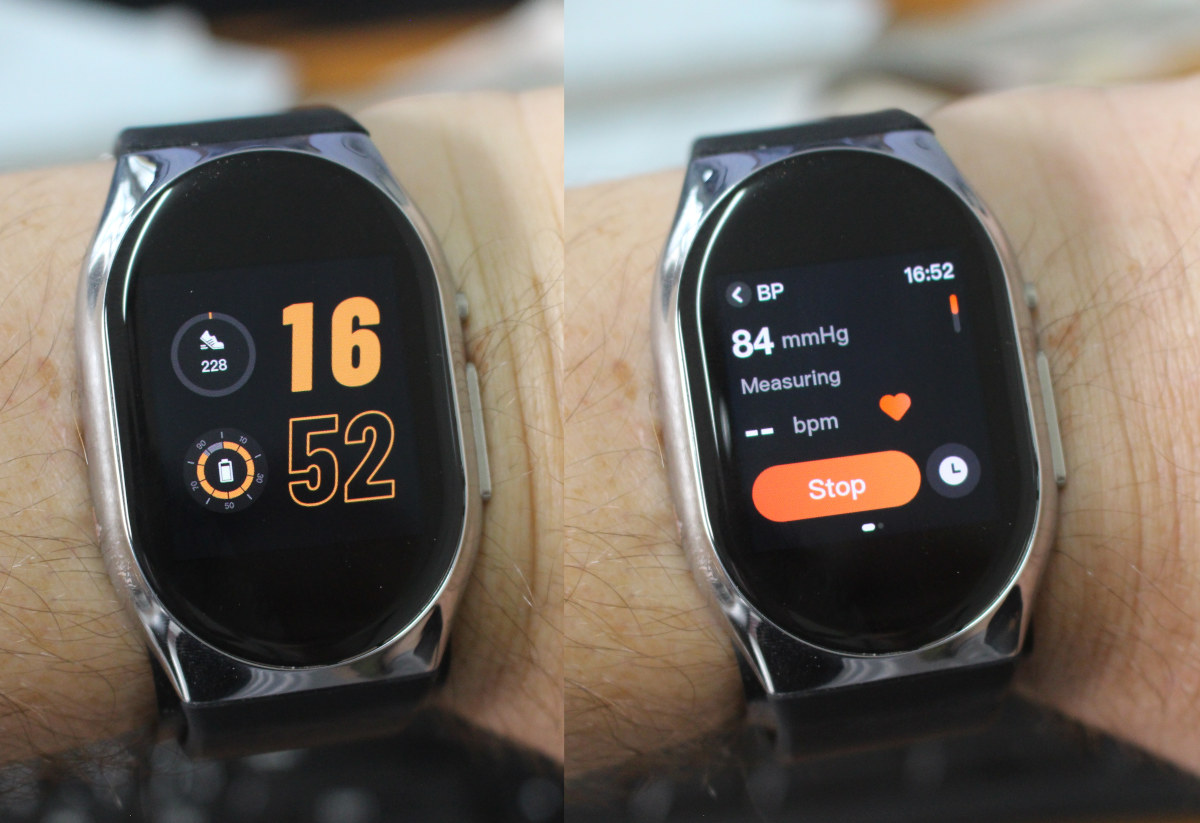
BP Doctor PRO review – A 2-in-1 smartwatch and blood pressure monitor
So far, If I wanted to monitor my blood pressure monitor and overall fitness, I’d use a Bluetooth blood pressure monitor (Koogeek BP2) plus a fitness tracker/smartwatch such as Weloop Key S3. It does the job, but WearWiz has come up with something much more compact with the BP Doctor Pro 2-in-1 device that acts as both a smartwatch/fitness tracker and a blood pressure monitor, and at $299, offers a cheaper alternative to the $500 FDA-approved Omron Heartguide. The company sent a sample to CNX Software for review, so we’ll have a look at the device and accessories, the Android app, and features such as blood pressure monitoring, HRM, SpO2 level monitoring, and more. The review is rather long, so if you are short on time, you may want to check the two sections: Blood pressure monitoring with BP Doctor PRO smartwatch Conclusion with Pros and Cons BP Doctor PRO […]