Spreadtrum Category - CNX Software - Embedded Systems News

Loomos AI smart glasses integrate GPT-4o, offer a 16MP camera and hi-fi audio for $199+ (Crowdfunding)

loomos AI smart glasses with 16MP camera

Chinese power supply company, SHARGE, has launched a pair of GPT-4o-powered smart glasses with a 16-megapixel camera capable of capturing 4K photos and 1080p videos. Like the Looktech AI glasses and Meta Ray-Ban series, the Loomos AI smart glasses have no onboard display. Instead, they feature a microphone array, onboard speakers, and side buttons for user control and feedback. The Loomos glasses are powered by a 2.0Ghz UNISOC quad-core processor and come integrated with the multi-modal GPT-4o for real-time AI assistance. The stated battery life is much more impressive than the competition at 40 hours of standby time (from a 450mAh battery). The company also offers a 6,500mAh neckband power bank for uninterrupted all-day wearing. The company promises security and privacy with the glasses. Data is processed anonymously with TLS encryption and users retain full control of their data. The glasses also include an indicator light to alert people around […]

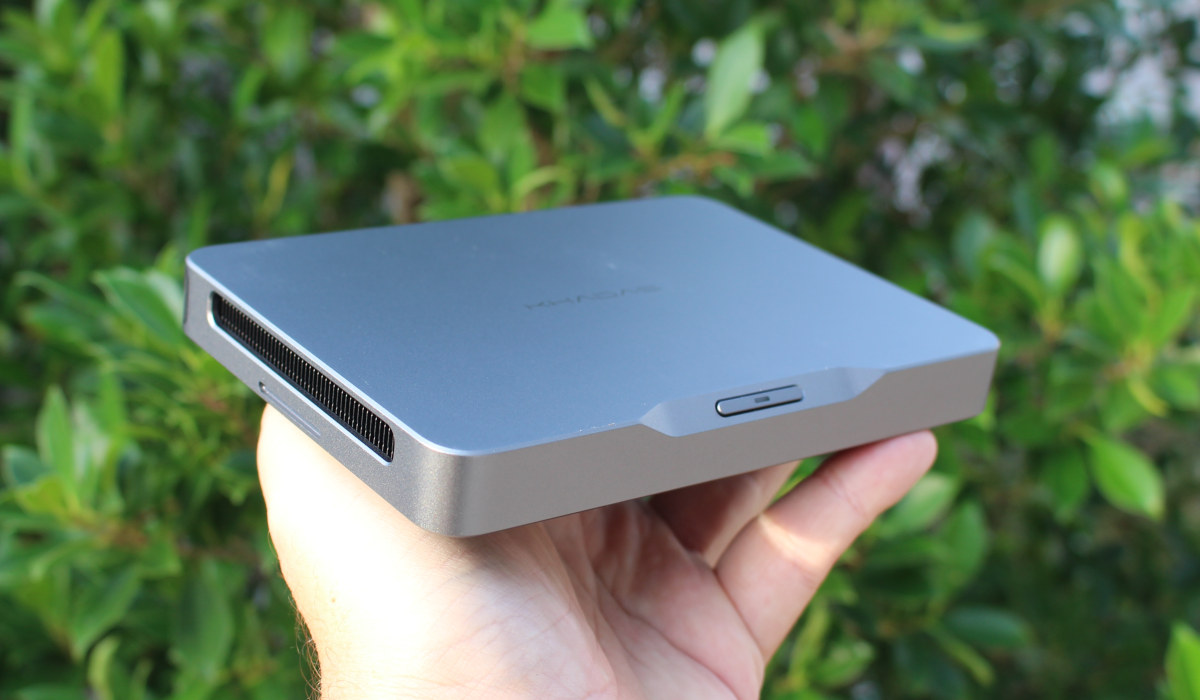
Khadas Mind 2 AI Maker Kit Review – Part 3: Ubuntu 24.10 and the importance of power limits

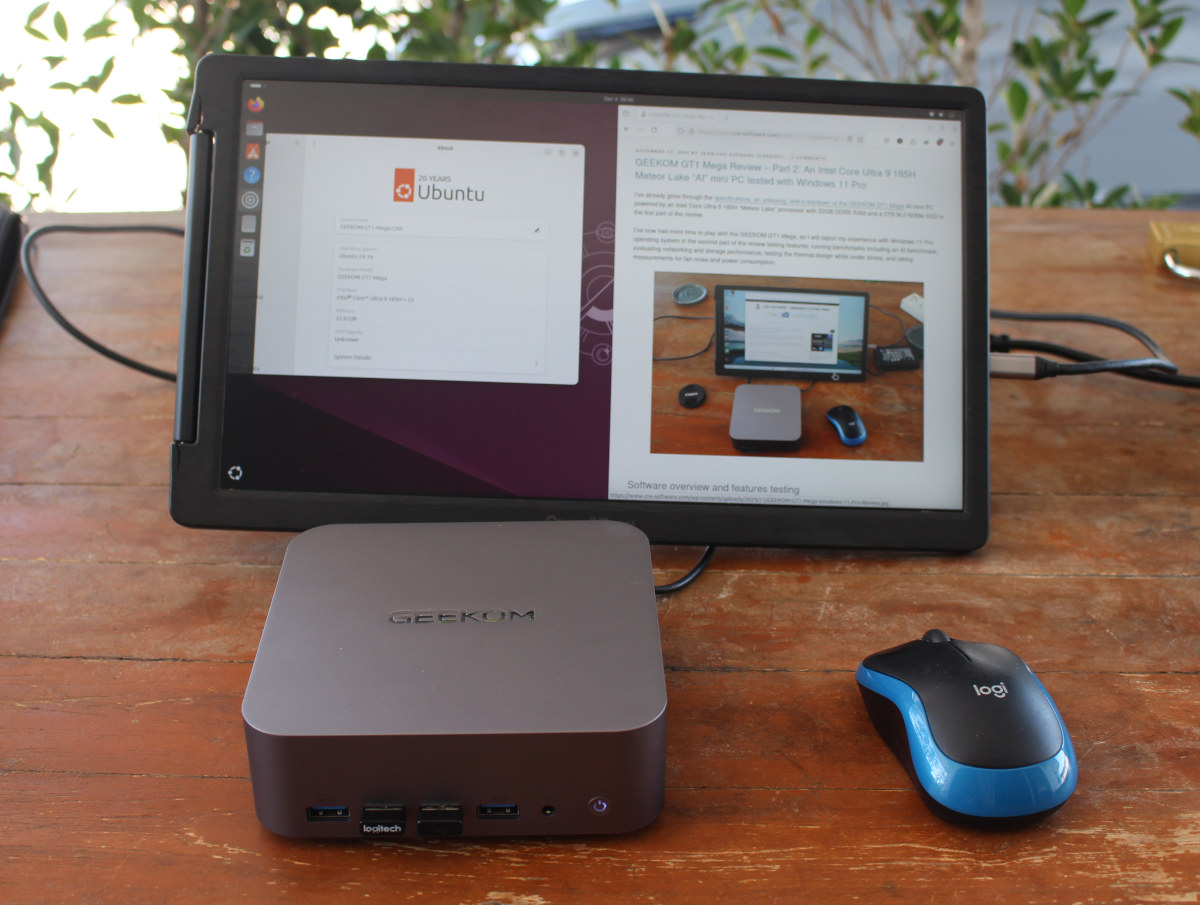
Khadas Mind 2 AI Maker Kit Ubuntu 24.10 Review

I’ve already reviewed the Khadas Mind 2 AI Maker Kit with Windows 11 Home, and today, I’ll report my experience with Linux on the Intel Core Ultra 7 258V mini PC using Ubuntu 24.10 operating system. I would usually review systems with Ubuntu 24.04 LTS OS, but considering the Intel Core Ultra 7 258V SoC is so new, I installed Ubuntu 24.10 when I tested whether disabling VT-d (IOMMU) would improve Intel Arc GPU performance (it does to some extent), and it turns out it was a good decision because Ubuntu 24.04 requires lots of fixes and workarounds to work the Khadas Mind 2 AI Maker Kit, at least until Ubuntu 24.04.2 is released later this month with a more recent kernel. Khadas Mind 2 AI Maker Kit – Ubuntu 24.10 system information My Ubuntu 24.10 installed has both Linux 6.11 (default) and Linux 6.13 kernels, but I did most […]

Radxa Orion O6 Review – Part 1: Unboxing, Debian 12 installation, and first benchmarks

Radxa Orion O6 Review Debian 12

Radxa sent me a sample of the Orion O6 mini-ITX motherboard for review. The system is powered by an CIX P1 (CD8180) 12-core Armv9 processor, equipped with 16GB RAM, and offers features like 5GbE, HDMI and DisplayPort, a PCIe Gen4 x16 slot, and more. It’s one of the most anticipated boards of the first part of 2025 since it’s powerful, offers a good performance/value ratio, and eventually promises to boot any ISO Arm64 image through an open-source BIOS / EDKII bootloader. I’ll start this review with an unboxing, NVMe SSD and WiFi module installation, and a short tutorial showing how to install Debian 12 operating systems before getting some system information and running a few benchmarks. In a few weeks, I’ll publish a more detailed review with features testing and more benchmarks to see what works and what doesn’t at this very early stage. Radxa Orion O6 unboxing I received […]

Disabling VT-d improves Intel Arc GPU Linux performance on Meteor Lake and newer SoCs

Improve Intel Arc GPU performance Linux VT-d disabled

In this post, I’ll check whether disabling VT-d virtualization support may improve the performance of the Intel Arc GPU in recent Meteor Lake or Lunar Lake SoC using a Khadas Mind Maker Kit with an Intel Core Ultra 7 258V CPU with Intel Arc 140V graphics running Ubuntu 24.10. A few days ago, I read a post on Phoronix about Intel publishing tips to improve the performance of Intel GPUs in Linux: Keep the system updated with the latest kernel and Mesa versions. Ensure SoC firmware is up-to-date. These firmware updates currently require installing the Windows graphics driver; firmware updates via fwupd are in progress. Use Wayland where possible, as it supports additional modifiers for better performance. For MTL (Meteor Lake) and newer integrated GPUs, disable VT-d if virtualization is not needed. For discrete GPUs: Enable ReBAR_ Enable ASPM_ I was especially curious about the line about disabling VT-d virtualization […]

SONOFF MINI-D Review – A Matter-enabled dry contact WiFi switch tested with eWeLink, Home Assistant, and Apple Home

SONOFF MINI-D Review

SONOFF sent us a sample of the MINI-D Wi-Fi smart switch with a dry contact design for review. If you’re familiar with the larger SONOFF 4CH Pro model, which features four channels, the MINI-D operates similarly but is smaller in size and comes with the latest software features. The principle of a dry contact is that the relay contacts are not directly connected to the device’s power supply circuit. Instead, the contacts are isolated and require an external power source to supply power to the load. Make it flexible to use the SONOFF Mini-D in various scenarios such as controlling garage doors, thermostats, or high-current electrical devices through a contactor, like water pumps. It can also manage low-power DC devices such as solenoid valves or small electric motors (<8W). Because the power supplied to the MINI-D and the power passed through its relay can come from different sources, it offers […]

Khadas Mind Maker Kit review – Part 2: Windows 11 Home on an Intel Core Ultra 7 258V AI mini PC

Khadas Mind Maker Kit Review Windows 11

I’ve already gone through the specifications and an unboxing of the “Khadas Mind 2 AI Maker Kit” powered by an Intel Core Ultra 7 258V “Lunar Lake” processor delivering up to 115 TOPS of AI performance and equipped with 32GB LPDDR5X RAM and a 1TB M.2 NVMe SSD in the first part of the review. I’ve now spent time with the mini PC/developer kit which is now simply called “Khadas Mind Maker Kit”, and I will report my experience with the Windows 11 Home 24H2 operating system in the second part of the review testing features, running benchmarks including an AI benchmark, evaluating networking and storage performance, testing the thermal design while under stress, and taking measurements for fan noise and power consumption. It looks like some AI features may finally be usable on Windows, but I’ll test that in a separate post since everything is new and Microsoft Copilot+, […]

Hisense A7CC 5G smartphone integrates a 6.7-inch color E-Ink display

Hisense A7CC 5G E-Ink Phone

Hisense A5 was one of the first phones exclusively equipped with an e-Paper display. But following the launch of color E-Ink displays and color eReaders from other companies last year,  the Chinese company has now launched Hisense A7CC 5G smartphone with a 6.7-inch color E-Ink display. The phone is powered by UNISOC T7510 octa-core processor, which appears to be based on T710 SoC with 5G modem, and comes with 6GB RAM and 128GB flash storage. Hisense A7CC specifications: SoC – UNISOC Tiger T7510 octa-core processor with 4x Arm Cortex-A75 cores @ 2 GHz, 4x Arm Cortex-A55 cores @ 1.8 GHz, and Imagination PowerVR GM9466 GPU System Memory – 6GB RAM Storage – 128GB flash Display – 6.7-inch E-Ink display with 4096 colors, 100 dpi Audio – 3.5mm headphone jack with AK4377AECB audio DAC; built-in microphone and speaker Camera – Dual rear cameras + single front-facing camera Connectivity Cellular – 5G […]

UNISOC Unveils T7520 5G SoC Manufactured with 6nm EUV Process Technology

UNISOC T7520

UNISOC has launched its second-generation 5G mobile SoC with T7520 processor manufactured with a 6nm EUV process technology and equipped with four Arm Cortex-A76 cores, four Arm Cortex-A55 cores, as well as an Arm Mali-G57 GPU, and the company’s Makalu 5G platform. T7520 processor is said to support “coverage enhancement for any application scenario, by allowing carriers to deploy 5G on their existing 4G spectrums” (aka NSA = Non-stand Alone). and is optimized for use on 500 km/h high-speed railway. Highlights of the processor include: Advanced 6nm EUV process technology with extremely high lithographic resolution and a better balance between cost, performance and power consumption. Compared to the previous 7nm process, the new process has an 18% improvement in density of transistors and reduces power consumption by 8%. Lower power consumption made possible by the improved process mentioned above as well as an improved low-power consumption architecture and AI-based power […]