New Embedded System Development Book by O’Reilly

This new book “Making Embedded Systems: Design Patterns for Great Software” has been written by Elicia White, the founder of Logical Elegance, an embedded systems consulting company based in San Jose and an expert who’s created embedded systems ranging from urban surveillance and DNA scanners to children’s toys. O’Reilly says this book is ideal for intermediate and experienced C programmers and will show you how to: Optimize your system to reduce cost and increase performance. Develop an architecture that makes your software robust in resource-constrained environments. Explore sensors, motors, and other I/O devices. Do more with less: reduce RAM consumption, code space, processor cycles, and power consumption. Update embedded code directly in the processor. Implement complex mathematics on small processors. Understand what interviewers look for when you apply for an embedded systems job. This 328-page book has 10 chapters: Chapter 1 Introduction Chapter 2 Creating a System Architecture Chapter 3 […]

Ubuntu Linaro Evaluation Builds (LEB) Tutorial

Ricardo Salveti, tech lead of the Developer Platform working group, gave a tutorial on the Ubuntu Linaro Evaluation Builds (LEBs) during Linaro Connect Q4.11. He first described the list of available images: nano – minimal rootfs (command line) with apt/dkpg support ALIP – nano + X11 + browser Developer – nano + development tools Ubuntu Desktop – clone of Ubuntu with Linaro modifications. and how the builds are made available via nightly builds and hardware packs. Linaro aims at making Ubuntu the reference Linux distribution for ARM. This goal is valid for Cortex A processors, but for older ARM core (ARM9/ARM11) other distributions will have to used such as Debian. For example, Raspberry Pi board (ARM1176) will support Fedora optimized by Redhat. He then gave further details on Offspring the Linaro build system based on live-build scripts used for Debian. The source code is retrieved either via git (http:/git.linaro.org) or launchpad […]

Long Term Support Initiative (LTSI) Linux Kernel for Consumer Electronics

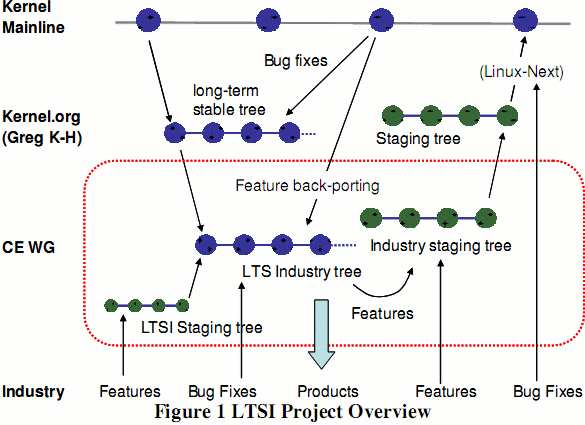
The Linux Foundation announced a new project, the Long Term Support Initiative (LTSI), created by the Consumer Electronics Workgroup (CE WG) at Linuxcon Europe 2011 in Prague. LTSI aims at reducing duplication of effort in maintaining separate private industry kernel trees. The LTSI project intends to deliver an annual release of a Linux kernel suitable for supporting the lifespan of consumer electronics products and regular updates of those releases for two to three years. The project is backed by several companies in the consumer electronics industry including Hitachi, LG Electronics, NEC, Panasonic, Qualcomm Atheros, Renesas Electronics Corporation, Samsung Electronics, Sony and Toshiba. LTSI will allow device makers to spend less time doing significant back-porting, bug testing and driver development on their own, which carries substantial cost in terms of time-to-market, as well as development and engineering effort to maintain those custom kernels. In some ways, this is similar to Linaro, […]

Avnet and ARM Launch The Embedded Software Store

Avnet and ARM have jointly announced the launch of the Embedded Software Store during ARM Techcon 2011. This is a store where you can purchase or sell operating systems, software stacks,  middleware and tools for embedded software development. The different software component are also classified  in different markets namely automotive, communication, consumer, industrial, medical and military. There are already quite a few well known vendors such as Adeneo Embedded, Micrium, ST Microelectronics. Keil and more. Before a purchase you’ll be able to view product details and contact the vendor for details. Once the purchase is done, you an download the products immeditaly. Some products such as STM32F40x Standard Peripheral & DSP Library can actually be downloaded free of charge. So in the future, more silicon vendors may want to add their BSP, SDK and development tools free of charge to the site. Open source embedded software may also be available […]

Yocto Project Release 1.1 Announced

The Linux foundation announced Yocto Project Release 1.1 today. This release codenamed “Edison” and based on Poky 6.0 is the the second release of the project, one year after it was announced in October 2010 to provide developers with greater consistency in the software and tools they’re using across multiple architectures for embedded Linux development. The Yocto Project reached the following milestones during the last year: Alignment of OpenEmbedded technology and the inclusion of OpenEmbedded representation in the Yocto Project governance structure. The projects share a common core that consists of software build recipes and core Linux components that prevent fragmentation and reinforce the OpenEmbedded methodology as an open standard for embedded Linux build systems. Contribution of tools and technologies such as Cross-prelink, EGLIBC, Pseudo, Shoeleather Lab (for automated testing) and Swabber have been contributed from Intel, Mentor Graphics, MontaVista Software and Wind River. Commercial adoption with examples such as […]

Online Petition Requesting to Allow Linux Installation on Windows 8 Devices

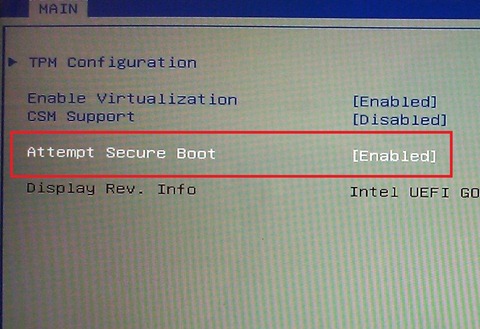
Back in September, some concerns emerged about UEFI secure boot requirement for Windows 8 and its possible consequences on Linux and other open source operating systems: it may be impossible to install such systems on computers or devices shipped with Windows 8, either by replacing Windows 8 or in a dual boot installation as the bootloader (UEFI) would prevent such installation for security reasons. Microsoft has already replied to those concerns and stated that: At the end of the day, the customer is in control of their PC. … We work with our OEM ecosystem to provide customers with this flexibility. The security that UEFI has to offer with secure boot means that most customers will have their systems protected against boot loader attacks. For the enthusiast who wants to run older operating systems, the option is there to allow you to make that decision. So there should be an […]

LLVM (Low Level Virtual Machine) Compiler Infrastructure

The Low Level Virtual Machine (LLVM) is a compiler and toolchain infrastructure, written in C++, designed for compile-time, link-time, run-time, and “idle-time” optimization of programs written in arbitrary programming languages. Originally implemented for C/C++, LLVM is now used with a variety programming languages such as Python, Ruby and may others. Code in the LLVM project is licensed under the “UIUC” BSD-Style license. LLVM can be used to replace and/or supplement the GNU tools such as gcc, g++, gdb, etc… LLVM now consists of a number of different sub-projects including: The LLVM Core libraries provide a source- and target-independent optimizer, along with code generation support for many popular CPUs. These libraries are built around a well specified code representation known as the LLVM intermediate representation (“LLVM IR”). The LLVM Core libraries are well documented, and it is particularly easy to invent your own language (or port an existing compiler) to use […]

Open Source Licenses Overview: GPL, LGPL, Apache, BSD,…

The great thing about open source code is the large amount of high quality code that is available and many embedded projects use FOSS code as it really speeds up development time. What is not often taken into account are the licenses for the code. Many companies often simply ignore licenses issues and some even go one step further by obfuscating the code to work around dual license issues or to hide the use of a particular open source library. Even though history shows that few companies get sued due to open source license infringements and release of open source code modified in commercial projects often requires the community involvement, open source licenses should still be taken into consideration as the risk still exists. I’ll give an overview of open source licenses in this blog post, as well as recommendation on how to keep your proprietary code closed. Definition of […]

Exit mobile version