In the rapidly evolving landscape of digital transformation, a technical plateau has emerged. While many “AI-coding” tools offer the promise of rapid development, a predictable pattern has surfaced: they generate visually impressive landing pages in seconds, but falter when tasked with building a functional business. Projects requiring user authentication, data persistence, or secure transaction handling often hit a technical ceiling, resulting in digital “toys” rather than scalable business tools. The release of YouBase by YouWare marks a significant shift in this narrative. Since its debut in March 2025, YouWare has pioneered the concept of “vibe coding,” capturing 500,000 monthly active users and a $200 million valuation. With the introduction of YouBase, the platform transitions from a prototyping environment to a production-ready engine, offering a missing link for enterprises looking to leverage AI for full-stack development. The Competitive Edge of Vibe Coding The efficacy of YouBase is built upon YouWare’s core […]
Raspberry Pi AI HAT+ 2 targets generative AI (LLM/VLM) with Hailo-10H accelerator
The Raspberry Pi AI HAT+ 2 is an add-on board based on the 40 TOPS Hailo-10H AI accelerator with 8GB of dedicated on-board RAM that brings generative AI capability to Raspberry Pi 5. While it delivers similar computer vision performance as the first-generation Hailo-8-based Raspberry Pi AI HAT+, the AI HAT+ 2 also adds support for large language models (LLMs) and vision-language models (VLMs) running locally without the need for Internet access. Target applications include offline process control, secure data analysis, facilities management, and robotics. Raspberry Pi AI HAT+ 2 specifications: AI accelerator – Hailo Hailo-10H AI accelerator delivering 40 TOPS (INT4) inferencing performance Performance for computer vision models comparable to the Raspberry Pi AI HAT+ (26 TOPS) 8GB on-board RAM Host interface PCIe Gen3 x1 FPC connector to Raspberry Pi 5 40-pin GPIO header (no signal used by the Hailo-10H, it only extends the GPIO header on the Pi) […]
reComputer Industrial R2135-12 review – A Raspberry Pi CM5-powered fanless Edge AI PC with Hailo-8 AI accelerator
Hello, today I am going to review the reComputer AI Industrial R2135-12 from Seeed Studio. This is an industrial edge computer built around the Raspberry Pi Compute Module 5 platform. The model is configured with 8 GB LPDDR4 memory and 32 GB eMMC storage. It provides a rich set of I/O options, including dual Gigabit Ethernet, USB 3.0/USB 2.0, HDMI output, and industrial interfaces such as RS-485/RS-232, CAN, and GPIO, along with Wi-Fi and Bluetooth support and a wide DC power input range suitable for industrial environments. In addition to standard checking and benchmarking the device, I will also include a hands-on demo application in which the system runs an AI model for real-time people detection from a USB camera, then sends detection results to an external ESP32 microcontroller to drive LED matrices for visually highlighting the locations of detected people. I made the following YouTube video to quickly demonstrate […]
StackChan is a cute, community-build, open-source AI desktop robot (Crowdfunding)
StackChan is an open-source AI desktop robot based on the M5Stack CoreS3 ESP32-S3 IoT controller that works as an AI Voice Assistant and can notably be used for Smart Home & IoT control. It features a 2-inch touchscreen display, a VGA camera, a dual microphone array and a 1W speaker for voice interaction, a few sensors, an infrared receiver, an infrared transmitter/blaster, two servos for horizontal and vertical movement, and a few buttons and LEDs. StackChan specifications: Core module – M5Stack CoreS3 IoT controller Wireless MCU – Espressif Systems ESP32-S3FN16R8 CPU – Dual-core 32-bit Xtensa LX7 microcontroller with AI vector instructions up to 240MHz, RISC-V ULP co-processor Memory – 512KB SRAM, 8MB PSRAM Storage – 16MB flash, Wirleess – 2.4GHz WiFi 4 (802.11b/g/n), Bluetooth 5.0 BLE + Mesh Antenna – Internal 3D antenna Storage – MicroSD card slot Display – 2-inch IPS display with 320×240 resolution, 65,536 colors via ILI9342C […]
Reolink Floodlight 4K Smart PoE and WiFi 6 security cameras add on-device LLM for natural language video search
Reolink has introduced the Elite Floodlight WiFi and Elite Pro Floodlight PoE, two new 4K security cameras with high-resolution video, integrated floodlights, PoE support (on the Pro model), and an on-device Large Language Model (LLM), which enables natural-language video search instead of basic object detection. We have reviewed various Reolink cameras over the years, such as the Argus PT Ultra, Reolink TrackMix PoE, and the RLC-810A, which features “Smart Detection” to the edge, allowing the camera to distinguish between people, vehicles, and pets without sending data to the cloud. However, they are limited to those fixed categories, and if you wanted to find something specific, like a “red shirt” or a “delivery truck,” you still had to scroll through the timeline manually, or rely on a networked video recorder (NVR). Reolink is now trying to solve that by integrating a Large Language Model (LLM) directly into their new Elite Floodlight […]
Nordic Semi nRF54LM20B wireless SoC integrates 128 MHz Axon NPU for Edge AI workloads
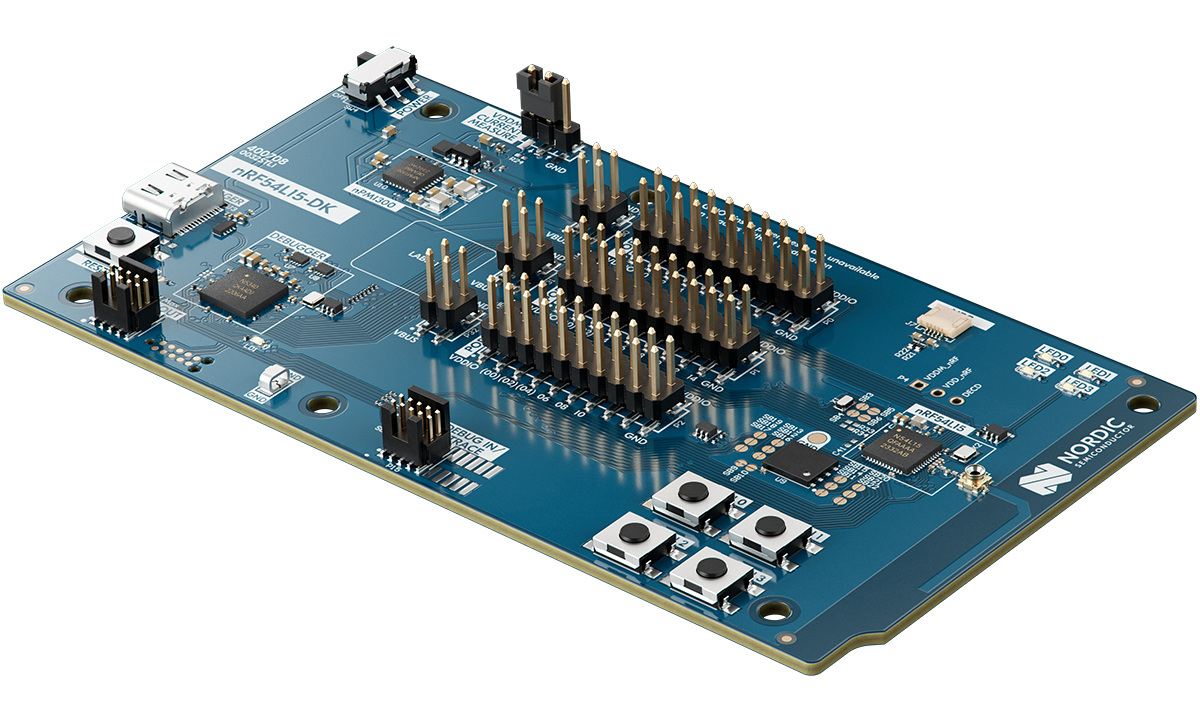
Nordic Semi nRF54ML20B Arm Cortex-M33 wireless SoC is the first nRF54L microcontroller to integrate the ultra-efficient Axon Neural Processing Unit (NPU) for edge AI workloads. The NPU is said to deliver up to 7 times faster performance and up to 8 times higher energy efficiency versus (unnamed) competing wireless solutions for tasks such as sound classification, keyword spotting, and image-based detection. The Axon NPU is also about 15x faster compared to using the Cortex-M33 CPU for the same task. Other than the NPU, the nRF54LM20B offers exactly the same features as the earlier nRF54LM20A wireless microcontroller, including up to 2 MB NVM, 512 KB RAM, a 128 MHz Arm Cortex-M33 plus RISC-V coprocessor, high-speed USB, up to 66 GPIOs, and an ultra-low-power 2.4 GHz radio supporting Bluetooth LE, Bluetooth Channel Sounding, Matter over Thread, and more as shown in the nRF54L comparison table below. Like other nRF54L wireless SoCs, the […]
Snapdragon X2 Plus 6-core and 10-core processors target low-power Windows Copilot+ PCs
After announcing the high-end Snapdragon X2 Elite Extreme and X2 Elite processors last year, Qualcomm has now introduced the mid-range Snapdragon X2 Plus platform at CES 2026. While the Elite SKUs target premium laptops, the X2 Plus series is designed for affordable, mainstream Windows 11 Copilot+ PCs. The new lineup includes the X2P-64-100 (10-core) and the X2P-42-100 (6-core), both manufactured on a 3nm process. What’s interesting is that they share the same 80 TOPS AI accelerator, 9523 MT/s LPDDR5x memory support, Snapdragon X75 5G modem, and FastConnect 7800 WiFi 7 and Bluetooth 5.4 as the flagship Elite models. This means that the X2 Plus reduces CPU core counts and GPU frequencies to maximize battery life for thin-and-light Windows 11 Copilot+ laptops, but it does not compromise on I/O, media capabilities, or AI performance, as it features the same USB4, PCIe Gen5, and AV1 video support as the top-tier models. Snapdragon […]
ESP32-DIV V1 handheld pentesting tool supports Wi-Fi Attacks, BLE spoofing, 2.4GHz scanning, and Sub-GHz jamming
Designed by Cirket open-source hardware in China, the ESP32-DIV V1 is a handheld wireless pentesting and experimentation tool with Wi-Fi, BLE, generic 2.4 GHz (NRF24), and Sub-GHz RF (CC1101) communication. The device targets hardware hackers and cybersecurity researchers for learning and testing wireless vulnerabilities across multiple frequency bands. The device features a modular “sandwich” design consisting of a Main Board and a Shield Board connected via a 20-pin header. The Main Board integrates an ESP32 microcontroller, a 2.8-inch ILI9341 TFT display with XPT2046 touch controller, SD card slot, battery charging and power management, and navigation controls. The Shield Board hosts the RF hardware, including three NRF24L01 modules, a CC1101 Sub-GHz transceiver, and multiple SMA antenna connectors. ESP32-DIV (V1) specifications: Wireless Module – ESP32-WROOM-32U SoC – ESP32 dual-core wireless microcontroller CPU – Dual-core Xtensa 32-bit microprocessor @ 240MHz Memory – 520KB internal SRAM Wireless – Wi-Fi 802.11b/g/n, and Bluetooth (4.2 and […]