Beelink EQi review – Part 2: An Intel Core 3 304 “Wildcat Lake” mini PC tested with Windows 11 Pro

Beelink EQi Wildcat Lake Core 3 304 Windows 11 mini PC review

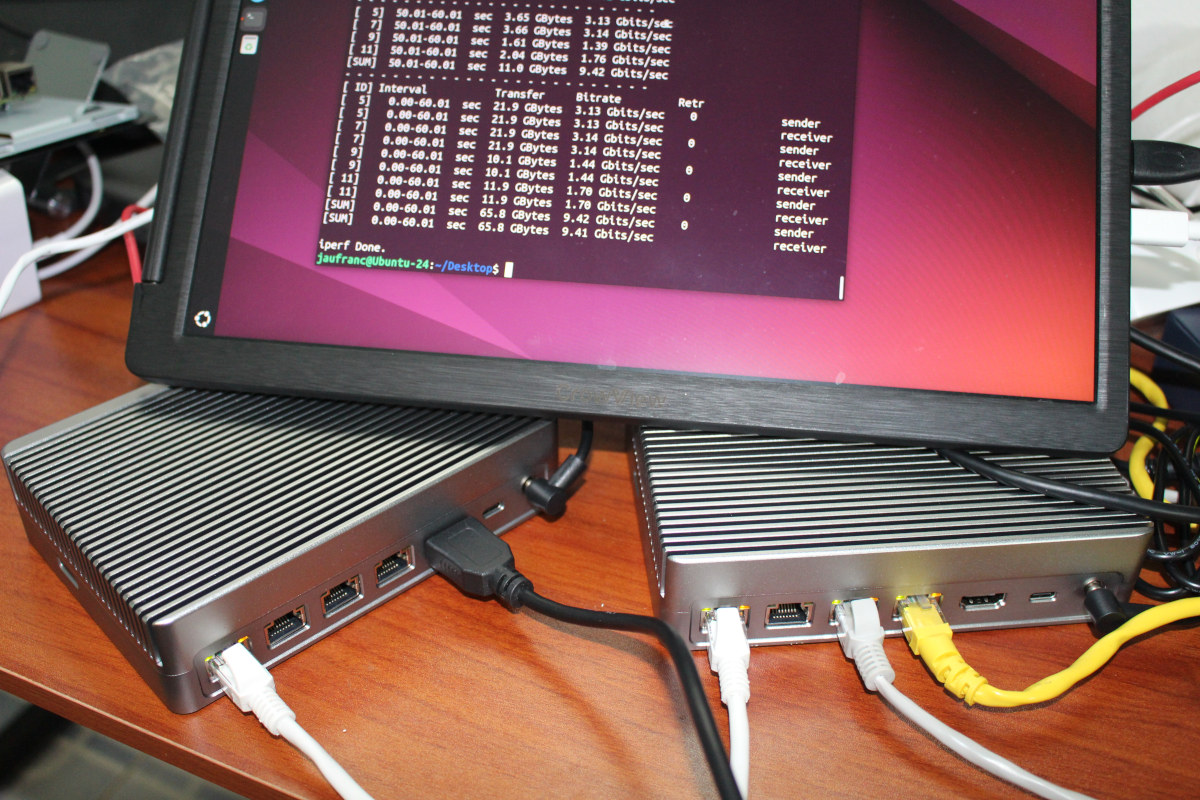
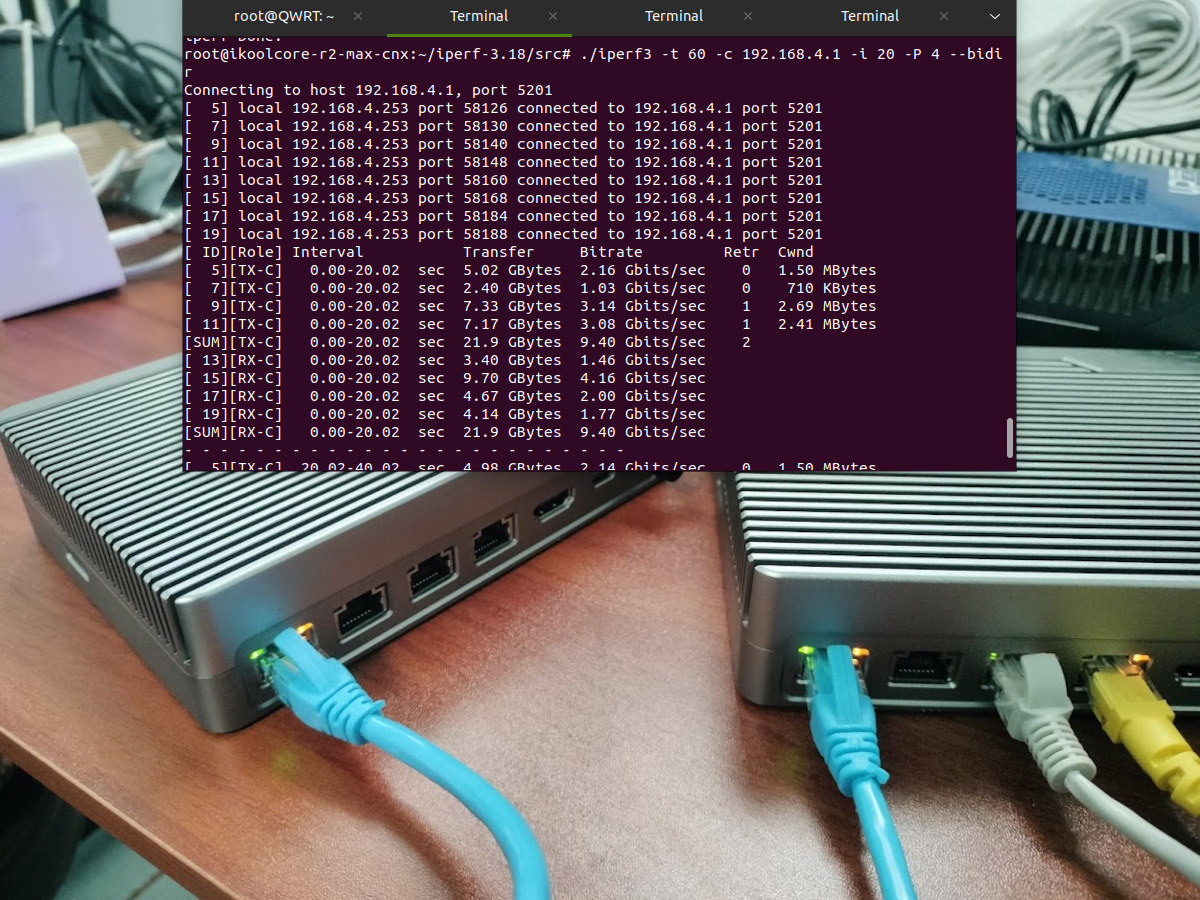
We’ve already checked out the specifications and hardware of the Beelink EQi Wildcat Lake mini PC in the first part of the review, with an unboxing and a teardown, before booting the mini PC into the pre-installed Windows 11 Pro for a first quick look. We’ve now had time to test the Intel Core 3 304 mini PC in more detail on Windows 11 Pro, so we’ll report our experience. The review includes feature testing, benchmark results, 4K and 8K YouTube video playback, 10GbE, 2.5GbE, and WiFi network performance evaluation, cooling performance, and measurement of fan noise and power consumption. Software Overview and Feature Testing After fully updating Windows 11 Pro and drivers to the latest version (excluding previews), I went to System > About window again. We still have a 1.50 GHz (base frequency) Intel Core 3 304 processor with 16GB 6400MT/s memory, and 834GB of storage from the […]

Beelink EQi Wildcat Lake Core 3 304 mini PC review – Part 1: Specifications, unboxing, teardown, and first boot

Beelink EQi Wildcat Lake Core 3 304 review

We’ve received our first Wildcat Lake hardware for review, as Beelink has sent us an EQi mini PC powered by the Intel Core 3 304 entry-level 5-core processor with a 15 TOPS AI accelerator. The mini PC ships with either 16GB of LPDDR5 (soldered-on) or 24GB/32GB of DDR5 (SO-DIMM) memory and 512GB UFS 3.1 storage. It also features two M.2 Key-M PCIe Gen4 sockets, 10GbE and 2.5GbE RJ45 ports, WiFI 6 and Bluetooth 5.2 connectivity, three display outputs via HDMI and USB4 ports, and more. We’ll start the review by listing the specifications, checking out the hardware with an unboxing and a teardown, before giving it a quick try with Windows 11 Pro. In the second part of the review, we’ll focus on Windows 11 Pro, with feature testing and benchmarks, before switching to Ubuntu 26.04 to test a recent Linux distribution on a Wildcat Lake mini PC. Beelink EQi […]

SpacemiT K3 Pico-ITX RISC-V Chassis Kit Review – Part 2: What works, what doesn’t in Bianbu OS 4.0

SpacemiT K3 Pico-ITX Chassis Kit BianbuOS 4.0 review

Last month, I received the SpacemiT K3 Pico-ITX Chassis Kit based on the company’s K3 16-core RISC-V SoC, and started the review with an unboxing, a teardown, and a first boot to Bianbu OS 4.0. Since the system features a 10Gbps Ethernet SFP+ cage, I also had to order a 10GbE SFP+ to Copper adapter, as my 10GbE networking gear is exclusively based on RJ45 ports. In this review, I’ll check system information in Bianbu OS 4.0.1, run a few benchmarks, test 10GbE, GbE, and WiFi 6 networking performance, play YouTube videos at various resolutions, run AI workloads (LLM), check all/most features work as expected, and measure the power consumption of the SpacemiT K3 “Pico-ITX Chassis Kit” mini PC. It’s a fairly long review, so if you are short on time, you can check out the “what works, what doesn’t” section. Bianbu OS 4.0 System Information Before running anything, I […]

Gateworks Catalina GW9200 NXP i.MX 95 SBC features Flexible Socket Adapter sockets for M.2 or mPCIe modules

Gateworks Catalina GW6200 SBC

Last March, Gateworks introduced the Catalina SBC family, starting with the GW9200 board, based on NXP i.MX 95 SoC for industrial Edge AI applications, and featuring Flexible Socket Adapter (FSA) sockets to accommodate either mini PCIe or M.2 module adapters, depending on requirements. We missed the original announcement, but the new SBC family was brought to our attention when Ezurio announced the acquisition of Gateworks last week. The GW9200 board comprises a system-on-module with the NXP i.MX 95 chip, 4GB LPDDR5 and 8GB eMMC flash by default, as well as a carrier board with 10GbE and GbE RJ45 ports, a MIPI DSI/CSI display/camera interface, two FSA sockets for M.2 or mini PCIe expansion, and a range of I/Os. Ezurio/Gateworks Catalina GW9200 specifications: SoC – NXP i.MX 95 CPU Up to 6x Arm Cortex-A55 application cores clocked at 1.8 GHz with 32KB I-cache and D-cache, 64KB L2 cache, and 512KB L3 […]

Radxa’s 2026 Qualcomm hardware: Dragon Q8B and Q5E SBCs, DragonStation and DragonBay NAS systems

Radxa Dragon Q8B

Radxa started its partnership with Qualcomm last with the Dragon Q6A SBC, but it turns out it was just the start, and the company showcased more Qualcomm SBCs and NAS systems at a Radxa + Qualcomm developer day on May 30, 2026. The Radxa Q8B SBC will be based on a Qualcomm Snapdragon 8cx Gen3 octa-core SoC and the Q5E SBC on a Dragonwing QCS6690 octa-core Kryo SoC. The company also teased DragonStation and DragonBay NAS systems, and a 2026 roadmap features a total of 22 Qualcomm systems made by Radxa. Radxa Dragon Q8B Dragon Q8B specifications: SoC – Qualcomm Snapdragon 8cx Gen 3 compute platform Octa-core CPU – 4x 3.0 GHz Kryo Prime cores, 4x 2.4 GHz Kryo Efficiency Cores GPU – Adreno 690 GPU with DirectX 12 (DX12) API support DSP – Qualcomm Hexagon Processor, Qualcomm Sensing Hub AI – Qualcomm Neural Processing Engine SDK support for AI […]

ODROID-H5 Review – Part 2: A dual 10GbE mini PC tested with Ubuntu 26.04

ODROID-H5 review dual 10GbE Ubuntu 26.04

I received a kit for review last week with an ODROID-H5 SBC, a Type1 case, an M.2 10GbE module, and other accessories. In the first part of the review, I went through an unboxing, assembled the kit, and tested whether it could boot an M.2 NVMe SSD with Ubuntu 24.04 and Windows 11. I’ve now updated the system to Ubuntu 26.04, run a few benchmarks, tested the two 10GbE RJ45 ports, as well as other features. I’ll report my experience about all that today. Upgrading from Ubuntu 24.04 to Ubuntu 26.04 The 512GB M.2 NVMe SSD I use in the ODROID-H5 comes from a laptop, which I upgraded with a 2TB SSD. That means the operating systems were not upgraded for a few months. While Ubuntu 24.04 could boot, it would not show the two 10GbE interfaces. That’s because the required drivers were not available in the version of Ubuntu […]

AMD launches Versal Prime Gen 2 2VM3454, 2VM3254, and 2VM3104 adaptive SoCs in compact 23x23mm packages

MD Versal Prime Gen 2 Adaptive SoC 2VM3454, 2VM3254, and 2VM3104

AMD has added three new chips to its Versal Prime Series Gen 2 lineup: the Versal 2VM3454, 2VM3254, and 2VM3104. Designed for space-constrained applications like Pro AV, broadcast, and industrial IoT, these new devices deliver up to 100K DMIPS of scalar compute in packages as small as 23 x 23 mm. AMD started shipping the first production units of the Versal Prime Gen2 Series with the 2VM3858 device late last year. The 2VM3558 has since entered full production, while the 2VM3358 is currently sampling. These new devices are designed to provide an optimized footprint and processing subsystem compared to the earlier models. Despite the reduction in core count, AMD claims these devices can deliver up to 5x the scalar compute performance compared to existing AMD adaptive SoCs. AMD Versal Prime Series Gen 2 (2VM3104, 2VM3254, and 2VM3454) specifications: Processor Subsystem (PS) APU – Quad-core Arm Cortex-A78AE with 64 KB L1 […]

AAEON MIX-PTLWV1 Panther Lake industrial mini-ITX motherboard offers quad DisplayPort, dual 10GbE, and more

Industrial Panther Lake mini ITX motherbaord

AAEON MIX-PTLWV1 is an industrial mini-ITX motherboard based on Intel Core Ultra Series 3 “Panther Lake” processors with up to two 10GbE and two 2.5GbE RJ45 jacks, and four 4K-capable DisplayPort video outputs. The motherboard also supports up to 128GB DDR5 C/SO-DIMM memory, M.2 NVMe SSD storage, optional WiFi and Bluetooth, and/or 4G LTE/5G cellular via M.2 modules, a PCIe Gen4 x8 slot for expansion, six serial interfaces, 12V-24V wide DC input, and more. AAEON MIX-PTLWV1 specifications: SoC – Intel Panther Lake processor (PTL-H404/PTL-H484 families) with Intel Xe LPG graphics; TDP: 15 to 25W System Memory – Up to 128GB via 2x 262-pin DDR5 C/SO-DIMM sockets up to 6400MHz (H404 SKU) or 7200MHz (H484 SKU) Storage – M.2 2280 M-Key (PCIe Gen4 x4) socket for NVMe SSD Display Interfaces 4x DisplayPort 1.4 up to 4096 x 2160 @ 60Hz 40-pin LVDS/eDP co-layout connector for Default: 18/24 bit dual-channel LVDS up […]

Exit mobile version