bootloader News - Page 3 of 5 - CNX Software - Embedded Systems News

AllWinner Linux-sunxi Community Presentation and Status Report – FOSDEM 2014

Oliver Schinagl, a member of linux-sunxi community working on open source kernel and bootloader for AllWinner SoCs, has given a presentation of the community at FOSDEM 2014 to give an overview, and show what progress has been made to date. I’ll write a summary in this post, but if you want to watch the video and/or access the slides scroll down at the bottom of the post. After explaining what sunxi is, and introducing himself, he gave some information about AllWinner and their SoCs: Founded in 2007 in Zhuhai, Chiang now with 550 employees including 450+ engineers 15% market share in 2013 for tablet SoCs, only behind Apple. Products: F-series SoC (2010), A10 (2011), A13, A10s (2012), and A20 (2013). (cnsoft He skipped A31(s) and A80 here as they are not really supported by the community). They list “Open Source Source” and “GPLv3” in their marketing materials although they clearly […]

Geniatech Releases ATV510B Source Code, Teases Dual and Quad Core ATV130 and ATV180 mini PCs

XBMCHUB (not affiliated with XBMC) reports that Geniatech has released the Android and Linux source code for ATV510B, one of Geniatech set-top boxes based on AML8726-M3 Cortex A9 processor. ATV510B is the design used by devices such as Pivos XIOS DS, Jynxbox Android HD, Sumvision Cyclone Nano M3, and MyGica ATV510B Enjoy TV Nano 3, among others. Pivos has made U-boot, Linux and XBMC source code available in github for a little while now, but this new release is a pretty large file (2.39 GB) called xbmcandroid_com-ics-base-M3-20121212.tar.bz2 that includes Android 4.0 source including the kernel and the bootloader. This source code should work with “stvmc” hardware, as found in build.prop’s ro.product.name or ro.product.device keys. I haven’t looked into details, but here’s the content of the root directory of the archive: On a separate note, Geniatech also showed the picture below on their Facebook page, with 2 new Android TV Sticks: […]

Booting Linux in Less Than 1 Second in AllWinner A10 Devices? Yes! You Can!

threewater, a Chinese developer, has just posted a very interesting demo on linux-sunxi mailing list showing a device based on AllWinner A10 boot linux within 0.85s, and if you add a Qt app, the total time is just about 1.2s. This appears to be a custom hardware (EM6000), but we do know it’s based on AllWinner A10, comes with 512 MB RAM, and 4GB NAND Flash. On the software side, the device runs kernel 3.4 from linux-sunxi, with a customized version of uboot, a squashfs rootfs, and a Qt 4.7.4 app showing a gauge. Both the rootfs (7MB) and the kernel (2MB) have been compressed with LZO. All that boots from NAND flash for optimal speed. The 1.2 second time includes kernel + rootfs + app time, and the total time is a bit longer, but this is still impressive. Here’s the boot log:

If you just boot to […]

VIA Announces $79 APC Rock & $99 APC Paper Cortex A9 Board and PC

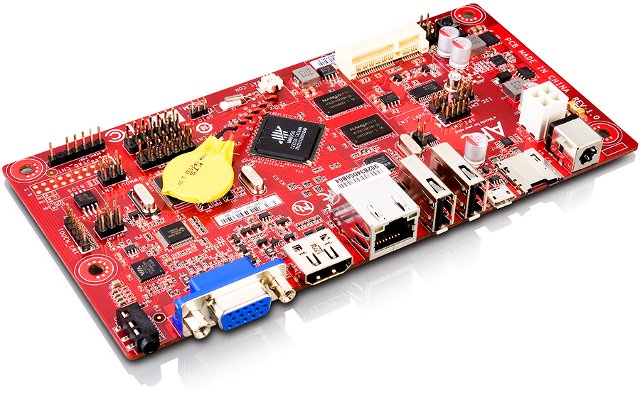
Following the launch of the $49 APC ARM11 board as a Raspberry Pi alternative last year, VIA has just announced two new APC products based on a WonderMedia WM8950 Cortex A9 processor: APC Rock – $79 Android board APC Paper – $99 Android PC with a case made of recycled cardboard Both products run Android 4.0 (ICS) and mostly share the same specifications: SoC – VIA WonderMedia WM8950 ARM Cortex-A9 @800Mhz + Mali-400 GPU System Memory – 512 DDR3 SDRAM Storage – 4GB NAND Flash + microUSB slot Video Output – HMDI (Rock & Paper) and VGA (Rock only) Audio I/O – Audio out / Mic in combo Ethernet – 10/100 Mbps USB – USB 2.0 (x2) and microUSB (OTG) 20-pin ARM-JTAG header Extra GPIO, SPI and I2C busses on a header Dimensions (Board) – 170 x 85mm (W x H), Neo-ITX Standard. APC Paper is basically the same as […]

Barebox Bootloader Status Update – ELCE 2012

Sascha Hauer, kernel developer at Pengutronix, gives an update about the status of Barebox bootloader at the Embedded Linux Conference 2012 in Barcelona, Spain. Abstract: Booting Linux is still a hot topic on embedded systems. It has been 3 years since the last presentation about Barebox at ELC-E, and the barebox community has grown and developed many new and unique features during that time. The talk gives an update on the status of barebox, including MMU support, compressed images, menu system, automouter, tftp, nfs filesystem, USB updating techniques and other goodies. The presentation is for kernel porters who need a robust, flexible,extensible and well structured tool to bring up Linux on embedded hardware. It is equally suitable for new and experienced barebox users. Agenda of the talk: Tour through Barebox – Basic hardware initialization (SDRAM, clocks), Startup, User Interface, Start operating system, Update and Initial hardware bring-up. Devicetree support Multi-platform […]

Upgrading Embedded Linux Without Bricking – ELCE 2012

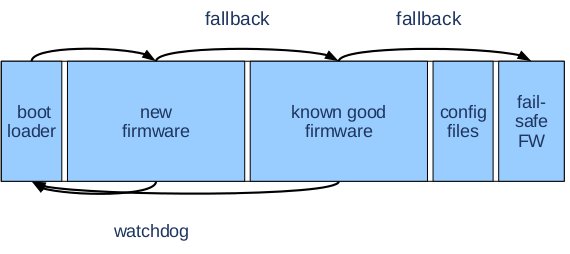
Arnout Vandecappelle, senior embedded software architect at Essensium/Mind, talks about ways to greatly decrease the risk of bricking your board/device during upgrade thanks to gubies scripts and tools at the Embedded Linux Conference in Barcelona, Spain, on November 6, 2012. Abtract: Embedded systems are often modified remotely, e.g. to upgrade the firmware or change the configuration. This may however break the system and render it inaccessible, which is a major problem if the device is hard to reach physically. Unfortunately, no catch-all failsafe solution exists to make sure that the device stays accessible remotely even if a modification goes wrong. Instead, the possible failures have to be anticipated and covered. This talk discusses some of the frequently occurring failures, how they can be detected and handled. These include power failure, kernel crashes, network failure and data corruption. We include examples of concrete use cases. Finally, there is room for discussion about […]

Board Bringup: You, Me, and I2C – ELCE 2012

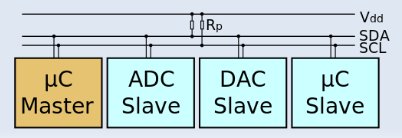
David Anders, embedded systems developer at Texas Instruments, explains how to work with I2C in Linux based embedded systems at ELCE 2012. Abstract: Board bring up is one of the most under documented aspects of embedded development. I2C is such a powerful, low-cost, and ubiquitous method of communication, that a basic understanding of it’s usage is essential to the embedded linux developer to quickly bring up and debug embedded designs. This presentation will look at the various software and hardware aspects of working with I2C using simple case studies highlighting the implementation of an EEPROM and a GPIO Expander. Most embedded Linux developers at some point in their career will be handed a piece of hardware that is untested. This presentation intends to provide some information about core tools and methods for bring up of I2C interfaces and assorted I2C based peripheral devices. David Anders has previously presented at Embedded […]

Supporting 200 Different Expansions Boards: The Broken Promise of Device Tree – ELCE 2012

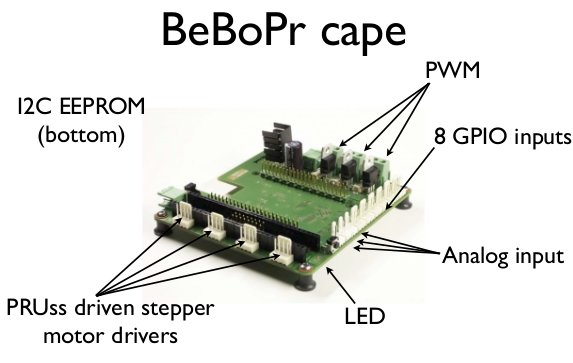
Koen Kooi, software engineering manager at Circuitco Electronics and lead developer of the Angstrom distribution, explains that device tree does help with the ARM Linux kernel, but brings all the complexity to the bootloader(s), taking the variety of Beaglebone capes as example, at the Embedded Linux Conference in Barcelona, Spain, on November 6, 2012. Abstract: Devicetree is marketed as the one ring to rule them all when it comes to non-discoverable hardware for Linux on ARM. The problem with devicetree is that the complexity gets removed from the kernel and put into the bootloader. Koen first gives an overview of device tree, and provides an example (am33xx.dtsi) to show device tree data structure. Then time for some Beaglebone and capes promotion overview,  before moving to the core of the problem: Pinctrl Resource tracking EVM/bone split uboot/uimage/dtb lockstep pdata only Keycodes and other non-hardware bits You can also download the presentation […]

Banana Pi BPI-R4 Pro networking SBC