
AkiraOS is a Zephyr-based embedded OS that runs sandboxed WebAssembly applications on microcontrollers and lets users deploy and update firmware OTA without reflashing. In other words, it’s similar to Docker containers, but for microcontrollers. The open-source embedded platform separates the OS from the application. That means the firmware stays stable, while apps are independent .wasm binaries deployable over-the-air without touching the OS, and portable so a single binary works on ESP32-S3, nRF5x, or STM32 MCU boards. AkiraOS highlights: User space Up to 8 wasm apps can be installed Up to two apps can run at the same time Footprint: 50KB to 200KB per app Akiraz runtime – Custom WASM runtime App Manager UI Framework with 32 widgets Shell/console 18 API modules WebAssembly Micro Runtime (WAMR) – Two options: Interpreter or Ahead-Of-Time (AOT) compilation with 10 to 50x higher performance RTOS – Zephyr RTOS Scheduler Network stack HTTP for OTA updates […]
Ubuntu Core 22 released for IoT devices and embedded systems
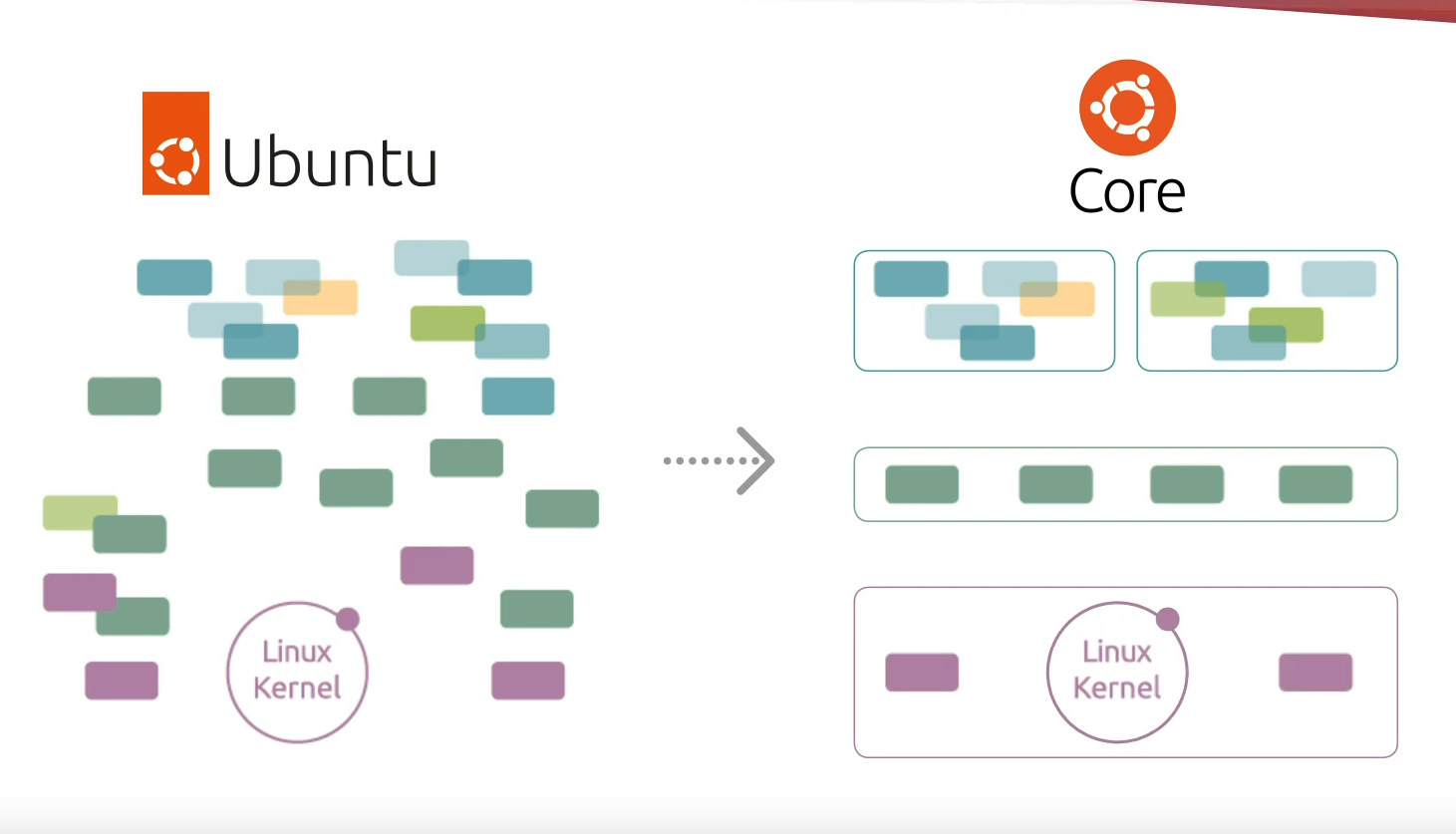
Canonical has just released Ubuntu Core 22, a containerized variant of Ubuntu 22.04 LTS, optimized for IoT devices and embedded systems and supporting Ubuntu’s new real-time kernel. In Ubuntu Core, everything is a snap, including the kernel, OS, and applications both to improve security to sandbox each package and to enable updates of specific packages from the IoT App Store over-the-air (OTA). If something goes wrong during the update, the system will automatically roll back to the previous version, so the device cannot be bricked. The Snap system also minimizes network traffic through delta updates. Ubuntu Core 22 also provides advanced security features with secure boot, full disk encryption, secure recovery, as well as confinement of the OS and applications as discussed above. Customers also benefit from Canonical’s 10 years (until 2032) of security maintenance of kernel, OS, and application-level code, which can be important for deployments in enterprise and […]
Giveaway Week – Balena Fin Developer Kit
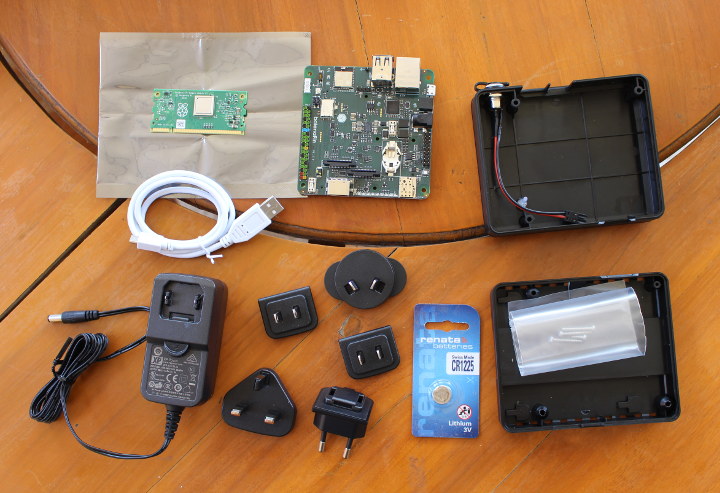
We’ve been organizing “giveaway weeks” every year since 2014 on CNX Software to send some of the review samples to our readers. Let’s do it again in 2019 starting with Balena Fin developer kit based on Raspberry Pi 3+ Computer Module (CM3+) with 8GB flash and a carrier board in order to get started with BalenaOS operating system and the company’s balenaCloud service. Instead of a traditional review, we wrote a getting started guide for balenaFin Developer Kit, balenaOS and balenaCloud, where we explain how to flash the OS to the board, configure it, run a container, and manage the device, including container updates, from Balenacloud. The winner will receive the full kit below with carrier board, Raspberry Pi CM3+ module, CR1225 battery, enclosure, power supply, and MicroUSB cable. It will come already assembled as shown in the first photo. To enter the draw simply leave a comment below. Other […]
Nubix Edge-native Tiny Containers for IoT Apps Released For Raspberry Pi and BeagleBone SBCs
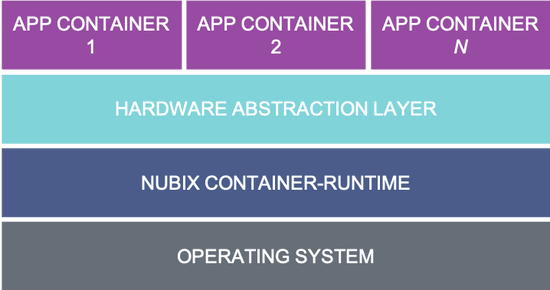
Nubix has just launched the developer edition of its edge-native tiny containers for IoT application development and analytics that target microcontrollers and single-board computers such as Raspberry Pi 3/4 and BeagleBone Black. Typical cloud solutions such as Docker are often too large with tiny IoT devices, and to solve these issues, Nubix tiny containers are sized in kilobytes, instead of megabytes, or about 100 times smaller than a Docker container, in order to be small enough to run at the edge. Nubix.io provides access to a library of sensors, analytics and tiny services that leverage open source languages and pre-packaged functions to easily create IoT applications in a few minutes. Analytics is commonly done in the cloud, which may cause issues in environments with limited or intermittent connectivity, so to solve this issue, Nubix provides analytics functionality directly on the IoT device, eliminating the latency, bandwidth, connectivity and cost constraints […]
FOSSASIA 2019 Schedule – March 14-17
As its name implies, FOSSASIA is a Free and Open Source Software event taking place every year in Asia, more specifically in Singapore. I first discovered it last year, and published a virtual FOSSASIA 2018 schedule last year to give an idea about the subjects discussed at the event. It turns out FOSSASIA 2019 is coming really soon, as in tomorrow, so I’m a bit late, but I’ll still had a look at the schedule and made my own for the 4-day event. Thursday – March 14, 2019 10:05 – 10:25 – For Your Eyes Only: Betrusted & the Case for Trusted I/O by Bunnie Huang, CTO Chibitronics Security vulnerabilities are almost a fact of life. This is why system vendors are increasingly relying on physically separate chips to handle sensitive data. Unfortunately, private keys are not the same as your private matters. Exploits on your local device still have […]
K3s Lightweight Kubernetes Distribution Targets Low Resources x86 and Arm Platforms
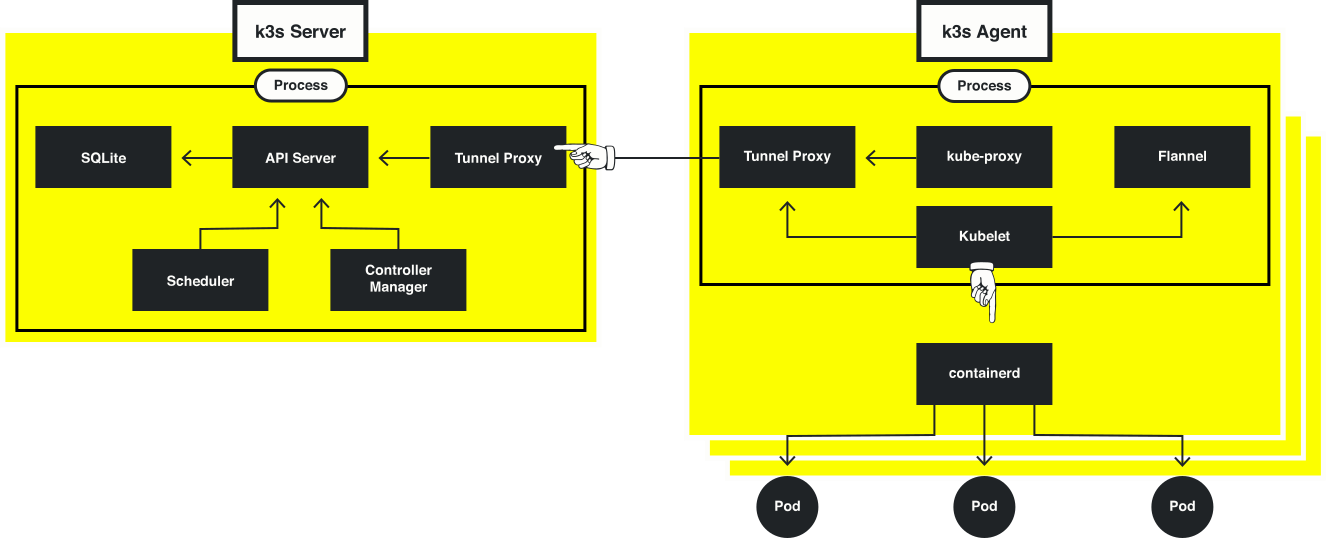
Kubernetes (K8s) is described as a “portable, extensible open-source platform for managing containerized workloads and services, that facilitates both declarative configuration and automation. It has a large, rapidly growing ecosystem. Kubernetes services, support, and tools are widely available. Google open-sourced the Kubernetes project in 2014”. However, as Rancher Labs’ CEO Sheng Liang explains “existing Kubernetes distributions are often memory intensive and overly complex for edge computing environments”, so the company developed and launched K3s, a lightweight Kubernetes distribution designed for developers and operators looking for a way to run Kubernetes in resource-constrained x86, Armv7-A and 64-bit Armv8-A hardware platforms often found in edge computing environments, as opposed to the cloud. Rancher Labs managed to reduce the footprint of Kubernetes, and better adapt it to entry-level hardware by taking four main steps: Removing old and non-essential code – Alpha functionalities, all non-default admission controllers, in-tree cloud providers, and storage drivers are […]
BalenaFin is an Industrial Carrier Board for Raspberry Pi CM3L Module Designed for Fleets of Connected Devices
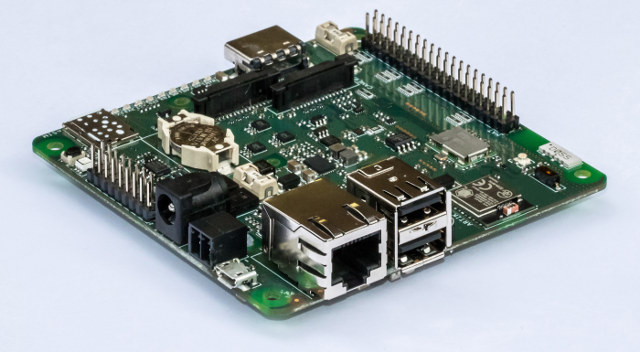
[Update January 2019: Resin.io Project Fin has been renamed to BalenaFin, I have not changed the rest of the article] Resin.io is a both a company and a software platform that includes device, server, and client software to get code securely deployed to a fleet of devices. Devices are setup to run ResinOS, and to deploy you app, you just need to push the code to resin.io build servers, where it will be packaged into containers and delivered to your fleet of boards. So far, resin.io relied on existing hardware platforms like Raspberry Pi 3, BeagleBone Black, or Intel NUCs, but they’ve now decided to launch their first hardware with Project Fin that takes a Raspberry Pi Compute Module 3 Lite, is hardened for field deployment use cases, and adds some of most commonly requested hardware features such as variable supply voltage support, RTC, and cellular connectivity (via mPCIe card). […]
UBPorts Ubuntu Touch Firmware to Add Android App Support using Anbox
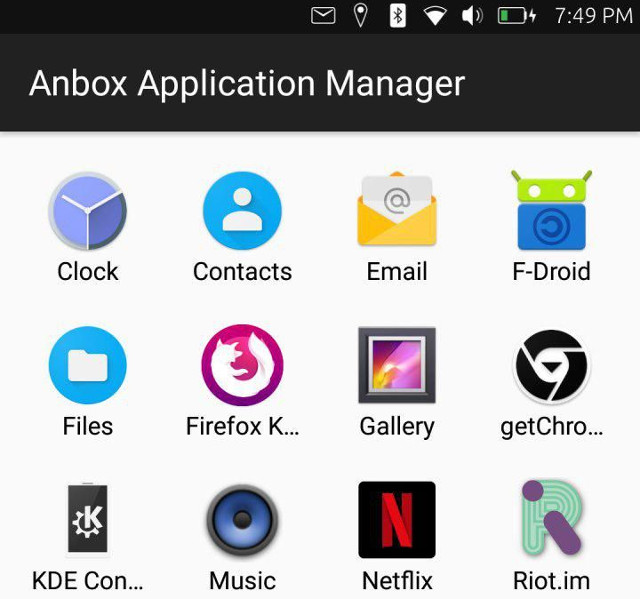
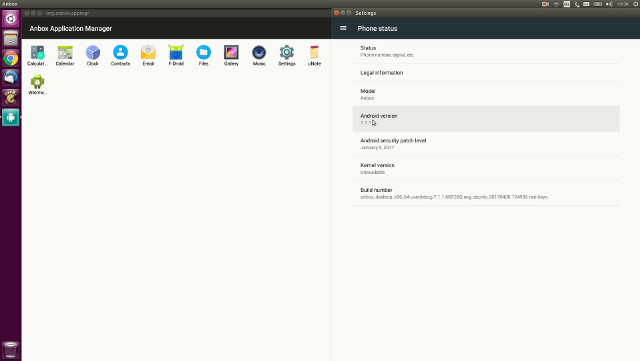
Last spring, Canonical stopped working on mobile and convergence, and dropped any work on Unity, which explains why Ubuntu 17.10 is now running Gnome desktop environment by default. The company had to take this decision because there was little interest from manufacturers for such solution, and instead they refocused on the more profitable IoT and cloud markets. However, some members of the community still wanted to run Ubuntu on their phone, and that’s why UBPorts community decided to carry on development on their own and released their first stable Ubuntu Touch image for supported smartphones last summer. A phone running Ubuntu Touch is great, but you’d have a very limited set of app to play with, so the developers are now working on adding support for Android apps support. There are various ways to implement such features, but they went with Anbox, as it executes Android apps natively in a […]