
The Analog Discovery Studio Max (ADS Max) is an all-in-one electronics trainer kit with four breadboards developed by Digilent for academic and engineering experimentation. Designed for both classroom and remote learning, it combines the functionality of 14 essential instruments into one, making it ideal for circuit design, signal analysis, and embedded systems education. The instruments include an oscilloscope, waveform generator, logic and spectrum analyzers, DMM, programmable and static power supplies, and a protocol analyzer. It supports WaveForms software, LabVIEW, C, and Python for control and data analysis. With a 100 MS/s, 14-bit oscilloscope, ±15 V power supplies, 16 digital I/O channels, and WaveForms SDK, it provides a complete learning and experimentation ecosystem. Analog Discovery Studio Max specifications: Core Instruments Oscilloscope 4x single-ended BNC channels, 14-bit resolution (16-bit with averaging) ±25 V input range (50 V p-p max), 50 MHz @ –3 dB bandwidth 100 MS/s per channel, 1 MΩ ‖ […]
ALLPCB offers one dollar PCB prototyping with free shipping (Sponsored)
For hobbyists, small businesses, and engineers in Europe and the United States, prototyping printed circuit boards (PCBs) is a critical step in turning innovative ideas into reality. However, one significant barrier often stands in the way: high shipping costs. These expenses can quickly inflate the total cost of small-scale PCB orders, making prototyping less accessible for individuals and startups with limited budgets. Few PCB manufacturers offer significant discounts on small-scale orders, and shipping fees can sometimes rival or even exceed the cost of the PCBs themselves, discouraging experimentation and innovation. To address this issue, ALLPCB, a leading PCB manufacturing and assembly provider, has launched an exciting new campaign designed to make PCB prototyping more affordable for everyone. New users can now enjoy $30 off their first PCB order, plus an additional $30 off shipping costs. What sets this offer apart is its flexibility—there are no limitations on PCB size, number […]
Red Pitaya STEMlab 125-14 PRO Gen 2 is an AMD Zynq 7010/7020-based board for measurement, control, and signal processing
The Red Pitaya board was first introduced in 2013 as an Xilinx Zynq 7010 SoC FPGA board designed as a high-performance tool acting as an oscilloscope, spectrum analyser, waveform generator, and more. I hadn’t heard about the company much this then, but they must have been doing alright, since Red Pitaya has just started taking pre-orders for the STEMlab 125-14 PRO Gen 2 Starter Kit based on the same AMD Zynq-7010 SoC FPGA, and the STEMlab 125-14 PRO Z7020 Gen 2 Starter Kit with a more powerful Zynq-7020 device. STEMlab 125-14 PRO Gen 2 specifications: SoC FPGA (one or the other) Xilinx Zynq 7010 CPU – Dual-core Cortex-A9 clocked up to 667 MHz FPGA fabric – 28K logic cells, 80x DSP slices Memory – 2.1 Mbit block RAM Xilinx Zynq 7020 CPU – Dual-core Arm Cortex-A9 processor FPGA – 85K logic cells, 220x DSP slices Memory – 4.9 Mbit Block […]
ST’s Human Presence Detection (HPD) solution tracks head and posture with AI and VL53L8CP ToF sensor
Back in 2022, we first saw STMicro launch the VL53L5CP ToF presence detection sensor for the PC market with features like user detection, gesture recognition, and intruder alert. Building upon that, the company has recently released its 5th‑generation Human Presence Detection (HPD) solution, built around the VL53L8CP 8×8 multizone Time‑of‑Flight sensor family with edge AI features offered as a turnkey solution for laptops, PCs, monitors, and accessories. We have seen and even tested earlier ToF sensors like the VL53L0X and VL53L1X, which used a single-photon avalanche diode (SPAD) for single-zone ranging. After that, we saw ST release the VL53L5, which was a major upgrade with up to 64-zone multi-zone support, enabling features like touch-to-focus and object tracking. Now, in the age of AI, ST has launched a 5th-gen turnkey HPD solution built around the VL53L8CP sensor. STMicro HPD solution specifications: Sensor – ST FlightSense VL53L8CP 5th generation multi-zone direct Time-of-Flight (dToF) […]
Raspberry Pi 5-based portable AI learning platform features 41 modules, supports Arduino Nano, RPi Pico, and Micro:bit boards (Crowdfunding)
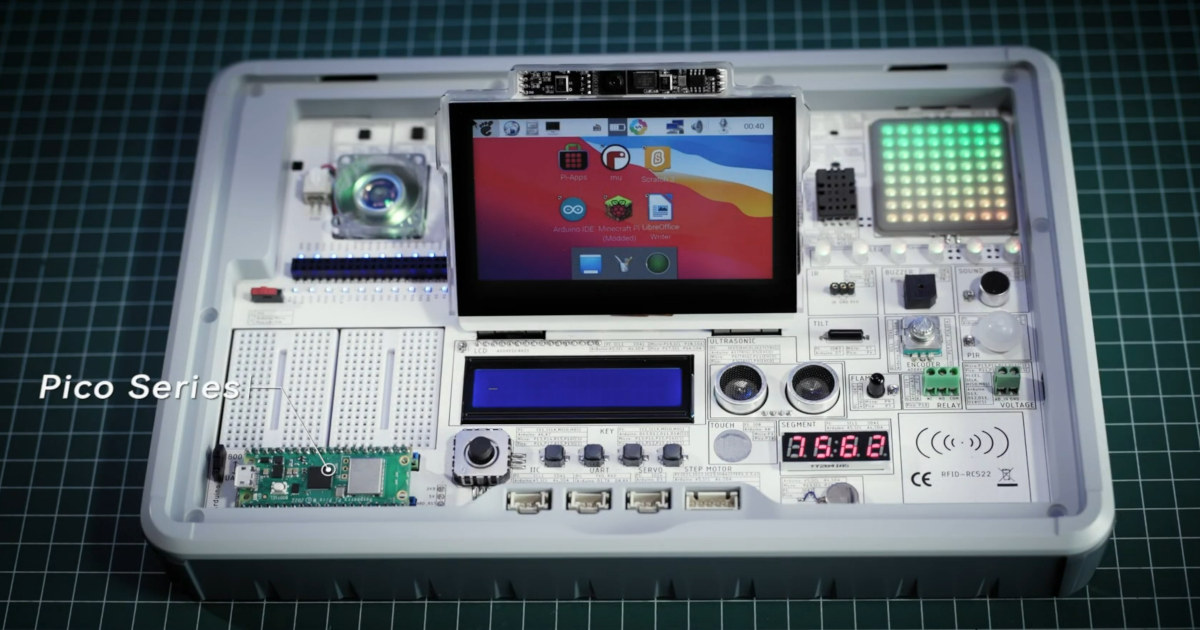
CrowPi 3 is a Raspberry Pi 5-powered all-in-one portable AI learning and development platform with a 4.3-inch touchscreen display, plenty of plug-and-play electronic modules, a breadboard area, and support for Arduino Nano, Raspberry Pi Pico, and BBC Micro:bit MCU boards for expansion. It’s basically another take on the CrowPi 2 laptop based on the Raspberry Pi 4 with similar modules placed under the keyboard, but in a different form factor. The CrowPi 3 portable learning platform replaces the 11.6-inch Full HD display with a 4.3-inch display and does away with the keyboard, but is equipped with a more powerful Raspberry Pi 5 SBC capable of handling real-time AI tools such as ChatGPT and LLaMA (with smaller, distilled models). CrowPi 3 specifications: Main Board – Raspberry Pi 5 SBC Compatible MCU boards Arduino Nano boards BBC Micro:bit boards Raspberry Pi Pico boards Display – 4.3-inch IPS touchscreen display with 800×480 resolution […]
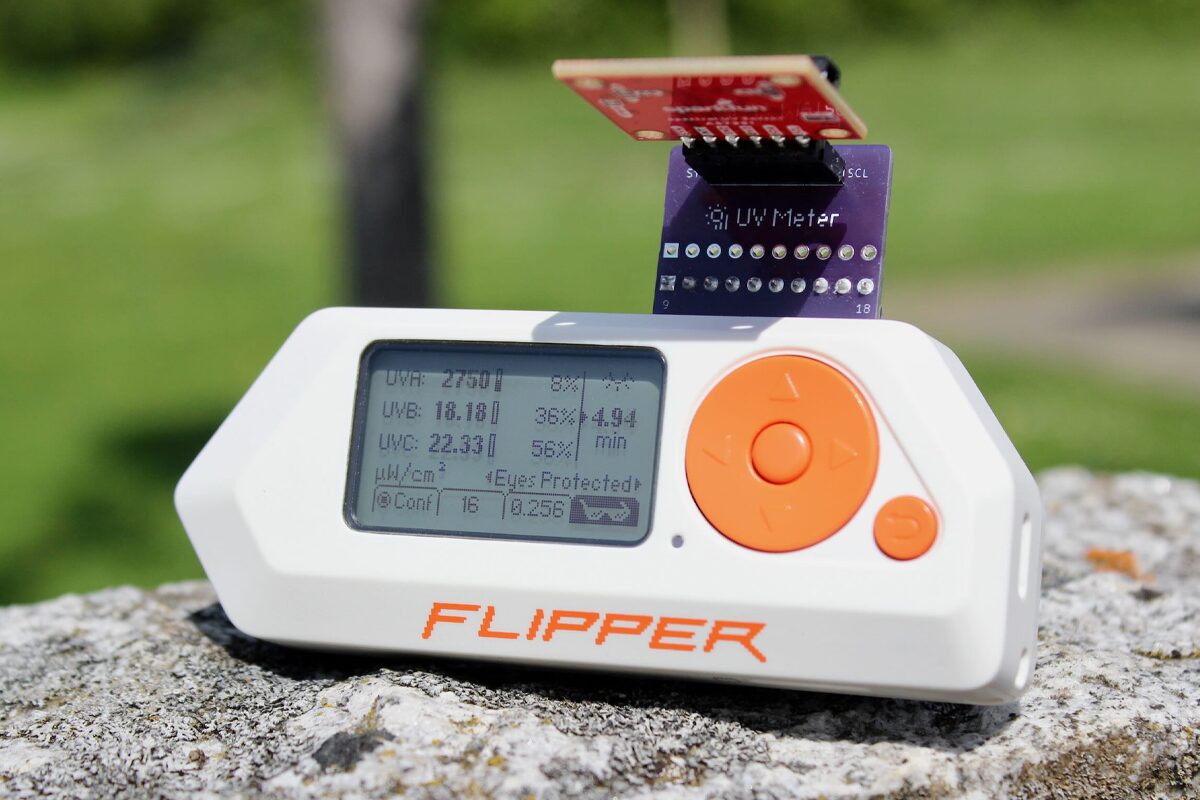
UV Meter for Flipper Zero measures ultraviolet radiation with AS7331 sensor
The UV Meter is a Flipper Zero application designed to measure ultraviolet (UV) radiation using the AS7331 spectral sensor, which can detect UV-A, UV-B, and UV-C wavelengths. Designed for personal and environmental UV monitoring, this tool measures UV exposure levels in everyday scenarios, whether it’s behind windows, under cloud cover, or while wearing sunglasses. It provides real-time irradiance readings in µW/cm², W/m², or mW/m², and calculates safe maximum daily exposure durations based on 2024 TLVs and BEIs from ACGIH, with adjustable factors like eye protection status, gain, and exposure time. A visual meter and warning symbols notify the user of under- or overexposure. The app also displays each UV type’s relative contribution to overall exposure risk. A compact adapter PCB enables easy connection between the Flipper Zero and the AS7331 breakout board via I²C. Flipper Zero UV Meter specifications: Target platform – Flipper Zero Sensor module – Sparkfun AS7331 Spectral […]
AWG to mm² Conversion Explained: Wire Sizing for Safety and Performance (Sponsored)
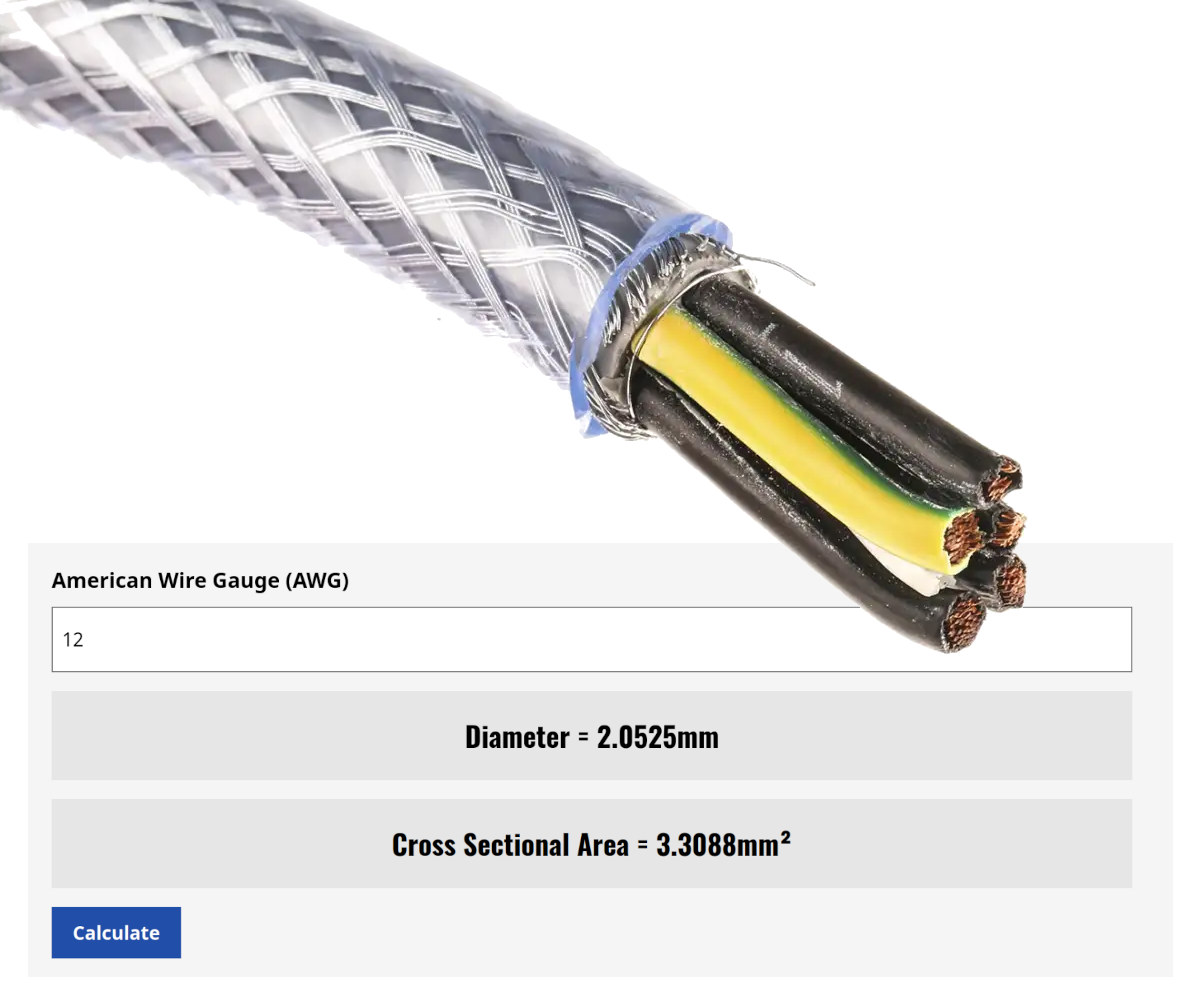
It is of fundamental importance across a broad range of electrical projects to ensure the right wire size is chosen for the given application. Accordingly, then, there are few more critically needed skills among electricians and engineers than knowing how to convert from AWG to mm2. Before we go any further, let’s quickly set out these two units of measurement: “AWG”, of course, refers to American Wire Gauge – a standardised wire gauge system that goes back to the mid-19th century. As its name indicates, AWG is predominantly used in North America. In Europe and elsewhere in the world, however, millimetres squared, or “mm2”, see widespread use for directly measuring a cable’s cross-sectional area, or CSA. In some contexts, then, you might see AWG being used, while in others, references to wire size may be in mm2. Being able to quickly convert between these two systems will help ensure both […]
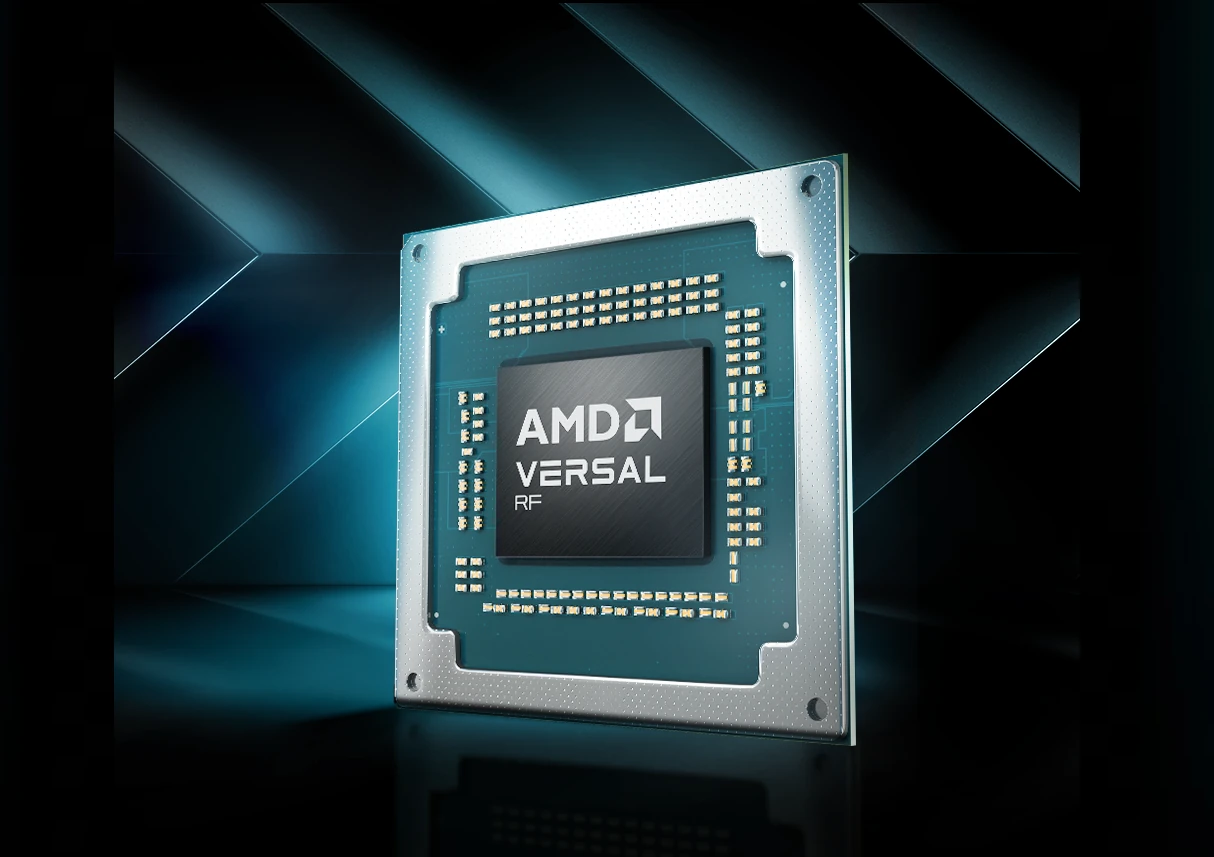
AMD Versal RF Series adaptive SoCs target 6G wireless, aerospace, and electronics test equipment
AMD Versal RF series adaptive system-on-chips (SoCs) combines Arm Cortex-A72 and Cortex-R5F hard cores with FPGA fabric and direct radio frequency (RF)-sampling data converters for pre-6G systems, wireless 6G testers, aerospace and defense applications like radars, and electronics test equipment such as multi-channel testers, oscilloscopes, and wideband spectrum analyzers. Built upon the Xilinx Zynq RFSoC devices, the AMD Versal RF Series supports wideband-spectrum with high-resolution thanks to up to sixteen 18 GHz, 14-bit RF ADCs with up to 32 GSPS and sixteen 14-bit RFV DACs up to 16 GSPS, and delivers 80 TOPS of DSP performance in a size, weight, and power (SWaP)-optimized design. The chips also integrate hard IP such as DDR5 memory controllers, 600 Gbps Ethernet, PCIe Gen5 x4, and various high-speed transceivers. AMD Versal RF Series adaptive SoCs key features and specifications: Processing System Application Processing Unit (APU) – Dual-core Arm Cortex-A72 with 48 KB/32 KB L1 […]