Allwinner T153-based industrial SoM and SBC feature a mix of Arm Cortex-A7 and RISC-V cores

Forlinx FET153 S Allwinner T153 System on Module

Forlinx has recently introduced the Allwinner T153-based FET153-S SoM and the OK153-S SBC. The Allwinner T153 processor features a hybrid architecture that combines a quad-core Arm Cortex-A7 CPU with an XuanTie E907 RISC-V core. The board features up to 1GB DDR3 RAM, 8GB eMMC, triple Gigabit Ethernet, dual CAN-FD, RS-485, and a Local Bus for PSRAM or FPGA expansion. Display options include support for RGB, LVDS, and MIPI DSI interfaces, and camera inputs are offered via parallel or MIPI CSI. Additional I/O include multiple UART, I²C, SPI, I²S, GPADC, and GPIO options, along with Wi-Fi/Bluetooth, a USB Type-C OTG port, and a Mini PCIe socket for 4G modules. Target applications include real-time control and edge computing, industrial automation, IoT gateways, and embedded systems. Forlinx FET153-S system-on-module Specifications: SoC – Allwinner T153 CPU 4x Arm Cortex-A7 cores @ up to 1.6GHz XuanTie E907 RISC-V core @ up to 600MHz GPU – 2D […]

Sub $7 CH32V317 board offers 10/100Mbps Ethernet, dual USB 2.0 Type-C, DVP interface

nanoCH32V317 development board

The nanoCH32V317 from MuseLab is a low-cost RISC-V development board designed for prototyping embedded systems and education. Built around the 144MHz WCH CH32V317WCU6 MCU. This development board is suitable for various embedded, IoT, prototyping, and automation projects. Other features of the development board include a USB 2.0 high-speed and full-speed controller, a 10/100Mbps Ethernet MAC with PHY, SDIO, and a DVP interface for digital video input, as well as advanced motor PWM timers for control applications. The board also includes an 8MHz main crystal and a 32.768KHz RTC crystal. For programming, it includes a dual USB Type-C interface, a USB ISP, as well as an SWD port.  nanoCH32V317 board specifications: MCU – WCH CH32V317WCU6 32-bit RISC-V core up to 144 MHz clock frequency USB 2.0 High-Speed (HS) and Full-Speed (FS) controllers Integrated Ethernet MAC + 10/100M PHY DVP interface, SDIO, and advanced motor PWM timer support Memory – Up to […]

KIWI 1P5 – A low-cost GOWIN GW1N industrial FPGA board with onboard USB-JTAG/UART

KIWI 1P5 industrial FPGA board

The OneKiwi KIWI 1P5 is a low-cost FPGA board built around the GOWIN GW1N-UV1P5 device. Priced at $14, it is designed for prototyping, digital logic design, and educational applications. The FPGA offers 1.5K LUT4 logic elements, 72Kbit of block SRAM, 96Kbit of on-chip flash, and a single PLL. The board comes with 40 user I/O pins via dual-row 2.54 mm headers, along with an onboard USB-C port for power. Debug and communication are handled by an onboard GOWIN USB-JTAG debugger and USB-to-UART bridge, while user interaction is done through two buttons and two LEDs. Additionally, a DIP switch enables external FPGA programming. OneKiwi KIWI 1P5 specifications: SoC – Gowin GW1N-UV1P5 1,584 Logic Units 96Kbit Block SRAM 256Kbit User Flash 2x PLL 6x I/O Banks Up to 125 user I/Os No embedded hard processor USB USB Type-C port for power and USB to UART USB Type-C port for debugging (USB to […]

Embedded Device Security: Protecting Linux Systems with Modern Tools

Embedded Device Security Protecting data on Linux systems

CNXSoft: This is a guest port by Erik Wierich, Senior Engineer at RISCstar Solutions, demonstrating a practical security implementation for embedded devices using standard Linux tools like dm-verity and TPM 2.0. It covers threat models, filesystem security, and TPM-based encryption with working code examples. Nowadays, it is (rightfully) impossible to put an embedded device into the market without comprehensive embedded device security measures. Most new devices store private data that we do not want to see leaked in dark corners of the Internet. We also want to avoid our device ending up as part of a botnet. Linux has a large set of tools to help us with security. What has historically been lacking is a simple, off-the-shelf way to integrate these tools into a secure-by-default configuration. This post will demonstrate how modern tools simplify deployments while ensuring strong security. Embedded Device Security Scope When talking about embedded system security, […]

Compulab EdgeAI-ORN Jetson Orin NX/Nano computer supports up to 4x GSML2, FPD Link IV, or MIPI CSI camera inputs

Compulab EdgeAI-ORN

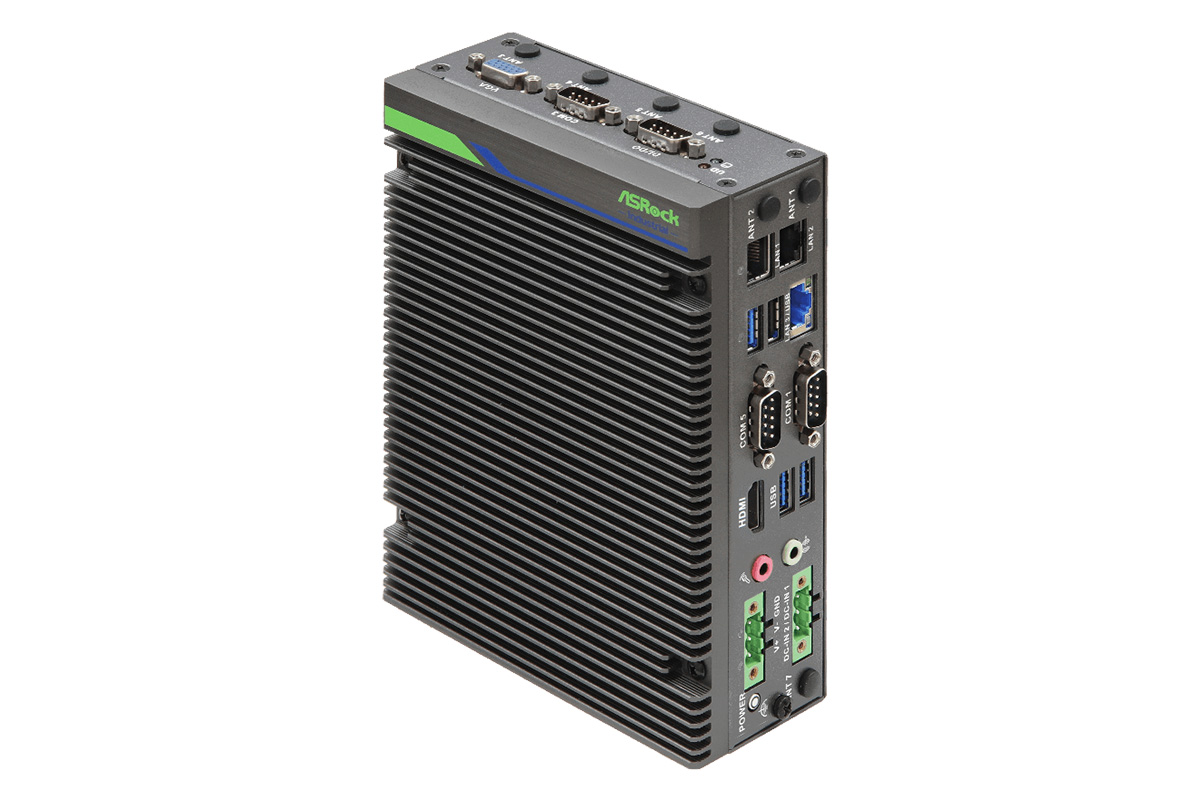
Compulab EdgeAI-ORN industrial-grade Edge AI computer is based on NVIDIA Jetson Orin NX/Nano system-on-module and delivers up to 157 TOPS for AI workloads with passive (fanless) or active cooling options. The embedded box PC supports up to four camera inputs using GMSL2, FPD Link IV, or 4-lane MIPI CSI interfaces, one 2.5GbE and one gigabit Ethernet port, an option for four PoE gigabit Ethernet ports, and M.2 sockets for storage, wireless, and 4G LTE/5G cellular connectivity. Other features include four USB 3.2 ports, HDMI 2.1 video output, and an optional Allxon Bolt for remote OOB management. Compulab EdgeAI-ORN specifications: SoM – NVIDIA Jetson Orin NX/Nano module Jetson Orin NX 16GB – Up to 157 TOPS, 16GB LPDDR5, 10W / 15W / 25W / 40W power modes Jetson Orin NX 8GB – Up to 117 TOPS, 8GB LPDDR5, 10W / 15W / 25W / 40W power modes Jetson Orin Nano 8GB […]

VS Code gets AutoML Embedded plugin for automated model tuning, deployment, and benchmarking

VS Code AutoML Embedded

AutoML for Embedded, developed by Analog Devices (ADI) and Antmicro, is an open-source plugin for Visual Studio Code that works alongside ADI’s CodeFusion Studio plugin. Built on the Kenning framework, it automates the full ML pipeline, including model search, hyperparameter tuning, optimization, compression, and deployment, making edge AI development easy on resource-constrained devices. The company mentions that it supports the ADI MAX78002 AI accelerator MCU, the MAX32690 MCU, Renode-based simulation, and Zephyr RTOS. It uses SMAC and Hyperband algorithms for automated model search and hyperparameter tuning, along with model compression and quantization to meet strict memory and compute limits. The plugin offers built-in benchmarking for inference speed, memory footprint, and accuracy, while performing RAM and compute compatibility checks. All these features make it useful for applications like image classification, anomaly detection, predictive maintenance, NLP, and action recognition on low-power IoT and embedded systems. AutoML Embedded overview: Type – Open-source AutoML plugin […]

Unexpected Maker launches Series[D] ESP32-S3 boards with dual antenna, software RF switch

Unexpected Maker Series[D] boards!

Unexpected Maker has recently released the Series[D], a lineup of four new ESP32-S3 development boards: the EdgeS3[D], TinyS3[D], FeatherS3[D], and ProS3[D]. The boards feature dual antenna support (onboard and u.FL) and are available in various form factors for different applications. Other features across the series include USB-C with native USB and USB Serial JTAG, LiPo battery charging, ultra-low deep sleep current, 8MB to 16MB of QSPI Flash, up to 8MB of PSRAM, and a new I2C battery fuel gauge chip. Additionally, ProS3[D] comes with ESD protection, castellated headers, and it’s also compatible with TinyS3 shields. The EdgeS3[D] module, on the other hand, uses an M.2 B-Key edge connector and an IO expander for some extra I/O access. EdgeS3[D], TinyS3[D], FeatherS3[D], and ProS3[D] share the following features: SoC – Espressif Systems ESP32-S3 CPU – Xtensa Dual-core 32-bit LX7 Microprocessor with up to 240MHz clock speed Memory – 512KB SRAM, 8MB PSRAM Storage […]

ESP32-P4 development board features 3.4-inch or 4-inch round IPS touchscreen display
ESP32 P4 Display Development Board

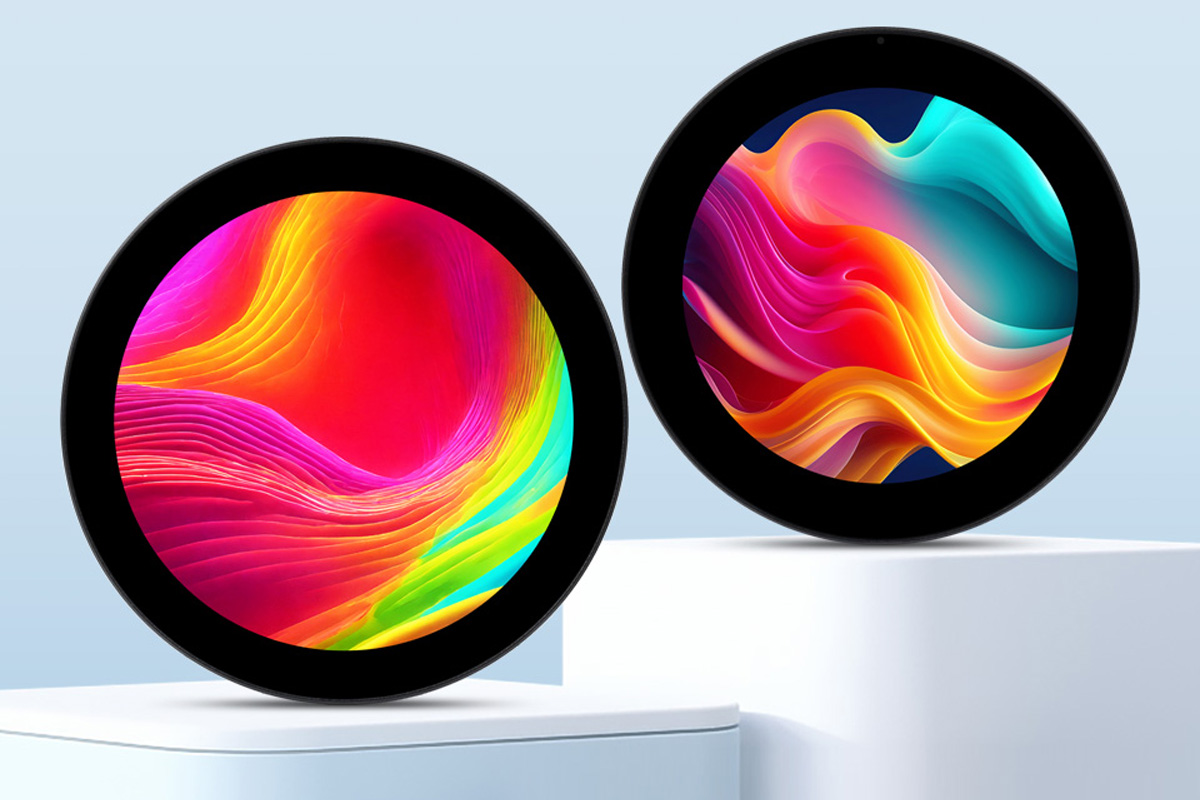
Waveshare ESP32-P4-WIFI6-Touch-LCD-3.4C and ESP32-P4-WIFI6-Touch-LCD-4C ESP32-P4-based development boards feature a 3.4-inch and a 4-inch round IPS display, respectively, a 10-point capacitive touchscreen, and a wide 170° viewing angle. They also integrate two microphones with echo cancellation for voice AI applications and offer Wi-Fi 6 and Bluetooth 5 (LE) connectivity via an ESP32-C6 module. Designed for AIoT and HMI projects, the boards also include USB ports, a camera connector, a speaker connector, and a microSD card slot. Target applications include Smart Home control panels, voice-controlled interfaces, digital dashboards, indoor environmental monitoring, PC performance monitoring, and other secure IoT and edge computing applications. Waveshare ESP32-P4-WIFI6-Touch-LCD-3.4C/4C specifications Main module – ESP32-P4-Core Module Microcontroller – ESP32-P4NRW32 MCU Dual-core RISC-V microcontroller @ 400 MHz with AI instructions extension and single-precision FPU Single-RISC-V LP (Low-power) MCU core @ up to 40 MHz GPU – 2D Pixel Processing Accelerator (PPA) VPU – H.264 and JPEG codecs support Memory – […]

Exit mobile version
Banana Pi BPI-R4 Pro networking SBC