Fogwise AIRbox Q900 – $599 Qualcomm IQ-9075 AI Box delivers up to 200 TOPS of AI performance

Radxa Fogwise AIRbox Q900

Fogwise AIRBox Q900 AI box is an upgrade to the Fogwise Airbox powered by a Qualcomm IQ-9075 SoC with up to 200 TOPS (sparse) of AI performance, 36GB RAM, and 128GB UFS storage. Radxa says its new AI micro-server competes directly against the NVIDIA Jetson Orin NX 16GB, offering cheaper overall system cost, similar performance, and higher efficiency.  Other benefits include Cortex-R52 real-time cores, 2.5GbE networking, and separate GPU, NPU, and DSP. Fogwise AIRBox Q900 specifications: SoC – Qualcomm DragonWing IQ-9075 CPU Octa-core Kryo Gen 6 (Cortex-A78C-based) application cores @ up to 2.36 GHz Quad-ore Cortex-R52 real-time cores @ up to 1.85GHz GPU – Adreno 663 GPU delivering up to 1.2 TFLOPS FP32 with secure GPU compute; supports Vulkan 1.2, OpenGL ES 3.2, OpenCL 2.0 FP, Adreno NN Direct VPU – Adreno VPU 765 Video Decode AV1 / HEVC / H.265 / H.264 / VP9 / MPEG-2 1x 8Kp60 / […]

Arm introduces Lumex platform with SME2-enabled C1 CPU for Edge AI, Mali-G1 GPU

Arm Lumex C1-Ultra Mali G1-Ultra

Arm Lumex CSS (Compute SubSystem) platform for mobile devices combines high-performance Arm C1 CPUs with Scalable Matrix Extension version 2 (SME2) and Mali-G1 GPUs to enable real-time on-device AI use cases like assistants, voice translation, and personalization. Lumex is part of Arm’s new product naming architecture announced last May, and targets specifically mobile devices. Arm says SME2-enabled Arm CPUs can deliver up to 5x faster AI performance, 4.7x lower latency for speech-based workloads, and 2.8x faster audio generation. Lumex components: Next-generation SME2-enabled Armv9.3 CPU cluster: C1-Ultra for flagship peak performance with +25% single-thread performance vs Cortex-X925; suitable for large-model inference, computational photography, content creation, generative AI C1-Premium with C1-Ultra performance, but greater area efficiency (35% smaller area than C1-Ultra); suitable for sub-flagship mobile segments, voice assistants, multitasking C1-Pro for sustained efficiency; +16% sustained performance vs Cortex-A725; ideal for video playback, streaming inference C1-Nano for maximum efficiency, smaller area for wearables, […]

Arm neural technology to add AI acceleration to Arm GPUs, enable “Neural Super Sampling” for lower bandwidth/higher FPS

Arm Neural Technology NSS

Arm neural technology will add dedicated neural/AI accelerators to Arm GPUs launched in 2026 and beyond to deliver up to 50% GPU workload reduction for mobile games and other graphics-intensive apps. The first application is called Arm Neural Super Sampling (NSS). It’s a kind of AI Super Resolution implementation for games, where rather than upscaling videos, the AI accelerator upscales graphics to lower the required bandwidth and increase the frame rate (or lower the power consumption) with no impact on the rendering quality. Watch the video below to see a demo rendered at 540p resolution by the GPU and upscaled to 1080p resolution by Arm neural technology with no obvious defects. The upscaler will introduce some lag, but only about 4ms per frame in sustained performance conditions, as explained in a technical blog about the Arm Neural and NSS announcement: We assume a target of 10 TOP/s per-watt of neural acceleration […]

PocketBeagle 2 Rev A1 board gets 1.4 GHz Sitara AM6254 quad-core Cortex-A53/Cortex-M4F SoC with 3D GPU
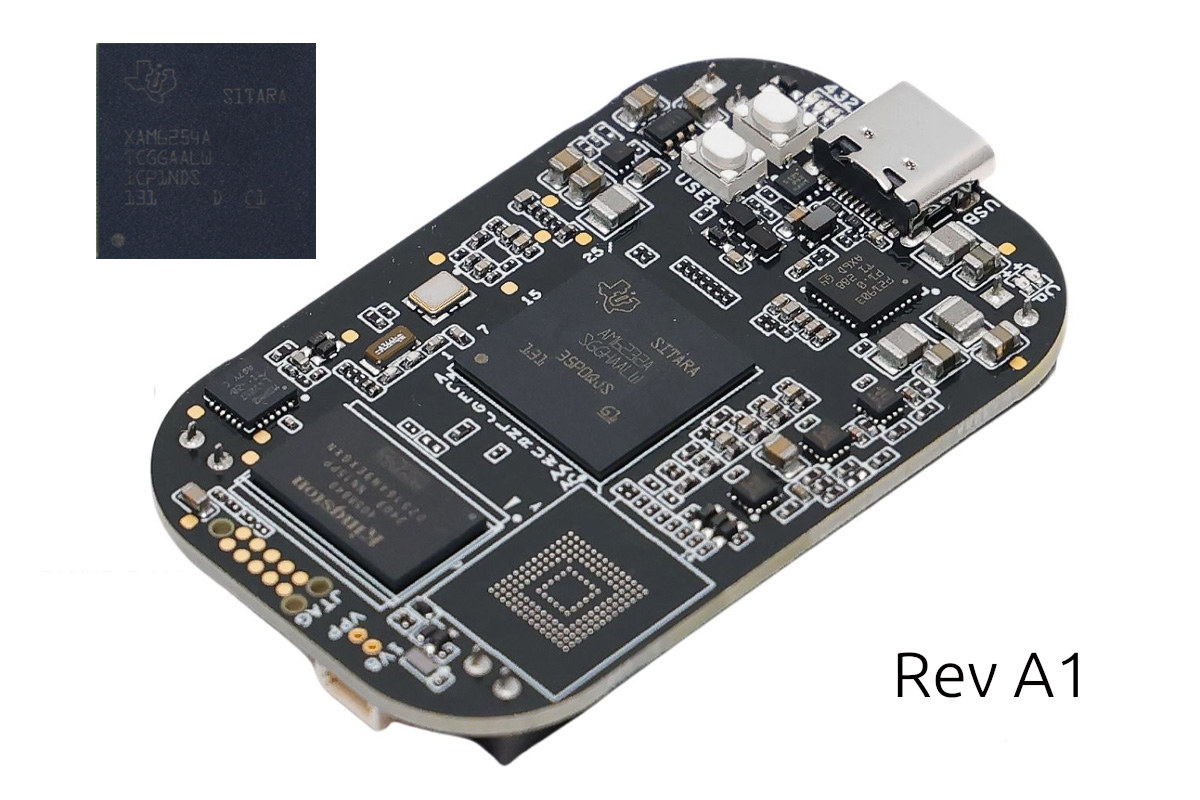
PocketBeagle 2 Rev A1

The PocketBeagle 2 was first introduced with a 1.0 GHz Texas Instruments Sitara AM6232 dual-core Cortex-A53 GPUless SoC in February with Rev A0 of the PCB. The BeagleBoard.org Foundation has now released a new PocketBeagle 2 Rev A1 board with a 1.4 GHz Sitara AM6254 quad-core Cortex-A53/Cortex-M4F SoC with a 3D GPU. All other features remain the same, with a secondary Texas Instruments MSPM0L1105 Arm Cortex-M0+ microcontroller, 512 MB LPDDR4 memory, a microSD card slot, a USB Type-C port for power and connectivity, a Raspberry Pi Debug Probe port, and two 36-pin expansion headers. PocketBeagle 2 Rev A1 specifications: Main SoC – Texas Instruments AM6254 as found in the BeaglePlay SBC CPU Quad-core 64-bit Arm Cortex-A53 @ 1.4 GHz Arm Cortex-M4F real-time core @ 400 MHz with 256KB SRAM GPU – Imagination PowerVR Rogue AXE-1-16M with support for OpenGL 3.x/2.0/1.1, Vulkan 1.2 Dual-core Programmable Real-Time Unit Subsystem (PRUSS) running up […]

Canonical releases Ubuntu 24.04 Desktop image for the Qualcomm DragonWing QCS6490 and QCS5430 processors

Qualcomm DragonWing Ubuntu 24.04

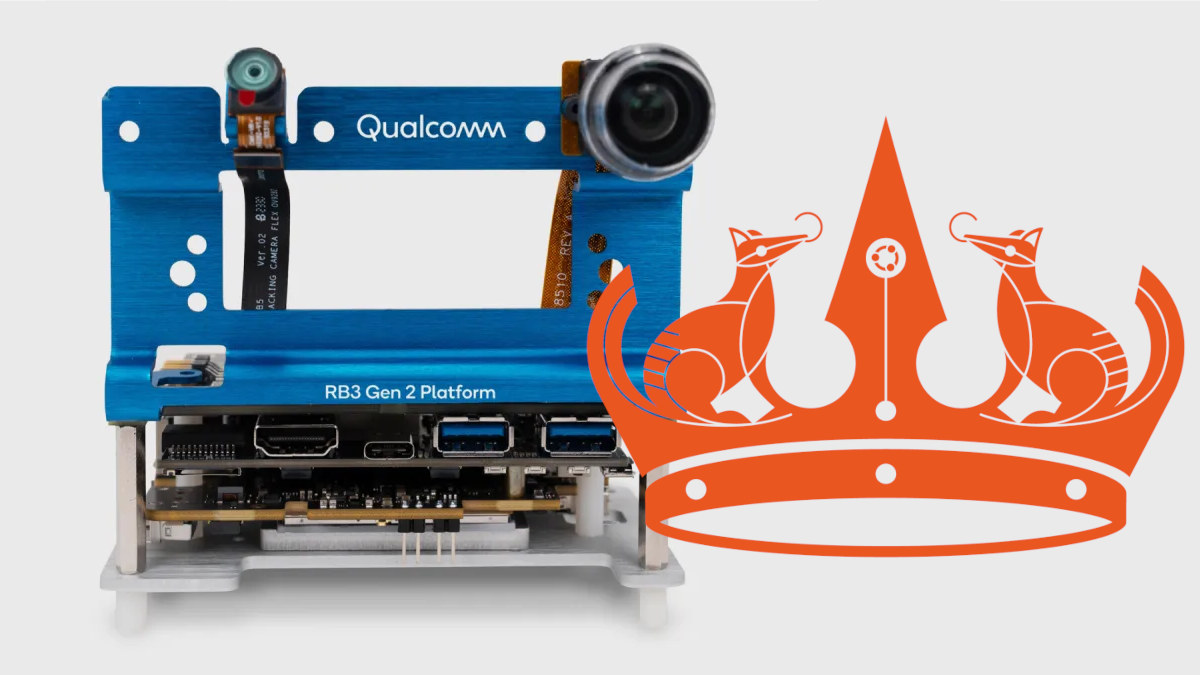
Canonical has just released a publicly available Ubuntu 24.04 Desktop beta image for the Qualcomm DragonWing QCS6490 and QCS5430 processors, and more specifically for the Qualcomm RB3 Gen 2 Vision Kit (QCS6490) and Qualcomm RB3 Gen 2 Lite Vision Kit (QCS5430). This adds to the existing Ubuntu 24.04 Server image for the Qualcomm vision kits, and Canonical says the unified image is currently designed for developers, ODMs/OEMs, and customers who want to evaluate the solution, and certified versions of Ubuntu 24.04 Desktop and Server images are coming soon with long term support and maintenance. Canonical explains the image enables the full Ubuntu Desktop experience at the edge with “powerful AI acceleration with high-performance graphics” (so I assume that means GPU and NPU are already supported), enhanced camera and multimedia capabilities, sensor integration, and various performance optimizations of the DragonWing family. So the way I read the announcement is that contrary […]

STMicro STM32MP23 Cortex-A35/M33 MPU features a 600 GOPS NPU for industrial IoT and ML applications

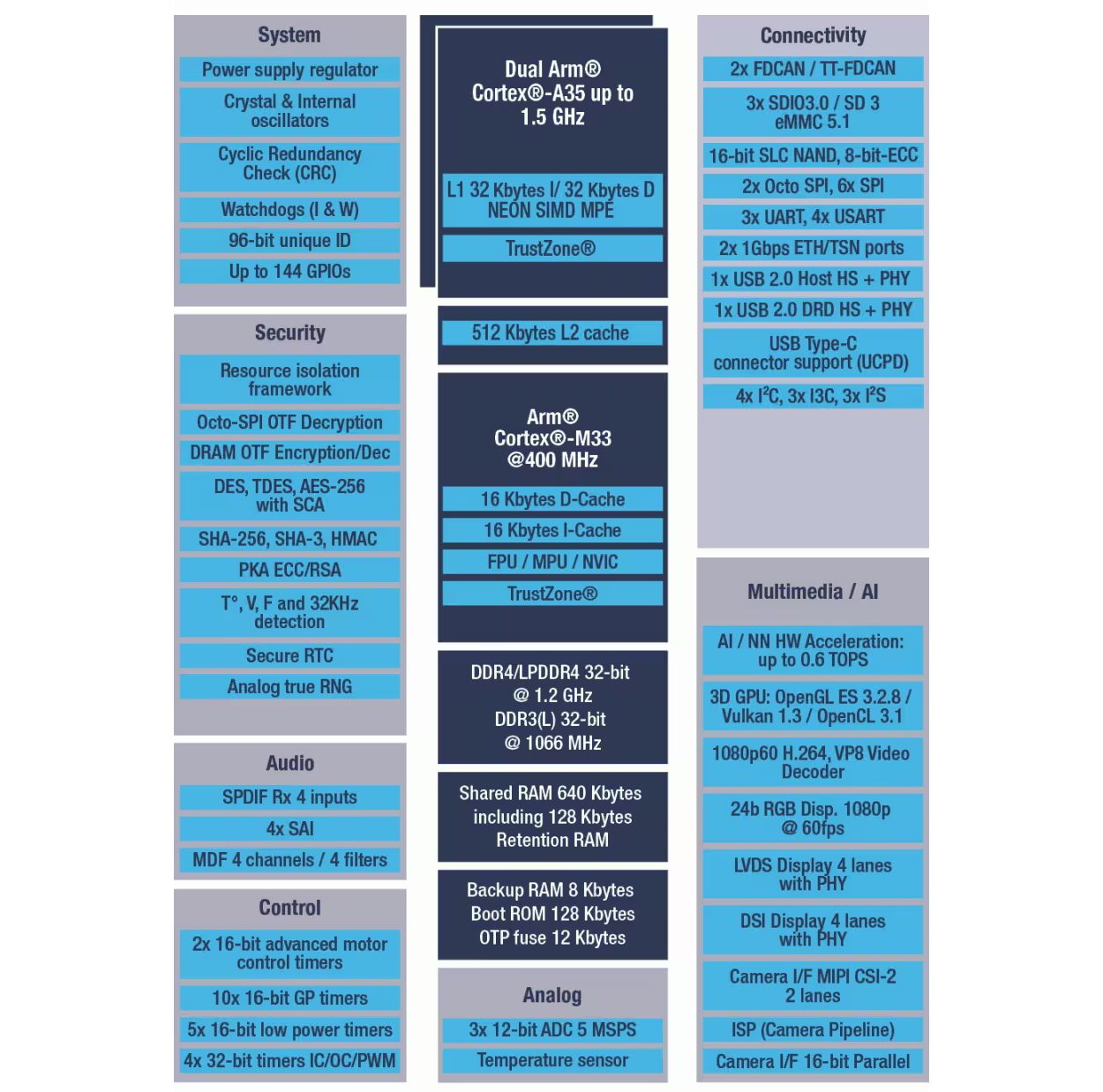
STM32MP235 block diagram

STMicroelectronics STM32MP23 is a dual-core Cortex-A35 general-purpose microprocessor (MPU) with a Cortex-M33 real-time core, and 600 GOPS of performance operating at up to 125°C and designed for industrial and Internet-of-Things (IoT) edge computing, advanced HMI, and machine-learning (ML) applications. It follows the STM32MP25 series unveiled in 2023 and launched the following year as the first member of the STM32MP2 family. The STM32MP23 is a cost-down version of the STM32MP25 with similar specifications (and pin-to-pin compatible packages), but the new family has a weaker 0.6 TOPS NPU, and tops at two Ethernet ports for the high-end parts instead of three. Ditto for CAN Bus interfaces (2x vs 3x). Other changes include a 16-bit memory interface and the lack of PCIe and USB 3.0 interfaces. STM32MP23 specifications: CPU – Single or dual Arm Cortex-A35 cores running at up to 1.5 GHz or 1.2 GHz with 512KB L2 cache Real-time MCU – Arm […]

Radxa Orion O6 Preview – Part 2: Debian 12 – What works, what doesn’t

Orion O6 Review Debian 12

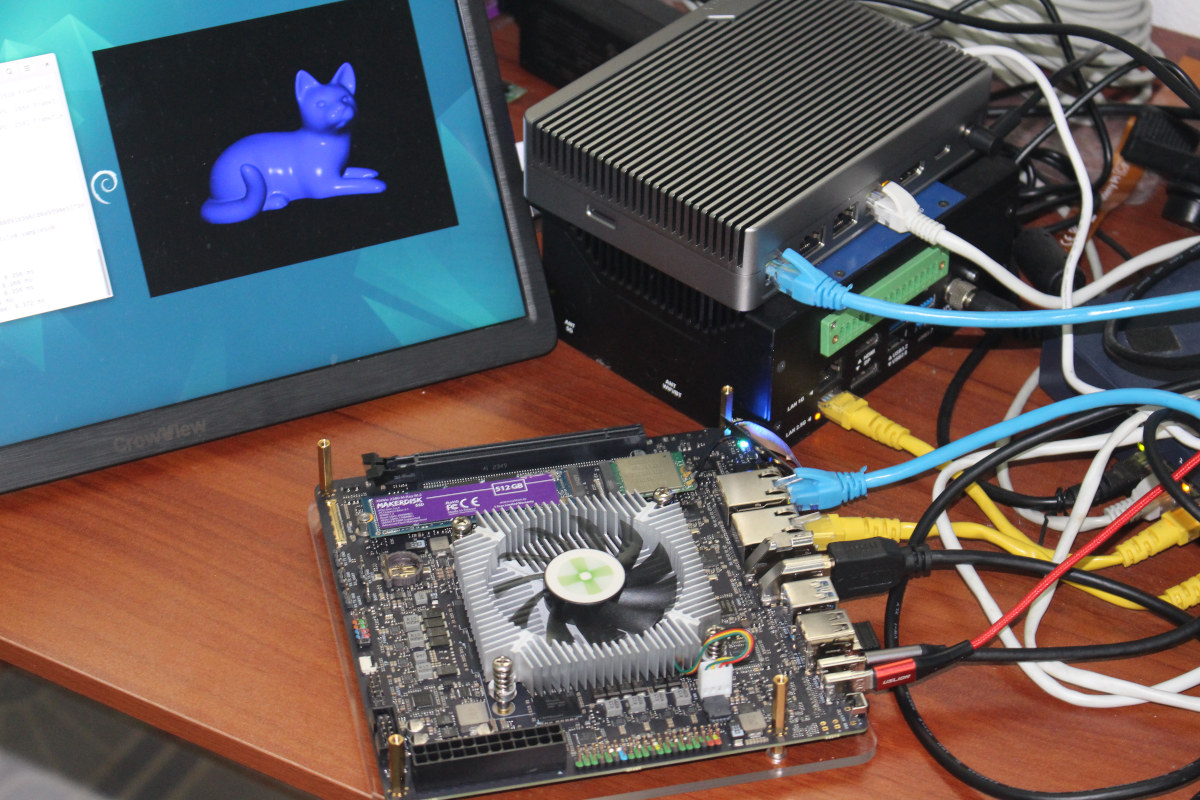
I went through an unboxing and Debian 12 installation on the Radxa Orion O6 at the end of January, but decided to work on other reviews since software support still needed to be worked on. Since then, there’s been some work done, but no new image released. After waiting for almost two months, I’ve decided to carry on with the review by testing the Debian 12 image in a way similar to the Rock 5B SBC preview I did with Debian 11 in 2022 to check what works and what doesn’t on the Orion O6 at the time of the review. That will involve testing all ports, including 5GbE networking and the PCIe slot with an (old) NVIDIA graphics card, running some benchmarks, and also trying the Debian 12 image with a self-built Linux 6.13 kernel using ACPI instead of UEFI for the default image. Orion O6 SBC benchmarks on […]

Imagination DXTP GPU promises 20% higher power efficiency compared to DXT GPU for mobile devices and laptops

Imagination DXTP power-efficient GPU

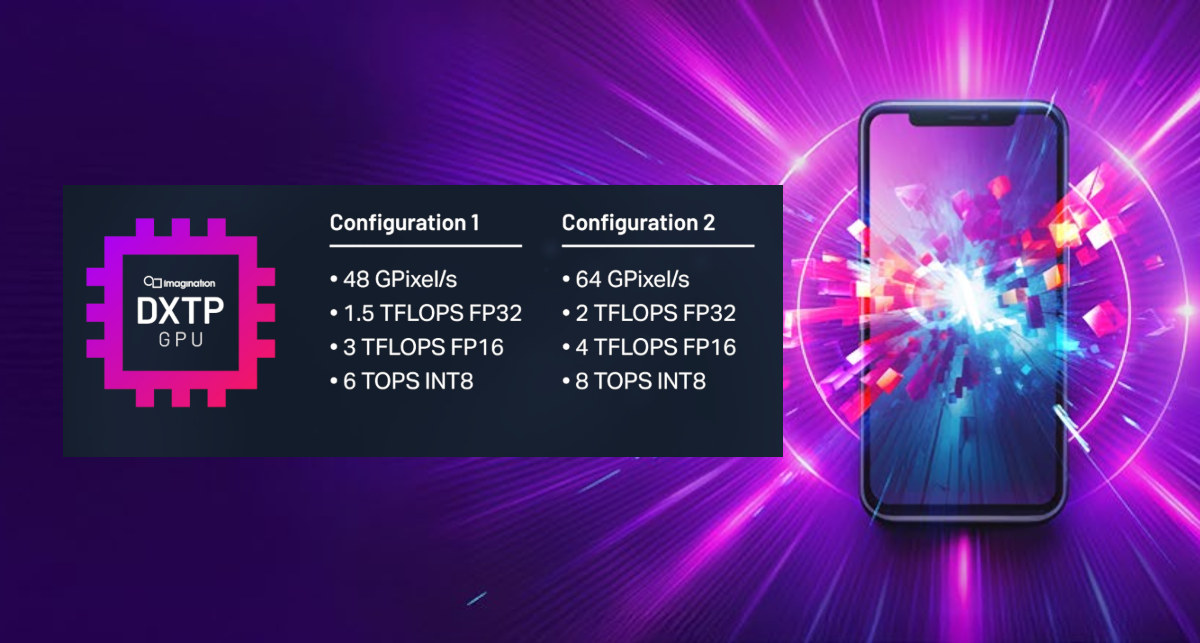
Imagination has announced the DXTP GPU for mobile and power-constrained devices with up to 20% greater power efficiency than its predecessor, the D-Series DXT GPU for longer battery life for AI applications or complex games. The company says the GPU is suitable for gaming, user interfaces, graphics-rich applications, computer vision, generative AI, and other AI applications designed to run on smartphones, tablets, laptops, desktops, or non-safety automotive products. Imagination DXTP highlights: Two off-the-shelf configurations: DXTP-48-1536 48 GPixel/s 1.5 TFLOPS FP32 (1536 FLOPs/Clock) 3 TFLOPS FP16 6 TOPS INT8 48 ppc Bilinear 3D Textured Up to 96 ppc 2D Dual Rate Mode DXTP-64-2048 64 GPixel/s 2 TFLOPS FP32 (2048 FLOPs/Clock) 4 TFLOPS FP16 8 TOPS INT8 64 ppc Bilinear 3D Textured Up to 128 ppc 2D Dual Rate Mode Bus Interface – AXI, ACE-Lite Compression PVRIC5 Lossless and Lossy Framebuffer Compression ETC and ASTC LDR and HDR Support Microarchitecture improvement – […]

Exit mobile version
Banana Pi BPI-R4 Pro networking SBC