M5Stack AI-8850 LLM Accelerator M.2 Kit offers an alternative to Raspberry Pi AI HAT+ 2

M5Stack AI-8850 LLM accelerator M.2 kit

M5Stack has launched the “AI-88502 LLM Accelerator M.2 Kit 8GB Version” based on its LLM-8850 M.2 card with a 24 TOPS Axera AX8850 SoC, and offering an alternative to the Raspberry Pi AI HAT+ 2, supporting both LLM and AI vision workloads. The kit is comprised of the M.2 card and a Raspberry Pi-HAT 8850 board with USB PD power input for the card and Raspberry Pi 5, a 16-pin PCIe connector and 40-pin GPIO header for connection to the SBC, as well as accessories. M5Stack AI-8850 LLM accelerator M.2 kit specifications: M5Stack LLM‑8850 M.2 card SoC – Axera AX8850 CPU – Octa-core Cortex‑A55 processor at 1.7 GHz NPU – 24 TOPS @ INT8 VPU Video Encoder – 8K @ 30 fps H.264/H.265 encoding, supports scaling / cropping Video Decoder – 8K @ 60 fps H.264/H.265 decoding, supports 16 channels 1080p parallel decoding, supports scaling / cropping Memory (two options) 8GB 64‑bit LPDDR4x @ 4266 Mbps 4GB 64-bit LPDDR4x, 4266 Mbps (not […]

VisionFive 2 Lite SBC Review – Ubuntu 24.04 on a low-cost RISC-V SBC in 2026

VisionFive 2 Lite RISC-V SBC Ubuntu Review 2026

StarFive has sent me a sample of the VisionFive 2 Lite RISC-V SBC for review. It’s a low-cost credit card-sized board based on the StarFive JH7110S quad-core RISC-V SBC and designed to get started with Linux RISC-V on the cheap. When I first tested the earlier VisionFive 2 SBC with a StarFive JH7110 RISC-V SoC in February 2023, I didn’t call it a review, but rather a hands-on experience, since, at the time, many features still didn’t work properly. Almost three years have passed since then, so reviewing the VisionFive 2 Lite SBC with Ubuntu 24.04 will allow us to see how much progress has been made on the software side. If you are in a rush, you can jump to the what works, what doesn’t section. VisionFive 2 Lite unboxing I received the board in a plastic box with a cover reading “VisionFive 2 Lite Your Gateway to RISC-V”. […]

LinkPi ENC1Pro 4Kp60 HDMI video encoder supports NDI HX, Tally light, and 4G/5G/Wi-Fi USB Expansion

LinkPi ENC1Pro NDI Video Encoder

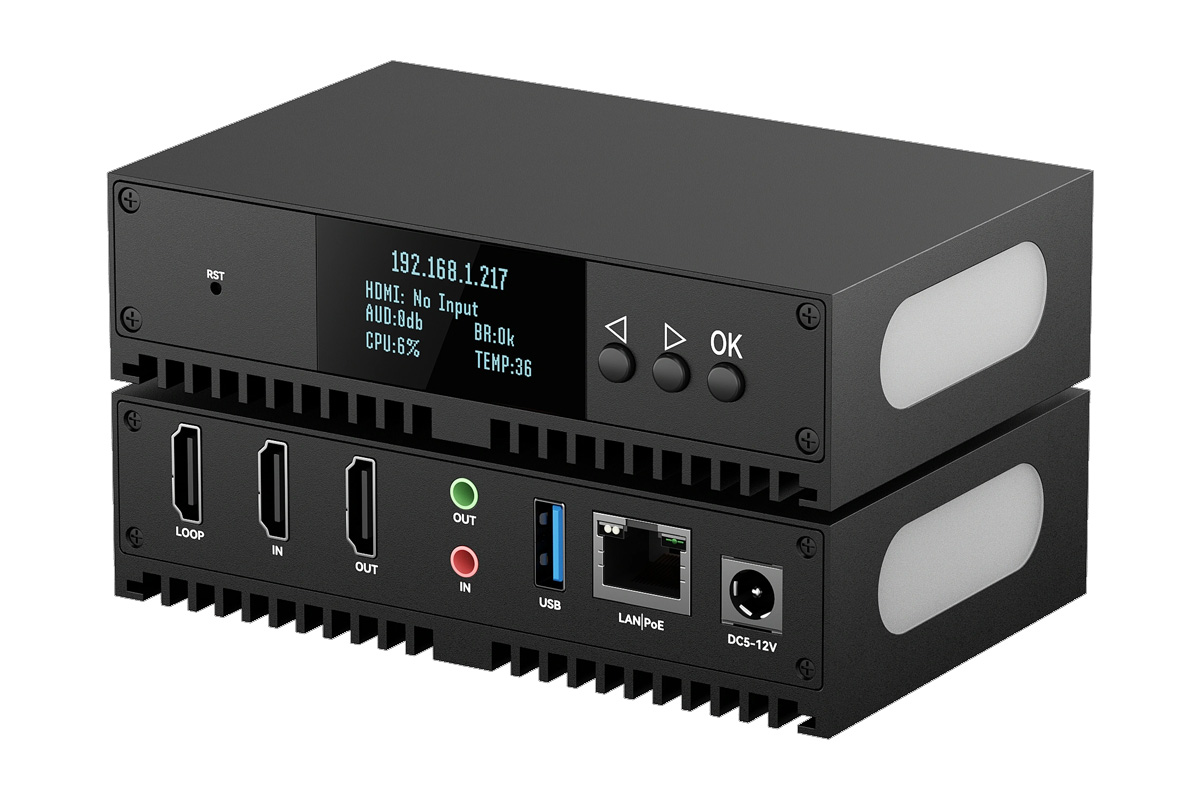
The LinkPi ENC1Pro is a compact, high-performance 4Kp60 HDMI video encoder designed for professional live streaming and broadcasting applications. It supports two HDMI 2.0 inputs and outputs with resolutions up to 4K @ 60fps, and is equipped with a built-in Tally light for studio use. Powered by an unnamed quad-core Arm Cortex-A55 processor coupled with 4GB DDR4 RAM and 8GB eMMC flash, the device supports H.265 (HEVC), H.264, and MJPEG compression formats. It is compatible with various streaming protocols, including NDI HX (license required), RTSP, RTMP, SRT, HTTP, HLS, and ONVIF. Other features include real-time picture-in-picture, multi-view, watermarking, subtitles, audio mixing, and video recording in formats such as MP4, MOV, and MKV. The ENC1Pro also supports AAC, MP3, OPUS, and other audio codecs, and includes 3.5mm stereo audio I/O alongside HDMI audio. It also offers flexible network connectivity with Gigabit Ethernet, USB expansion for 4G/5G/Wi-Fi modules, and supports remote management […]

Ambarella CV75S AI SoC brings Vision Language Models (VLM) and Vision Transformer Networks to cameras

ambarella cv75s

Ambarella has been expanding its AI SoC portfolio, and the latest addition is the CV75S family of 5nm chips. The company claims this family introduces the most cost- and power-efficient SoC option for running the latest AI-based image processing like vision language models (VLMs) and vision transformer networks in security, robotics, conferencing, and sports cameras. The CV75S family is the first in Ambarella’s lineup to integrate the latest CVflow 3.0 AI engine, which results in 3 times the performance compared to the former generation. CVflow 3.0 is a chip architecture designed based on a deep understanding of the core computer vision algorithms. It features a dedicated vision-processing engine that Ambarella has programmed using a high-level algorithm description and works with Tensorflow, Caffe, and PyTorch. This engine enables the SoC to perform trillions of operations each second at a fraction of the power consumption of leading GPUs and general-purpose CPU solutions. These chips also […]

Allwinner VPU gets open-source Linux driver for its H.264 hardware video encoder

Allwinner V3s open source Linux video encoding driver

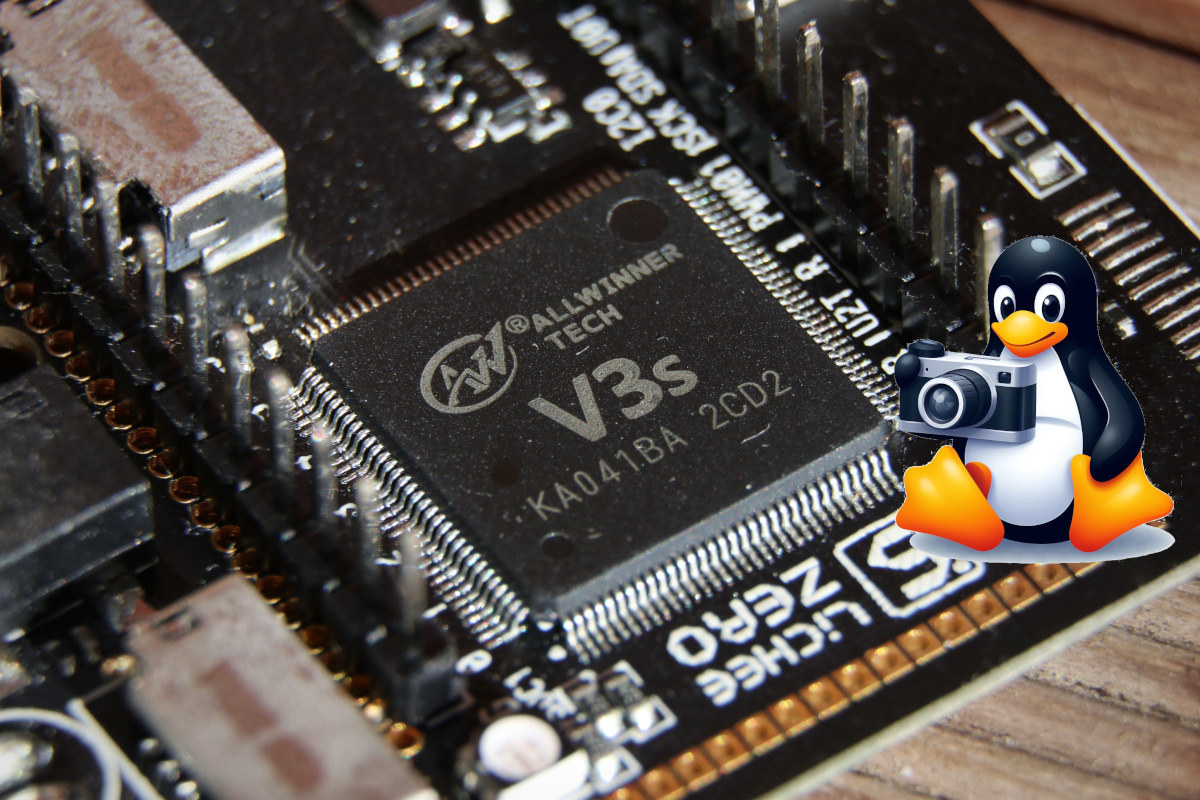
Long-time readers of CNX Software may remember Bootlin’s crowdfunding campaign launched in 2018 to bring open-source Allwinner VPU drivers to take care of hardware video encoding and decoding in mainline Linux. They managed to raise enough funds (over 30,000 Euros) from small donors and several companies (Olimex, Pine64, Libre Computer, FriendlyELEC, and Orange Pi) to work on open-source VPU drivers for mainline Linux, but only for MPEG2, H264, and H265 decoding for in a range of Allwinner SoCs such as the A20 and H5, but not quite enough to cover the cost of H264 video encoding. Five years later, Bootlin took it upon themselves to complete the work without backing or support from Allwinner and have now released an open-source Linux-kernel based V4L2 driver to support the H.264 video encoder found in Allwinner V3, V3s, and S3 camera SoCs. The new driver builds upon earlier work by the company to […]

Qualcomm Iris video decoder & encoder gets Linux V4L2 driver

Qualcomm Iris V4L2 video encoder decoder driver

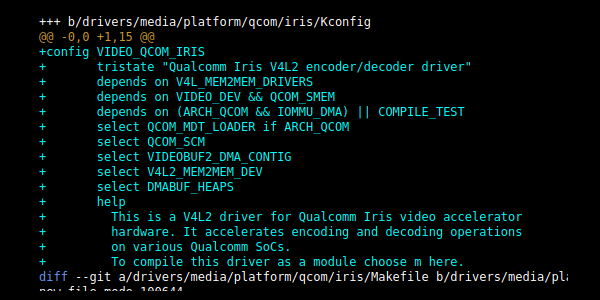
Qualcomm engineer Vikash Garodia has just pushed a commit to add “Qualcomm Iris V4L2 encoder/decoder driver” to mainline Linux enabling support for H.264, H.265, and VP9 decoding, H.264 and H.265 encoding, as well as M2M and STREAMING capabilities. The Adreno GPUs found in Qualcomm SoC have been supported by the open-source Freedreno driver for several years, but this was not the case with the IP block taking care of hardware video encoding and decoding. The latest patchset addresses this issue for “Qualcomm’s new video acceleration hardware architecture”, meaning it might not work for older Qualcomm processors. The list of features implemented in the Iris V4L2 encoder/decoder driver: Centralized resource and memory management. Centralized management of core and instance states. Defines platform-specific capabilities and features providing a single point of control to enable/disable a given feature depending on specific platform capabilities. Handles hardware interdependent configurations. Handles multiple complex video scenarios involving […]

Link Pi ENC5 v2 video encoder supports up to 5 4Kp30 HDMI inputs

Link Pi ENC5 v2

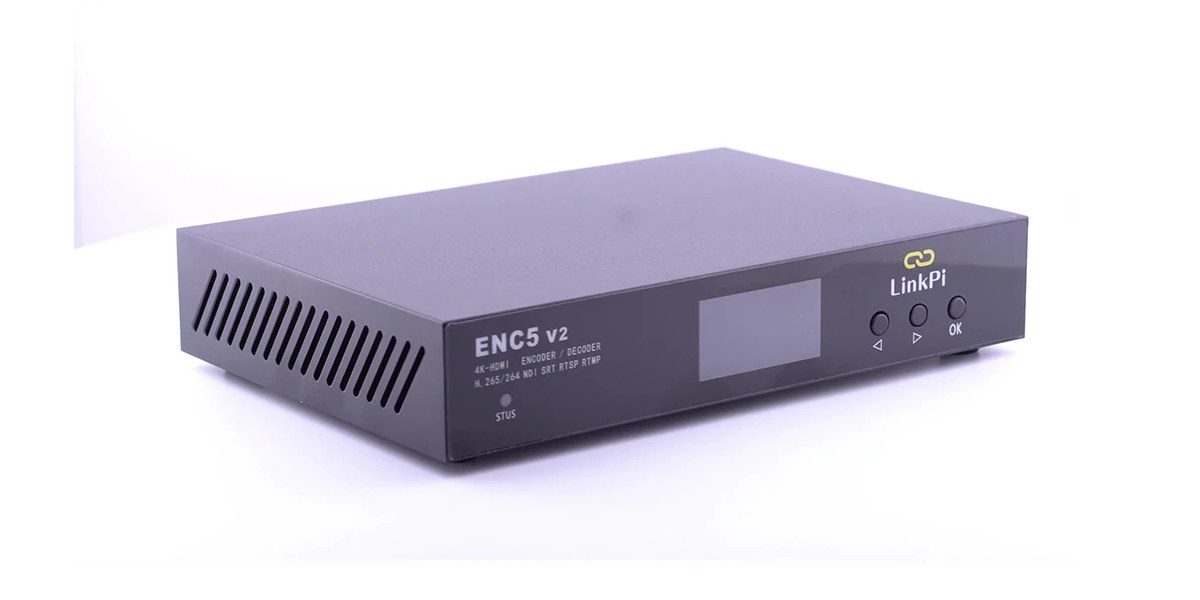
The Link Pi ENC5 v2 is a video encoder with five HDMI inputs up to 4Kp30, one HDMI output, two audio jacks, Gigabit Ethernet, and a USB 3.0 port that supports RTSP, ONVIF, SRT, and NDI streaming protocols. The system appears to be based on the Hisilicon Hi3531DV200 quad-core Cortex-A53 processor and features 8GB eMMC flash for the OS, plus 4GB RAM. The USB port can be used to record videos to an external hard drive or flash drive or add WiFi or 4G/5G cellular connectivity. Link Pi ENC5 v2 specifications: SoC – Unnamed, but some of the specs are matching the Hisilicon Hi3531DV200 SoC CPU – Arm Cortex A53 quad-core processor @ 1.2GHz with 32KB l-Cache, 32KB D-Cache VPU Decode – H264, H264, MJPEG Encode – Up to 4Kp30 / 1080p60 H.264 Main/Baseline/High/ profiles, H.265 Main profile, MJPEG/JPEG Max Bitrate – 20Mbps Bit rate control – CBR, VBR, AVBR, […]

AMD Alveo MA35D media accelerator transcodes up to 32 1080p60 AV1 streams in real-time

AMD ALVEO MA350 AV1 real-time encoding card

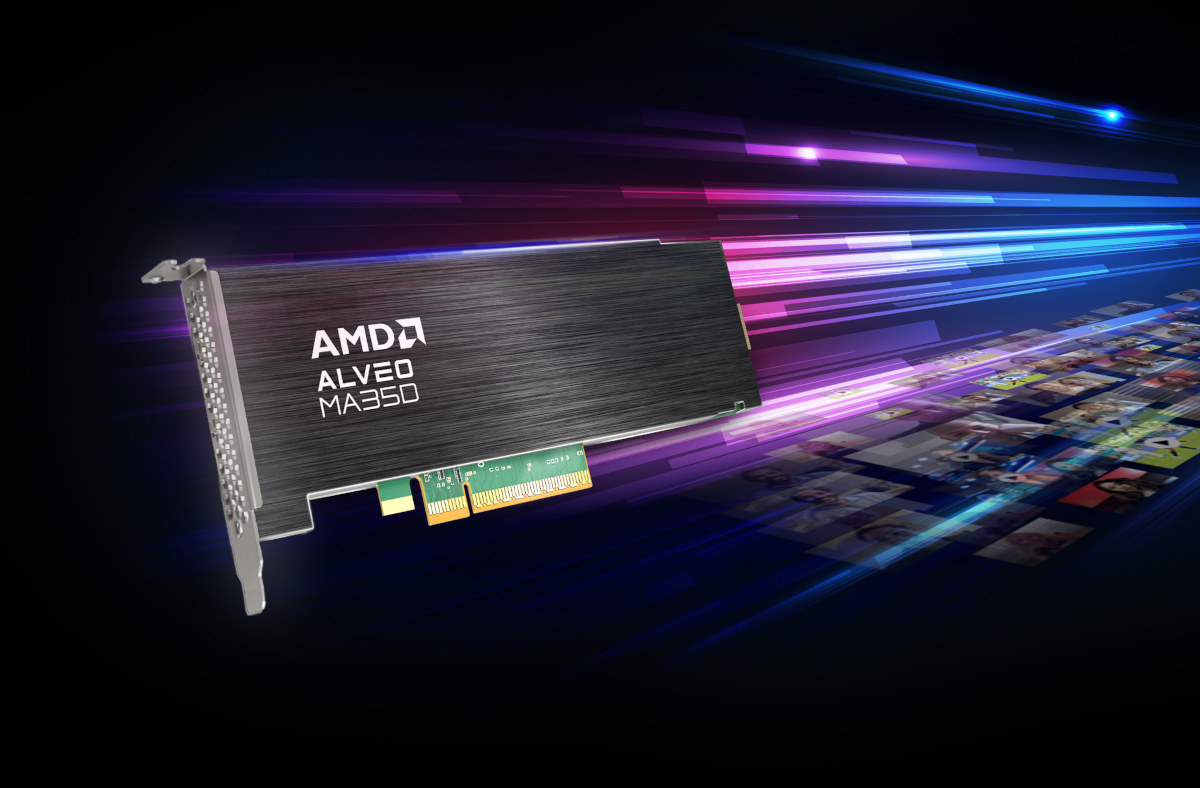
AMD Alveo MA35D media accelerator PCIe card is based on a 5nm ASIC capable of transcoding up to 32 Full HD (1080p60) AV1 streams in real-time and designed for low-latency, high-volume interactive streaming applications such as watch parties, live shopping, online auctions, and social streaming. AMD says the Alveo MA35D utilizes a purpose-built VPU to accelerate the entire video pipeline, and the ASIC can also handle up to 8x 4Kp60, or 4x 8Kp30 AV1 streams per card. H.264 and H.265 codecs are also supported, and the company claims its “next-generation AV1 transcoder engines” deliver up to a 52% reduction in bitrate at the same video quality against “an open source x264 veryfast SW model”. AMD Alveo MA350 highlights: Auxiliary CPU – 2x 64-bit quad-core RISC-V to perform control and board management tasks AI Processor – 22 TOPS per card for AI-enabled “smart streaming” for video quality optimization Memory – 16GB […]

Exit mobile version