DSTIKE AI Home Security Sidekick, nicknamed “Eve,” is an ESP32-S3-based AI-powered hacking tool with a display, camera, audio interaction, USB, and a built-in battery for portable use. The device is designed by Travis Lin, well known for his deauther watches like the Deauther Watch V4S and the Deauther Watch X, but now they have designed a Home Security Sidekick with a 2.0-inch LCD, a 2MP camera for basic computer-vision tasks, and an onboard microphone and speaker for voice interaction. It supports real-time Wi-Fi deauthentication attack detection through 802.11 management frame analysis, includes a USB Type-C port for charging and firmware flashing, and integrates a physical wake/function button, all housed in a transparent acrylic enclosure for home network monitoring, desktop diagnostics, and educational applications. DSTIKE AI Home Security Sidekick specifications Core module – Espressif Systems ESP32-S3-WROOM-1-N16R8 SoC – ESP32-S3 CPU – Dual-core LX7 processor with up to 240MHz Memory – 512KB SRAM, […]
M5MonsterC5 hacking tool adds ESP32-C5 and 5 GHz Wi-Fi 6 support to M5Stack Cardputer ADV and Tab5
Developed by Laboratorium in Poland, the M5MonsterC5 is an ESP32-C5-based “Marauder” hacking tool designed to work with M5Stack Cardputer ADV or M5Stack Tab5. It gets connected to the Cardputer ADV or Tab5 via a Grove connector and runs JanOS and Project Zero for wireless security research, experimentation, and rapid prototyping with minimal setup. Built around the ESP32-C5, the device supports dual-band Wi-Fi 6 (2.4/5-GHz) and 802.15.4 (Thread/Zigbee) to the M5Stack devices. Key features include multi-channel deauthentication with 5 GHz support, Evil Twin and phishing captive portals, WPA3 SAE overflow attacks, wardriving with GPS logging and WiGLE-compatible exports, passive sniffing, Karma attacks, whitelist management, and persistent “blackout” modes. The platform uses a two-stage web-based flashing process (JanOS on the Monster board and a Cardputer app flasher), offers microSD card and optional GPS support, and is intended strictly for authorized Wi-Fi auditing, offensive security research, and educational use under the Project Zero […]
ESP32-DIV V1 handheld pentesting tool supports Wi-Fi Attacks, BLE spoofing, 2.4GHz scanning, and Sub-GHz jamming
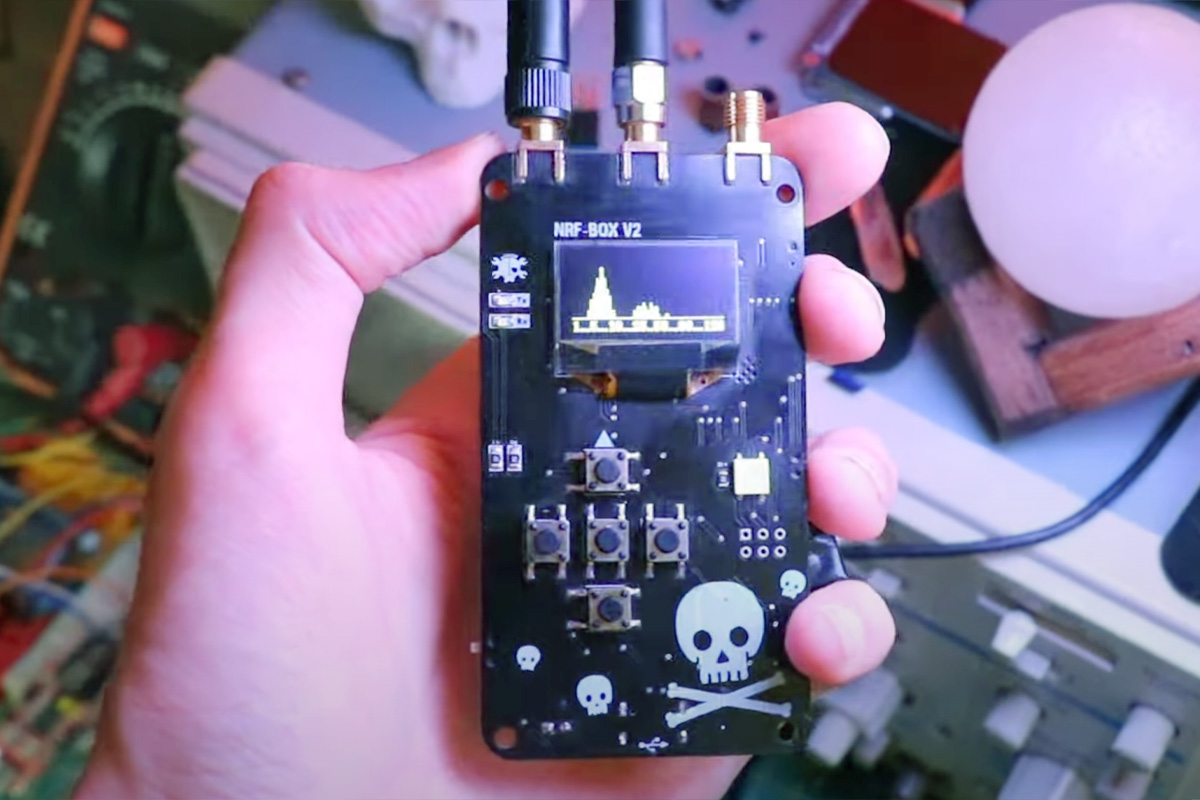
Designed by Cirket open-source hardware in China, the ESP32-DIV V1 is a handheld wireless pentesting and experimentation tool with Wi-Fi, BLE, generic 2.4 GHz (NRF24), and Sub-GHz RF (CC1101) communication. The device targets hardware hackers and cybersecurity researchers for learning and testing wireless vulnerabilities across multiple frequency bands. The device features a modular “sandwich” design consisting of a Main Board and a Shield Board connected via a 20-pin header. The Main Board integrates an ESP32 microcontroller, a 2.8-inch ILI9341 TFT display with XPT2046 touch controller, SD card slot, battery charging and power management, and navigation controls. The Shield Board hosts the RF hardware, including three NRF24L01 modules, a CC1101 Sub-GHz transceiver, and multiple SMA antenna connectors. ESP32-DIV (V1) specifications: Wireless Module – ESP32-WROOM-32U SoC – ESP32 dual-core wireless microcontroller CPU – Dual-core Xtensa 32-bit microprocessor @ 240MHz Memory – 520KB internal SRAM Wireless – Wi-Fi 802.11b/g/n, and Bluetooth (4.2 and […]
Using an overpowered vape as a secondary display
Last week, we noted that it was possible to run a web server on a disposable vape through its USB-C port, and now I’ve been shown DOOM on an even more overpowered vape acting as a secondary display, which is a bit larger in size than the WeAct Display FS 0.96-inch USB display we just covered. Perhaps I should add a ‘vaporware’ category on CNX Software… The new hack was done by Aaron Christophel (ACT1441) using an Aspire PIXO Vape with a Cortex-M4F MCU, a small color LCD, a USB-C port, Bluetooth LE connectivity, and a battery. Aspire PIXO vape hardware specifications: MCU – Puxa PY32F403XC Arm Cortex-M4F microcontroller @ 144 MHz with 64KB RAM, 256KB Flash Storage – External 16MB SPI Flash Display – 323 x 173 LCD Wireless – WS8000 BLE chip USB – 1x USB Type-C port Misc Heating Coil Vape microphone (designed to detect airflow from […]
ESP32 Marauder Double Barrel 5G adds 5GHz deauthentication with RTL8720DN module
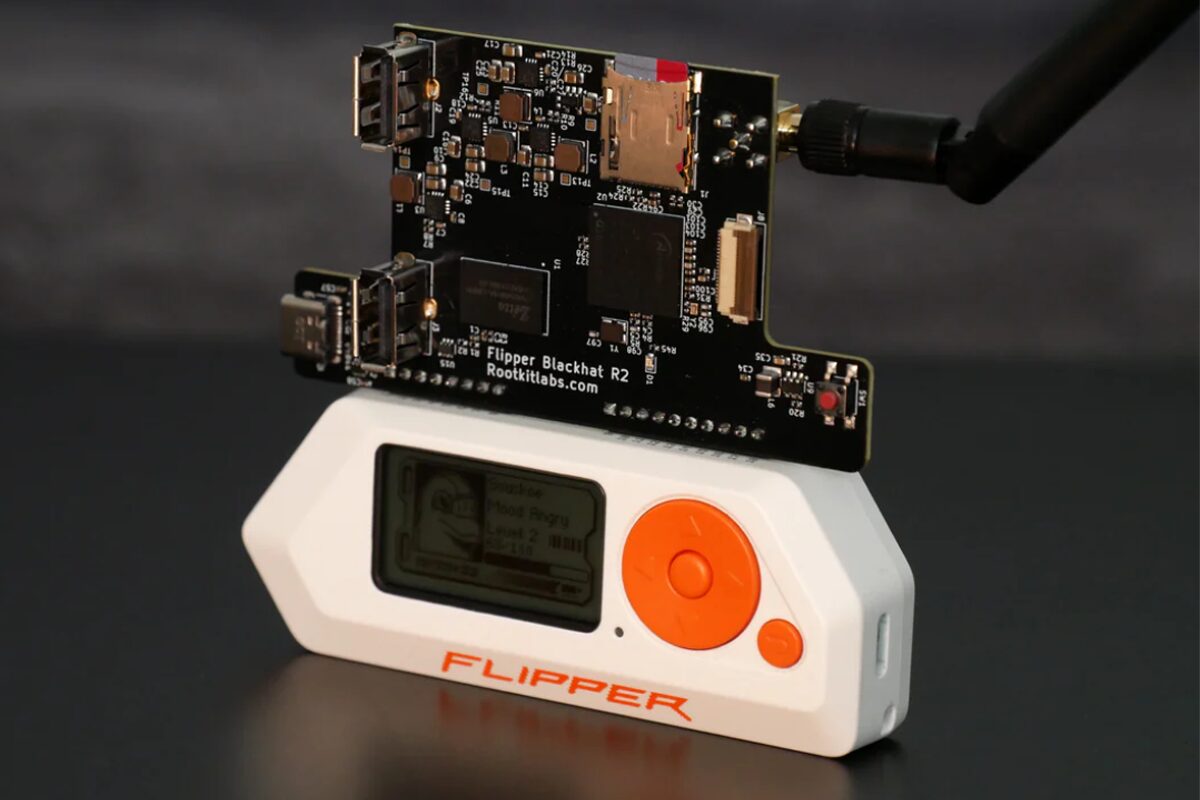
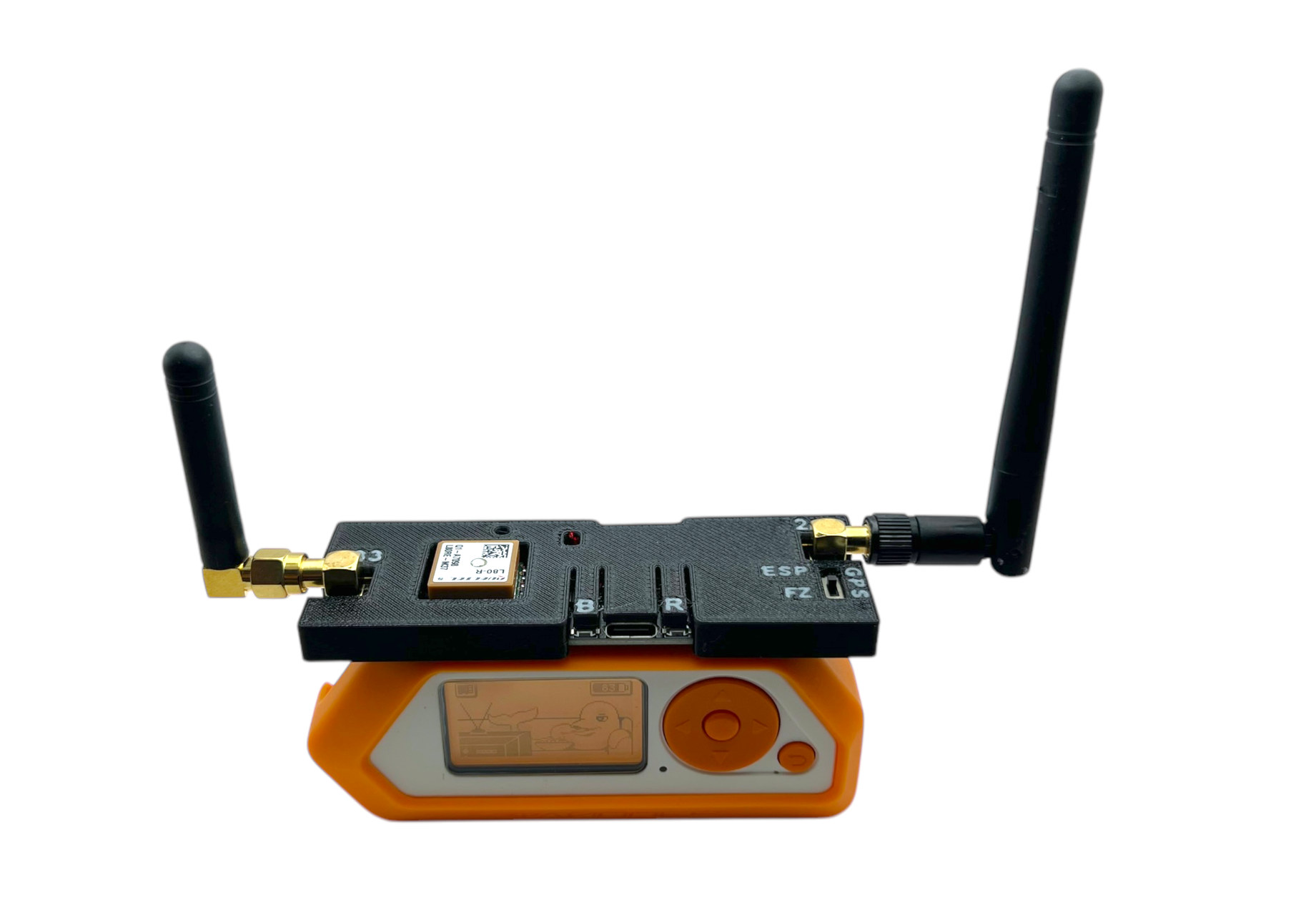
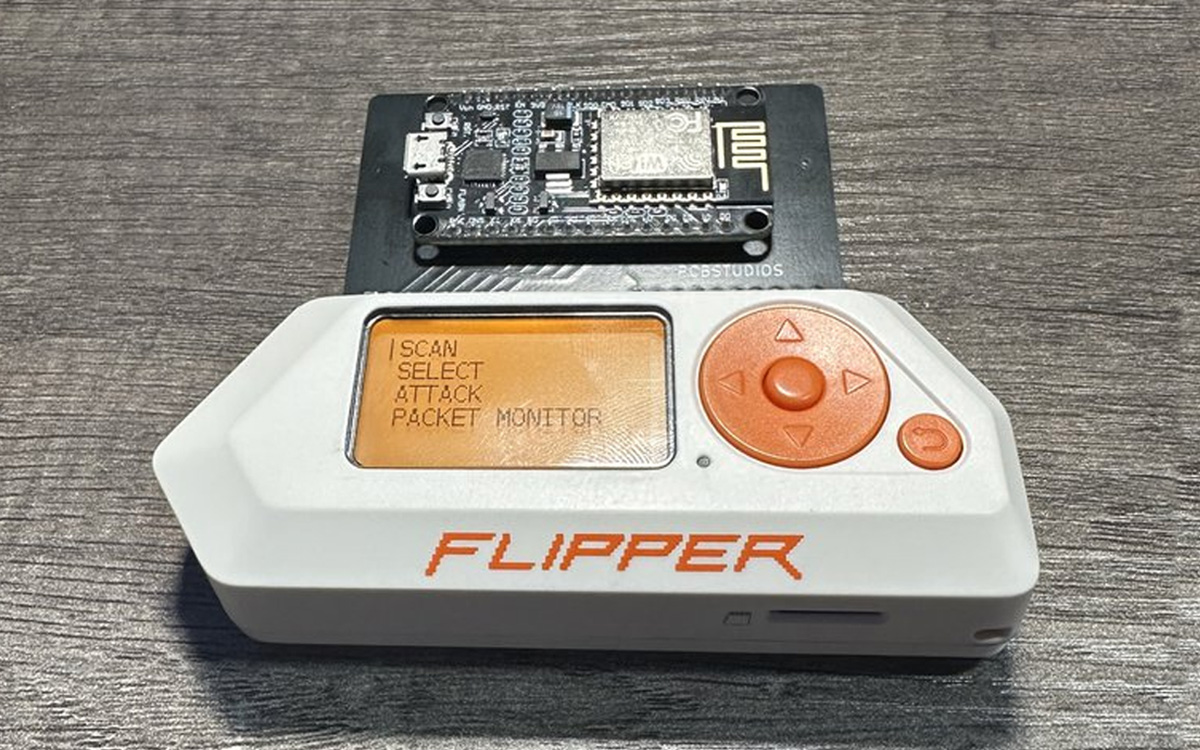
The ESP32 Marauder – Double Barrel 5G is a dual-chip hacking and penetration testing tool that supports both 2.4 GHz and 5 GHz Wi-Fi scanning, deauthentication, and can be used for penetration testing, wireless research, and learning security concepts. The device is built around an ESP32, and can be used with Flipper Zero or as a standalone device. Additionally, it features a dedicated GPS receiver and a CC1101 Sub-GHz transceiver (433 MHz) for wireless experiments. Other features include a 2.8-inch touchscreen, 800 mAh rechargeable battery, micro-SD slot for logs/firmware/Flipper FAP files. There are also dual USB-C interfaces (one for charging/ESP32 recovery and one for BW16 firmware update), and four external antenna ports (Wi-Fi ×2, GPS, Sub-GHz) housed in a 3D-printed enclosure. ESP32 Marauder Double Barrel 5G specifications Main module – ESP32 Wi-Fi & Bluetooth SoC Storage – MicroSD card slot for firmware, logging, and data storage. Display – 2.8-inch touchscreen with included […]
DisruptorX V2 – An ESP32-based BLE penetration testing device with Sour Apple exploit mode
DisruptorX V2 is an ESP32-based wireless security and penetration testing tool designed to analyze, jam, spoof, and disrupt Bluetooth Low Energy (BLE) signals. Developed by C1PH3R-FSOCITEY in India, it’s designed for cybersecurity professionals, penetration testers, and ethical hackers for BLE-focused security testing. Built around an ESP32-WROOM-32 module, DisruptorX V2 supports BLE signal jamming, scanning, spoofing, and packet analysis. It includes a “Sour Apple” mode to exploit BLE vulnerabilities by injecting malicious signals. The tool can impersonate legitimate BLE devices and observe interactions between them, making it suitable for studying protocol behavior and wireless security flaws. DisruptorX Specifications: Wireless Module – ESP32-WROOM-32 module with ESP32 dual-core processor @ 160 MHz, 520 Kbytes SRAM / 4 Mbit Flash, WiFi 802.11 b/g/n, Bluetooth 4.2 Display – 0.96″ OLED display Functions BLE signal jamming BLE signal spoofing (device impersonation) BLE packet analysis and scanning “Sour Apple” mode for signal injection exploits USB – Micro […]
FlippenHeimer Geiger Counter module adds radiation sensing to Flipper Zero
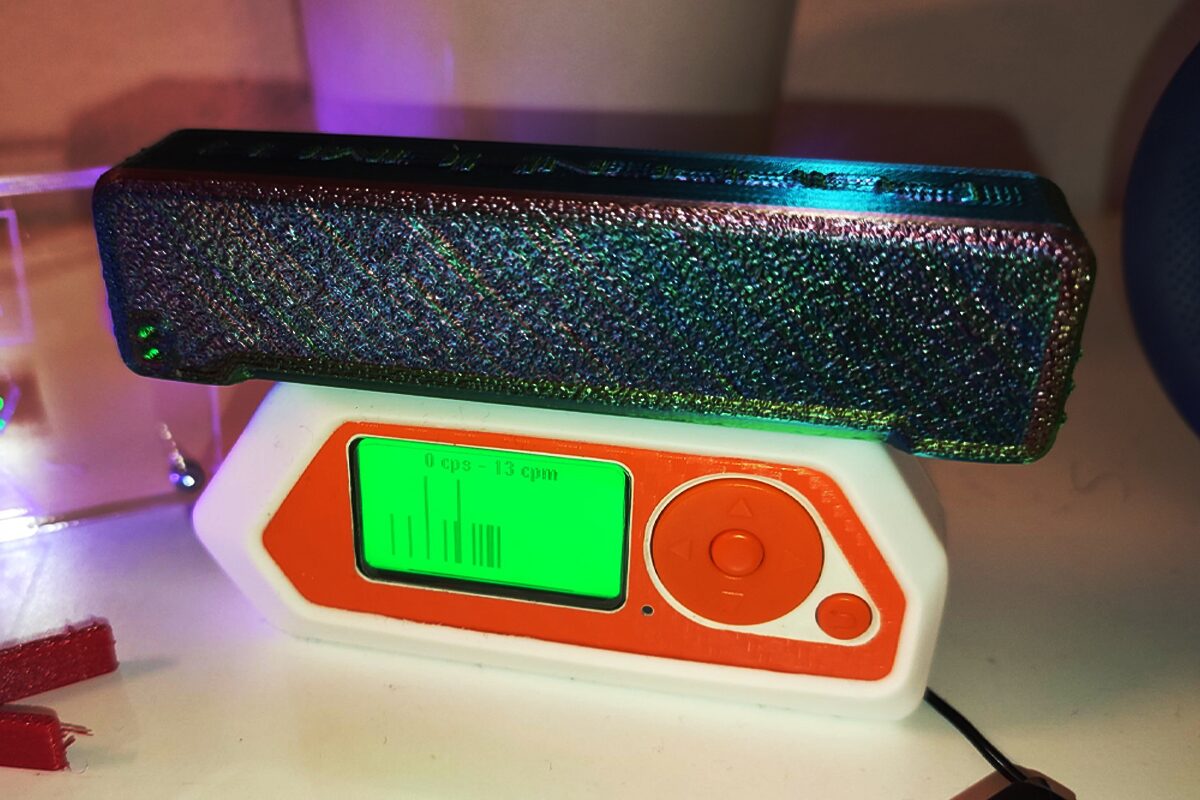
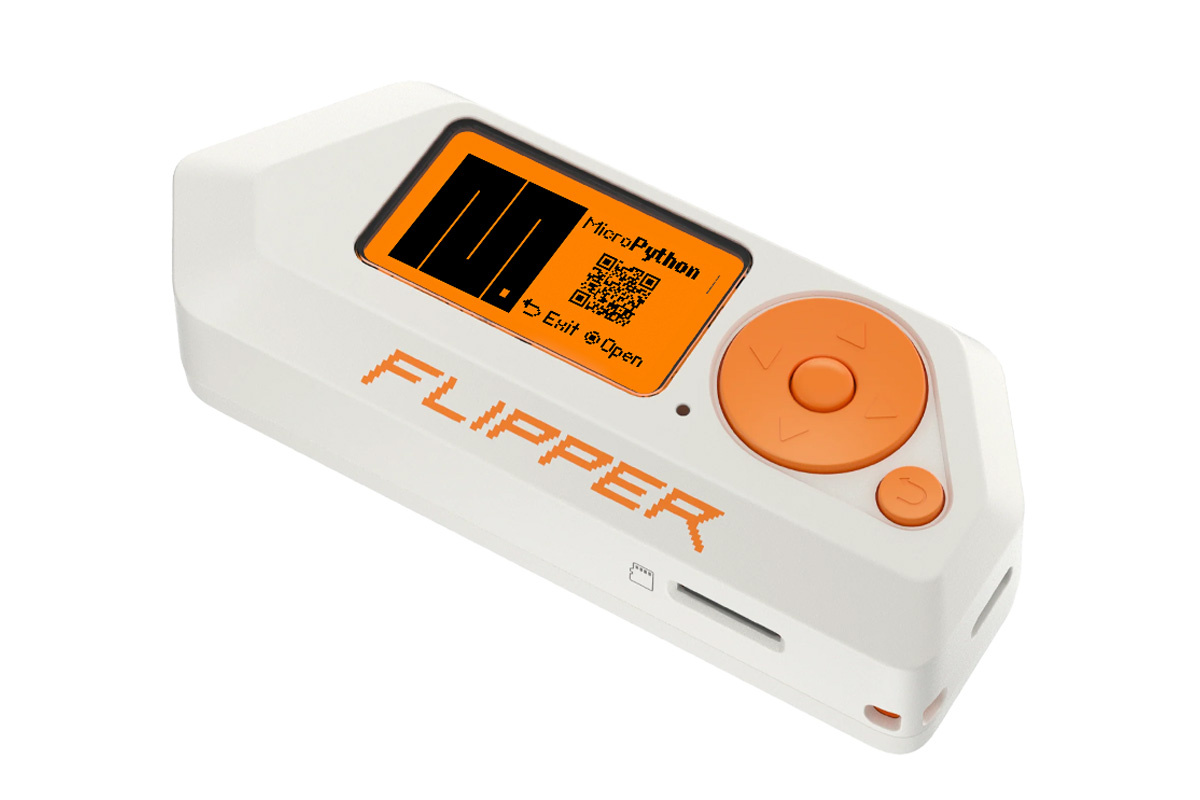
The FlippenHeimer is a compact Geiger counter add-on module designed to work with the Flipper Zero. It allows users to monitor beta and gamma radiation levels using the Flipper’s display and power source, making it a portable device to detect radiation. Built around a J305 Geiger–Müller tube, the FlippenHeimer provides real-time data logging, visual feedback via graphs. Other than that, it features “atomic dice roller” functionality that uses the random nature of radioactive decay to generate unpredictable outcomes. Key components of this device include 555 timers, LM358 op-amps, 2N3904 and MPSA42 transistors, inductors, and high-voltage capacitors. These features make this device useful for applications such as environmental awareness, hobbyist radiation monitoring, and generating random values. FlippenHeimer Specifications: Main interface – Connects to Flipper Zero via GPIO/UART (plug-and-play with GPIO header) Detection device – J305 Geiger-Müller glass tube, suitable for gamma and beta radiation Radiation detection: Detects beta and gamma radiation […]
Antenna hack more than doubles the range of cheap ESP32-C3 USB-C boards
There are plenty of small ESP32-C3 IoT boards with a USB-C connector on the market, and while they all look very similar, antenna designs differ, and less thought-out ones may severely impact the WiFi and Bluetooth range. Peter Neufeld decided to hack one of those cheap ESP32-C3 boards by adding a custom antenna, and this resulted in the board having more than twice the range and almost three times in some cases. Those tiny boards are cramped, so there’s very little space around the ceramic antenna typically used, leading to poor RF performance. To work around that issue, Peter added a 31mm long antenna made of silver-plated wire, making a loop of about 8mm in diameter outside of the board and soldered on the ceramic antenna’s solder joints, and the rest of the wire (about 15mm) points upwards. As you can see from the photo above, he didn’t remove the […]