
FOSDEM 2026 will take place on January 31-February 1, with thousands of developers meeting in Brussels to discuss open-source software & hardware projects. The free-to-attend “Free and Open Source Software Developers’ European Meeting” gets more traction every year, and in 2026, there will be at least 1,113 speakers, 1,016 events, 70 tracks, and potentially close to 10,000 attendees. As usual, I’ll create a virtual schedule with sessions most relevant to the topics covered on CNX Software from the “Embedded, Mobile and Automotive” and “Open Hardware and CAD/CAM” devrooms, but also other devrooms, including “RISC-V”, “Robotics and simulation”, and “FOSS on Mobile”, among others. I’m aware some of the talks overlap by a couple of minutes or so… FOSDEM 2026 Day 1 – Saturday, January 31 10:40 – 11:15 – RISC-V Vector optimisations in FFmpeg by Rémi Denis-Courmont FFmpeg is the most versatile multimedia codec and format support library, and was […]
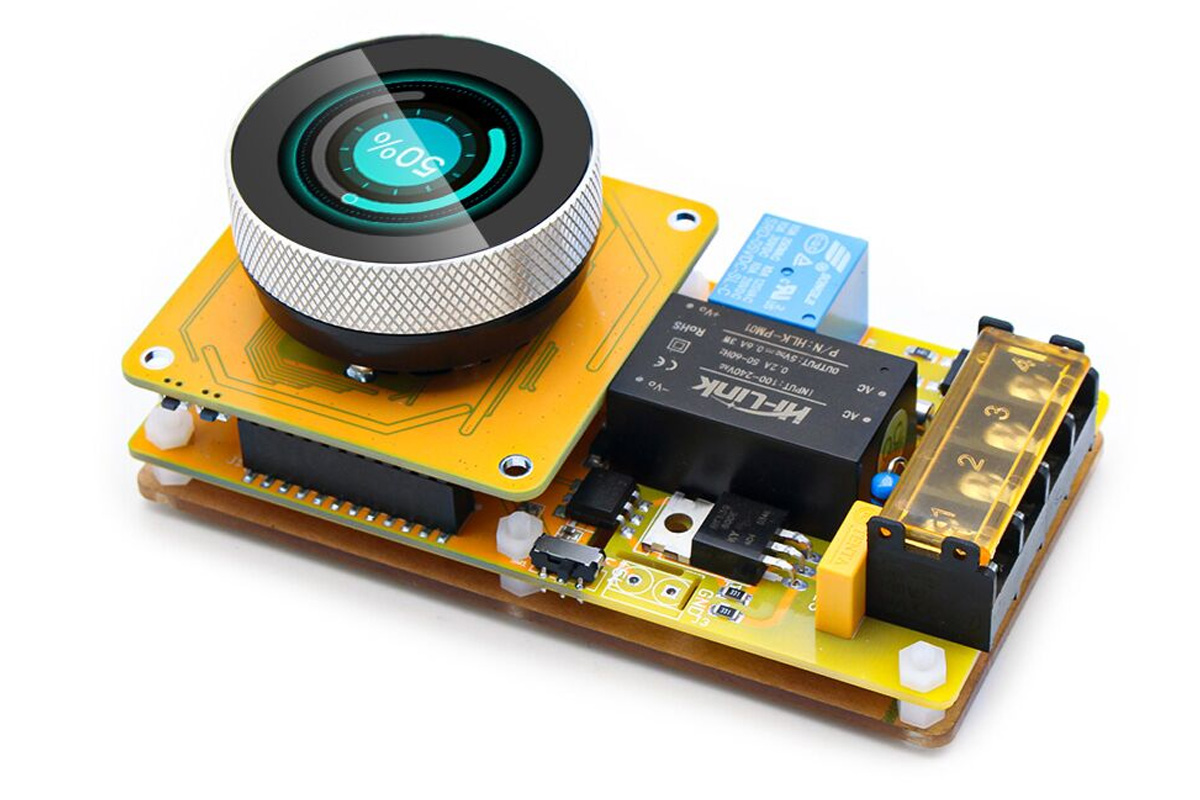
Home Assistant-compatible Makerfabs ESP32-S3-based energy meter features BL0942 energy metering IC
The Energy Meter for Home Assistant is an ESP32-S3-based single-phase energy monitoring and control module designed to work with Home Assistant via ESPHome. It measures real-time power and energy consumption and also has a remote on/off control. The device is built around the BL0942 calibration-free energy metering IC, which supports voltage, current, power, and energy measurements with less than 1% error. It operates directly from AC 100–240V, includes an onboard 15A relay for switching loads, and provides electrical isolation for safety. Connectivity is done through USB and Wi-Fi using ESPHome for easy firmware flashing, API encryption, and automatic discovery in Home Assistant. These features make it suitable for smart homes, DIY energy monitoring, smart sockets, home energy dashboards, and automation projects. Energy Meter for Home Assistant specifications: Core module – Espressif Systems ESP32-S3-WROOM-1 SoC – ESP32-S3 CPU – Dual-core Tensilica LX7 up to 240 MHz with vector extension for AI/ML workloads […]
NetCube Systems Nagami Allwinner T113-S3 mini PCIe SoM features ESP32 wireless SoC, supports mainline Linux
NetCube Systems Nagami is a small Allwinner T113-S3 system-on-module that I just saw added to Linux 6.18. Besides mainline Linux support, the Allwinner SoM offers somewhat unique or unusual features that include a mini PCIe form factor and an ESP32 co-processor for WiFi 4 and Bluetooth connectivity. The Nagami also comes with 128MB DDR3 embedded in the T113-S3, 4GB eMMC flash, a Fast Ethernet PHY, and a Qwiic connector for I2C expansion modules. All I/Os are exposed through a standard mini PCIe edge connector: audio I/Os, Ethernet, USB 2.0 OTG/host, and a range of low-speed I/Os. Nagami SoM specifications: SoC – Allwinner T113-S3 CPU – Dual-core Arm Cortex-A7 @ 1.2 GHz with 32 KB L1 I-cache + 32 KB L1 D-cache per core, and 256 KB L2 cache DSP – Single-core HiFi4 VPU – H.265/H.264 video decoding up to 1080p60 and JPEG/MJPEG video encoding up to 1080p60 Memory – 128 […]
SMHUB Nano Mg24 compact Linux-based Zigbee/Thread Smart Hub combines SG2000 RISC-V SoC with MG24 wireless MCU
SMLight’s SMHUB Nano Mg24 may look like the company’s earlier SLZB-06p Zigbee to Ethernet/WiFi/USB coordinators, but it’s a more powerful Linux-based Zigbee/Thread Smart Hub that pairs SOPHGO SG2000 RISC-V SoC with Silicon Labs MG24 multi-protocol wireless MCU. Unlike traditional Zigbee/Thread adapters that connect to a host through USB or Ethernet, the SMHUB Nano Mg24 is an all-in-one solution that runs all major automation apps directly on the device, eliminating the need for a Raspberry Pi, Mini PC, or other hardware server. SMHUB Nano Mg24 specifications: SoC – SOPHGO SG2000 CPU cores 1x C906 64-bit RISC-V core @ 1GHz or 1x Arm Cortex-A53 core @ 1GHz (selectable at boot) 1x C906 64-bit RISC-V core @ 700MHz MCU – 8051 8-bit microcontroller core @ 25 to 300 MHz with 6KB SRAM GPU – None VPU – H.265/H.264 video decoding and encoding (5M @ 30fps) ISP – 5M @ 30fps NPU – 0.5 TOPS Memory […]
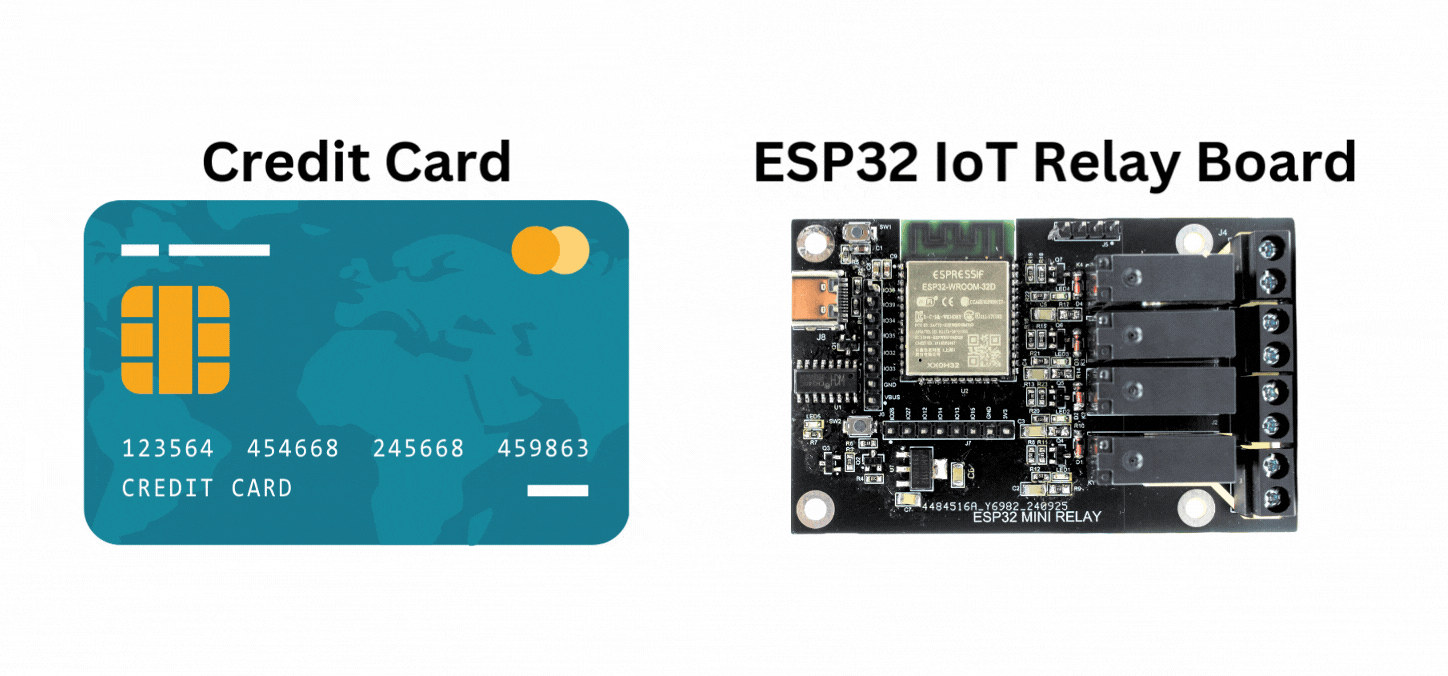
DIN rail-compatible industrial relay board features 4 outputs, 4 analog/digital inputs, RS-485 interface
The ESC3B04 is a compact DIN rail-compatible relay board built around the ESP32-C3 Super Mini module for building Wi-Fi remote switches, voltage monitoring systems, motor control, timed automation, and RS-485-based setups. The board features four 10A relay outputs, four 0–5V/10V analog voltage inputs (also configurable as 12–24V PNP digital inputs), an RS-485 interface, and a push-button input. It operates on a 7–25V DC supply and supports direct installation in control panels or DIN-rail enclosures. ESC3B04 relay board specifications: Wireless module –16-pin ESP32-C3 Super Mini module SoC – Espressif Systems ESP32-C3FH4, single-core 32-bit RISC-V microcontroller @ up to 160 MHz; 400 KB SRAM; 4MB flash USB – 1x USB Type-C port for programming Ceramic antenna I/Os and expansion 4x relays (10A/240VAC) 4x 0-5V/0-10V analog voltage inputs (can be used as 12-24V digital inputs) Serial – RS-485 interface for Modbus or custom protocol communication Misc User button Power LED Power Supply 7-25V […]
Industrial 6-Channel RP2350 relay module offers RS485 interface, Raspberry Pi Pico HAT support
Waveshare RP2350-Relay-6CH is a Raspberry Pi RP2350-based industrial 6-channel relay module with an isolated RS485 interface, 7 to 36V DC input via a terminal block, and support for Raspberry Pi Pico HATs. Each relay is isolated and can handle 250VAC/30VDC up to 10A, a USB-C port is used for firmware updates, and the module also includes a buzzer, a few LEDs, as well as Reset and BOOT buttons, with everything housed in a DIN-Rail enclosure. Waveshare RP2350-Relay-6CH specifications: Microcontroller – Raspberry Pi RP2350B CPU Dual-core Arm Cortex-M33 @ 150 MHz with Arm Trustzone, Secure boot OR Dual-core RISC-V Hazard3 @ 150 MHz Either two cores can be used. Memory – 520 KB on-chip SRAM Package – QFN-80 Relay – 6x relays Contact rating – ≤10A 250VAC/30VDC Contact form – 1NO 1NC via screw terminals Optocoupler isolation USB – USB Type-C port for power, data, and firmware flashing Serial Isolated RS485 […]
XIAO 2-channel Wi-Fi AC Energy Meter runs ESPHome on ESP32-C6 module, comes with two 100A CT clamps
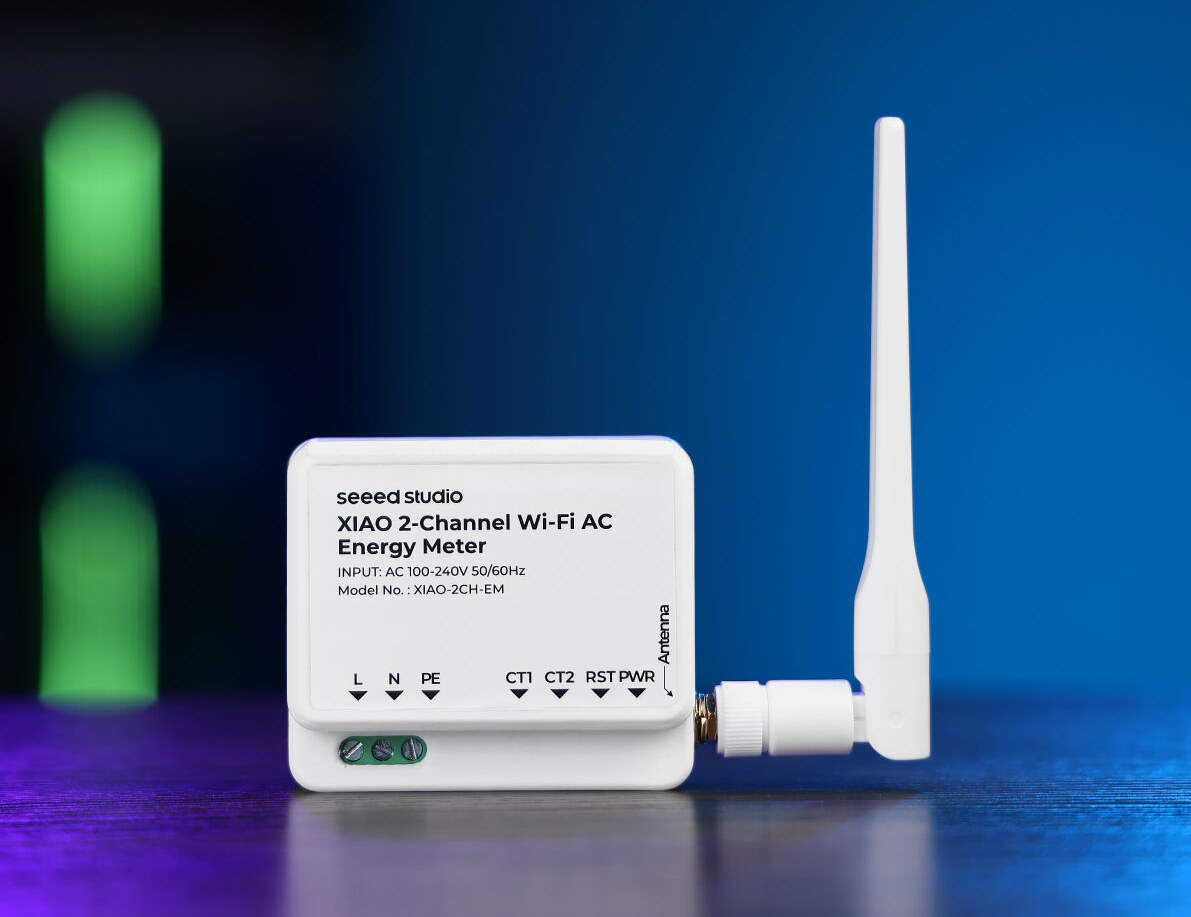
Seeed Studio’s XIAO 2-channel Wi-Fi AC Energy Meter is an ESP32-C6 (XIAO ESP32-C6) powered power meter with two independent CT clamp (Current Transformer clamp) connectors to safely measure power consumption when placed around one of the wires from an AC cable. We reviewed the SONOFF POW Ring single-channel WiFi CT clamp power meter with eWelink and Home Assistant last year, and before that, we also covered models supporting multiple CT clamps, up to 16 clamps with the Emporia Vue Gen 2 energy monitor. The XIAO 2-channel Wi-Fi AC Energy Meter offers a middle ground with support for two CT clamps measuring up to 100A per channel. XIAO 2-channel Wi-Fi AC Energy Meter specifications: Wireless module – XIAO ESP32C6 board Wireless MCU – Espressif Systems ESP32-C6 CPU Single-core 32-bit RISC-V clocked up to 160 MHz Low-power RISC-V core @ up to 20 MHz Memory – 512KB SRAM, 16KB low-power SRAM Storage […]
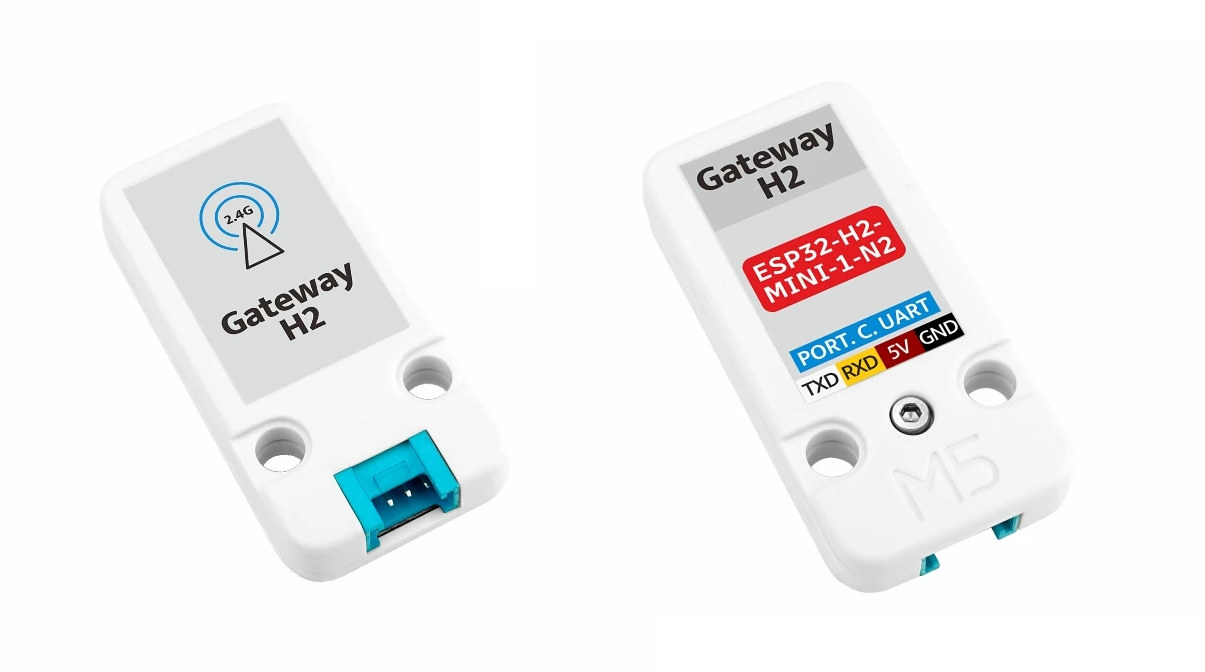
M5Stack Unit Gateway H2 – A tiny ESP32-H2 Thread/Zigbee gateway selling for $6.50
M5Stack’s Unit Gateway H2 is a small Thread/Zigbee gateway powered by the ESP32-H2-MINI-1 module with an 802.15.4 radio for Zigbee 3.0, Thread 1.3, and Matter connectivity. The Unit Gateway H2, also known as Gateway H2 Unit…, can operate as a gateway (e.g. a Thread Board Router) or a terminal device that communicates with an M5Stack device via serial/UART through the Grove interface. It also features a USB-C port for power, firmware flash, and debugging. M5Stack says it’s suitable for smart homes, environmental monitoring, sensor networks, and low-power wireless communication nodes. M5Stack Gateway H2 Unit specifications: Wireless module – ESP32-H2-MINI-1-N2 SoC – Espressif Systems ESP32-H2 CPU – 32-bit RISC-V SoC clocked at up to 96 MHz RAM and storage – 320 KB SRAM, 128 KB ROM, 4 KB LP memory Wireless – 802.15.4 radio with Zigbee 3.0, Thread 1.3, and Matter support. (Note: the ESP32-H2 also supports Bluetooth 5.2 LE/Mesh, but […]