piBrick PocketCM5 – An open-source handheld Linux computer kit for Raspberry Pi CM5

piBrick Pocket CM5

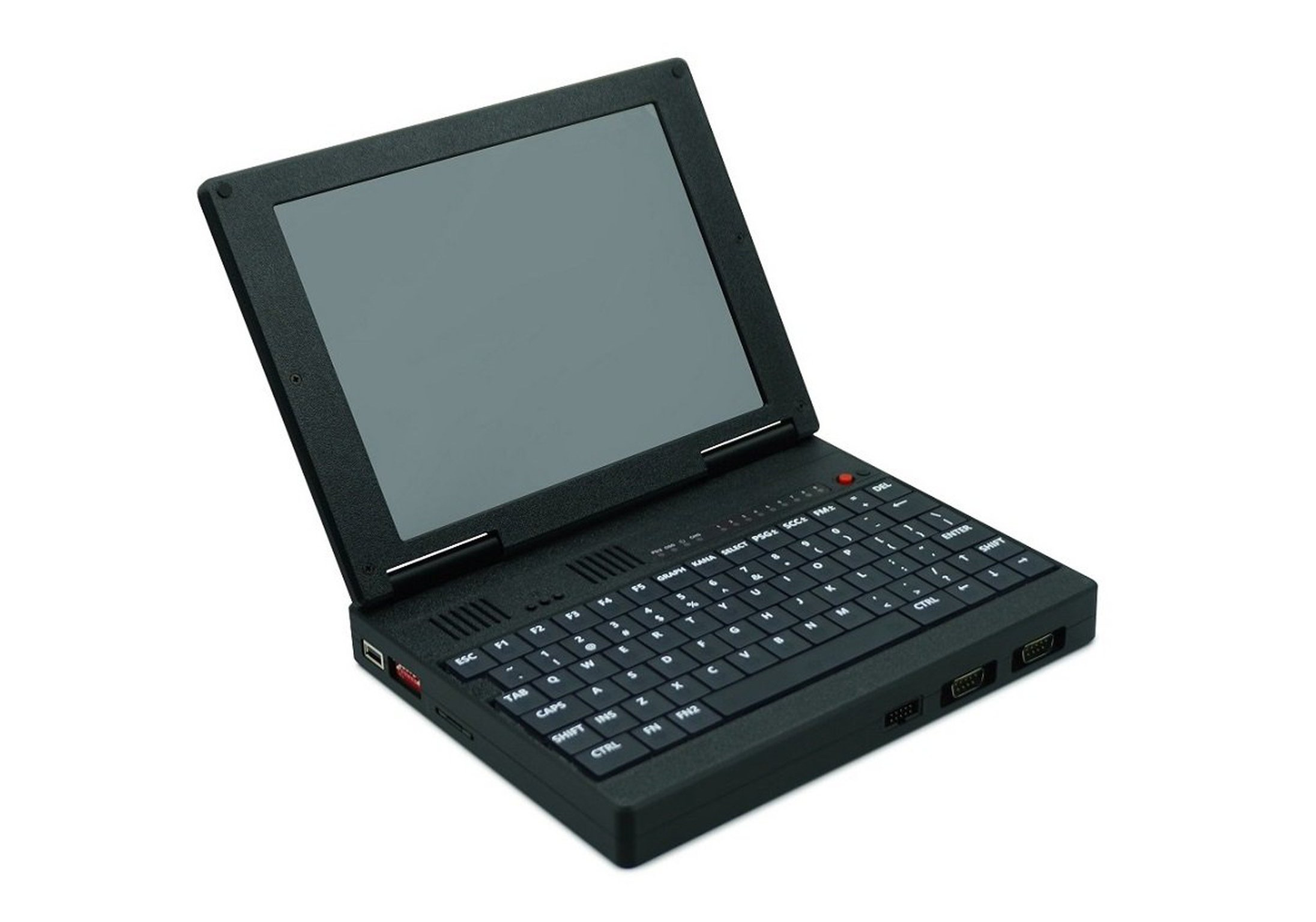
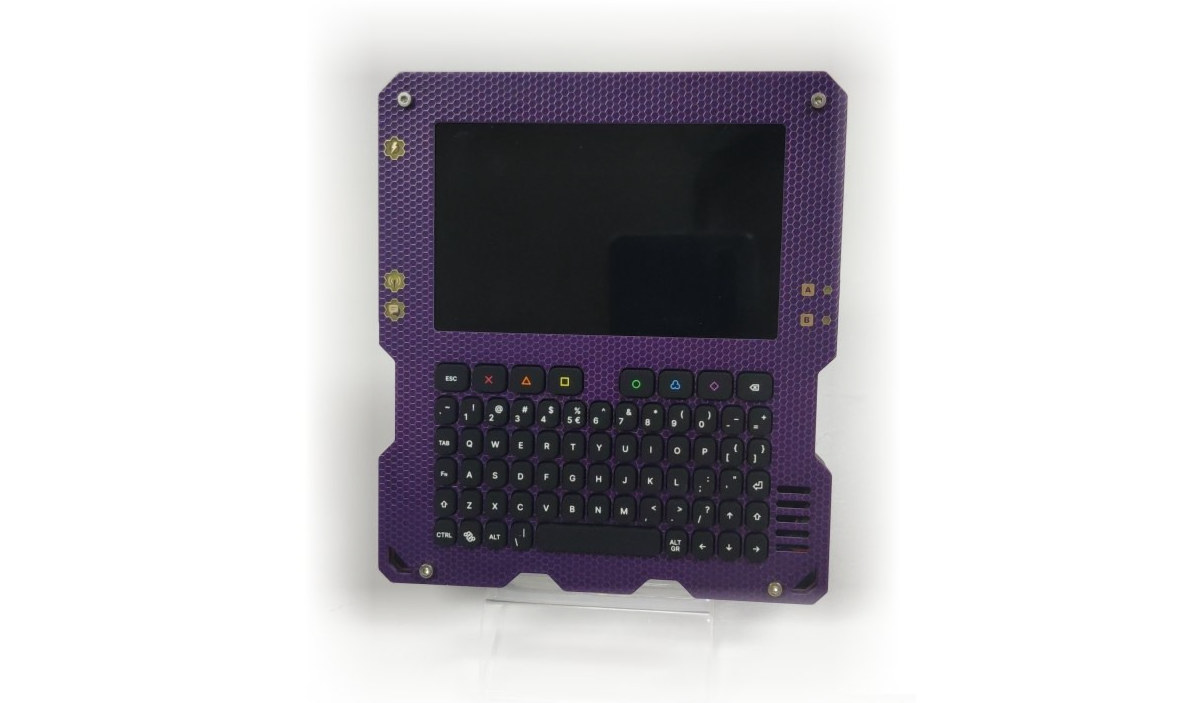
Designed by Indonesian maker Ahmad Amarullah (amarullz), the piBrick PocketCM5 is an open-source hardware handheld Linux computer kit built around the Raspberry Pi CM5; it’s basically a smartphone-sized Linux machine with a physical keyboard and touchscreen. It is for developers, makers, and system administrators, for tasks such as general experimentation, embedded development, and remote access. We have seen other handheld terminals and pocket computers based on Raspberry Pi SBCs and Compute Modules over the years, such as the PocketTerm35,  DevTerm, Carbon’s CyberT, Pi Slate, and many others. However, the piBrick PocketCM5 is based on the latest Raspberry Pi CM5 and features a 3.92-inch AMOLED touchscreen display, a physical BlackBerry QWERTY keyboard, and various expansion options. piBrick PocketCM5 specifications: Compatibility – Raspberry Pi Compute Module 5 (CM5 and CM5 Lite) Auxiliary MCU – Raspberry Pi RP2040 for keyboard/trackpad input, rotary encoders and buttons, USB HID (keyboard/mouse) emulation, and accelerometer data processing Storage […]

Convert old IR remote controls into presentation clickers using an RP2040 USB board and open-source TTVKTR firmware

IR remote control RP2040 USB HID

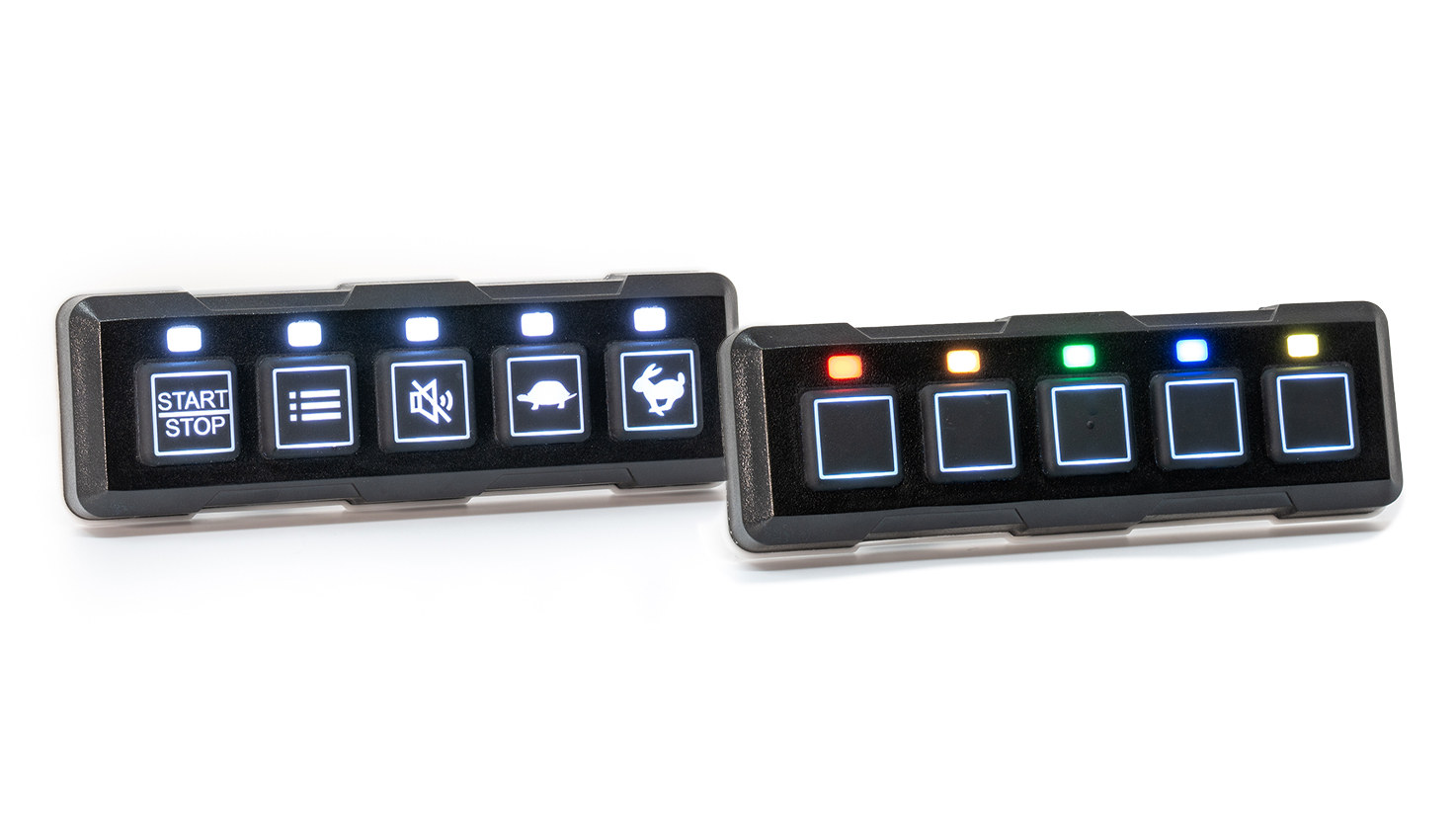
Brisk4t’s “Tossed The TV — Kept The Remote” (TTVKTR) is an open-source firmware project for Raspberry Pi RP2040 USB boards that aims to reduce electronics waste by converting old IR remote controls into presentation clickers. Most Raspberry Pi RP2040 boards with USB ports should work, but the project highlights the Waveshare RP2040-Zero combined with a standard 38 kHz infrared receiver due to its small size and low price ($4-5). The project also relies on the built-in RGB LED for layer color feedback. That’s about it for the hardware. It just required some basic soldering of the IR receiver to GPIO 28 (OUT), 5V or 3.3V, and GND pins. Nothing too hard. The WS2812 RGB LED is already connected to GPIO 16. I tried to look for RP2040 USB boards with a built-in IR receiver, but I could not find any.   The firmware receives IR codes from a standard 38 […]

Mind xPlay display and keyboard review using Khadas Mind and Mind 2 mini PCs

Khadas xPlay connected to Crowview USB C display

In this review, I’ll report my experience with the Khadas Mind xPlay display and keyboard using the Mind and Mind 2 mini PCs, as well as a CHUWI CoreBook Air Plus 16 laptop to test it as a standard external display. Using Mind xPlay with the Mind 2 mini PC I received the Mind xPlay with the Mind 2 Meteor Lake mini PC, and I already showed how to connect it and get started in the first part of the review. So I’ll continue the review with it initially. I used the EIZO monitor test website to evaluate the display panel itself. I went through all 13 tests, including dead pixel and gradients tests. The pattern above looks fine too, so I compare the Mind xPlay monitor to the 16-inch display of the ASUS Vivobook 16 to find differences. Both were set to maximum brightness. The xPlay delivers noticeably more […]

Pi Slate – A Raspberry Pi 5 handheld Linux cyberdeck with a 5-inch 1280×720 touchscreen display

Pi Slate

We previously wrote about Carbon’s CyberT, a Blackberry-style Raspberry Pi CM4 handheld Linux cyberdeck designed for Kali Linux and penetration testing. The company, now operating under the CyberArch/Carbon Computers brand, has introduced the Pi Slate, a more powerful handheld cyberdeck designed for portable computing and security-focused applications. Built around the Raspberry Pi 5, the Pi Slate integrates a 5-inch 1280×720 touchscreen, a backlit RGB keyboard with an integrated cursor, and a 10,000 mAh battery for 3–5 hours of portable use in a compact enclosure. It supports modular expansion for HATs such as LoRa, SDR, AI accelerators, and M.2 storage, and includes cooling support, antenna mounts, and an optional modular back with a kickstand. It targets penetration testers, IT professionals, and field technicians needing a compact, preconfigured system for cybersecurity and field work. Pi Slate specifications: SBC – Raspberry Pi 5 with 2GB, 4GB, 8GB, or 16GB LPDDR4X RAM options Storage […]

Khadas Mind Graphics 2 and Mind xPlay display + keyboard review – Part 1: Unboxing, teardown, and first try

Khadas Mind 2 Graphics xPlay Review

Khadas has sent us the Mind Graphics 2 dock, Mind xPlay portable display and keyboard, as well as the Mind 2 mini PC for review. In the first part of the review, I’ll start by listing specifications, an unboxing of all three packages, a teardown of the graphics dock, and a first try of the xPlay and Mind Graphics 2 with the mini PC. While the Mind 2 will be used for testing, I won’t go into details here since it’s quite similar to the Mind 2 AI Maker Kit we reviewed last year. Instead, in the next parts, I’ll do a review of the xPlay with it, the first-generation Mind, and maybe another platform with USB-C video output. I’ll follow that by detailed testing of the Khadas Mind 2, including graphics and AI performance with the built-in NVIDIA GeForce RTX 5060 Ti 16GB card, and check all its features. […]

Ploopy Bean open-source hardware pointing stick mouse runs QMK firmware

Ploopy Bean

The Ploopy Bean is a 3D-printed, open-source hardware pointing stick mouse that runs QMK open-source firmware on a Raspberry Pi RP2040 microcontroller to control four Omron D2LS-21 buttons and a friction nub. Ploopy is a Canadian company known for its open-source hardware computer accessories. We first covered their headphones in 2023, but they’ve also made a trackball mouse, a trackpad, a USB knob, and other accessories since then. The Bean is just the latest addition. Ploopy Bean specifications: Bean Pointing Stick PCB Microcontroller Raspberry Pi RP2040 MCU USB – 1x USB-C port for power and data Buttons – 4x Omron D2LS-21 buttons configured as left click, right click, middle click, and click-to-drag/scroll by default (but customizable) Sensor – Texas Instruments TMAG5273 high-precision 3D hall effect sensor for the nub; up to 20,000 ksps sample rate, detects 3+ microns movements 3D-printed parts – Top, bottom, and spring for red nub Accessories […]

M5Stack Cardputer goes off-grid with new Mesh Kit featuring LoRa, GNSS, and Meshtastic support

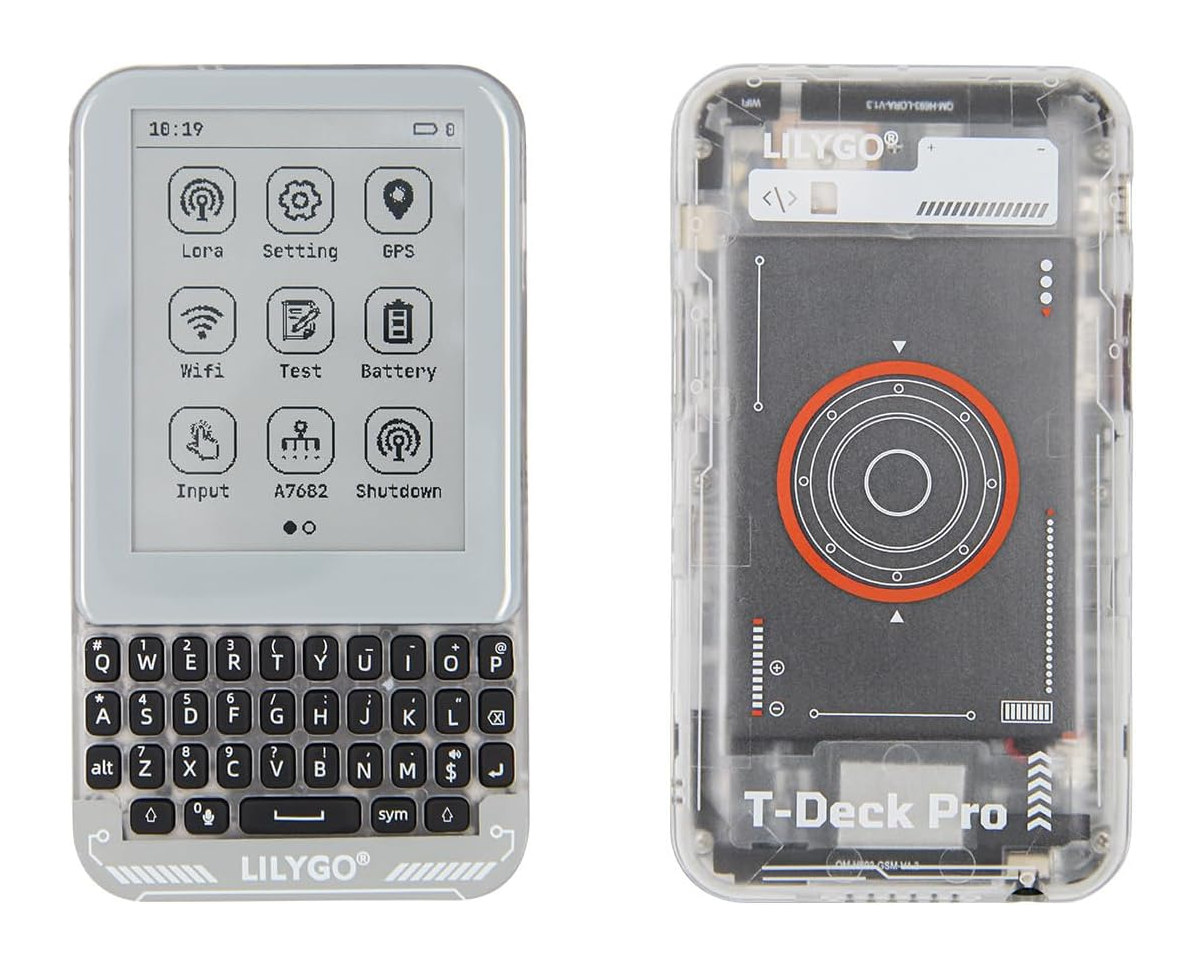
M5Stack has just launched the Cardputer Mesh Kit, a portable, card-sized Meshtastic communication terminal built around the ESP32-S3-powered Cardputer-Adv controller and a new LoRa expansion module (CapLoRa-1262). The kit is essentially a modular upgrade to the original Cardputer, where the base unit handles the UI via a 56-key keyboard and a 1.14-inch LCD. The added “Cap” module adds a Semtech SX1262 transceiver and an AT6668 GNSS module, allowing for off-grid text messaging and GPS location tracking without relying on cellular networks. Cardputer Mesh Kit specifications: Core Controller (Cardputer-Adv): Wireless MCU module – M5Stack M5Stamp S3A with SoC – Espressif Systems ESP32-S3FN8 CPU Dual-core 32-bit Xtensa LX7 microcontroller with AI vector instructions up to 240MHz RISC-V ULP co-processor Memory – 512KB SRAM Storage – 8MB flash Wireless – 2.4GHz WiFi 4 (802.11b/g/n), Bluetooth 5.0 BLE + Mesh 2.4GHz 3D antenna USB – 1x USB Type-C port Expansion connectors for I/Os such as SPI, I2C, […]

VitaLink – A foldable 180° keyboard with an integrated 13-inch 4K touchscreen (Crowdfunding)

VitaLink keyboard with 4K touchscreen 1

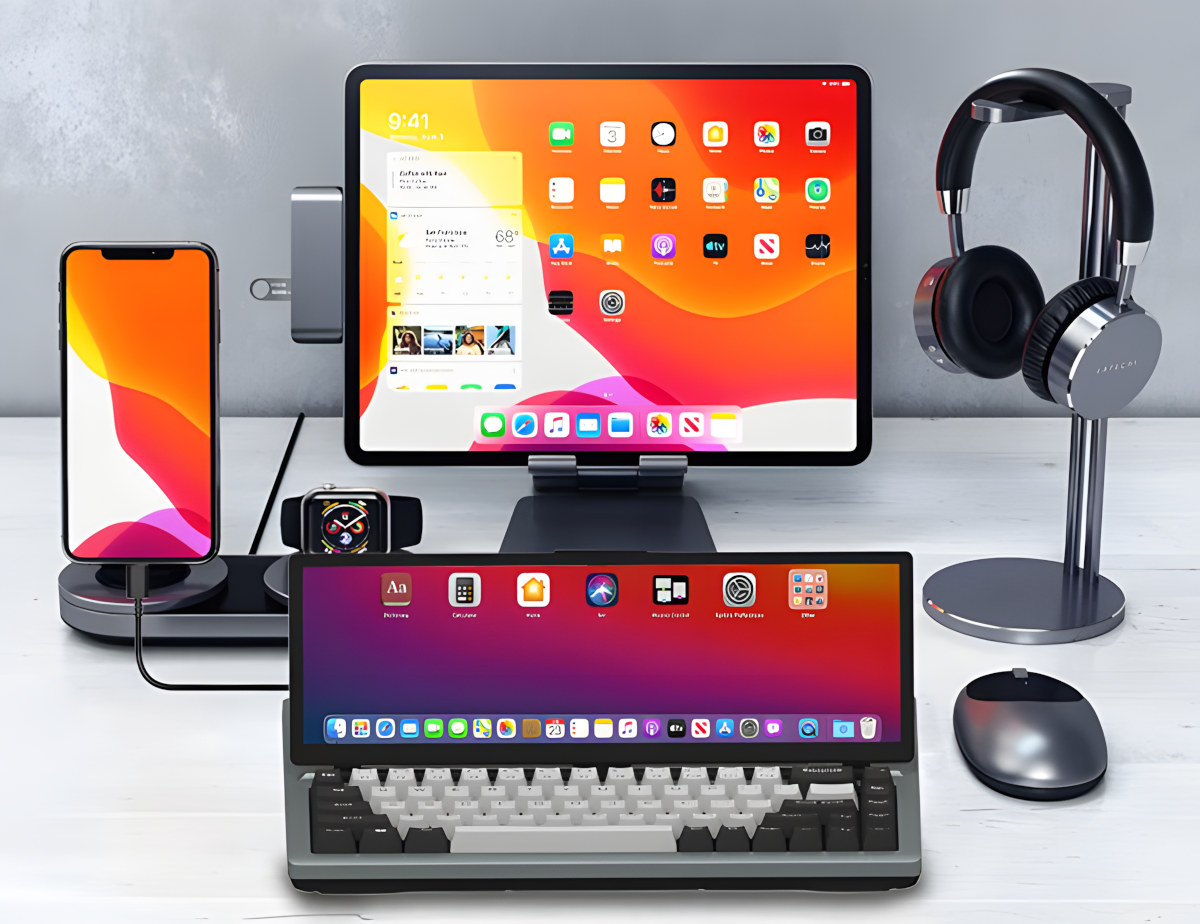
VitaLink is a portable keyboard with a built-in 4K touchscreen. It folds like a laptop and gives you a second display when connected to a laptop, tablet, or mini PC. It is mainly used for people who work on the go and want a simple dual-screen setup without carrying extra devices. It features a 13-inch 4K touch display (3840×1600, 60Hz) and a full keyboard with RGB backlight. The body is made of aluminum and folds flat to about 20 mm, with a 180° hinge. It connects using USB-C for power, video, and data, and works with Windows, macOS, Linux, and Android. It also has built-in speakers, 10-point touch, around 298 PPI, and weighs about 1.2 kg. It can be used for coding, writing, editing, gaming with handheld consoles, and general multitasking in small spaces, such as on desks or while traveling. VitaLink specifications: Compatibility – Laptop, tablet, mini PC like […]

Exit mobile version