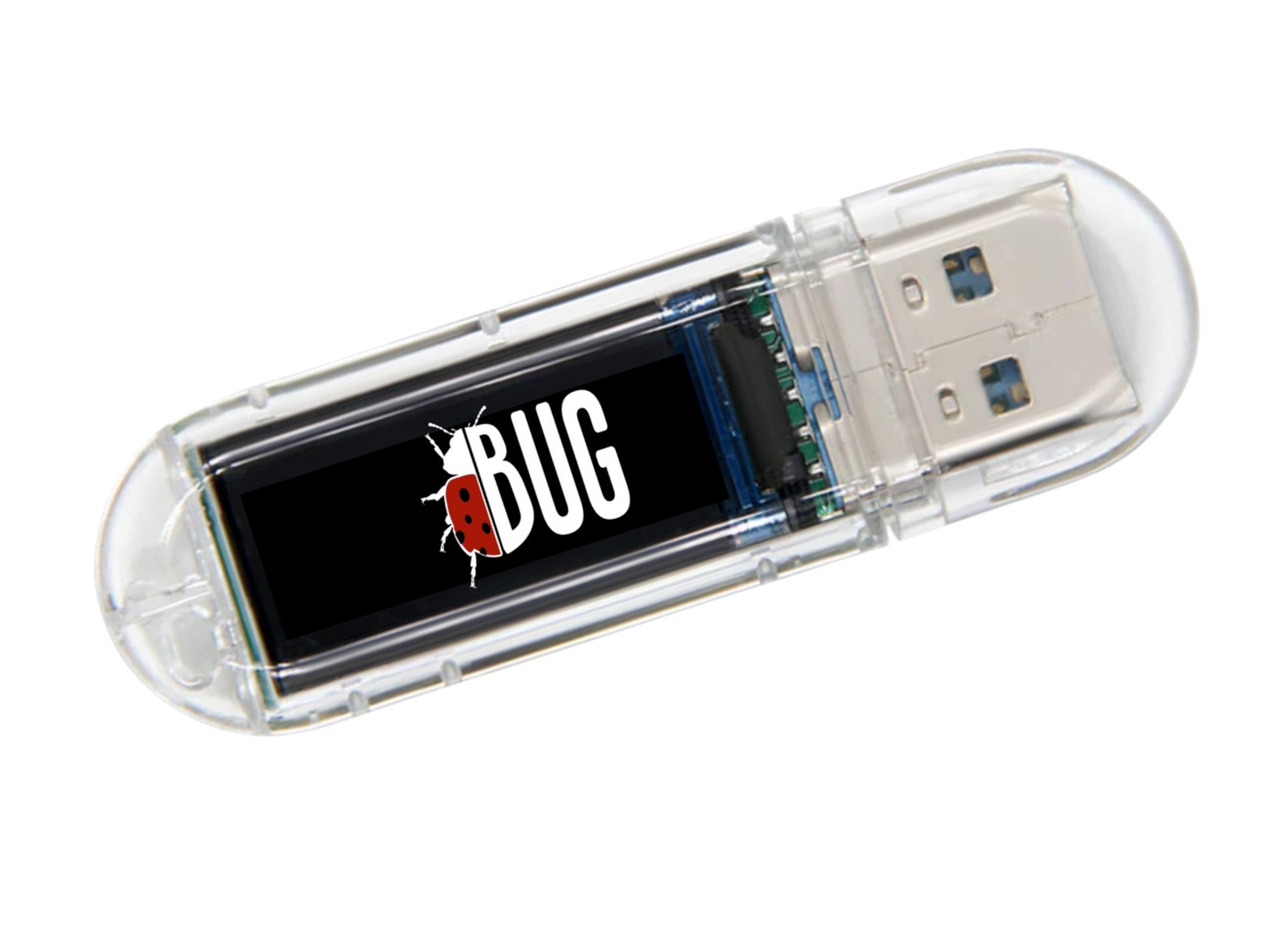
Hack the Board’s HackBEE is a tiny programmable USB-C dongle and development platform powered by the Raspberry Pi RP2350 Arm Cortex-M33/Hazard3 RISC-V microcontroller. It supports USB host and device modes, has side buttons, and includes a multi-color RGB LED for feedback. The device can be used as a programmable HID device (keyboard/mouse/media controller), a USB host or device for testing and prototyping, an automation tool for repetitive tasks, a compact input emulator, or a teaching tool for C/C+, MicroPython, and embedded systems education. HackBEE specifications: MCU – Raspberry Pi RP2350A CPU Dual-core Arm Cortex-M33 @ 150 MHz with Arm Trustzone, Secure boot OR Dual-core RISC-V Hazard3 @ 150 MHz Either two cores can be used. Memory – 520 KB on-chip SRAM Package – QFN-60 Storage – Not disclosed USB – 1x USB Type-C host/device port Security – Arm TrustZone for Cortex-M33 cores, optional boot signing (OTP), protected OTP storage, SHA-256 […]
CrowPanel Advance 7-inch ESP32-P4 HMI display supports Zigbee, LoRa, and 2.4GHz radio modules
The CrowPanel Advance 7.0-inch ESP32-P4 HMI AI display is an ESP32-P4 HMI terminal that is similar to the GUITION 7-inch touchscreen display. It also adds an ESP32-C6 module for WiFi 6, Bluetooth LE, and 802.15.4 connectivity, and is suitable for Smart Home, industrial automation, and AIoT applications. It features a 7-inch 1024×600 IPS capacitive touchscreen and optional AI vision and audio through a 2MP MIPI-CSI camera for face and object recognition, and a speaker header and a dual microphone array for interactive voice applications. The smart display also supports interchangeable wireless expansion for Zigbee/Thread, LoRa, and 2.4 GHz proprietary (nRF2401) connectivity. CrowPanel Advance 7.0-inch display specifications: Microcontroller – Espressif Systems ESP32-P4 CPU Dual-core RISC-V HP (High-performance) CPU @ up to 400 MHz with AI instructions extension and single-precision FPU, 768KB of on-chip SRAM Single-RISC-V LP (Low-power) MCU core @ up to 40 MHz with 8KB of zero-wait TCM RAM Memory – […]
$4 Shrike-lite FPGA board combines 1120 LUTs Renesas ForgeFPGA with Raspberry Pi RP2040 MCU
Shrike-lite is an ultra-cheap FPGA board based on a 1120 LUTs Renesas ForgeFPGA device (SLG47910V) and also equipped with a Raspberry Pi RP2040 microcontroller. The board also features a USB-C port for power and programming, two 18-pin headers and a 12-pin PMOD-compatible header for I/Os, as well as Boot and Reset buttons, but not much else since it’s designed as a minimal development board. Shrike-lite and Shrike boards specifications: FPGA – Renesas ForgeFPGA (SLG47910V,1120 LUTs) 1120 5-bit LUTs 1120 DFFs 5 kb distributed memory 32 kb BRAM Configurable through NVM and/or SPI interface Package – STQFN-24 MCU – Raspberry Pi RP2040 dual-core Cortex-M0+ microcontroller @ 125 MHz with 264KB SRAM FPGA/ MCU interface – 6-bit high-speed bridge Storage – QSPI flash for configuration and storage USB – USB Type-C for programming & power Expansion 2x 18-pin headers for RP2040 and ForgeFPGA’s I/Os 12-pin PMOD compatible header Misc Boot and Reset buttons […]
upyOS modular MicroPython-based OS for microcontrollers works with ESP32, RP2040, etc…
upyOS is a modular, lightweight MicroPython-based operating system (OS) that provides a Unix-like experience on low-resource microcontrollers such as Espressif Systems ESP32/ESP32-C3/ESP32-S3, Raspberry Pi RP2040, and others. Inspired by smolOS, upyOS offers remote development tools, OTA updates, and a built-in web server. Its modular architecture separates system functions into reusable components, instead of large, monolithic programs. Key Features: Modular architecture: Commands and system functionality are broken down into small, independent modules to reduce memory usage. Built-in shell environment: Execute commands and scripts directly, providing a Unix-like CLI experience. Startup and shutdown scripting: Configure boot and shutdown behaviors using /etc/init.sh and /etc/end.sh. Recovery mode: A built-in failsafe mechanism lets users recover the system when booting fails. Background execution: Supports threads and asyncio for background tasks, along with & sufix, hold, resume, kill and killall commands for process control. Remote development support: Telnet and FTP servers allow file transfer and terminal access over […]
Olimex RP2350-PICO2 open hardware boards expose all 48 GPIOs for breadboard prototyping
Olimex RP2350-PICO2-BB48 and RP2350-PICO2-BB48R open hardware development boards are built around the Raspberry Pi RP2350B MCU, and expose all 48 GPIOs in a 0.6-inch dual-inline PCB layout. Compared to the earlier PICO2-XL and PICO2-XXL boards, this new board features a breadboard-friendly design with options for PSRAM and microSD on the BB48R version. Other features include USB-C power/data, BOOT and RESET buttons, a 2A 3.3V regulator, UEXT and Qwiic/Stemma connectors, status LED, and debug pads. With pre-soldered headers, it can be plugged directly into a breadboard, making it ideal for DIY projects, IoT, retro computing, and hardware prototyping. Olimex RP2350-PICO2-BB48 and RP2350-PICO2-BB48R specifications: MCU – Raspberry Pi RP2350B CPU Dual-core Arm Cortex-M33 @ 150 MHz with Arm Trustzone, Secure boot OR Dual-core RISC-V Hazard3 @ 150 MHz Either two cores can be used. Memory – 520 KB on-chip SRAM Package – QFN-80 Memory – 8 MB external QSPI PSRAM (only on […]
WiFIRCard – A credit card-sized WiFi and IR-controlled dual relay board (Crowdfunding)
WiFIRCard is a credit card-sized ESP32-S3 board designed for home automation with two relays and a few GPIOs (headers and screw terminals) that can be controlled over WiFi 4 or an IR (infrared) remote control. The board also features a microSD card slot for data logging or other storage uses, a buzzer for audio feedback, a USB-C port for power and programming, and a few buttons and LEDs. WiFiRCard specifications: Wireless module – ESP32-S3-WROOM-1 with Xtensa® LX7 dual-core 32-bit SoC – Espressif Systems ESP32-S3 CPU – Dual-core Tensilica LX7 up to 240 MHz with vector extension for AI/ML workloads RAM – 512KB SRAM, up to 8MB PSRAM Storage – Up to 16MB flash Wireless – WiFi 4 and Bluetooth LE 5 Antenna – PCB antenna Storage – MicroSD card slot for data logging/storage USB – 1x USB Type-C port for power and programming Relays 2x HLS8L-DC5V-S-C relays 10A/250V AC, 15A/120V AC, […]
Waveshare RP2350-Matrix board features 8×8 WS2812 RGB LED matrix, 6-axis IMU, Dout pin for more LEDs
Waveshare’s RP2350-Matrix is a Raspberry Pi RP2350A-powered LED matrix board featuring 64 RGB LEDs (8×8 RGB matrix), a built-in 6-axis IMU, and a Dout pin in case the user needs even more LEDs. The RP2350-Matrix also includes 25 GPIOs along with 12 PIO state machines for custom peripheral support, an on-chip temperature sensor, accurate hardware timers, and support for low-power sleep and dormant modes. It comes with a USB Type-C port for power and programming via USB 1.1 device/host, and an onboard 800mA LDO regulator for stable power delivery. These features make this board suitable for motion sensing and visual feedback. Waveshare RP2350-Matrix Specifications: SoC – Raspberry Pi RP2350A CPU Dual-core Arm Cortex-M33 @ 150 MHz with Arm Trustzone, Secure boot OR Dual-core RISC-V Hazard3 @ 150 MHz Up to two cores can be used in any combination Memory – 520 KB on-chip SRAM Package – QFN-60 Storage – 16 MB […]
Genesis IoT Discovery Lab is a modular ESP32-S3-based wire-free prototyping platform (Crowdfunding)
Developed by Axiometa in Lithuania, the Genesis IoT Discovery Lab is a modular Wi-Fi-enabled prototyping platform built around the ESP32-S3 and a standardized module with AX22 connectors, designed to replace messy breadboards with a structured, plug-and-play system. Designed to simplify hardware development and education, this prototyping module features eight universal AX22 ports, a USB OTG Type-C port, a battery module with charging, and support for over 50 sensors and peripherals. Modules include sensors, buttons, motors, LEDs, relays, and displays, all secured with robust connectors. With open-source hardware and various expansion add-ons, it’s suitable for education, IoT prototyping, and fast hardware iterations. Genesis IoT Discovery Lab specifications: Wireless Module – ESP32-S3-WROOM-1 SoC – Espressif Systems ESP32-S3 CPU – Dual-core Tensilica LX7 up to 240 MHz with vector extension for AI/ML workloads RAM – 512KB SRAM Storage – 8MB flash Wireless – WiFi 4 and Bluetooth LE 5 Antenna – PCB antenna USB […]