
HalowLink 2 Wi-Fi HaLow access point and extender offers up to 1 km range, supports up to 1,000 IoT end devices

GL.iNet HaLowLink 2 WiFi HaLow access point extender

Designed in collaboration with Morse Micro, GL.iNet’s HalowLink 2 is a Wi-Fi HaLow (802.11ah) access point and extender that offers up to 1 km range and supports up to 1,000 IoT end devices. It’s an update to the earlier HaLowLink 1 Wi-Fi HaLow gateway with the exact same functionality, except it replaces a Morse Micro MM6108-based module with an MM8108-based module that offers a higher max link rate (43.3 Mbps vs 32.5 Mbps), broader region support, higher device capacity, and potentially better /performance range with up to 26 dBm Tx power (vs 23dBm in the first generation model). HalowLink 2 specifications: SoC – Mediatek MT7621 dual-core, quad-thread MIPS1004K processor @ up to 880MHz System Memory – 256MB DDR3 Storage – 32MB NAND Flash Connectivity Wi-Fi HaLow (802.11ah) AzureWave AW-HM677 module with Morse Micro MM8108 HaLow chipset supporting Wi-Fi HaLow, IEEE 802.11ah, Sub-GHz, 43.3 Mbps, ultra-low power, WPA3 Sub-GHz frequency range […]

Linux 6.18 LTS release – Main changes, Arm, RISC-V, and MIPS architectures

Linux 6.18

Linus Torvalds has just announced the release of Linux 6.18 on the Linux Kernel Mailing List (LKML), which will likely become the next LTS kernel [update: it’s now official]: So I’ll have to admit that I’d have been happier with slightly less bugfixing noise in this last week of the release, but while there’s a few more fixes than I would hope for, there was nothing that made me feel like this needs more time to cook. So 6.18 is tagged and pushed out. Most of the last-minute fixes are minor fixes to drivers, with some random noise elsewhere (bluetooth, ceph, afs..). Nothing strikes me as standing out, but hey, there’s a shortlog appended if you want to see the details. And this obviously means that the merge window will open tomorrow, and I already have three dozen pull requests pending. Thanks. And as I already mentioned a couple of […]

Linux 6.17 release – Main changes, Arm, RISC-V, and MIPS architectures

Linux 6.17 changelog

Linux 6.17 has just been released on LKML: No huge surprises this past week, so here we are, with kernel 6.17 pushed out and ready to go. Below is the shortlog for just the last week – not the full 6.17 release – as usual. It’s not exciting, which is all good. I think the biggest patch in there is some locking fixes for some bluetooth races that could cause use-after-free situations. Whee – that’s about as exciting as it gets. Other than that, there’ the usual driver fixlets (GPU and networking dominate as usual, but “dominate” is still pretty small), there’s some minor random other driver updates, some filesystem noise, and core kernel and mm. And some selftest updates. This obviously means that the merge window for 6.18 will open tomorrow, and I already have four dozen pull requests pending. Thanks to the proactive people – you know who […]

Linux 6.16 Release – Main changes, Arm, RISC-V, and MIPS architectures

Linux 6.16 release arm linux mips

Linus Torvalds has just announced the release of Linux 6.16 on LKML: It’s Sunday afternoon, and the release cycle has come to an end. Last week was nice and calm, and there were no big show-stopper surprises to keep us from the regular schedule, so I’ve tagged and pushed out 6.16 as planned. It’s worth noting that the upcoming merge window for 6.17 is going to be slightly chaotic for me: I have multiple family events this August (a wedding and a big birthday), and with said family being spread not only across the US, but in Finland too, I’m spending about half the month traveling. That means that I will try very hard to get most of the merge window done the first week before my travels start, and I already ended upgiving a heads-up on that to the people who tend to send me the most pull requests. […]

Linux 6.15 Release – Main changes, Arm, RISC-V and MIPS architectures

Linux 6.15 release

Linus Torvalds has just announced the release of Linux 6.15: So this was delayed by a couple of hours because of a last-minute bug report resulting in one new feature being disabled at the eleventh hour, but 6.15 is out there now. Apart from that final scramble, things looked pretty normal last week. Various random small fixes all over, with drivers as usual accounting for most of it. But we’ve got some bcachefs fixes, some core networking, and some mm fixes in there too. Nothing looks particularly scary. And this obviously means that the merge window opens tomorrow as usual, and I see the usual people being proactive and having sent me their pull requests. It’s memorial day tomorrow here in the US, but like the USPS, “neither snow nor rain nor heat nor gloom of night” – nor memorial day – stops the merge window. [ Actually, thinking back […]

SATURN NITRO – A Microchip PIC32MK development board with Arduino Nano form factor

PIC32MK development board

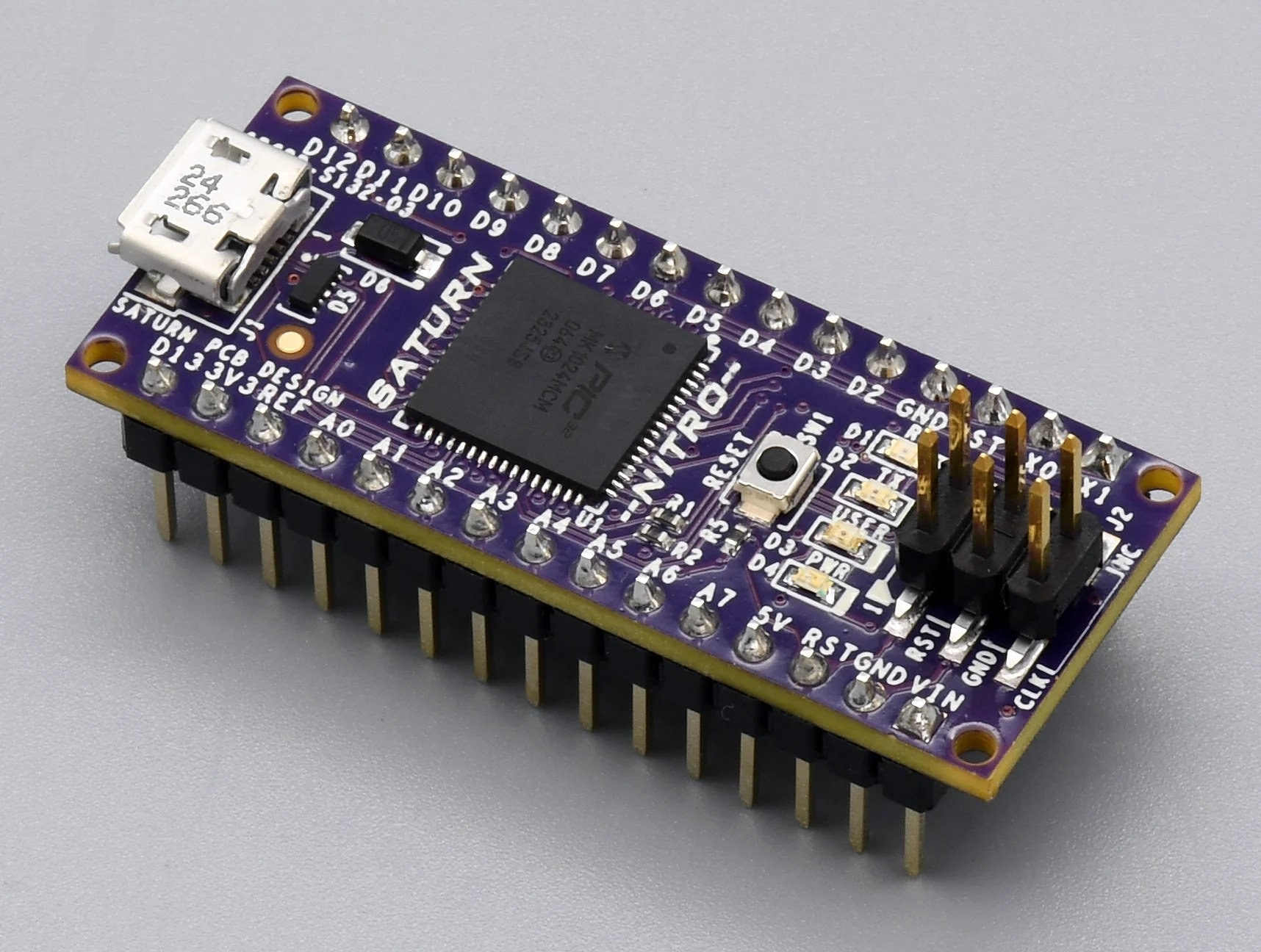
While Microchip regularly releases PIC32 microcontrollers and evaluation kits, we don’t see that many PIC32 development boards from third parties. The SATURN NITRO is an exception, and the Arduino Nano-inspired development board is equipped with a 120 MHz PIC32MK general-purpose and motor control 32-bit MIPS microcontroller with 256KB SRAM, 1024KB flash, and 4KB EEPROM. The board closely follows the design of the official Arduino Nano board and can be seen as a beefed-up version with a much more powerful microcontroller delivering 198 DMIPS compared to the Microchip ATmega328P 8-bit microcontroller @ 16 MHz with just 2KB SRAM, 32 KB flash, and 1KB EEPROM, and a less capable I/Os. SATURN NITRO specifications: MCU – Microchip PIC32MK1024MCM064 Core – MIPS32 microAptiv MCU core @ 120 MHz with FPU; up to 198 DMIPS Memory – 256 KB SRAM Storage – 1MB flash, 4KB EEPROM USB – 1x Micro USB OTG port also used […]

Linux 6.14 release – Main changes, Arm, RISC-V, and MIPS architecture

Linux 6.14 release

Linus Torvalds has just announced the release of Linux 6.14 on LKML: So it’s early Monday morning (well – early for me, I’m not really a morning person), and I’d love to have some good excuse for why I didn’t do the 6.14 release yesterday on my regular Sunday afternoon release schedule. I’d like to say that some important last-minute thing came up and delayed things. But no. It’s just pure incompetence. Because absolutely nothing last-minute happened yesterday, and I was just clearing up some unrelated things in order to be ready for the merge window. And in the process just entirely forgot to actually ever cut the release. D’oh. So yes, a little delayed for no good reason at all, and obviously that means that the merge window has opened. No rest for the wicked (or the incompetent). Below is the shortlog for the last week. It’s nice and […]

HaLowLink 1 Wi-Fi HaLow gateway turns legacy devices into Wi-Fi HaLow clients via Ethernet, USB, or 2.4 GHz Wi-Fi

MorseMicro HaLowLink 1 Long Range Sub GHz Wi Fi HaLow

Morse Micro in collaboration with GL.iNet has recently showcased the HaLowLink 1 Wi-Fi HaLow gateway, which the company terms as Wi-Fi HaLow reference design and evaluation platform developed for long-range, low-power wireless connectivity for IoT applications. Built around the AzureWave AW-HM593 module with Morse Micro MM6108 silicon, it supports 1/2/4/8 MHz bandwidths. It features a MediaTek MT7621A dual-core CPU, Wi-Fi 4 module, dual Gigabit Ethernet, USB-C, and an SMA antenna connector, allowing it to work as a Wi-Fi HaLow router, access point, or extender. The device runs OpenWrt and provides an intuitive web-based UI and SSH/CLI configuration. OpenWrt also gives access to a web-based UI and SSH/CLI configuration. These features make this device useful for applications like smart homes, industrial automation, agriculture, and telecommunications. HaLowLink 1 specifications: SoC – Mediatek MT7621 dual-core, quad-thread MIPS1004K processor @ up to 880MHz System Memory – 256MB DDR3 (optional 512 MB) Storage – 32MB […]

Exit mobile version