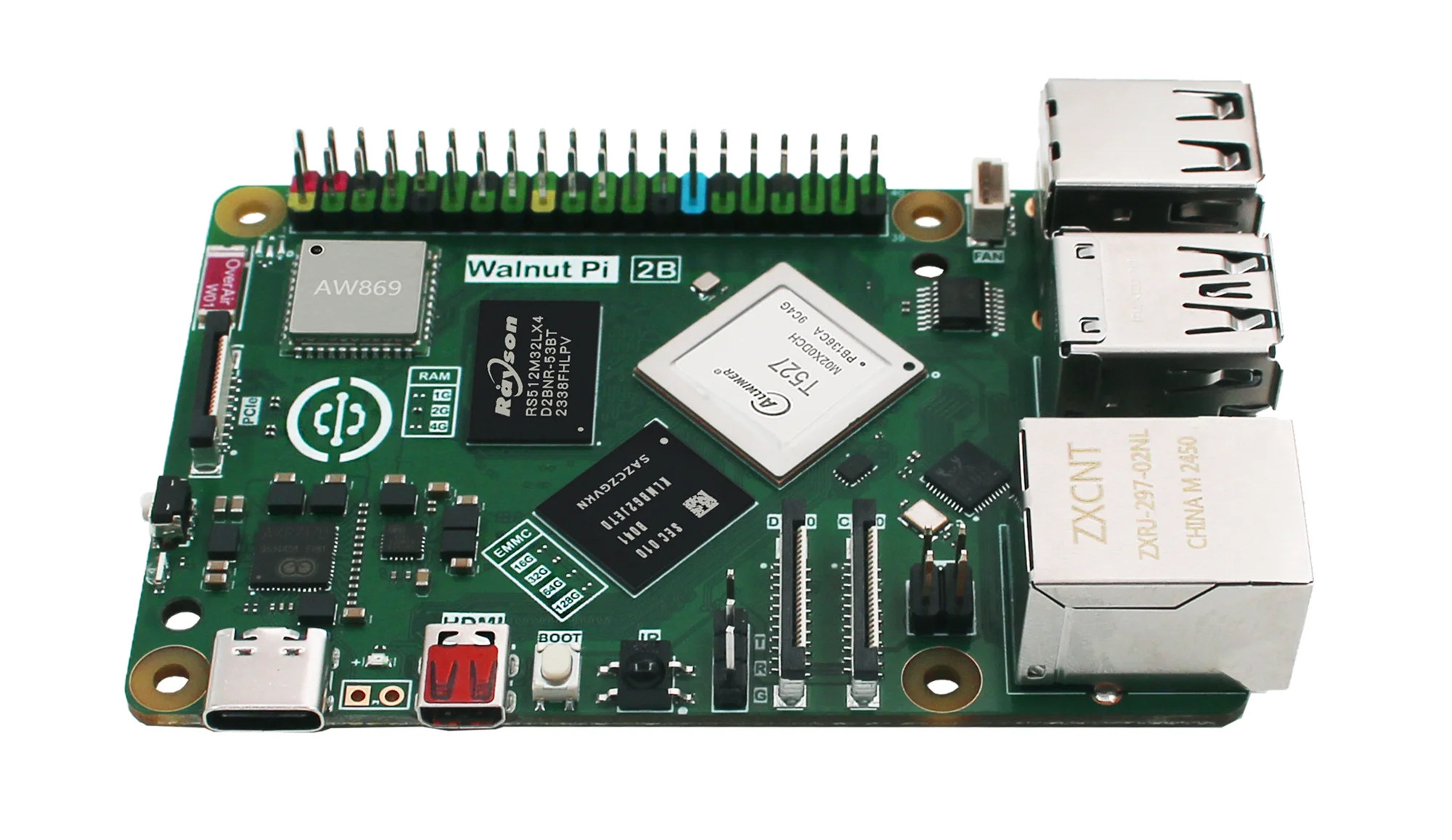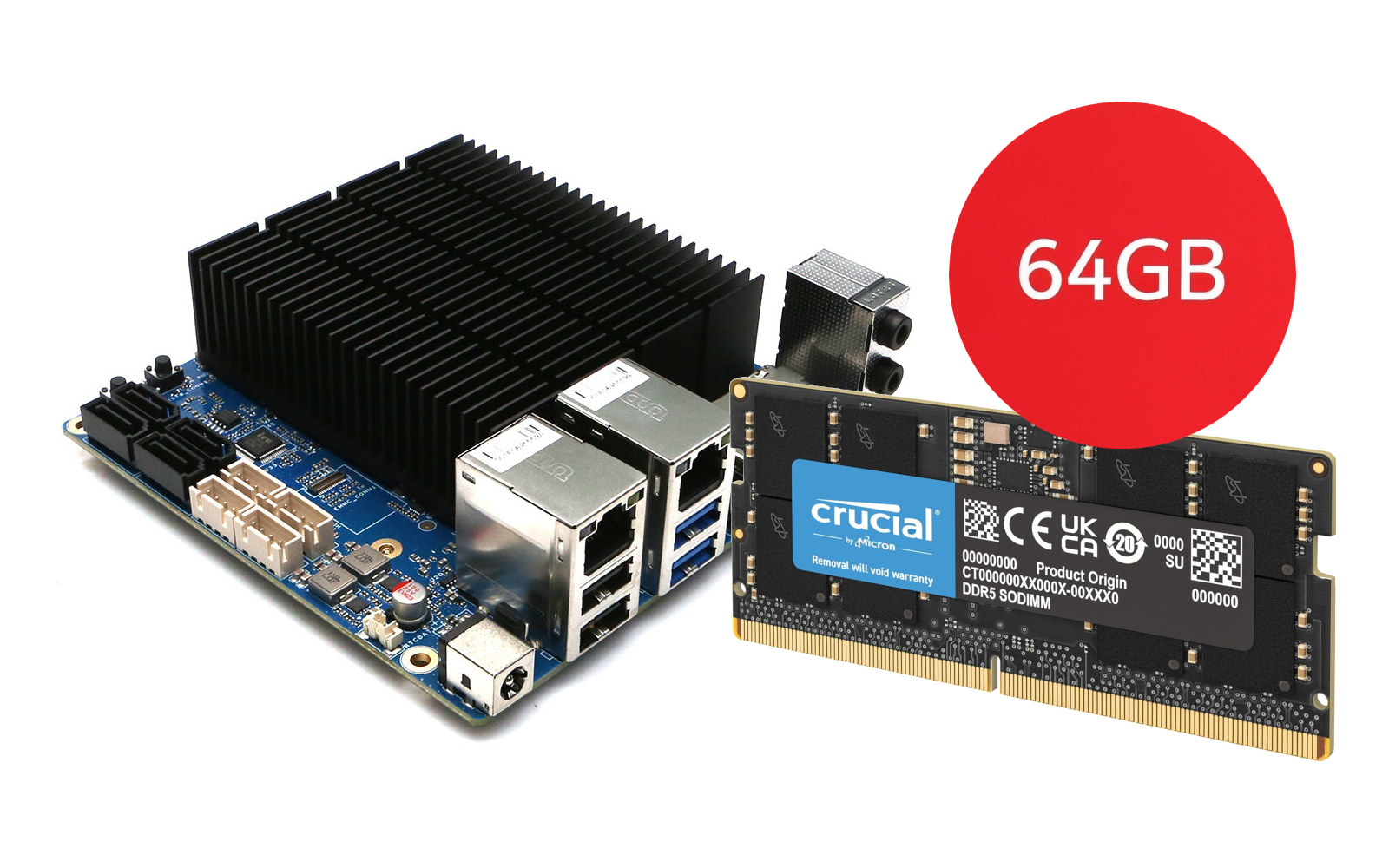

Radxa Orion O6N is a Nano-ITX SBC powered by CIX P1 (CD8160 variant) 12-core Cortex-A720/A50 processor with a 30/45 TOPS AI accelerator, up to 64GB LPDDR5, support for UFS and M.2 NVMe storage, and plenty of interfaces. It’s a smaller and cheaper version of the Orion O6 mini-ITX motherboard introduced at the end of last year. It offers most of the same features, but is equipped with a CD8160 SoC instead of a CD8180 with a slightly lower CPU frequency for the Cortex-A720 big cores (2.6 vs 2.8 GHz), more storage options, fewer display interfaces, no dedicated audio port, 2.5GbE networking instead of 5GbE, and a few other differences you can see in the specifications below. Radxa Orion O6N specifications (highlights in bold and strikethrough show differences against Orion O6): SoC – Cix P1 (Codename: CD8160) 12-core DynamIQ processor 4x Cortex‑A720 big cores @ up to 2.6 GHz 4x Cortex‑A720 […]
Qualcomm acquires Arduino, introduces Arduino UNO Q “dual-brain” SBC
Qualcomm has just signed an agreement to acquire Arduino, and the goal of the purchase is to “combine Qualcomm’s leading-edge products and technologies with Arduino’s vast ecosystem and community to empower businesses, students, entrepreneurs, tech professionals, educators, and enthusiasts to quickly and easily bring ideas to life.” They also took the opportunity to launch the Arduino UNO Q “dual-brain” SBC powered by a Qualcomm DragonWing QRB2210 SoC running Linux and an STMicro STM32U585 MCU for real-time control, as well as the Arduino App Lab integrated development environment to “unify the Arduino journey across Real‑time OS, Linux, Python, and AI flows”. Will the acquisition change anything? I suppose we’ll see more and more Arduino boards based on Qualcomm processors, but the company also promises to preserve Arduino’s open approach and community: Arduino will retain its independent brand, tools, and mission, while continuing to support a wide range of microcontrollers and microprocessors […]
The latest Raspberry Pi OS images are now based on Debian 13 “Trixie”
Since Debian 13 “Trixie” was released last August, it was just a matter of time until Raspberry Pi OS followed. Raspberry Pi announced the update from Bookworm to Trixie a few days ago. The new Raspberry Pi OS images get the new and updated packages from Debian 13, and features like 64-bit time support to solve the Y2K38 bug. However, as Simon Long, UX engineer at Raspberry Pi, points out, there have been fewer changes in newer versions of Debian, and most changes in the new version of Pi OS are cosmetic, although there are some interesting under-the-hood changes as well. The most obvious change from the user’s perspective is the new theme featuring a completely new set of icons, a new font (Nunito Sans Light), new desktop backgrounds (the new default is a photo of the sun rising over the Drakensberg mountains in Lesotho), and some other small tweaks. […]
M5Stack LLM-8850 card – An M.2 M-Key AI accelerator module based on Axera AX8850 24 TOPS SoC
M5Stack LLM‑8850 card is an M.2 M-Key 2242 AI acceleration module powered by an Axera AX8850 SoC delivering 24 TOPS ( INT8) of performance, and suitable for host devices such as Raspberry Pi 5, Rockchip RK3588 SBCs, and even x86 PCs like mini PCs with a spare M.2 Key-M socket. The card ships with 8GB RAM, a 32Mbit SPI NOR flash, and also supports H.265/H.264 8Kp30 video encoding and 8Kp60 video decoding, with up to 16 channels for 1080p videos. It is also equipped with an active cooling system to maintain stable temperatures and prevent thermal degradation inside enclosures. M5Stack LLM‑8850 card specifications: SoC – Axera AX8850 CPU – Octa-core Cortex‑A55 processor at 1.7 GHz NPU – 24 TOPS @ INT8 VPU Video Encoder – 8K @ 30 fps H.264/H.265 encoding, supports scaling / cropping Video Decoder – 8K @ 60 fps H.264/H.265 decoding, supports 16 channels 1080p parallel decoding, supports scaling / cropping Memory – 8GB 64‑bit LPDDR4x @ 4266 Mbps Storage – 32Mbit QSPI NOR […]
AAEON GENE-ARH6 – A 3.5-inch subcompact industrial SBC with Intel Core Ultra 200H/U SoC
AAEON’s GENE-ARH6 is a 3.5-inch subcompact industrial SBC built around the Intel Core Ultra 200H/U “Arrow Lake” processors, which delivers up to 96 TOPS AI power when equipped with an Intel Core Ultra 7 255H SoC. The board supports up to 96GB DDR5 memory, and multiple display outputs through HDMI 2.1, DP 2.0, LVDS, and eDP interfaces. Connectivity includes three Ethernet ports, four COM headers, GPIO, SMBus or I2C, and multiple USB ports. Expansion options include M.2 slots for 5G, Wi-Fi 6E CNVi, PCIe Gen4 storage with RAID 0 or 1, and an FPC2 connector for additional PCIe lanes. Other features include TPM 2.0 security, a watchdog timer, a 9V to 36V DC input, and a wide temperature range. Applications include robotics, inference-based safety monitoring, automation, and rugged industrial deployments with wide power input and connectivity options. AAEON GENE-ARH6 specifications: Arrow Lake SoC (one of the other) Intel Core Ultra 5 […]
Linux 6.17 release – Main changes, Arm, RISC-V, and MIPS architectures
Linux 6.17 has just been released on LKML: No huge surprises this past week, so here we are, with kernel 6.17 pushed out and ready to go. Below is the shortlog for just the last week – not the full 6.17 release – as usual. It’s not exciting, which is all good. I think the biggest patch in there is some locking fixes for some bluetooth races that could cause use-after-free situations. Whee – that’s about as exciting as it gets. Other than that, there’ the usual driver fixlets (GPU and networking dominate as usual, but “dominate” is still pretty small), there’s some minor random other driver updates, some filesystem noise, and core kernel and mm. And some selftest updates. This obviously means that the merge window for 6.18 will open tomorrow, and I already have four dozen pull requests pending. Thanks to the proactive people – you know who […]
Particle Tachyon Review – A Qualcomm QCM6490 Edge AI and 5G cellular SBC tested with Ubuntu
Hello, today I’m going to review the Particle Tachyon SBC designed for high-performance edge AI, IoT, and connectivity applications. Powered by the Qualcomm QCM6490 platform with an octa-core Kryo CPU, an Adreno GPU, and a Hexagon DSP. The board also integrates robust wireless options, including 5G, Wi-Fi 6E, and Bluetooth 5.2. The Particle Tachyon adopts the Raspberry Pi form factor and provides various I/O interfaces, such as a 40-pin GPIO header compatible with Raspberry Pi HATs, along with expansion options for sensors and peripherals. It also includes a Qwiic connector for SparkFun and Adafruit integrations, as well as MIPI-CSI/DSI connectors for cameras and displays. Particle Tachyon Unboxing The parcel was shipped from Hong Kong and arrived with all the expected components. Inside the package, I found a single-cell 3.7 V LiPo battery with a 3-pin JST-PH connector, the main Tachyon board, a small welcome card, and an additional microphone audio […]
LattePanda IOTA SBC combines Intel N150 SoC with Raspberry Pi RP2040 for GPIO and power control
LattePanda IOTA is a new Intel Processor N150 SBC equipped with up to 16GB LPDDR5 and 128GB eMMC flash, as well as a Raspberry Pi RP2040 microcontroller for GPIO and power control It’s an update to the LattePanda V1 launched in 2015 with an Intel Atom x5-Z8300/Z8350 Cherry Trail SoC and an ATMega32U4 microcontroller. The new model is up to eight times faster, features up to four times the memory, twice the storage, Gigabit Ethernet, and more, but mostly keeps the same dimensions and layout for compatibility with most accessories. It also adds new features such as a 16-pin PCIe connector, ECC memory, Wake-on-LAN, and more… LattePanda IOTA specifications: SoC – Intel Processor N150 Quad-core “Twin Lake” processor @ up to 3.6 GHz (Turbo) with 6MB cache GPU – 24EU Intel UHD graphics @ 1000 MHz TDP: 6W to 15W (Configurable in BIOS/UEFI) Memory – 8GB or 16GB LPDDR5 4800MT/s […]