Silicon Labs FG23L low-cost Arm Cortex-M33 SoC targets proprietary Sub-GHz IoT applications

Silicon Labs FG23L

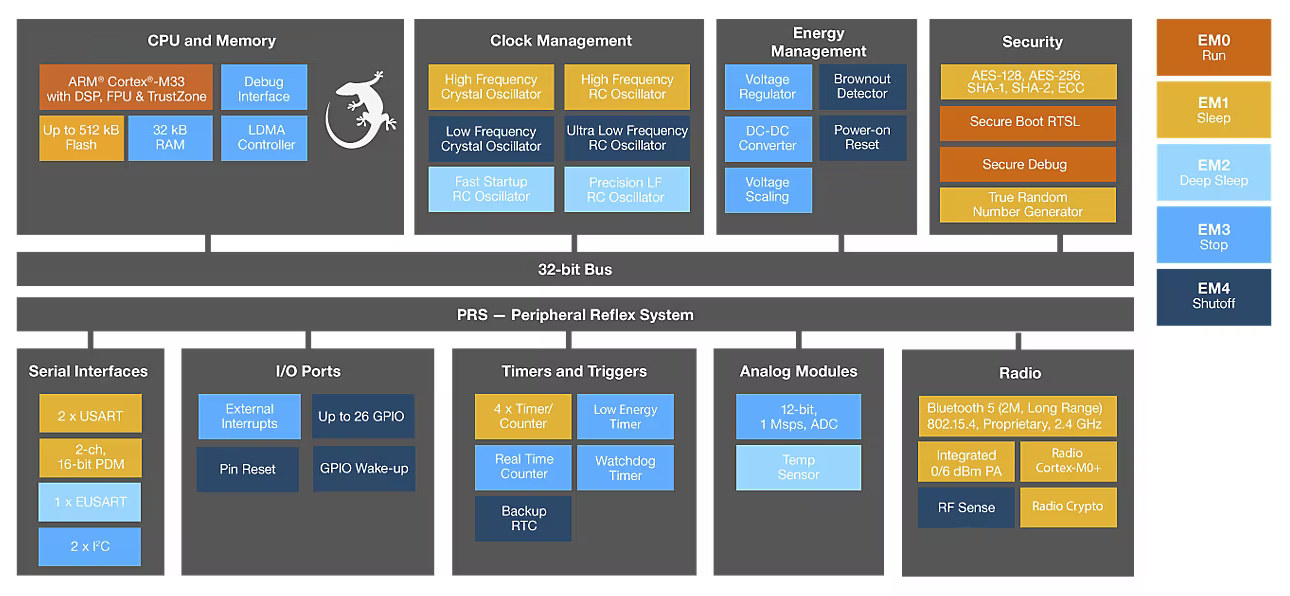
Silicon Labs EFR32FG23L, or FG23L for short, is an ultra-low power, Sub-GHz wireless Arm Cortex-M33 SoC, which the company claims offers the best price/performance ratio for Sub-GHz IoT applications such as home and industrial automation, key fobs, and smart city sensor nodes. It’s a cost-down version of the PSA Certified Level 3 FG23 SoC equipped with less memory (32KB vs 64KB) and storage (128KB vs 512KB), less advanced security features, no segment LCD interface, and fewer GPIOs. The new FG23L is only designed for proprietary protocols, while the FG23 supports Amazon Sidewalk, Wi-SUN, Wireless M-Bus (WM-Bus), and Wirepas. Silicon Labs FG23L specifications: MCU core – Arm Cortex-M33 @ 78 MHz with DSP instruction and floating-point unit Memory – 32 kB RAM data memory Storage – 128 kB flash program memory Sub-GHz radio Tx power up to +20 dBm Rx sensitivity -98.6 dBm @ 400 kbps 920 MHz 4-GFSK -125.8 dBm […]

Quectel KCMCA6S industrial wM-bus modules target smart metering

cnx KCMCA6S series sub GHz Wireless M Bus (WM Bus) modules

Quectel’s KCMCA6S is a series of industrial wireless M-Bus (wM-Bus) modules built around Silicon Labs’ EFR32FG23 chipset. The modules operate in the 868 MHz, 169 MHz, and 433 MHz bands and support the EN13757-4 wM-Bus standard for smart metering and AMI (Advanced Metering Infrastructure) applications. The device features an Arm Cortex-M33 processor, 32 KB of SRAM, 256 KB of flash, and a Sub-GHz transceiver. It supports multiple wM-Bus modes (T, C, S, R, N, F), with dynamic multi-mode switching, flexible frequency configuration, and low-power operation alongside multi-layer security mechanisms. Interfaces include USART, SWD, and GPIOs, with optional EUSART, I²C, and ADC through pin multiplexing. Available in two variants (with or without SAW filter), the module comes in a compact 25.4 × 14.0 × 2.9 mm LCC package for water, electricity, gas, and heat metering systems. Quectel KCMCA6S specifications: MCU- Silicon Labs EFR32FG23 Core – Arm Cortex-M33 core, up to 78 […]

Silicon Labs SiXG301 and SiXG302 “Series 3” wireless SoCs are built for line-powered and battery-powered IoT applications

Silicon Labs SiMG301 Series 3 wireless SoC

Silicon Labs has just introduced the first 22nm Series 3 SoCs with the SiXG301 and SiXG302 Arm Cortex-M33 multiprotocol wireless SoCs designed for line-powered and battery-powered IoT devices, respectively. The SiXG301 is offered with 4MB flash and 512 KB SRAM, embeds an LED pre-driver for advanced LED smart lighting and smart home products, and supports 2.4 GHz wireless protocols such as Bluetooth, Zigbee, and Thread with support for Matter.  The upcoming SiXG302 Bluetooth and Matter SoC offers an ultra-low-power consumption using only 15 µA/MHz active current, or 30% lower than competitive devices in its class, and as such is ideal for battery-powered wireless sensors and actuators.  We’ll be focusing on the SiMG301 multi-protocol SoC and SiBG301 Bluetooth LE SoC in this article since the details are sparse for the SiXG302 parts (SiMG302 and SiBG302). Silicon Labs SiMG301 / SiBG301 specifications: MCU Core – 32-bit Arm Cortex-M33 with DSP instructions and […]

Tiny Silicon Labs BG29 Bluetooth LE SoC measures just 2.8 x 2.6mm for wearables and sensors

Silicon Labs BG29 vs coin cell battery

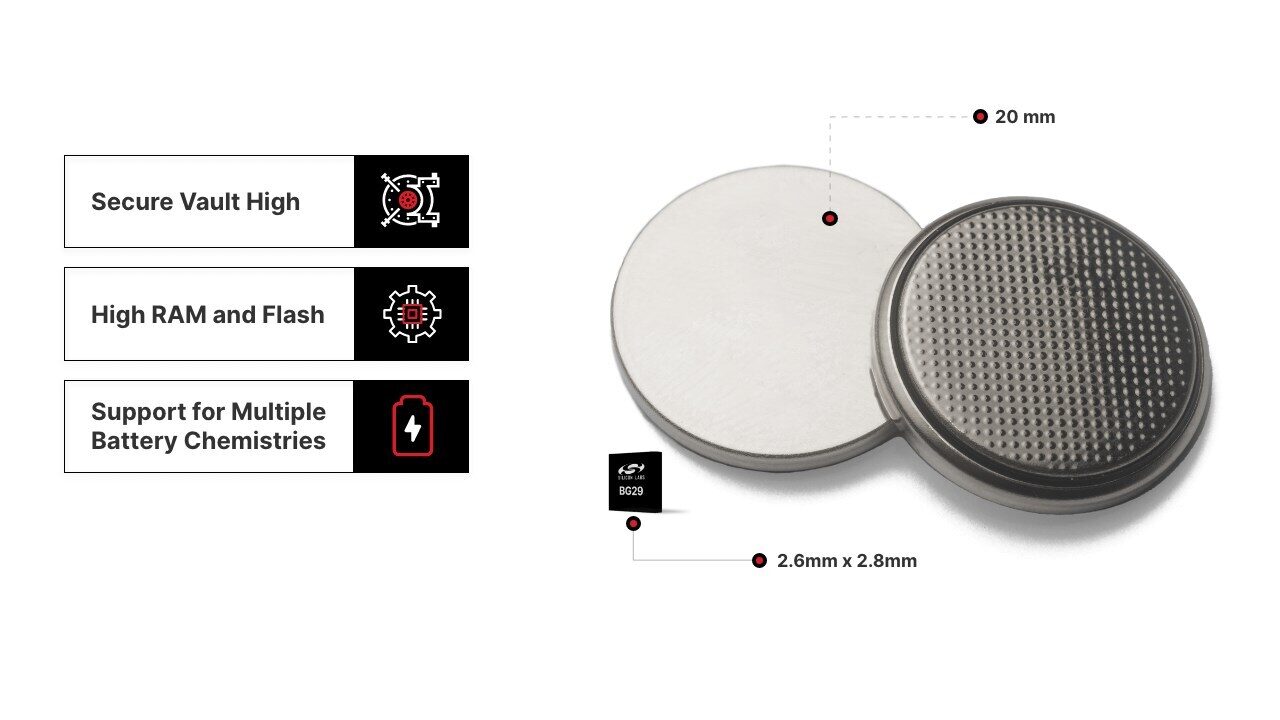
Yesterday, we wrote about the world’s smallest microcontroller (TI MSPM0C1104), which measures just 1.38mm2 in its smallest package. However, it is designed for general-purpose applications without built-in wireless connectivity. If you need Bluetooth LE in a tiny form factor, Silicon Labs BG29 wireless SoC, with a 2.8x 2.6mm package, is worth a look. The BG29 features a Cortex-M33 core clocked at up to 76.8 MHz, up to 256KB SRAM, up to 1MB flash, various digital and analog peripherals, and security features that make it suitable for Bluetooth LE applications such as wearable health and medical devices, asset trackers, and battery-powered sensors. Silicon Labs BG29 (EFR32BG29) specifications: CPU core – Arm Cortex-M33 @ 76.8 MHz with DSP instruction and floating-point unit Memory – Up to 256 kB RAM data memory Storage – Up to 1 MB flash program memory Wireless – 2.4 GHz radio Protocols – Bluetooth 5.4 Low Energy (LE) […]

Silicon Labs MG26 development kits and SoCs are now available for Matter and multiprotocol Smart Home applications

xG26 PK6028A MG26 development kit

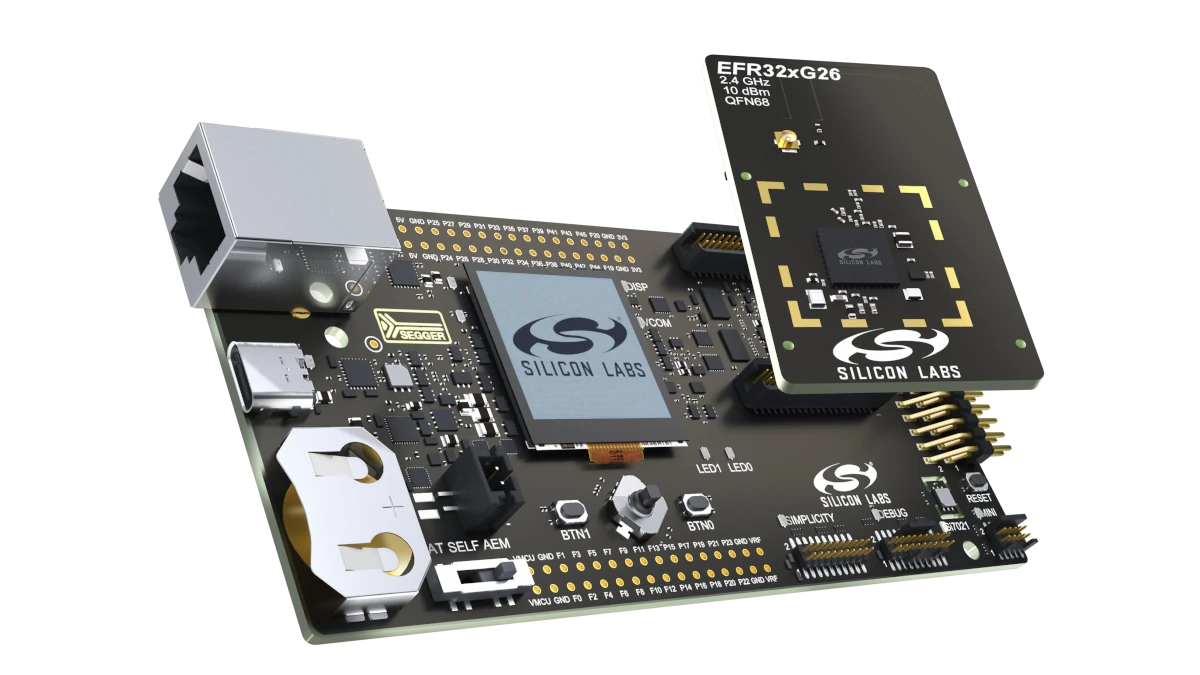
Silicon Labs MG26 is a new family of Arm Cortex-M33 wireless SoCs designed for Matter or multiprotocol Smart Home applications that provide an update to the MG24 with more memory and storage, additional GPIO, a 4×40 LCD controller, and an integrated AI/ML accelerator. We first covered the new wireless microcontroller family in April 2024, but the company has now published a new press release announcing the general availability of the MG26 microcontrollers, and I also noticed some development kits were now available, so we’ll check those out in this post. Silicon Labs MG26 specifications A reminder of the SoC specifications with highlights in bold showing the improvements or differences against the MG24 family: MCU core – Arm Cortex-M33 @ 78.0 MHz with DSP instruction and floating-point unit Memory – Up to 512 kB RAM data memory Storage – Up to 3200 kB flash program memory AI/ML accelerator – Matrix Vector […]

Silicon Labs unveils low-cost BG22L BLE 5.4 and BG24L BLE 6.0 SoCs

Silicon Labs BG24L BG22L

Silicon Labs has unveiled the BG22L and BG24L SoCs for low-cost, ultra-low-power Bluetooth LE connectivity. These are Lite versions of the company’s BG22 and BG24 SoC families introduced in 2020 and 2022 respectively. The 38.4 MHz Silabs BG22L Arm Cortex-M33 SoC targets high-volume, cost-sensitive Bluetooth 5.4 applications like asset tracking tags and small appliances. In comparison, the 78 MHz BG24L Cortex-M33 SoC offers an affordable entry-level solution with AI/ML acceleration and Bluetooth 6.0 Channel Sounding to locate items or implement access control in crowded areas such as warehouses and multi-family housing. Since the specs for the BG22L and BG24L are similar to the ones for the BG22 and BG24 chips I won’t reproduce those here, and instead highlights the main features and cost-saving measures. Silicon Labs BG22L Bluetooth LE 5.4 SoC Silicon Labs BG22L highlights: MCU – Arm Cortex-M33 @ 38.4 MHz with DSP and FPU (BG22 is clocked at […]

Silicon Labs SiWG917Y and SiWN917Y are ultra-low power WiFi 6 and Bluetooth LE 5.4 IoT modules

Silicon Labs SiWG917Y SiWN917Y module

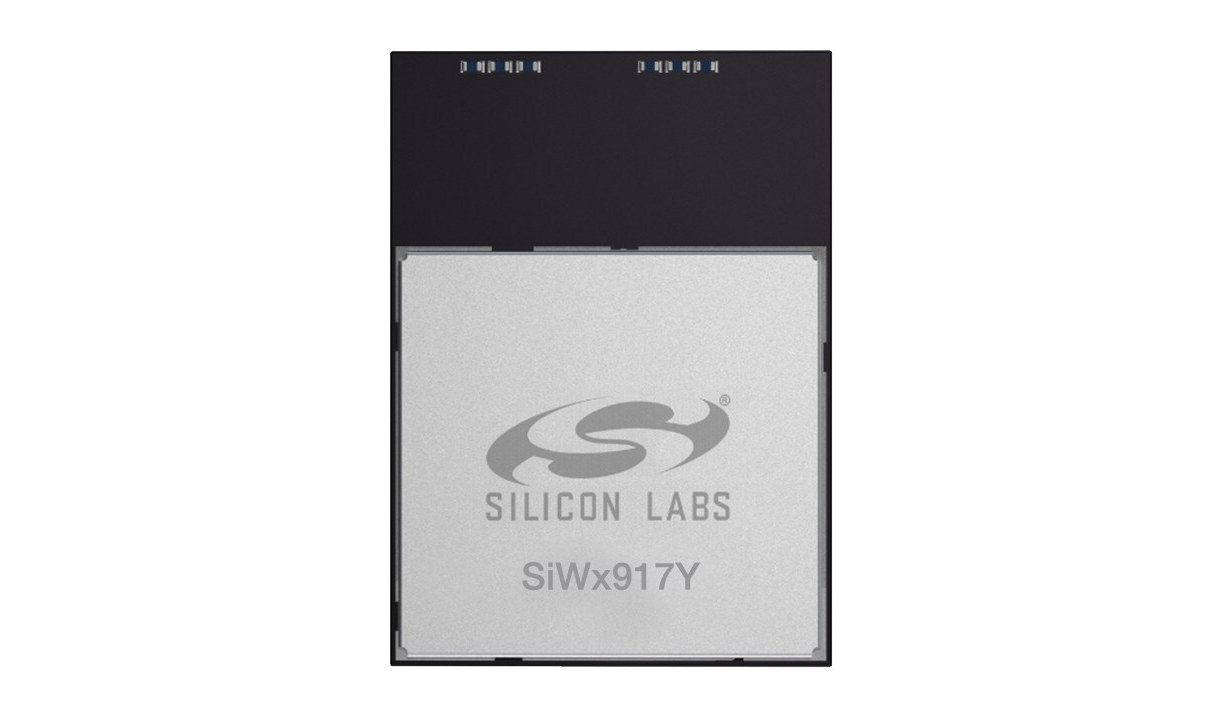
Silicon Labs SiWG917Y and SiWN917Y are pre-certified, ultra-low power 2.4 GHz WiFi 6 and Bluetooth Low Energy (LE) 5.4 modules made as an extension of the Wireless Gecko Series 2 Arm Cortex-M33 microcontroller family and designed for IoT applications such as Smart Home devices, building automation solutions, healthcare devices, industrial sensors, and asset trackers. The SiWG917Y module is used as a standalone solution where all application code runs on an Arm Cortex-M4 core, and the SiWN917Y module is designed as a Network Co-processor so customers can execute their application on a separate MCU while the wireless module manages WiFi 6 and BLE 5.4. Silicon Labs SiWx917Y modules specifications: Microcontroller MCU Arm Cortex-M4F application core up to 180 MHz (225 DMIPS performance) Arm Cortex-M4 network wireless processor running up to 160 MHz, Accelerators – Integrated FPU, MPU, NVIC, Matrix vector processor (MVP) Memory 672 KB embedded SRAM shared by Cortex-M4 and […]

Arduino Nano Matter powered gamepad runs Quake at 27 FPS

Arduino Nano Matter gamepad board

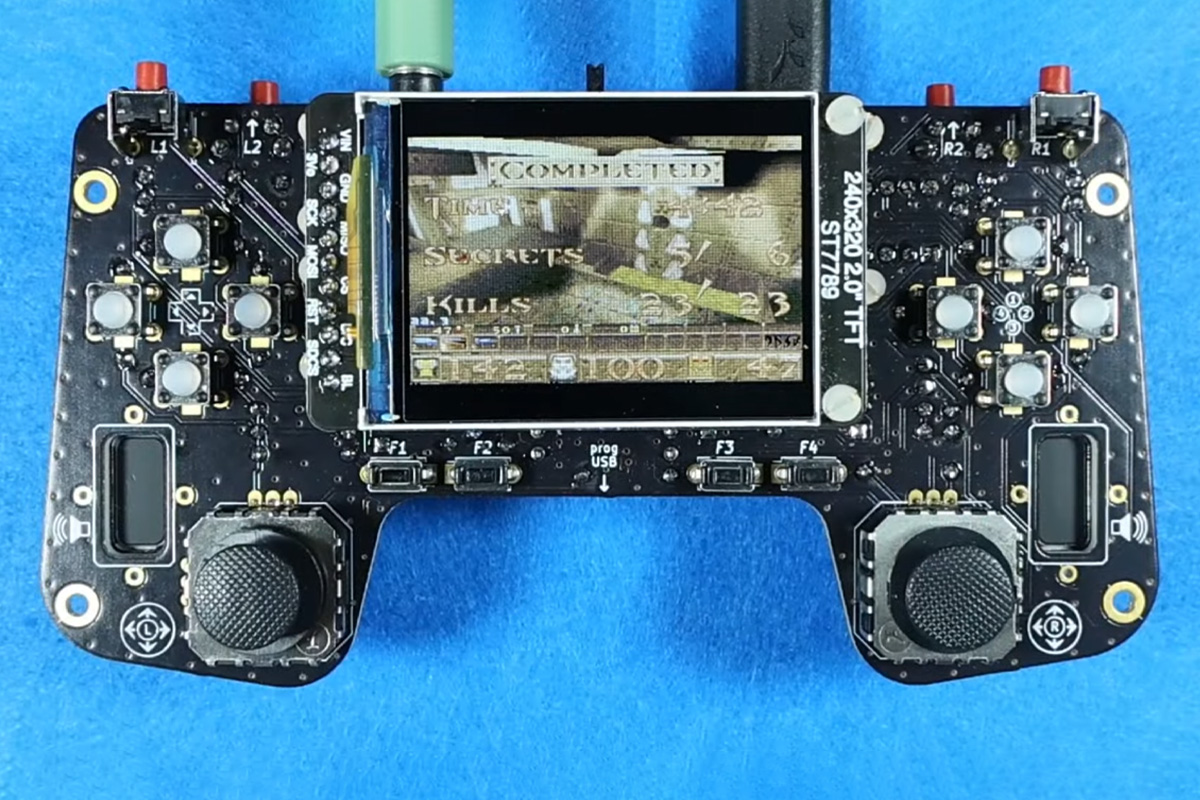
Silicon Labs Solutions architect Nicola Wrachien has designed an Arduino Nano Matter gamepad for which he was successfully able to port Quake, a popular first-person shooter game. We have seen developers and engineers port doom on everything from toothbrushes to GPS receivers. Wrachien was previously able to port Doom on a Sparkfun Thing Plus Matter MGM240P at Silicon Labs’ 30th-anniversary celebration. But to make things more interesting and challenging he wanted to see if Quake could be run on the same MGM240SD22VNA MCU, and he succeeded. In the end, he could not only run the game, but he also implemented improved graphics (better than Doom), better physics, 3D rendering, and much more. This gamepad is built around an Arduino Nano Matter board which features MGM240SD22VNA MCU from Silicon Labs, along with 256KB of RAM, which is very low compared to Quake’s original system requirements which is a minimum of 8MB […]

Exit mobile version
Banana Pi BPI-R4 Pro networking SBC