Seeed Studio’s reCamera Pro is an AI camera powered by a Rockchip RV1126B quad-core Cortex-A53 SoC with a 3 TOPS NPU for on-device AI vision, but also large language models (LLMs), vision language models (VLMs), as well as speech-to-text (STT) and text-to-speech (TTS) with built-in audio capabilities. It offers a powerful update to the earlier reCamera modular AI camera based on an SG2002 RISC-V AI SoC, with up to 4GB RAM, 16GB eMMC flash, an 8MP camera sensor supporting up to 4K @ 30 FPS, an M12 lens mount, a built-in 1W speaker, two microphones, Gigabit Ethernet with PoE, dual-band WiFi 5 connectivity, a USB-C port for power and data, and and expansion through a GPIO and MIPI DSI connectors. reCamera Pro specifications: SoC – Rockchip RV1126B CPU – Quad-core Arm Cortex-A53 up to 1.2 GHz with 32KB L1 I-Cache and 32KB L1 D-Cache, unified 512KB L2 Cache MCU – […]
ESP32-C5 devkit offers 2.8-inch capacitive touch display, dual-band Wi-Fi 6, Bluetooth 5 LE, LiPo battery support
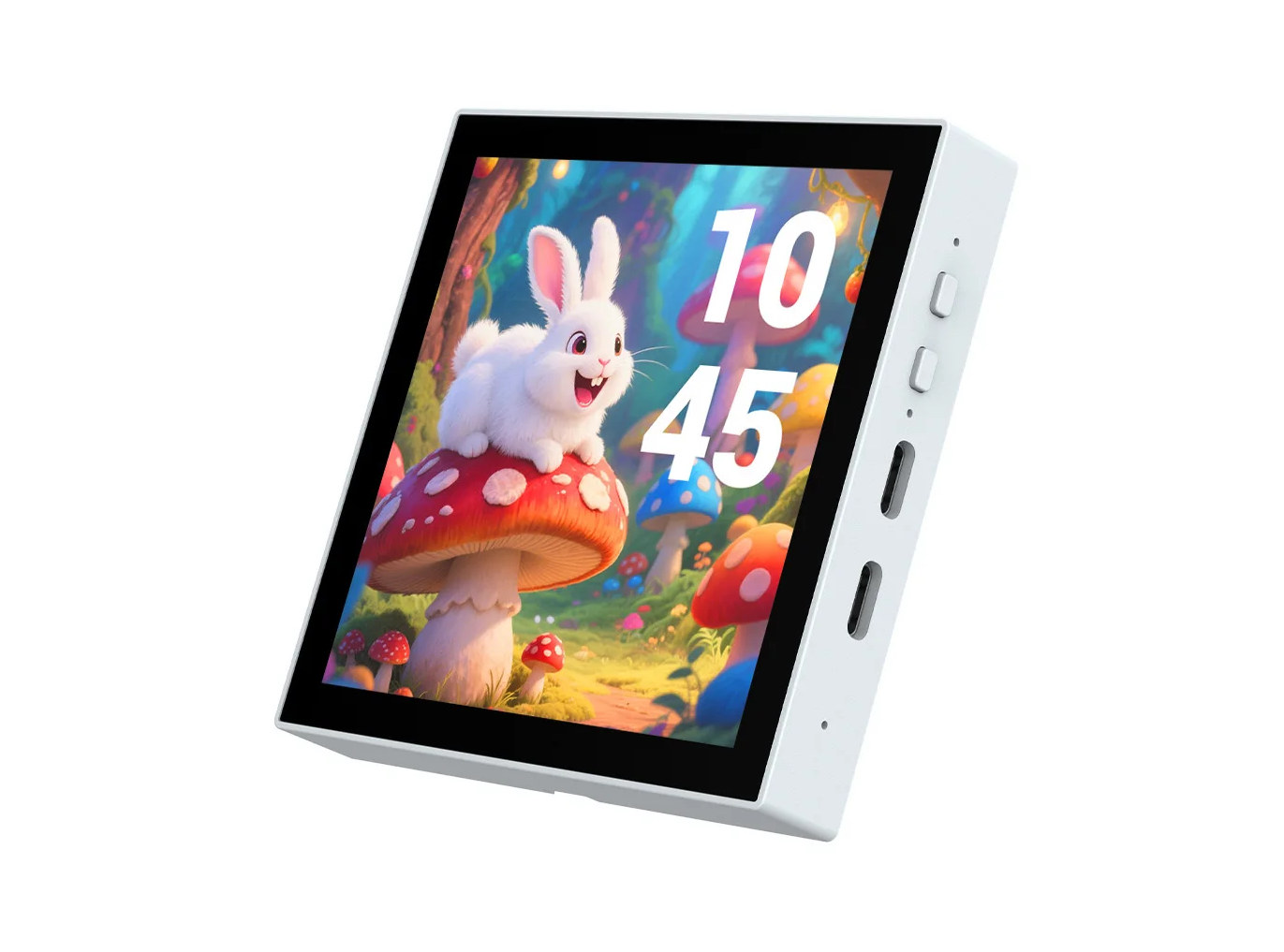
Last week, I wrote about the ESP32-C5-LCD-1.47 as one of the first ESP32-C5 devkits with a built-in display enabling dual-band WiFi 6 connectivity for IoT and HMI projects. However, one reader lamented the lack of touch-capable screens, at which point kwchow pointed to the ESP32-C5-Touch-LCD-2.8 model offering just that by pairing an ESP32-C5 with a 2.8-inch IPS display with capacitive touch and 320×480 resolution. The new board also features a microSD card slot, a USB-C port for power and programming, a built-in microphone and a speaker connector, a few sensors, and various I/Os connectors for expansion. Let’s have a closer look. ESP32-C5-Touch-LCD-2.8 specifications: Wireless module – Espressif Systems ESP32-C5-WROOM-1-N32R8 SoC – ESP32-C5HR8 CPU Single-core 32-bit RISC-V processor @ up to 240 MHz Low-power RISC-V core @ 40 MHz acting as the main processor for power-sensitive applications Memory – 384 KB SRAM on-chip, 8MB PSRAM Storage – 320 KB ROM Wireless […]
Makerfabs MaTouch ESP32-P4 10.1-inch HMI display features 4G LTE and Ethernet connectivity, a 2MP camera
Makerfabs MaTouch ESP32-P4 TFTTouch 10.1 MIPI with 4G LTE is an ESP32-P4 + ESP32-C6-based display development platform for HMI edge AI, and connected embedded applications. The development board features a 10.1-inch IPS LCD, very similar to those of Seeed Studio’s reTerminal D1001, Waveshare ESP32-P4-WIFI6-Touch-LCD, and CrowPanel Advanced 7-inch displays. However, what makes it unique compared to other devices is that it also features a SIM7670G 4G LTE modem with a SIM card slot, an RJ45 Ethernet jack, and a 2MP camera. The HMI display also comes with microphone and speaker connectors, a microSD card slot, various USB interfaces, lithium battery support, and two 2.54 mm pitch GPIO expansion headers exposing UART, I2C, SPI, and other peripheral interfaces. All these features make it suitable for HMI, edge AI, and connected embedded applications. Makerfabs MaTouch ESP32-P4 10.1-inch 4G LTE specifications: SoC – Espressif Systems ESP32-P4NRW32 CPU Dual-core 32-bit RISC-V HP (High-performance) CPU @ up to 400 […]
Pine64 Pinevoice – A $50 RISC-V Smart Speaker for Home Assistant based on Bouffalo Lab BL606P MCU
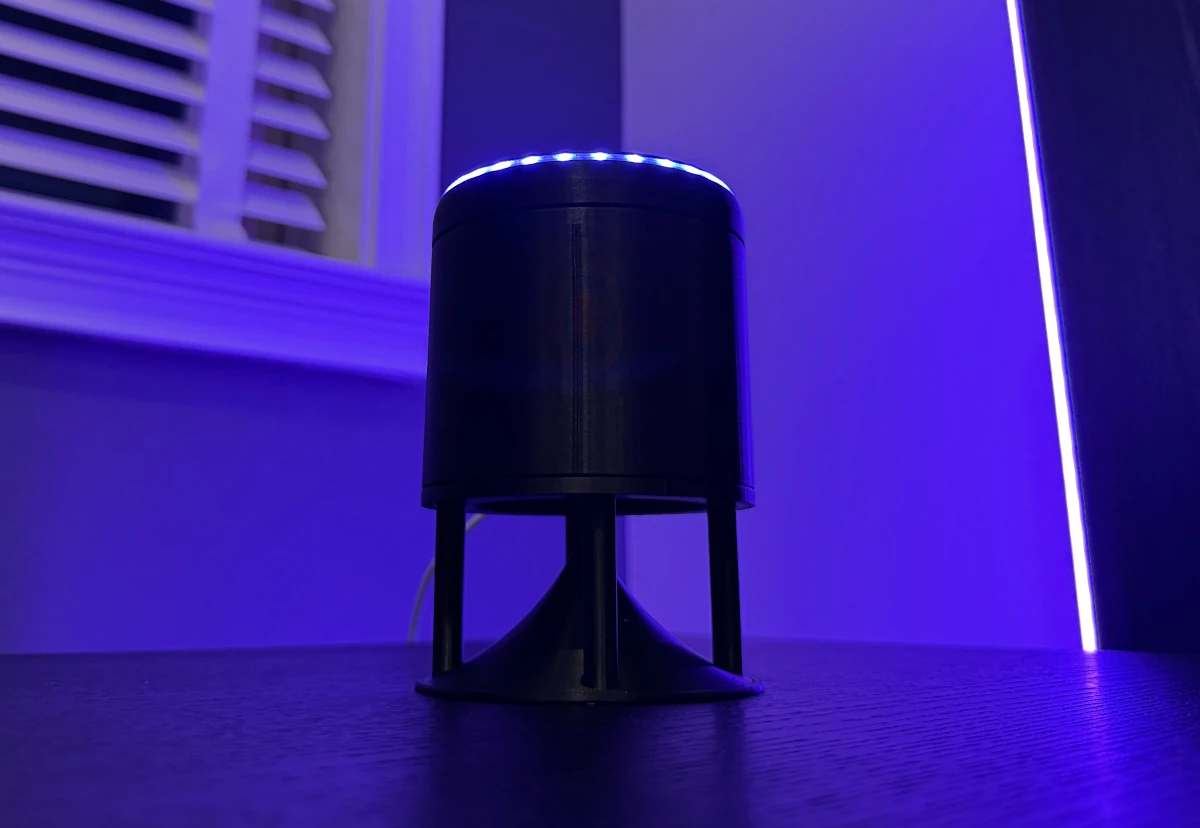
After over two years in the making, Pine64 has now launched the PineVoice (previously PineVox) smart speaker based on the Bouffalo Lab BL606P RISC-V wireless microcontroller with WiFi, Bluetooth, and Zigbee radio interfaces. The device also features two microphones, a speaker, a USB 2.0 OTG port, volume buttons, a mute button with LED, a start/stop button, and four RGB LEDs. The PineVoice smart speaker is mainly designed to work with Home Assistant. PineVoice specifications: SoC – Bouffalo Lab BL606P CPU D0 core – T-Head C906 64-bit RISC-V (RV64IMAFCV) CPU @ 480 MHz M0 core – T-Head E907 32-bit RISC-V (RV32IMAFCP) CPU @ 320 MHz Memory – 544KB RAM (788KB SRAM listed on the Pine64 store), 16MB embedded PSRAM Storage – 128KB ROM, 4KB eFuse Wireless 2.4 GHz 802.11 b/g/n 1T1R WiFi 4 Bluetooth 5.x Dual-mode (Classis + BLE) 802.15.4 radio (Zigbee) Storage – 128Mbit (16MB) SPI NOR flash Audio 2x […]
NanoPi M6V2 RK3588S SBC gains support for dual analog microphone input
FriendlyELEC’s NanoPi M6V2 is an update to the NanoPi M6 Rockchip RK3588S SBC, whose main change is a 4-pin connector for dual analog microphone input. The RAM is also now fixed to 8GB (no more 4GB, 16GB, or 32GB options), some buttons have changed, and the company has stopped offering an enclosure with a built-in 3.5-inch display. The rest of the specifications remain the same, with LPDDR5 memory, support for microSD, eMMC flash, or NVMe storage, HDMI 2.1 and MIPI DSI display interfaces, MIPI CSI camera inputs, Gigabit Ethernet and optional M.2 WiFi/Bluetooth connectivity, a few USB ports, and a 30-pin GPIO header. NanoPi M6V2 specifications: SoC – Rockchip RK3588S CPU – Octa-core processor with 4x Cortex-A76 cores @ up to 2.4 GHz, 4x Cortex-A55 cores @ up to 1.8 GHz GPU – Arm Mali-G610 MP4 GPU compatible with OpenGL ES 3.2, OpenCL 2.2, and Vulkan 1.2 APIs VPU – […]
CardputerZero – A Raspberry Pi CM0 pocket computer for makers (Crowdfunding)
CardputerZero is a pocket-sized computer based on the Raspberry Pi Compute Module Zero (CM0) and designed for makers with a 46-key matrix keyboard, a 1.9-inch LCD, HDMI video output, Fast Ethernet, three USB ports, a microphone and a speaker for voice interaction, a 14-pin GPIO header, a Grove interface, and an IR transceiver (Rx/Tx). The credit card-sized device comes in two models: CardputerZero Lite and CardputerZero. The latter also adds an 8MP camera, a 6-axis IMU, and a 32GB microSD card preloaded with the software. Both models are powered by a rechargeable 1,500 mAh LiPo battery or directly via a USB-C port. Cardputer Zero specifications: SoM – Raspberry Pi CM0 Lite SoC – Broadcom BCM2710A1 CPU – Quad-core Cortex-A53 processor @ 1.0 GHz GPU – VideoCore IV GPU supporting OpenGL ES 1.1, 2.0 graphics VPU – H.264/MPEG-4 1080p30 video decoding, H.264 1080p30 video encoding System Memory – 512MB LPDDR2 RAM Storage […]
Khadas Mind Graphics 2 review – A powerful NVIDIA GeForce RTX 5060 Ti eGPU dock for the Mind 2 mini PC
Earlier this month, I received the Khadas Mind 2 (Intel Core Ultra 7 155H) mini PC with two accessories connecting through the Mind Link (PCIe x8) connector: The Mind xPlay Display and Keyboard combo, and the Mind Graphics 2 dock, adding a range of interfaces and an NVIDIA GeForce RTX 5060 Ti GPU with 16GB of VRAM. After going through the specifications, an unboxing, and a partial teardown in the first part of the review, I tested the Mind xPlay using the Mind and Mind 2 mini PCs running Windows 11 and Ubuntu 24.04. I’ve now had time to test the Khadas Mind Graphics 2 dock with the Mind 2 mini PC running Windows 11, so I’ll report my experience with the NVIDIA GPU (3D graphics and AI), and test all features, including 2.5GbE networking, the built-in speakers, microphone array, and so on. A few gremlins and system info When […]
ESP32-S31 development boards unveiled for IoT, Smart Audio, and HMI applications
Two ESP32-S31 development boards are currently in the works, and the documentation is already available. The ESP32-S31 was unveiled last March, and it’s the most feature-rich ESP32 wireless microcontroller so far with two RISC-V cores, Gigabit Ethernet, 2.4 GHz WiFi 6, Bluetooth, and 802.15.4 connectivity, LCD and camera interfaces, and more. The ESP32-S31-Function-CoreBoard-1 development board is based on the ESP32-S31-WROOM-3 wireless module, and offers Gigabit Ethernet, USB 2.0 OTG, and onboard audio peripherals for connected IoT applications. The ESP32-S31-Korvo-1 is a multimedia-focused development board based on the same ESP32-S31-WROOM-3 module, but featuring a dual-microphone array for speech recognition and near/far-field wake-up, two speaker connectors, a 4.3-inch LCD, a 3MP camera module, and a microSD card slot. It targets low-cost, low-power, connected audio/video and HMI applications. ESP32-S31-Function-CoreBoard-1 development board Specifications: Wireless module – ESP32-S31-WROOM-3 SoC – ESP32-S31NRV16 CPU RISC-V HP (High-performance) RV32IMAFCP CPU @ 320 MHz with FPU, SIMD, etc. RISC-V […]