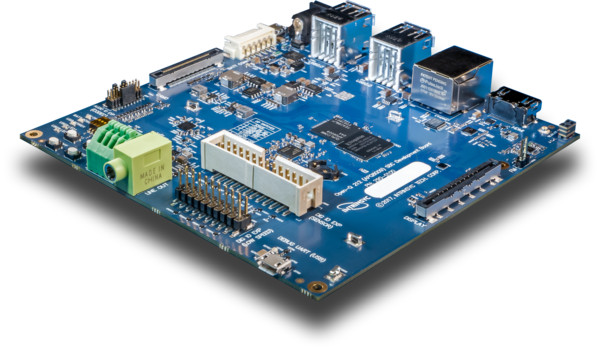
We’ve known Intel has been working on Quark S1000 “Sue Creek” processor for voice recognition for several months. S1000 SoC is based on two Tensilica LX6 with HiFi3 DSP, some speech recognition accelerators, and up to 8x microphones interfaces which allows it to perform speech recognition locally. The solution can also be hooked to an application processor via SPI, I2S and USB (optional) when cloud based voice recognition is needed. Intel has recently introduced their Speech Enabling Developer Kit working with Amazon Alexa Voice Service (AVS) featuring a “dual DSP with inference engine” – which must be Quark S1000 – and an 8-mic array. The kit also includes a 40-pin cable to connect to the Raspberry Pi 3 board. Intel only provided basic specifications for the kit: Intel’s dual DSP with inference engine Intel 8-mic circular array High-performance algorithms for acoustic echo cancellation, noise reduction, beamforming and custom wake word […]
Amazon Introduces Echo 2, Echo Plus, Echo Connect, and Echo Spot Alexa Devices
Beside their “all-new” Amazon Fire TV 2017, Amazon has made a bunch of other announcements mostly related to their Alexa services with four new or updated Echo devices: the “all-new” Echo, the Echo Plus, Echo Connect, and the Echo Spot. 2017 Amazon Echo (aka Echo 2) The new second generation of the Alexa based Echo has a new smaller design, improved sound with Dolby processing, and a lower price at just under $100. Some of the key features include: Speakers – 2.5″ woofer and 0.6″ tweeter Connectivity Dual band 802.11 b/g/n WiFi for streaming music from Amazon Music, Spotify, Pandora, etc…, controlling smart devices Bluetooth LE Audio 3.5mm audio jack 7-mic array using beamforming technology and enhanced noise cancellation. Improved wake-word (“Alexa”) detection Various designs with 6 different fabrics Dimensions – 148 x 88 x 88 mm Weight – 821 grams The Echo can make free calls to the US, […]
Onkyo Has Developed a Shaker Turning Walls & Home Appliances Into Speakers
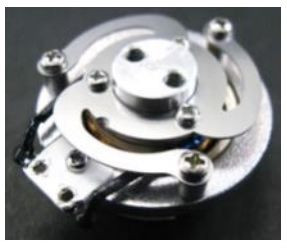
According to an article on Nikkei Technology, Onkyo has designed a shaker that can be attached directly to walls and/or the surface of home appliances, and turn them into speakers to play music and voices. The device developed using Onkyo voice & music playing technologies, has a a minimum resonance frequency of 115 hertz, and measures just 41x 36 x 21 mm. The company expects it to be used in places where visible speakers are problematic, either due to installation issues because of requirements such as waterproofness or air tightness, or for aesthetic reasons. Onkyo will provide the shaker to OEM’s in order to be integrated into home appliances or walls for artificial intelligence, or Internet of things applications. So voice enabled walls and washing machines may just be around the corner… Jean-Luc Aufranc (CNXSoft)Jean-Luc started CNX Software in 2010 as a part-time endeavor, before quitting his job as a […]
Review of Vobot Alarm Clock with Alexa
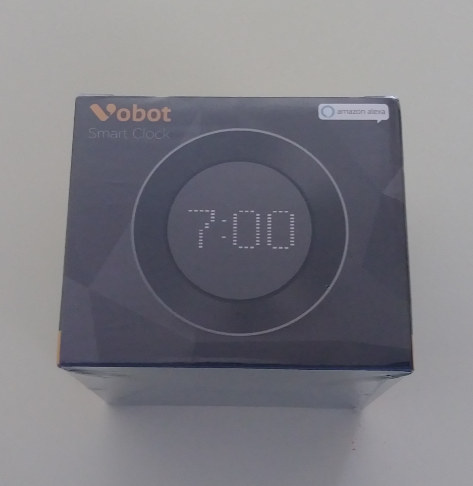
Karl here with a review of Vobot sent By Cafago. I had to Google it when I was asked to review it. Turned out it was an Echo type device with a pixel display and a battery. It started as an Indiegogo campaign. I had been wanting to try to do some sort of voice control with my home automation so I agreed to review it. Vobot Clock C1 Specifications These are pulled from Vobot’s website. No power supply is included but a long USB cable is. Vobot Setup I let my wife do the initial setup as I figured that she would use it the most. She followed the instructions, and it seemed straightforward from what she told me. She said she had to reboot it once during a step but it continued the setup with no problems. She tied to our Amazon Prime account, and she quickly was […]
Amlogic A111, A112 & A113 Processors are Designed for Audio Applications, Smart Speakers
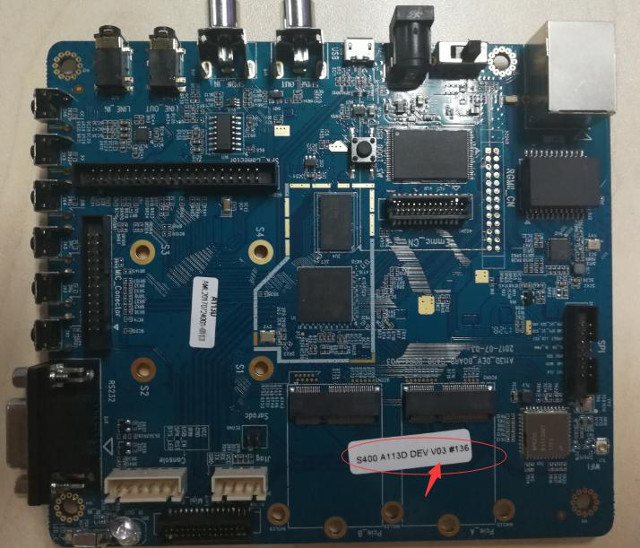
Amlogic processors are mostly found in TVs and TV boxes, but the company is now apparently entering a new market with A111, A112, and A113 audio processors. I was first made aware of those new processors through Buildroot OpenLinux Release Notes V20170831.pdf document posted on their Open Linux website, where two boards with Amlogic A113D and A113X are shown. First, S400 board with the following key features/specifications: SoC – Amlogic A113D CPU System Memory – 1GB DDR3 Storage – 512MB SLC NAND flash Display I/F – MIPI interface Connectivity – Gigabit Ethernet SDIO WiFi/BT (AP6356S) Audio SPDIF_IN/SPDIF_OUT LINE_IN/LINE_OUT 2x Audio headers (MIC_Connector & SPK_Connector) USB – 1x USB 2.0 OTG Expansion – 2x PCIe ports Misc – 6x ADC Keys, IR_IN/IR_OUT, UART Interface (RS232) The second S420 board is based on A113X SoC, and comes with less features (no display, no Ethernet, no PCIe…), less memory: SoC – Amlogic A113X […]
X-Powers AC108 is a Quad-Channel ADC Chip for Microphone Arrays
X-Powers, a company better known to supply PMIC “companion” chip for Allwinner processors, also made some audio chips including AC108 is a chip specifically designed for microphone arrays with support for 4 microphones, and an I2C + I2S output interface to the host processor. Microphone arrays are particularly useful for smart speakers, and especially hot word detection (voice activity detection) as single microphone setups like I use with Orange Pi Zero, may have trouble detecting hot words like “OK Google” in noisy environments (music playing, alarm ringing…). X-Powers AC108 specifications: 108 dB dynamic range (A-weighted) @ 0 dB boost gain -90 dB THD+N (total harmonic distortion plus noise) @ 0 dB boost gain 4x programmable boost amplifiers with 0dB to 45dB in 3dB step ADC sample rates supported – 8kHz,12kHz,16kHz, 22.05kHz, 24kHz, 32kHz, 44.1kHz, 48kHz,96kHz Analog mixer and digital mixer in record data path 4x fully differential microphone inputs: MIC1P/N […]
Qualcomm Snapdragon 212 Boards – Intrinsyc Open-Q 212 and Kaynes Technology SKATE-212
Qualcomm Snapdragon 212 (APQ8009) quad core Cortex A7 processor is used in entry-level smartphones, but it’s also one of the processors which the company expects to use in their Smart Speaker Platform leveraging Google Assistant, Amazon Alexa, and other A.I. voice services. Two company has designed single board computers that can be used for this purpose: Intrisync Open-Q 212 and Kaynes Technology SKATE-212. Intrisync Open-Q 212 SBC Development Board Contrary to some other Open-Q boards, but not all, Open-Q 212 is not comprised of a baseboard and a system-on-module, as everything is soldered on a single PCB. Open-Q 212 specifications: SoC – Qualcomm Snapdragon 212 (APQ8009) quad core ARM Cortex A7 processor @ 1.267GHz with Adreno 304 GPU, QDSP6 DSP System Memory – 1GB LPDDR3 Storage – 8GB eMMC (non-POP) flash and micro SD card socket Connectivity – Ethernet, pre-scanned Wi-Fi 802.11n 2.4Ghz (WCN3610) with chip and U.FL antennas, Bluetooth 4.1 […]
Intel Quark S1000 “Sue Creek” Processor to Support On-Chip Speech Recognition
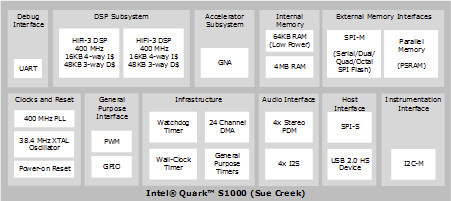
Intel may have announced plans to discontinue several of their IoT boards, but based on some documents I received, the company has not given up on the Quark family, although they may have given up on the Intel architecture for low power microprocessor, as Intel Quark S1000 – codenamed “Sue Creek” – will feature two Tensilica LX6 cores (yes, just like ESP32), and is designed to handle speech recognition at the edge (e.g. locally), so some of your voice commands should still work when Internet is down. Intel Quark S1000 key features and specifications: Digital Signal Processors Dual Tensilica LX6 cores @ 400 MHz with HiFi3 DSP Single precision scalar floating-point instructions 16KB 4-way I$; 48KB 4-way D$ Up to 2400 DMIPS, 3.2 GMACS (16×16), 800 MFLOPS of Compute Speech Accelerators A GMM (Gaussian Mixture Model) and neural network accelerator Low power keyboard and limited vocabulary recognition Up to 9.6 […]