stem News - Page 2 of 10 - CNX Software - Embedded Systems News

STEVAL-ROBKIT1 – A robot evaluation kit based on STM32H725 and STM32G0 microcontrollers

STEVAL-ROBKIT1 STM32H725 robot evaluation kit

The STEVAL-ROBKIT1 is an evaluation kit for robotics applications based on ST’s STM32H725 and STM32G0 Arm microcontrollers. It’s the first such robot kit from the company, and it targets both traditional engineering teams, educators, and students. The kit features an STM32H725 main board, an STM32G0 motor-control PCB, and a 1.53MP camera + ToF sensor module, as well as a robotic frame, wheels, and motors with encoders. It does not require a soldering iron for assembly to make it easier for students. STEVAL-ROBKIT1 key components and features: Main board – STEVAL-ROBKIT1-1 SoC – STMicro STM32H725IGT6 Arm Cortex-M7 microcontroller @ 550 MHz with 1MB flash, 564 KB SRAM with ECC Wireless – BlueNRG-M2 Bluetooth LE 5.2 SoC Sensors 6-axis IMU (LSM6DSV16BX) Magnetometer (LIS2MDL) Microphone (MP34DT06J) Expansion – 40-pin Raspberry Pi-like header Motor control board – STEVAL-ROBKIT1-2 SoC – STMicro STM32G071CBT6 Arm Cortex-M0+ microcontroller at 64 MHz with 128 KB flash, 36KB SRAM Motor […]

Quarky Intellio – A LEGO-compatible AI, Augmented Reality, and IoT learning platform (Crowdfunding)

Quarky Intellio rover car robot

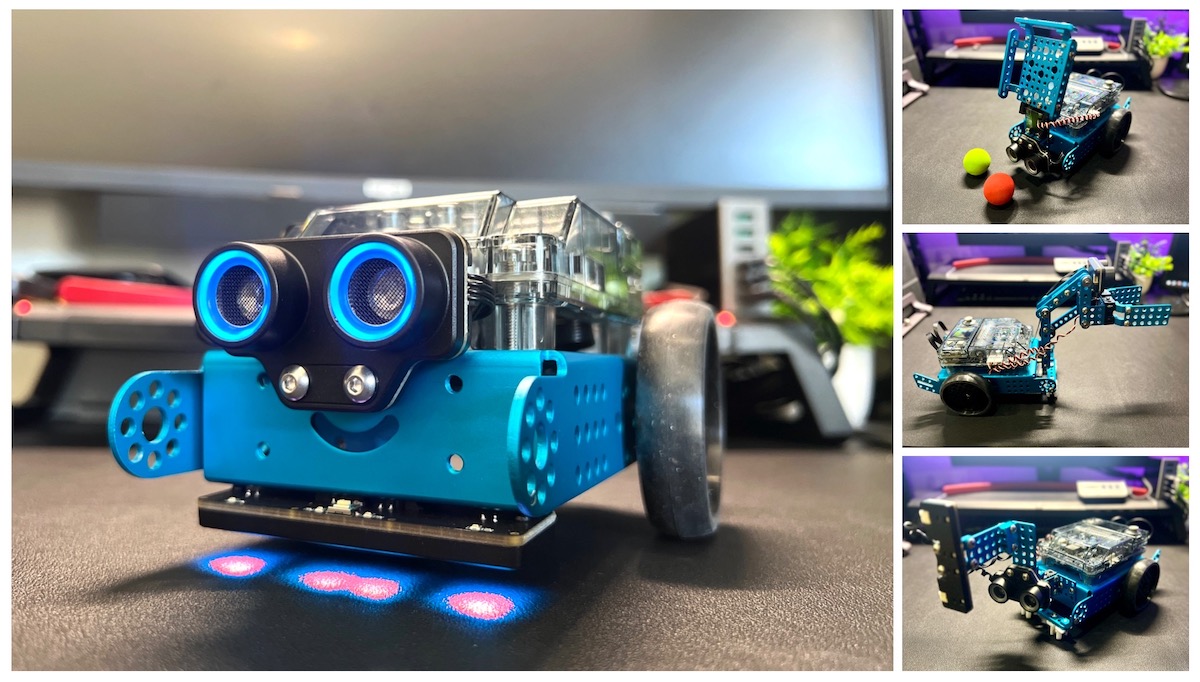
Quarky Intellio is an ESP32-S3-based development kit designed as an educational platform for learning AI, Augmented Reality (AR), and IoT concepts. It is compatible with LEGO bricks and targets users aged 10 and older. The core AI-AR module features an SPI TFT display interface, a 5MP camera, a speaker and microphone, a microSD card slot for data storage, a USB-C port for programming and charging, servo and GPIO expansion ports, and a 1,000 mAh battery. The company offers a discovery kit with the core module only as well as a rover car kit, and since it’s compatible with LEGO, users can easily create their own robot. Quarky Intellio specifications: Core module – Espressif Systems ESP32-S3-WROOM-1-N16R8 SoC – ESP32-S3 CPU – Dual-core LX7 processor with up to 240MHz Memory – 512KB SRAM, 8MB PSRAM (SiP) Storage – 384KB ROM Wireless – WiFi 4 802.11b/g/n and Bluetooth 5.0 LE Storage – 16MB flash […]

Arduino Nesso N1 – An ESP32-C6 IoT wireless development kit with WiFi 6, BLE, 802.15.4, LoRa, and IR transmitter

Arduino Nesso N1

Arduino Nesso N1 is a new ESP32-C6 IoT development kit with not only 2.4 GHz WiFi 6, Bluetooth LE, and an 802.15.4 radio for Zigbee/Thread/Matter, but also a LoRa radio and an IR transmitter for smart home, industrial, and educational applications. Developed in collaboration with M5Stack, the Nesson N1 also features a 1.14-inch touchscreen display, a 6-axis motion sensor, a few LEDs and buttons, as well as Grove and Qwiic expansion connectors, and an 8-pin GPIO header. Nesso N1 specifications: SoC – Espressif Systems ESP32-C6 CPU Single-core 32-bit RISC-V clocked up to 160 MHz Low-power RISC-V core @ up to 20 MHz Memory/Storage – 320KB ROM, 512KB SRAM Wireless – 2.4 GHz WiFi 6, Bluetooth 5.3, and 802.15.4 radio for Thread/Zigbee Storage – 16MB NOR Flash Display – 1.14-inch touchscreen display with 240 x 135 resolution, 262K colors; ST7789P3 driver, FT6336U capacitive touch Wireless 2.4 GHz WiFi 6, BLE 5.3, Zigbee […]

Genesis IoT Discovery Lab is a modular ESP32-S3-based wire-free prototyping platform (Crowdfunding)

Genesis IoT Discovery Lab ESP32 S3 prototyping platform

Developed by Axiometa in Lithuania, the Genesis IoT Discovery Lab is a modular Wi-Fi-enabled prototyping platform built around the ESP32-S3 and a standardized module with AX22 connectors, designed to replace messy breadboards with a structured, plug-and-play system. Designed to simplify hardware development and education, this prototyping module features eight universal AX22 ports, a USB OTG Type-C port, a battery module with charging, and support for over 50 sensors and peripherals. Modules include sensors, buttons, motors, LEDs, relays, and displays, all secured with robust connectors. With open-source hardware and various expansion add-ons, it’s suitable for education, IoT prototyping, and fast hardware iterations. Genesis IoT Discovery Lab specifications: Wireless Module – ESP32-S3-WROOM-1 SoC – Espressif Systems ESP32-S3 CPU – Dual-core Tensilica LX7 up to 240 MHz with vector extension for AI/ML workloads RAM – 512KB SRAM Storage – 8MB flash Wireless – WiFi 4 and Bluetooth LE 5 Antenna – PCB antenna USB […]

XIAOML Kit with ESP32-S3, camera, microphone, and IMU complements a free Machine Learning Systems book

XIAOML Kit Machine Learning Systems Book

The XIAOML Kit is one of the devkits that complements Harvard University Professor Vijay Janapa Reddi’s book “Introduction to Machine Learning Systems“, available for free as a 2050-page PDF file. Made by Seeed Studio, the XIAOML Kit is composed of the XIAO ESP32S3 Sense with an ESP32-S3 WiFI and Bluetooth SoC, a microSD card slot, a built-in OV3660 camera and microphone, and the “IMU Breakout board” featuring a 6-axis IMU and 0.42-inch OLED display. The kit enables students, educators, and developers to build vision, sound, and motion applications through tinyML lab sessions developed with Marcelo Rovai (UNIFEI). XIAOML Kit specifications: Main Board – XIAO ESP32S3 Sense SoC – Espressif Systems ESP32-S3R8 dual-core Tensilica LX7 microcontroller @ 240 MHz with 512KB SRAM, 8MB PSRAM, Wi-Fi 4 & Bluetooth 5.0 dual-mode (Classic + BLE) connectivity Storage – 8MB flash, microSD card slot Sensors – OV3660 camera, digital microphone USB – USB-C port […]

Hengbot Sirius is a trainable AI robotic dog for consumers and developers (Crowdfunding)

Henbot Sirius trainable AI robot dog

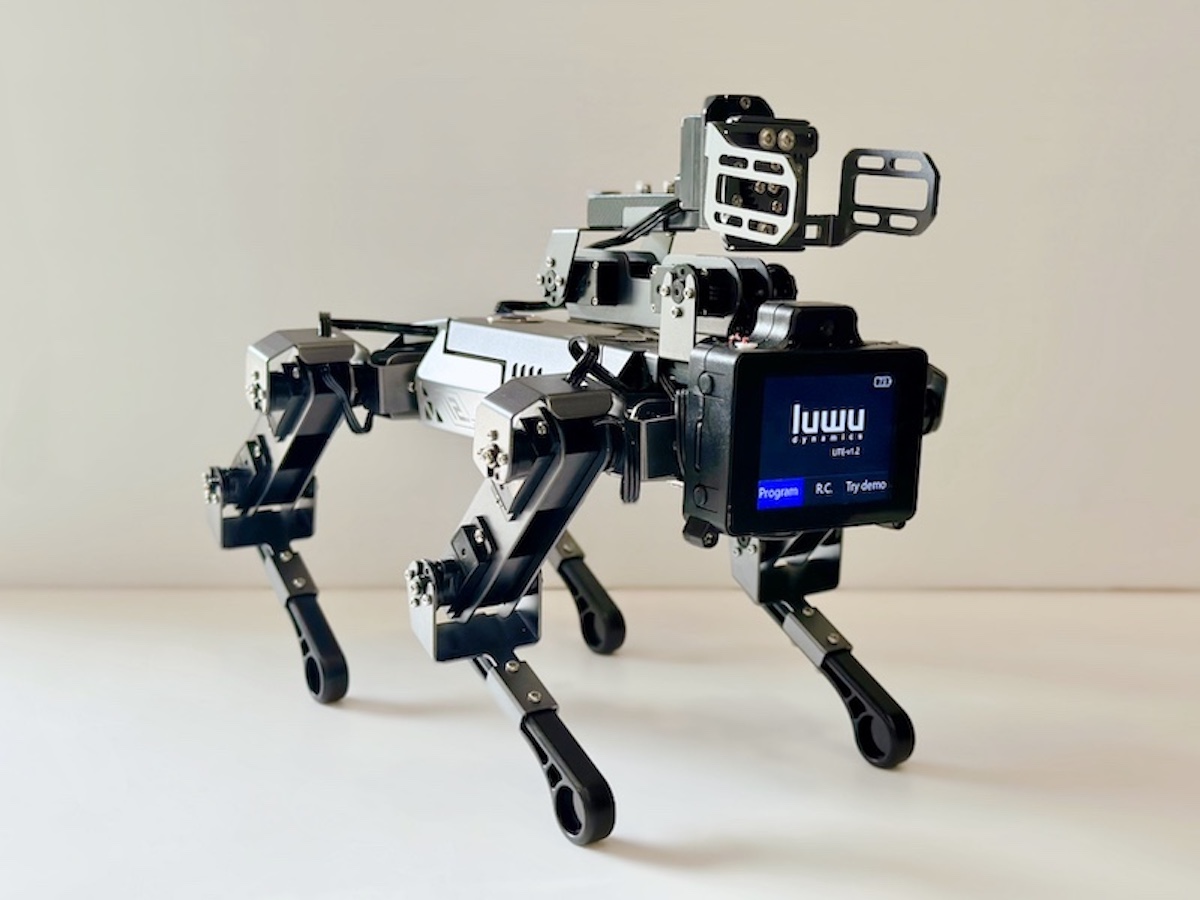
Hengbot Sirius is a small AI robotic dog that can be trained by users with “manual teaching” and by developers using tools such as Sirius Creator Studio Pro and C or Python APIs. Features include an 8MP camera, a dual-mic array, and a speaker for user interaction using LLMs, text-to-speech, voice recognition, and computer vision leveraging the built-in 5 TOPS AI accelerator, a small LCD, a few RGB LEDs and sensors, and 14 DoF for legs and the head. We’ve seen plenty of other robot dogs over the years, such as the Hiwonder MechDog, the Raspberry Pi CM4-based CM4 XGO Lite smart robot dog, Mini Pupper 2, and Petoi Bittle, among others. Most are more robot-like than dog-like, and the Sirius has a more appealing design closer to a real dog. Hengbot Sirius specifications: SoC – Unnamed but likely Horizon Robotics Sunrise X3 CPU – Quad-core Arm Cortex-A53 @ 1.2-1.5 […]

Tonybot educational humanoid robot is programmable with Arduino, Scratch, and Python

Tonybot STEM Education humanoid robot

While child-sized humanoid robots like the Unitree R1 have come down in price, not everybody has a spare $6,000 to throw around to play with robots, and smaller models like the Tonybot are more affordable for educational purposes. The Tonybot offers 17 degrees of freedom, relies on high-voltage bus servos and anti-blockage servos, and has a separate ESP32 expansion board for extra modules. Optionally equipped with an ESP32-S3 AI vision camera and an AI voice integration module, the 38cm tall humanoid robot supports object and face recognition, color and line following tracking, human-robot interaction, fall recovery, obstacle avoidance, and more, besides walking, dancing, etc… Tonybot specifications: H5S Robot Controller Storage – MicroSD card socket 6x servo ports, head module port Bluetooth/MP3 module header Sensor – Accelerometer Debugging – 4-pin UART header Misc ON/OFF switch Buzzer Power Supply Via DC jack Terminal block for battery ESP32 Expansion Board ESP32-DevKitC board PWM […]

OpenWheely is a 4WD robot car based on ESP32-S3-WROOM-1 WiFi and BLE module (Crowdfunding)

OpenWheely

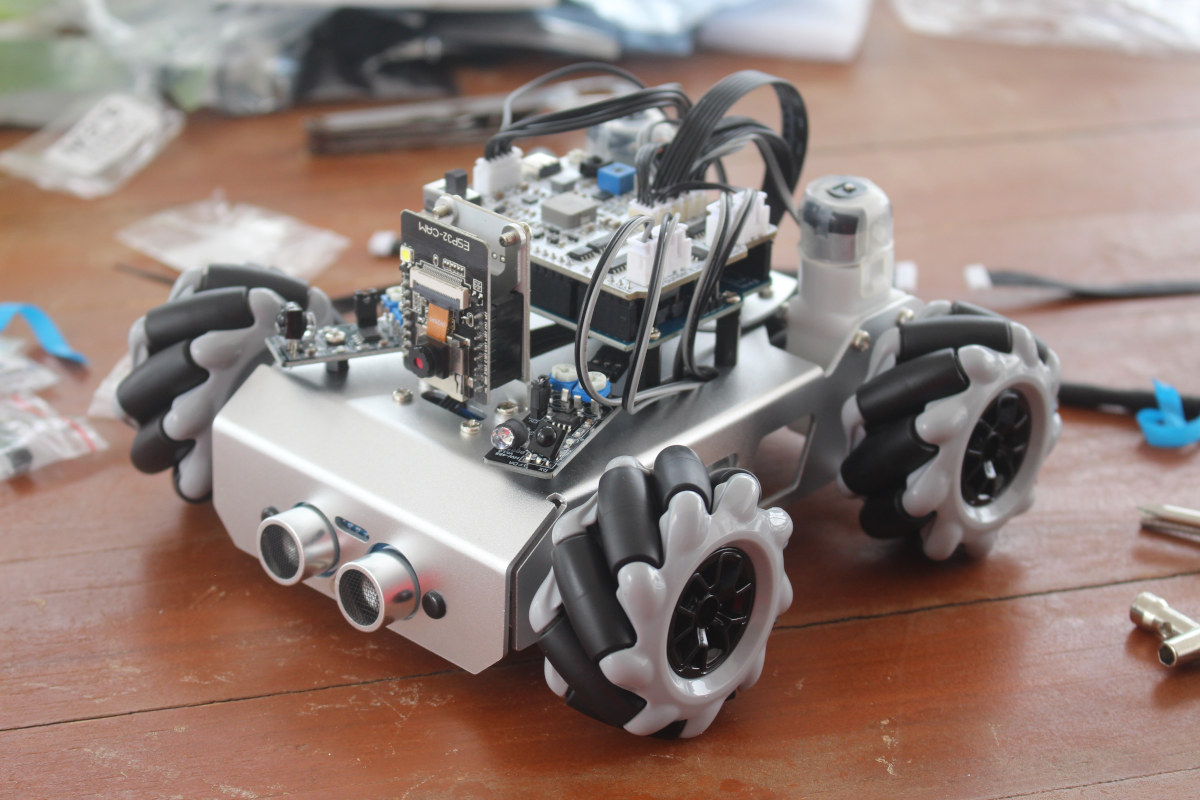
Sanket Garg’s OpenWheely is a 4WD robot car based on Espressif ESP32-S3-WROOM WiFi and Bluetooth LE module that is equipped with a 2-inch display, a 5MP camera, and various sensors. The robot car can drive upside down, follow sound and light, stream live video, and operate in a swarm. It can be controlled from a Phone, a PC, or an infrared TV remote, but Sanket also designed an ESP32-S3 gamepad with a 2.0-inch display and two joysticks to control the car. We’re also told OpenWheely can be used by students, educators, developers, gamers, and robotic enthusiasts. OpenWheely robot car specifications: Wireless Module – ESP32-S3-WROOM-1 SoC – Espressif Systems ESP32-S3 CPU – Dual-core Tensilica LX7 up to 240 MHz with vector extension for AI/ML workloads RAM – 512KB SRAM Storage – TBD Wireless – WiFi 4 and Bluetooth LE 5 Antenna – PCB antenna Display – 2.0-inch LCD screen Camera – […]