
XIAO ESP32-C5 – A tiny USB-C IoT board with dual-band WiFi 6, Bluetooth 5.0 LE, Zigbee, and Thread connectivity

XIAO ESP32-C5

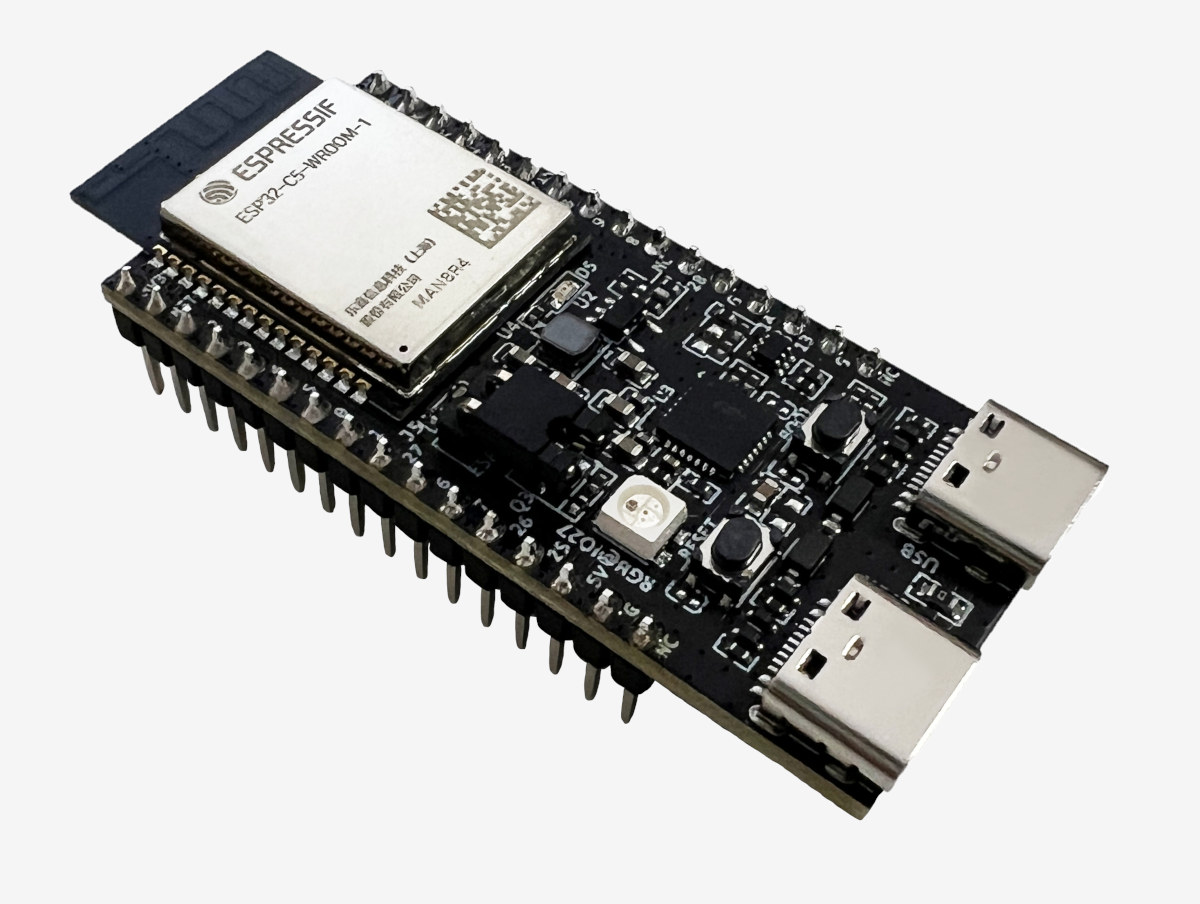
Seeed Studio has just added a new member to its XIAO USB-C board family with the XIAO ESP32-C5 offering dual-band WiFi 6 (2.4 and 5.0 GHz), as well as Bluetooth 5.0 LE, Zigbee, and Thread connectivity for IoT projects and products. It still features a u.FL antenna connector, Reset and Boot buttons, two 7-pin GPIO headers, and 8 pads for JTAG or GPIOs on the back. Compared to the earlier XIAO ESP32C6, the new model is clocked higher (240 MHz vs 160 MHz), supports dual-band Wi-Fi, and offers more memory (384KB SRAM + 8 MB PSRAM vs 512KB SRAM) and storage (8MB vs 4MB flash), but exposes fewer analog pins (5 vs 7). XIAO ESP32-C5 specifications: Wireless MCU –  Espressif Systems ESP32-C5HR8 CPU Single-core 32-bit RISC-V processor @ up to 240 MHz Low-power RISC-V core @ 48 MHz acting as the main processor for power-sensitive applications Memory – 384 KB […]

ESP32-S3 multi-radio Smart Home gateway features Ethernet, Zigbee, Thread, Z-Wave, Wi-Fi, BLE, and optional 4G LTE connectivity

SLZB Ultima multi radio smart home gateway with ESP32 S3 Zigbee Z Wave, Matter or Thread

SMLIGHT SLZB-Ultima is an ESP32-S3-based, multi-radio smart-home gateway with dual Zigbee/Thread radios, optional Z-Wave 800, Wi-Fi, Bluetooth LE, Ethernet with PoE, USB host expansion, and optional 4G LTE connectivity designed for advanced Home Assistant and DIY applications. The device also integrates an IR receiver and transmitter for controlling legacy appliances, GPIO and I²C for hardware expansion, a buzzer, physical buttons, service LEDs, and 12 on-board WS2812B RGB LEDs on the front for status indication. These features make it suitable for an all-in-one smart-home and IoT gateway rather than a simple coordinator. SMLIGHT SLZB-Ultima specifications: Main SoC – ESP32-S3 CPU – Dual-core LX7 microprocessor @ up to 240 MHz with Vector extension for machine learning Wireless – WiFi 4 and Bluetooth 5 with LE/Mesh Audio – Built-in buzzer and optional microphone for ESPHome Voice Assist Networking  Wireless Dual Zigbee / Thread radios (Texas Instruments CC2674P10 + Silicon Labs EFR32MG24) Wi-Fi 802.11 b/g/n […]

eWeLink CUBE OS enables all SONOFF WiFi and Zigbee devices to connect to Matter

SONOFF WiFi Zigbee Matter Compatibility

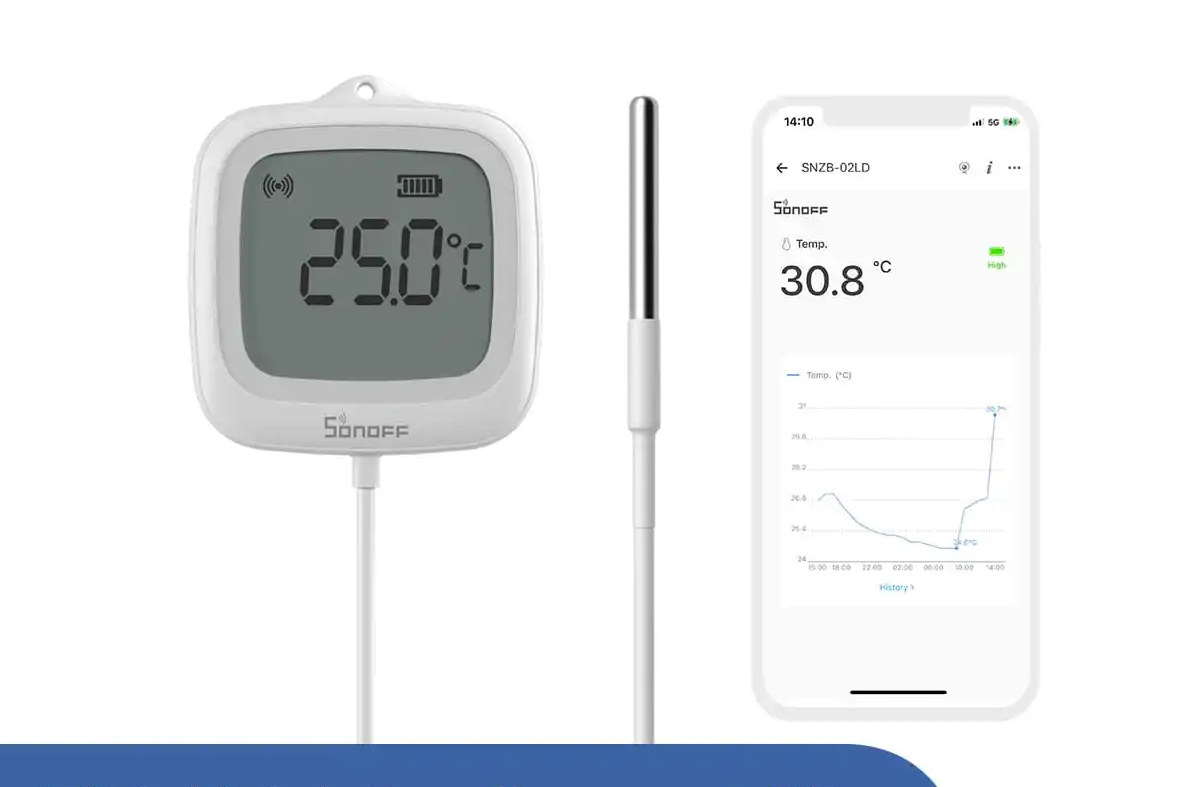
All SONOFF WiFi and Zigbee home automation devices can now work with the Matter protocol. This can be done in two ways: Software path (free of charge)  – Use eWelink CUBE OS on a Raspberry Pi or other host computer to bridge SONOFF WiFi & Zigbee devices to Matter. Hardware path — Install a certified Matter gateway such as SONOFF iHost, ZBBridge-U, or NSPanel Pro, and pair your WiFi/Zigbee devices to use them with Matter. The main benefit is that you no longer need to use the eWelink app, and any SONOFF devices can now work with Matter-compatible platforms, such as Apple Home, Google Home, SmartThings, Amazon Alexa, and Home Assistant. I’ll focus on the software solution in this post. Most users will likely install eWelink CUBE OS on a Raspberry Pi 4/5 connected to a supported USB Zigbee dongle if they have Zigbee devices. SONOFF lists their own ZBDongle-MAX, […]

Quectel SRG091X and SRG093X NXP i.MX 9 industrial AIoT modules integrates Wi-Fi 6, Bluetooth 5.4, and 802.15.4 radios

Quectel SRG091X and SRG093X NXP i.MX Smart AIoT module

After releasing the very powerful P895BD-AP AIoT module at CES 2026, Quectel now released two new low-power industrial AIoT modules based on NXP’s i.MX 9 series SoCs. The module integrates Wi-Fi 6, Bluetooth 5.4, and 802.15.4 radios through the IW610G chipset, so it can simply be dropped into a PCB to create a fully compliant Matter Border Router without any RF design or coexistence concerns. While both modules share the same 46 x 41.5 mm form factor and wireless capabilities, they are different in terms of  CPU power as the SRG091X is an entry-level solution built around a single-core NXP i.MX 91 processor, while the SRG093X features dual-core NXP i.MX 93 SoC, which includes a Cortex-M33 real-time core and a neural processing unit (NPU) for edge AI workloads. The module supports LPDDR4/LPDDR4X memory, eMMC storage, and various I/O options, including dual Gigabit Ethernet, USB 2.0, CAN-FD, SPI, UART, I²C/I³C, ADC, […]

Nordic Semi nRF54LM20B wireless SoC integrates 128 MHz Axon NPU for Edge AI workloads

nRF54LM20B

Nordic Semi nRF54ML20B Arm Cortex-M33 wireless SoC is the first nRF54L microcontroller to integrate the ultra-efficient Axon Neural Processing Unit (NPU) for edge AI workloads. The NPU is said to deliver up to 7 times faster performance and up to 8 times higher energy efficiency versus (unnamed) competing wireless solutions for tasks such as sound classification, keyword spotting, and image-based detection. The Axon NPU is also about 15x faster compared to using the Cortex-M33 CPU for the same task. Other than the NPU, the nRF54LM20B offers exactly the same features as the earlier nRF54LM20A wireless microcontroller, including up to 2 MB NVM, 512 KB RAM, a 128 MHz Arm Cortex-M33 plus RISC-V coprocessor, high-speed USB, up to 66 GPIOs, and an ultra-low-power 2.4 GHz radio supporting Bluetooth LE, Bluetooth Channel Sounding, Matter over Thread, and more as shown in the nRF54L comparison table below. Like other nRF54L wireless SoCs, the […]

Espressif Systems showcases ESP32-E22 Wi-Fi 6E SoC and ESP32-H21 BLE MCU for battery-powered devices

ESP32-E22 WiFi 6E SoC

Espressif Systems is showcasing its products at CES 2026, including two interesting upcoming parts: the ESP32-E22 Wi-Fi 6E tri-band SoC and the ultra-low-power ESP32-H21 Bluetooth LE MCU for battery-powered devices. Espressif Systems has been teasing an upcoming Wi-Fi 6E SoC for several months, but so far, there have been very few details. Once tipped that the ESP32-E22 tri-band Wi-Fi 6E SoC was demonstrated at CES 2026, I headed over to X and noticed tks posted a few interesting photos from the exhibition. Here’s what we know about the ESP32-E22 so far: CPU – Dual-core RISC-V processor at up to 500 MHz Memory – 1 MB (no optional PSRAM) Wireless Tri-band 2.4/5/6GHz Wi-Fi 6E, 160 MHz channel bandwidth, 2×2 MIMO; tested with iperf; up to 2.1 Gbps physical thoughput Dual-mode Bluetooth 5.4/6.0 (LE + BR/EDR) I/Os – 41x GPIO Host interfaces – PCIe 2.0, USB FS OTG, SDIO 3.0 (when used […]

M5Stack NanoH2 – An ultra-compact ESP32-H2 IoT development kit with Zigbee, Thread, and Matter connectivity

M5Stack NanoH2

M5Stack NanoH2 is an ultra-compact, standalone IoT development kit powered by an Espressif Systems’ ESP32-H2 wireless SoC with support for Zigbee, Thread, and Matter, and designed for smart home and low-power wireless applications. It also features a built-in LED, an RGB LED, an infrared transmitter, a Grove port for expansion, a user button, and a USB-C port for power and programming. On the surface, it looks very similar to the Unit Gateway H2 introduced last March, with an ESP32-H2 SoC and a Grove connector. But while the earlier model is designed as an add-on board to other M5Stack products, the NanoH2 is a standalone development kit that you can use directly without another board from M5Stack. M5Stack NanoH2 specifications: SoC – Espressif Systems ESP32-H2FH4S CPU – 32-bit RISC-V SoC clocked at up to 96 MHz Memory – 320 KB SRAM, 4 KB LP memory Storage – 128 KB ROM, 4MB […]

Compact development board features a single ESP32-P4 + ESP32-C5 dual-band Wi-Fi 6 module, MIPI display and camera interfaces

WTDKP4C5 S1, ESP32 P4 and ESP32 C5 WI FI6 Development Board

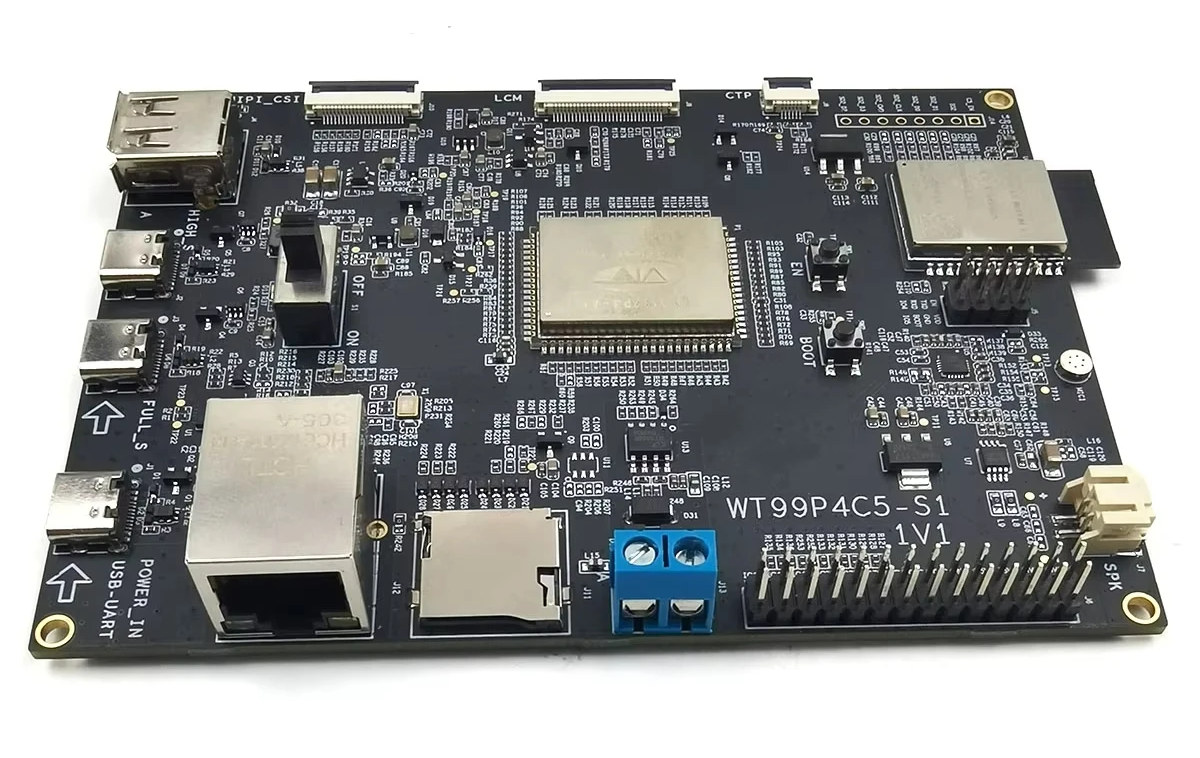
Just a few months back, Wireless-Tag released the WT99P4C5-S1, which combines the ESP32-P4 with an ESP32-C5 dual-band WiFi 6 module, instead of the more commonly used ESP32-C6 wireless module found on most ESP32-P4 development boards we’ve covered. The company has now released the WTDKP4C5-S1, a more compact development board built around the WT01P4C5-S1 ESP32-P4 and ESP32-C5 core module. The board supports MIPI-CSI and MIPI-DSI through the ESP32-P4, while the SDIO-connected ESP32-C5 provides dual-band Wi-Fi 6 (2.4/5 GHz) connectivity along with BLE 5, Zigbee, Thread, and Matter. Other features include a USB 2.0 Type-C OTG port, two UART debug interfaces, two 40-pin GPIO breakouts from both chips, and various power options via USB-C, a 12V DC input, or headers. The board is suitable for LVGL-based HMIs, data acquisition, industrial control, and Edge AI applications such as IPCs and smart displays. Wireless Tag WTDKP4C5-S1 specifications: Core module – Wireless Tag WT01P4C5-S1 Main […]

Exit mobile version