3.5-inch Atom x6000E embedded SBC features 3x GbE, 2x SATA, 6x USB, and more
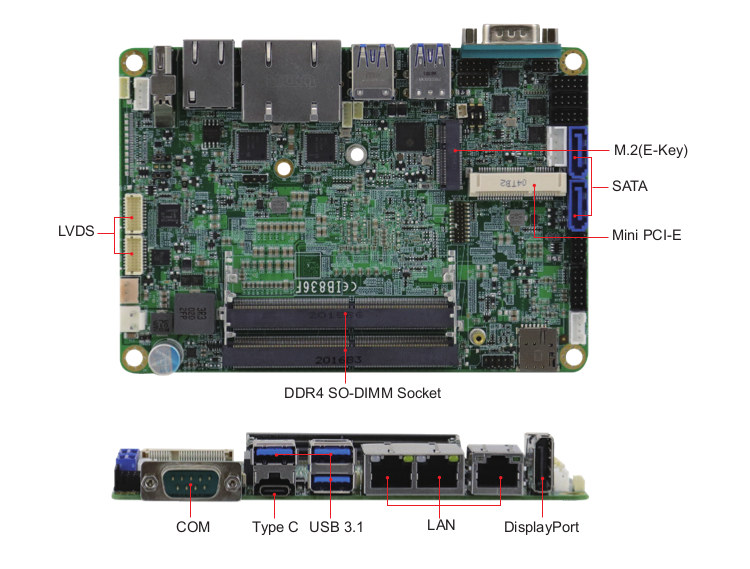
3.5-inch Atom x6000E SBC

Several Elkhart Lake SBC’s integrate two Ethernet ports including Avalue ECM-EHL 3.5-inch SBC or Congatec Conga-PA7 Pico-ITX board with the former equipped with 2.5GbE  and GbE ports, and the latter two GbE ports. But if your industrial project requires more Ethernet ports, iBase IB836 3.5-inch Atom x6000E embedded SBC offers three Gigabit Ethernet RJ45 ports, as well as two SATA ports, six USB interfaces, plus various display options, as well as M.2 and mPCIe expansion sockets. iBase IB836 specifications: Elkhart Lake SoC (one of the other) Intel Atom x6425E quad-core processor @ 1.8GHz/3.0GHz, with 1.5MB cache, Intel UHD graphics; 12W TDP Intel Atom x6413E quad-core processor @ 1.5GHz/3.0GHz, with 1.5MB cache, Intel UHD graphics; 9W TDP Intel Atom x6211E dual-core processor @ 1.2GHz/3.0GHz, with 1.5MB cache, Intel UHD graphics; 6W TDP System Memory – Up to 32GB via DDR4-3200 SO-DIMM, with IBECC support Storage – 2x SATA ports, 1x mSATA […]

A neat way to add a reset button to Raspberry Pi Pico

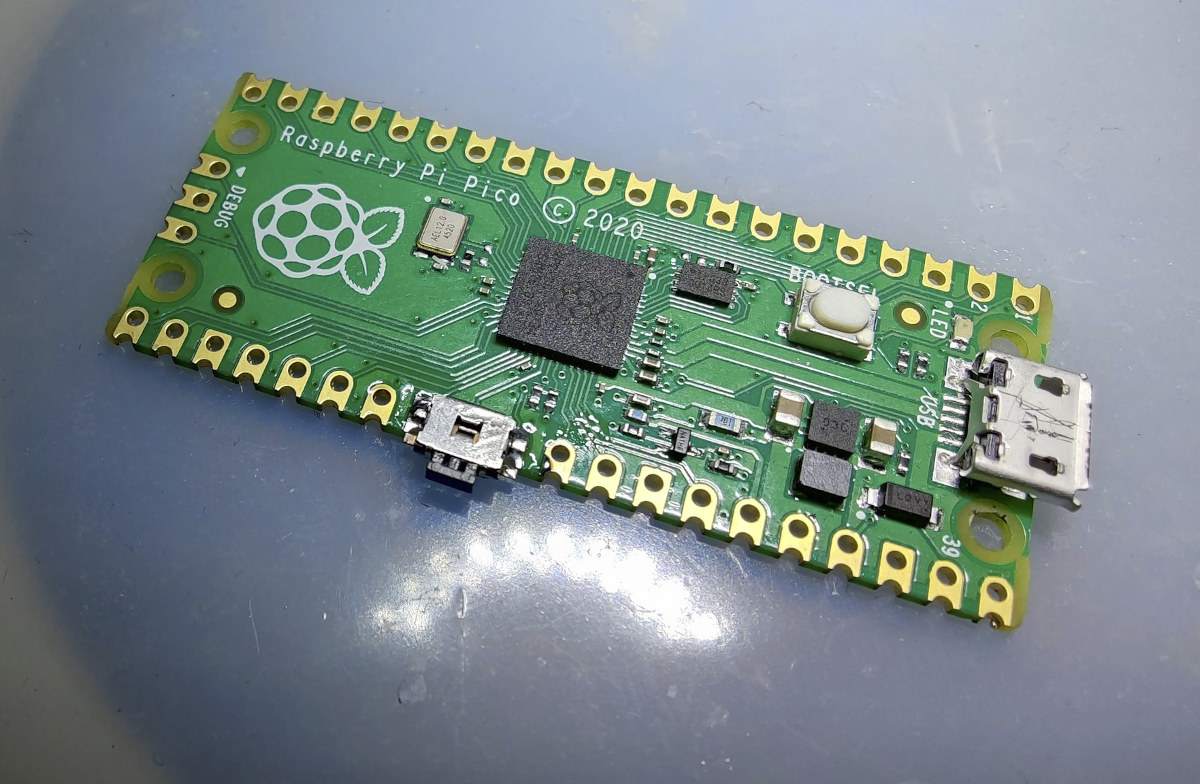
Raspberry Pi Pico Reset Button Soldered

The Raspberry Pi Pico is a nice little board, but if you program in C language, you’d need to disconnect the micro USB cable each time you’d like to flash the UF2 firmware. That’s not convenient and could damage your board over time.  The Raspberry Pi Foundation even decided to write a blog post explaining how to add a reset button to your Raspberry Pi Pico using a breadboard circuit. Here’s what it looks like. That works but you may want to use that breadboard for another circuit, so the reset button takes space. Another solution is to program with a Raspberry Pi board and use SWD mode to upload code using the debug port, instead of using mass storage (BOOTSEL) mode. I’ve also found out that most baseboards for the Pico board will include a reset button. But this morning, I’ve come across another solution that looks pretty neat. […]

Raspberry Pi CM4 Carrier Board comes with RS485/Modbus, CAN, 1-wire interfaces (Crowdfunding)

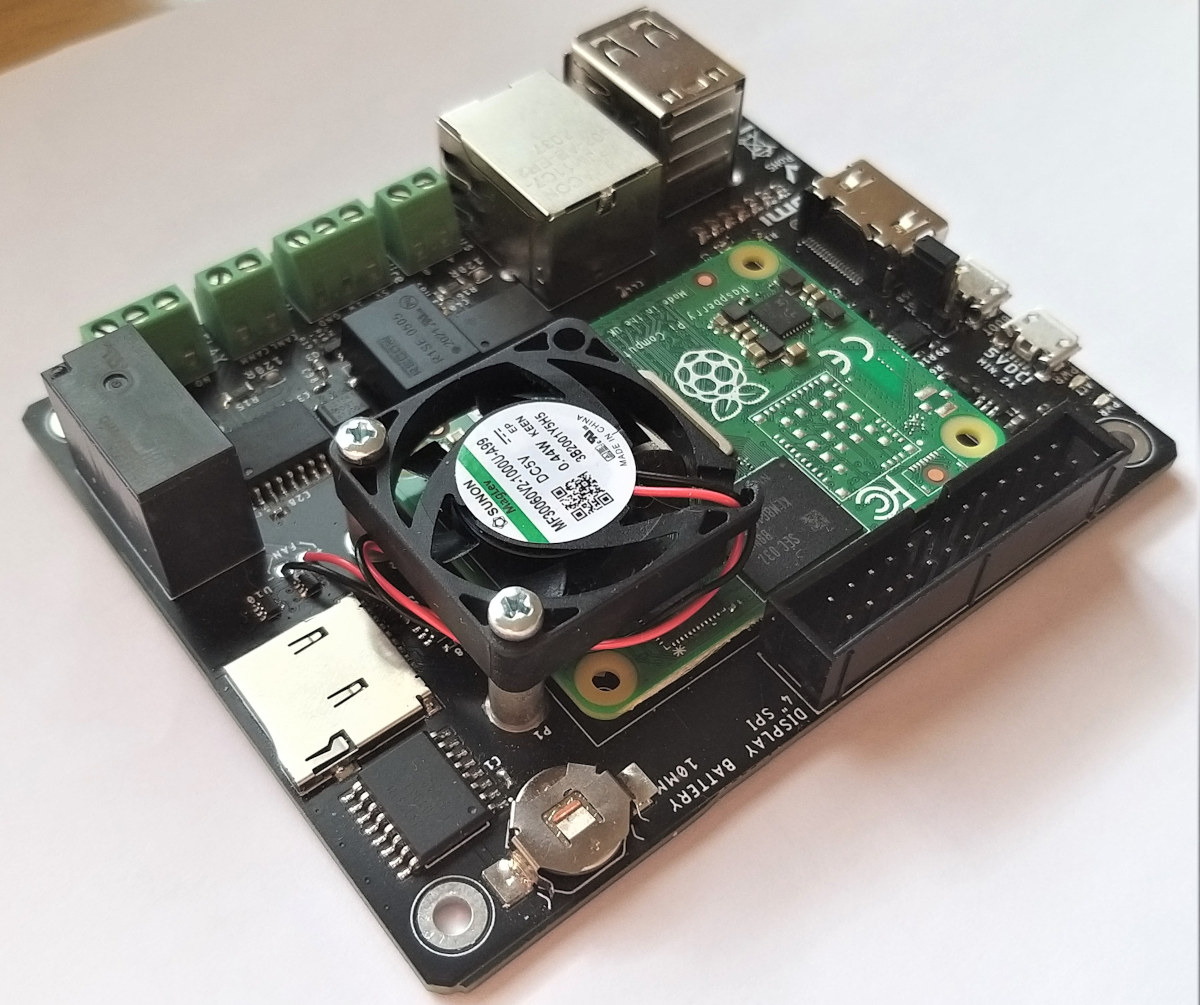
CM Hunter

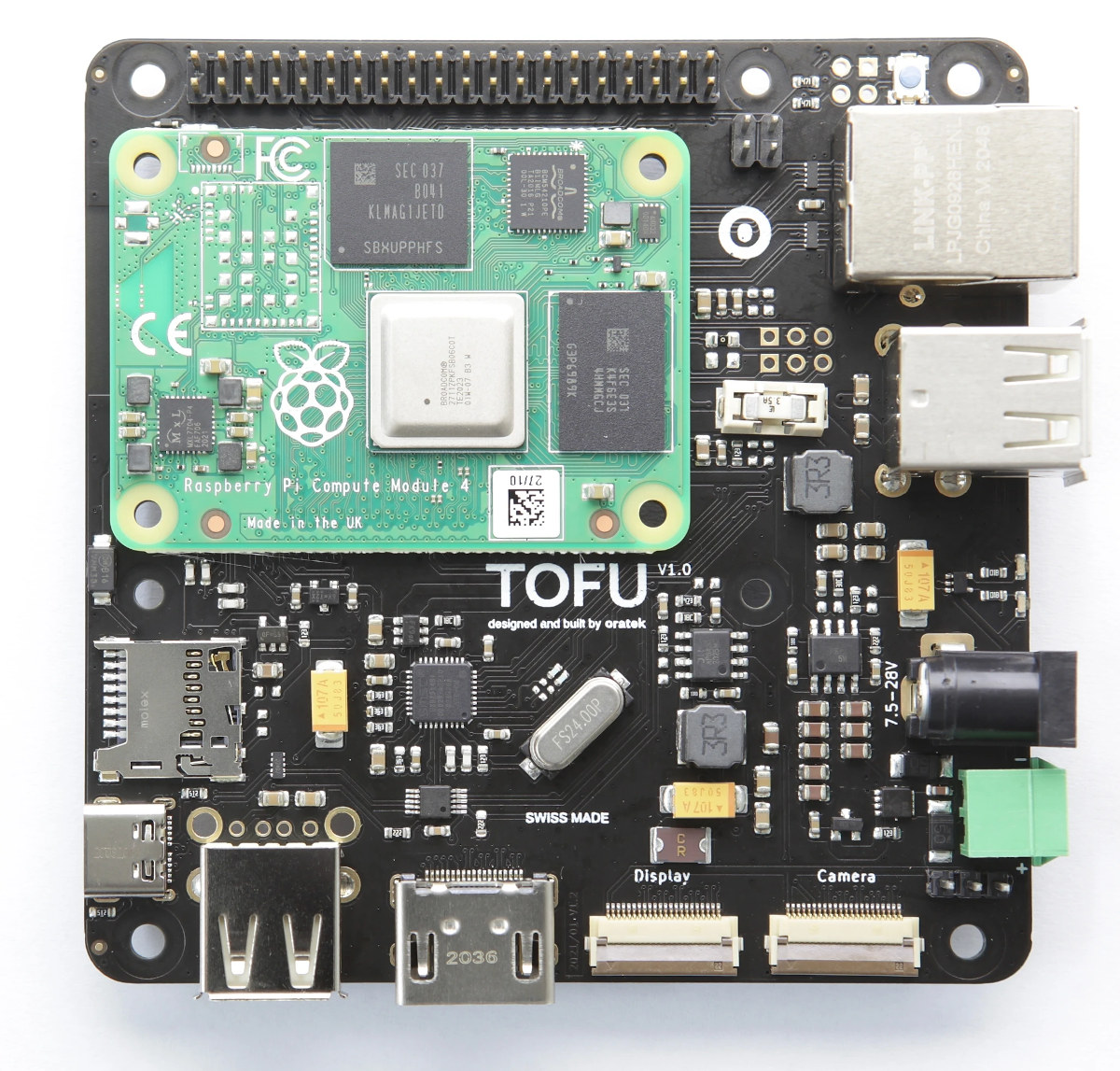
Another day, another Raspberry Pi CM4 carrier board. Just like the TOFU carrier board, CM Hunter carrier board for Raspberry Pi CM4 targets industrial applications, but in a different way, as it focuses on industrial communication protocols with Galvanically-Isolated RS485/Modbus, 1-Wire, CAN 2.0B, and together with more common interfaces like Ethernet, HDMI, USB, etc… CM Hunter specifications: Supported systems-on-module – Raspberry Pi Compute Module 4 / 4 Lite Industrial communication Interfaces  Isolated RS485/Modbus (Profibus compatible) based on Texas Instruments ISO1410 controller Isolated CAN 2.0B based on Microchip MCP2515 controller and MAX14879 CAN transceiver Isolated 1-Wire via Maxim DS2482 I2C bridge Storage – MicroSD card slot Video  Output – HDMI 2.0, optional 3.5-inch or 4-inch 480×320 LCD display with resistive touch connected over SPI Networking – Gigabit Ethernet RJ45 port and optional 802.11b/g/n/ac WiFi 5 plus Bluetooth 5.0 LE USB – 2x USB 2.0 ports, 1x micro USB 2.0 OTG port […]

STM32U5 Cortex-M33 MCU gets more performance, 2D graphics accelerator, and advanced security

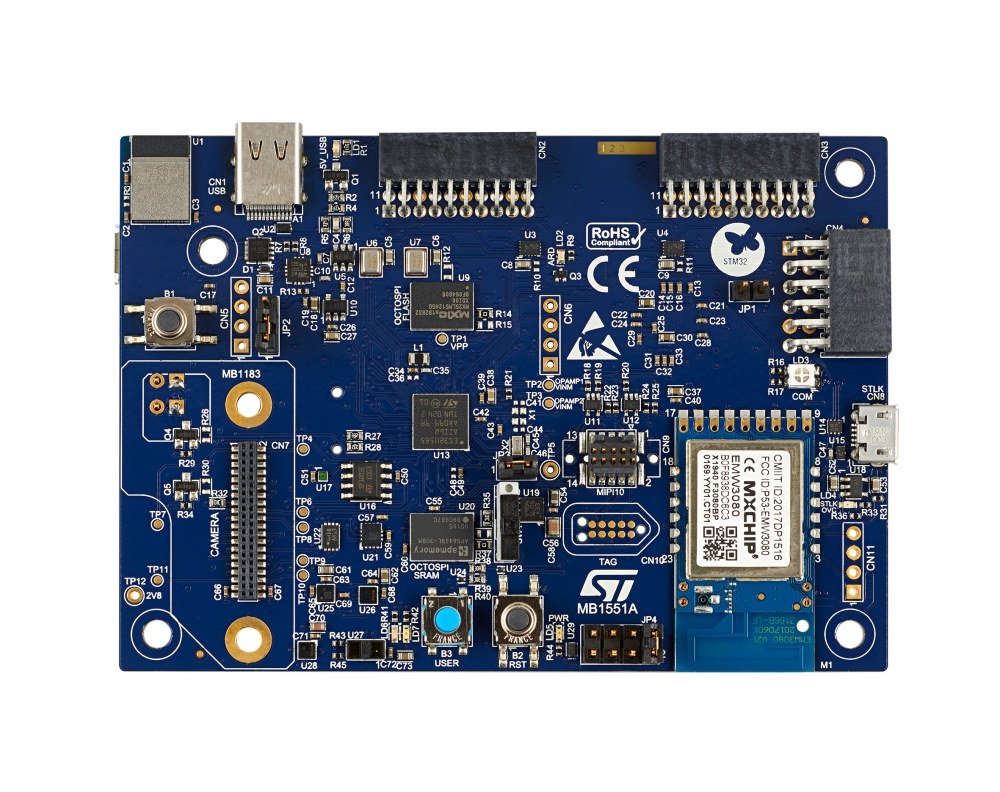
STM32U5 development board B-U585I-IOT02A Discovery kit

The first STM32 MCU based on Arm Cortex-M33 core was the ultra-low-power STM32L5 microcontroller, and the company is now following up with the STM32U5 series also designed for smart applications including wearables, personal medical devices, home automation, and industrial sensors. The new family has a higher 160 MHz clock speed, up to 2048 KB flash, up to 786 KB RAM, a 2D graphics accelerator, several peripherals have been upgraded, and a new autonomous mode lets DMA and peripherals keep working while most of the device sleeps in order to save power. STM32U5 MCUs also integrate additional hardware security features, and are manufactured using a 40nm process, which the company says is the most advanced process suitable for microcontrollers. Just like for the STM32L5 family, there are two product lines in the STM32U5 series which mostly differ in their security features: STM32U575 with 1024 to 2048 KB of flash memory, 786 […]

Embedded Artists launches 1GHz NXP i.MX RT1176 Crossover MCU module and devkit

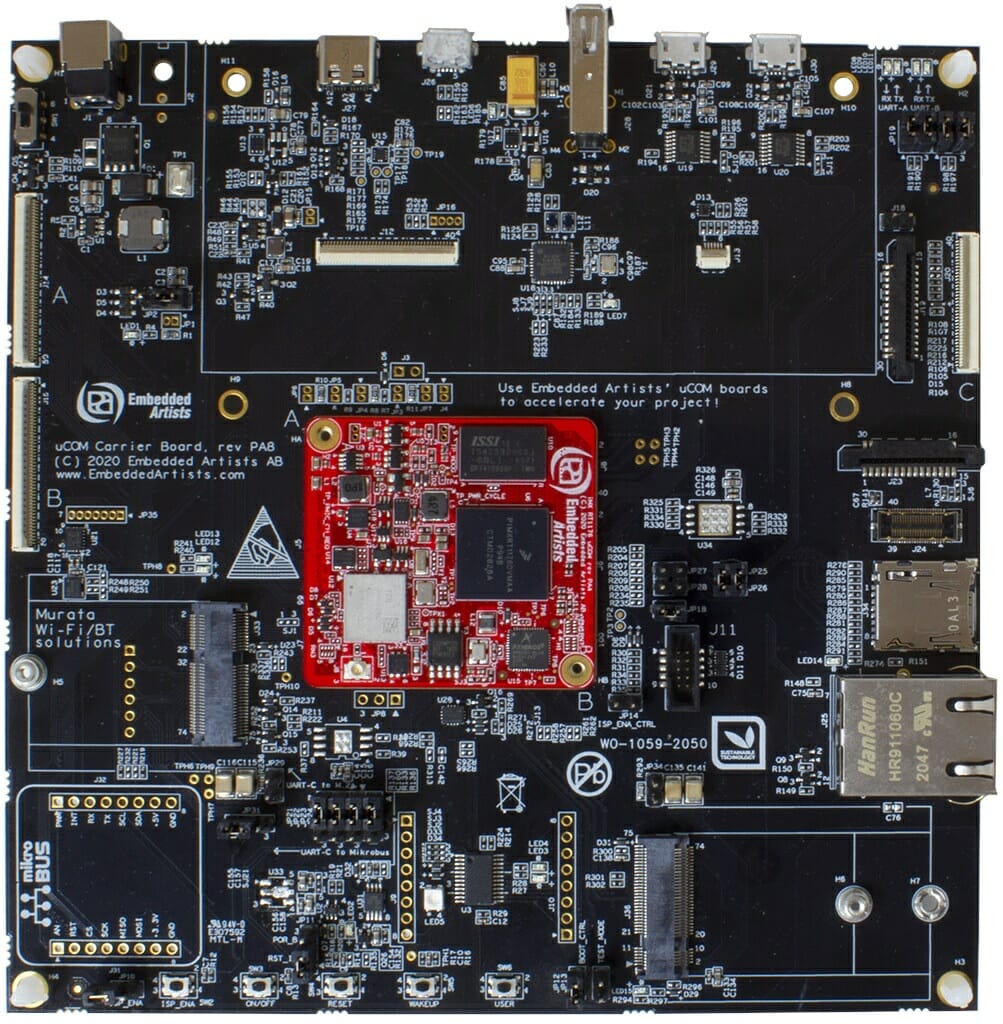
uCOM iMX RT1176 Developer Kit

Microcontrollers used to be those cute little chips clocked at 8 MHz, but it’s now common to have MCUs clocked at one or two hundred Megahertz, and with Cortex-M7 cores, several hundred Megahertz is now possible, and NXP even pushed the limit to one Gigahertz with their i.MX RT1170 series of Cortex-M7/M4 Crossover MCUs announced over a year ago. Embedded Artists has now made a computer-on-module and a corresponding devkit based on NXP i.MX 1176 Crossover MCU clocked at one Gigahertz. iMX RT1176 uCOM MCU module delivers up to 6468 Coremarks, comes with up to 32MB SDRAM, 16MB QSPI flash, optional WiFi and Bluetooth, and various peripherals in a tiny 45x42mm form factor. iMX RT1176 uCOM module Specifications: SoC – NXP i.MX RT1176 processor with Cortex-M7 core up to 1 GHz/800MHz (Commercial vs industrial), Cortex-M4 core up to 400/200 MHz, 2MB internal SRAM, 2D GPU with OpenVG 1.1 support and […]

Raspberry Pi Compute Module 4 industrial carrier board supports M.2 NVMe SSD, 4G LTE modem

Raspberry Pi Compute Module 4 industrial carrier board

Since the Raspberry Pi Compute Module 4 launch last fall, we’ve seen several interesting carrier boards for the system-on-module including Wiretrustee to build a NAS with up to four SATA drives, the compact, Arduino-sized Piunora board that also include an M.2 socket, or Over:Board mini-ITX carrier board. Oratek brings another one specially designed for industrial use cases with TOFU Raspberry Pi Compute Module 4 carrier board offering wide DC input, Gigabit Ethernet with PoE, M.2 NVMe SSD or 4G LTE modem support, among many other features. Specifications: Raspberry Pi Compute Module 4 socket Storage NVMe SSD via M.2 2242 Key B socket (See Expansion section) MicroSD card slot Video Output HDMI 2.0 port up to 4Kp60 MIPI DSI connector for Raspberry Pi LCD display Camera – 1x MIPI CSI connector for Raspberry Pi camera Connectivity Gigabit Ethernet port with PoE Optional WiFI 5 and Bluetooth 5.0 on Raspberry Pi CM4 […]

Sony announces Altair ALT1255 5G-ready NB-IoT chipset with 2G fallback

Sony ALT1255 NB-IoT

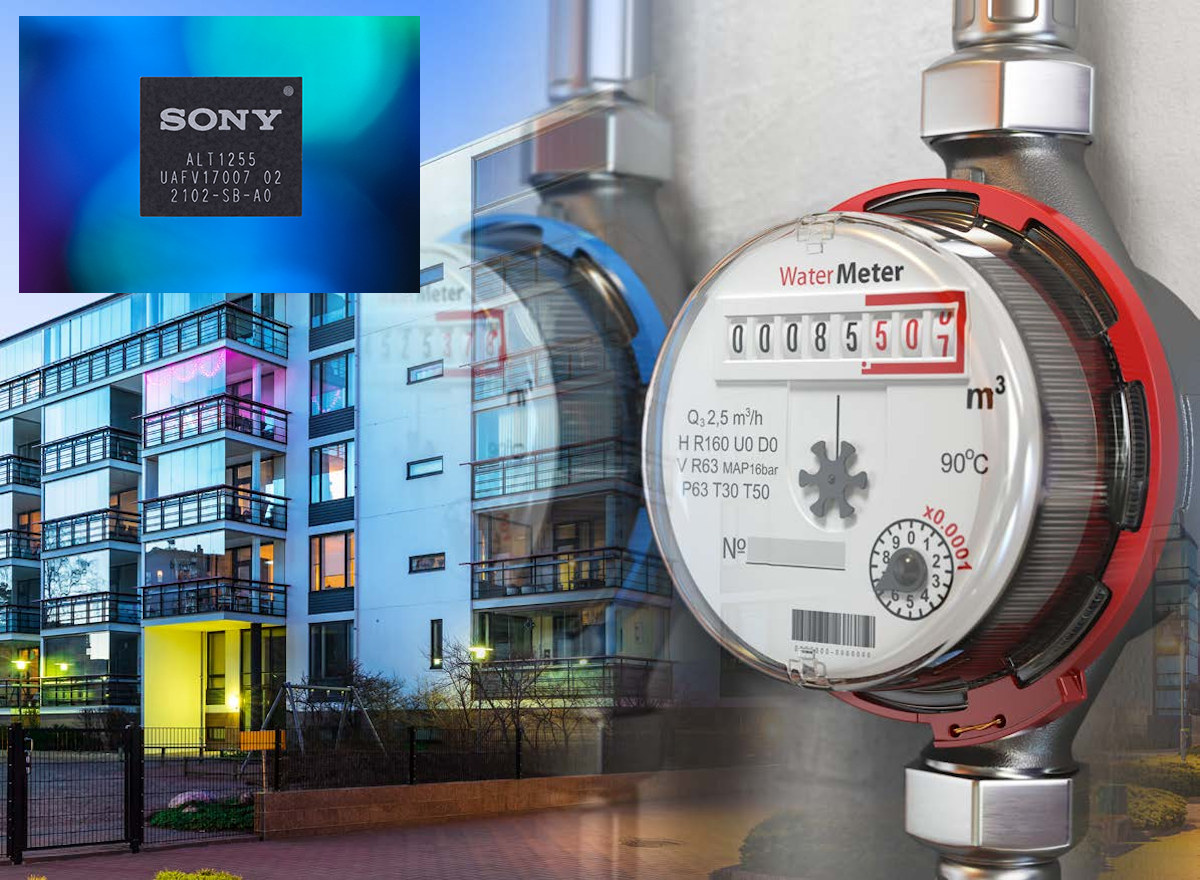
Sony Semiconductor Israel, previously known as Altair Semiconductor, has announced the launch of the Altair ALT1255 NB-IoT (NB2) chipset. The 5G-ready chip comes with an integrated SIM, a user MCU, and a GSM/GPRS fallback modem. Sony Altair ALT1255 NB-IoT chipset specifications: MCU core – Arm Cortex M4 MCU with 192KB RAM for user applications Cellular connectivity CAT-NB1 up to 27.2 Kbps DL, 62.5 Kbps UL CAT-NB2 up to  127 Kbps DL, 158 Kbps UL Carrier-grade integrated SIM (iSIM) 3GPP Release 14 Features – eDRX, PSM, Relaxed monitoring, RAI (Release Assistance Indication), Large TBS, and Dual HARQ processes “OneSKU” frequency range 617 – 960 MHz and 1695– 2200 MHz; Frequency bands HD-FDD bands – 1, 2, 3, 4, 5, 8, 12, 13, 14, 17, 18, 19, 20, 25, 26, 28, 66, 70, 71 and 85 Optional support for 410-467.5 MHz bands: 31, 72, 73, 87, 88 2G quad-band support: GSM-850, E-GSM-900, […]

Qualcomm unveils Snapdragon XR1 based AR smart glasses reference design

Snapdragon XR1 AR Smart Viewer

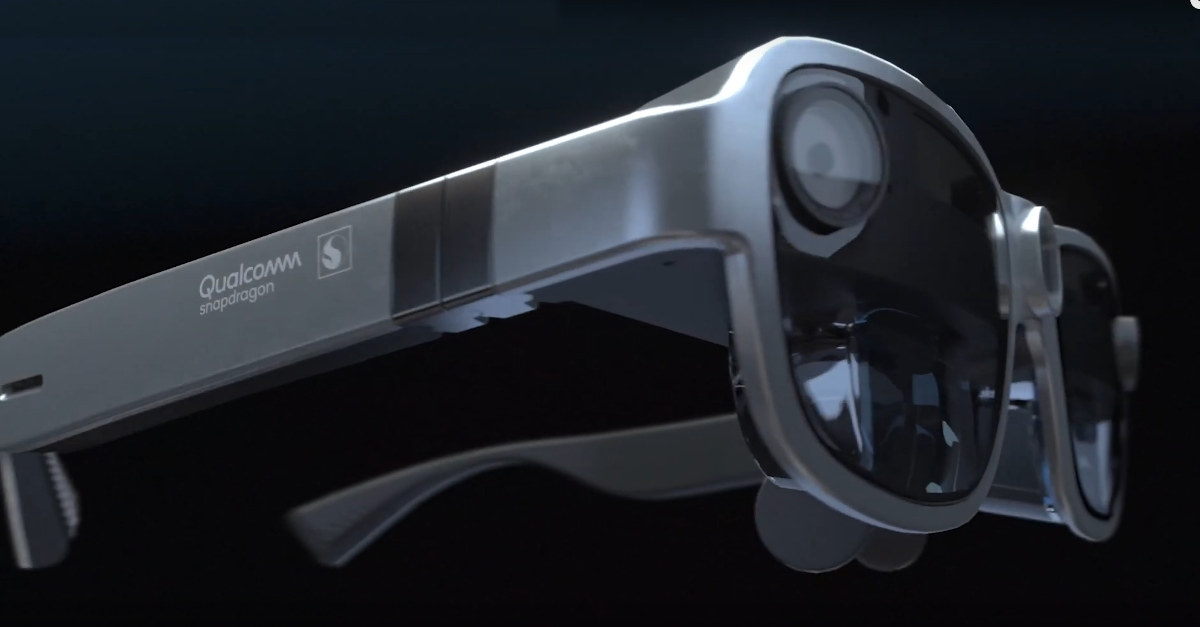
Qualcomm introduced the Snapdragon XR2 5G VR Reference Design last year based on their latest Snapdragon XR2 virtual/extended reality processor. But the company never designed a reference design for the earlier Snapdragon XR1 that was found in Google Glass Enterprise Edition v2. Better late than never, as the company has now announced the Snapdragon XR1 AR smart viewer reference design. If you happen to be a human not part of Qualcomm’s marketing team, you may wonder what an “AR smart viewer” is. The team behind the terms “Mobile Platform” (i.e. SoC + some companion chips), “Visual subsystem” (i.e. GPU, ISP, and stuff), is now bringing the new “AR Smart viewer” term for what commoners like myself used to call “smart glasses”. The reference design can tether to a compatible smartphone, Windows PC, or processing puck and is said to work best with other Qualcomm Snapdragon platforms. Some of the highlights […]

Exit mobile version