Espressif Systems has now released an alpha version of ESP32 Arduino Core 3.0.0 enabling the new ESP32-C6 and ESP32-H2 targets to be programmed with the Arduino IDE, and including a number of new features made possible by the ESP-IDF 5.1 SDK. Announced in 2021, the ESP32-C6 WiFi 6, Bluetooth 5 LE, and 802.15.4 wireless MCU became available in modules and devkits at the beginning of this year, but so far they could only be programmed with the latest version (5.1) of the ESP-IDF framework, and so was the new ESP32-H2 Bluetooth 5.2 and 802.15.4 (Zigbee/Thread) MCU. But fans of Arduino programming can now rejoice as an alpha version of ESP32 Arduino Core 3.0.0 brings support for the new microcontroller, and a stable release is planned for December 2023. But as you can probably imagine ESP32 Arduino Core 3.0.0 will also bring lots of other changes since the ESP32 Arduino Core […]
Rockchip roadmap reveals RK3576 and RK3506 IoT processors, Linux 6.1 SDK
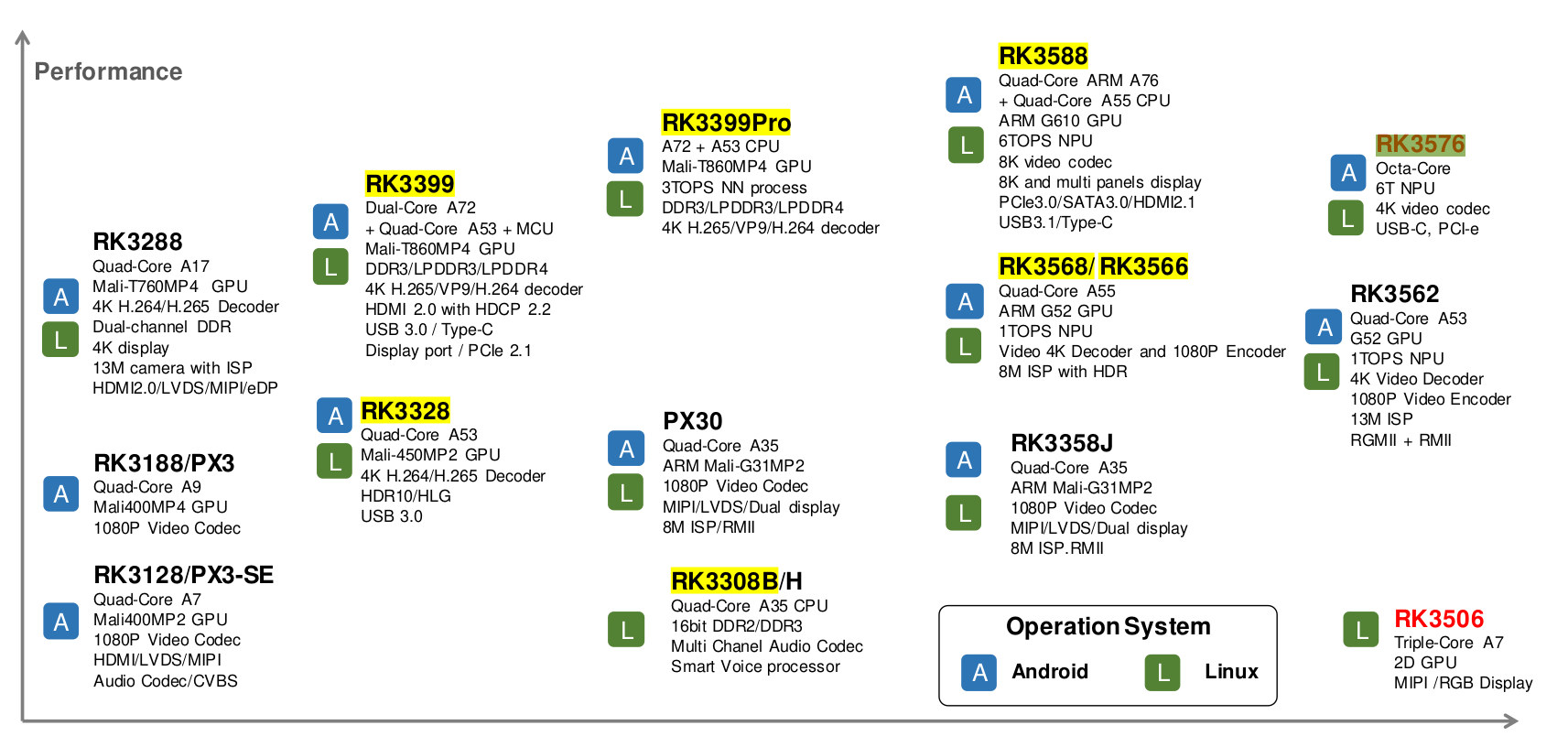
The Rockchip RK3588 processor may remain the most powerful processor from the company for a while as an updated Rockchip IoT processor roadmap reveals the new RK3576 octa-core SoC and RK3506 tri-core Cortex-A7 chip, as well as a Linux 6.1 SDK to be released in Q4 2023. With the limited information we have, the Rockchip RK3576 looks to be a cost-down version of the RK3588 processor with eight cores, a 6 TOPS NPU, a 4K video codec, as well as PCIe and USB-C interfaces. Strangely the Rockchip RK3582 that should serve a similar purpose is not showing up in the roadmap. [Update: The RK3576 is indeed a lower-cost SoC but features four Cortex-A72 and four Cortex-A53 cores instead as per the comparison table reproduced below: That also means we now have the RK3576 specifications (some obtained from another document too): CPU Octa-core Arm processor with 4x Cortex-A72 cores at 2.2 […]
Alibaba T-Head TH1520 user manuals released
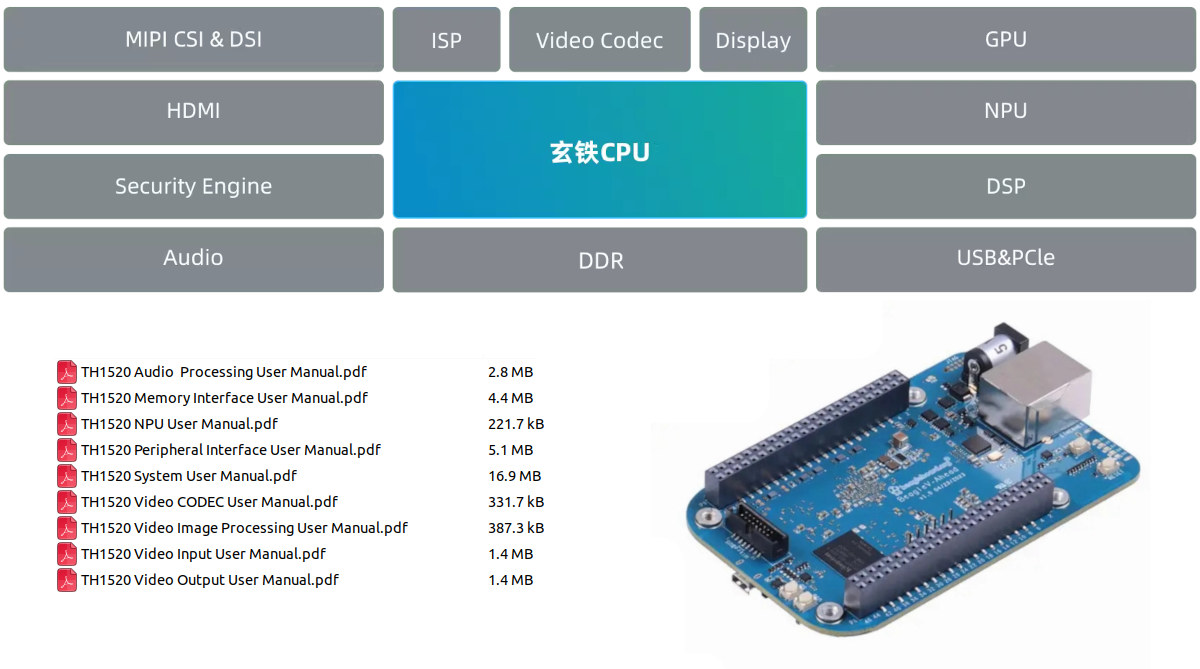
Further Alibaba T-Head TH1520 quad-core RISC-V processor documentation has been released with nine user manuals covering video and audio processing, peripheral interfaces, memory interfaces, system registers, and the built-in NPU for video acceleration. We first noted the TH1520 RISC-V SoC in the expensive web3-focused ROMA laptop in October 2022, but since then there have been some very interesting developments with the release of Sipeed’s Lichee Pi 4A SBC and various other platforms based on the LM4A system-on-module plus the BeagleBoard.org’s BeagleV Ahead. Both boards also have preliminary support in mainline Linux with the Lichee Pi 4A making it to Linux 6.5, and the BeagleV Ahead was added to the just-released Linux 6.6 kernel. However I had not noticed documentation for the processor was not released publicly until now as both Sipeed and Beagleboard.org have now made available nine user manuals in English, and the Sipeed link has the Chinese versions […]
Qualcomm Snapdragon 8 Gen 3 gains upstream Linux support
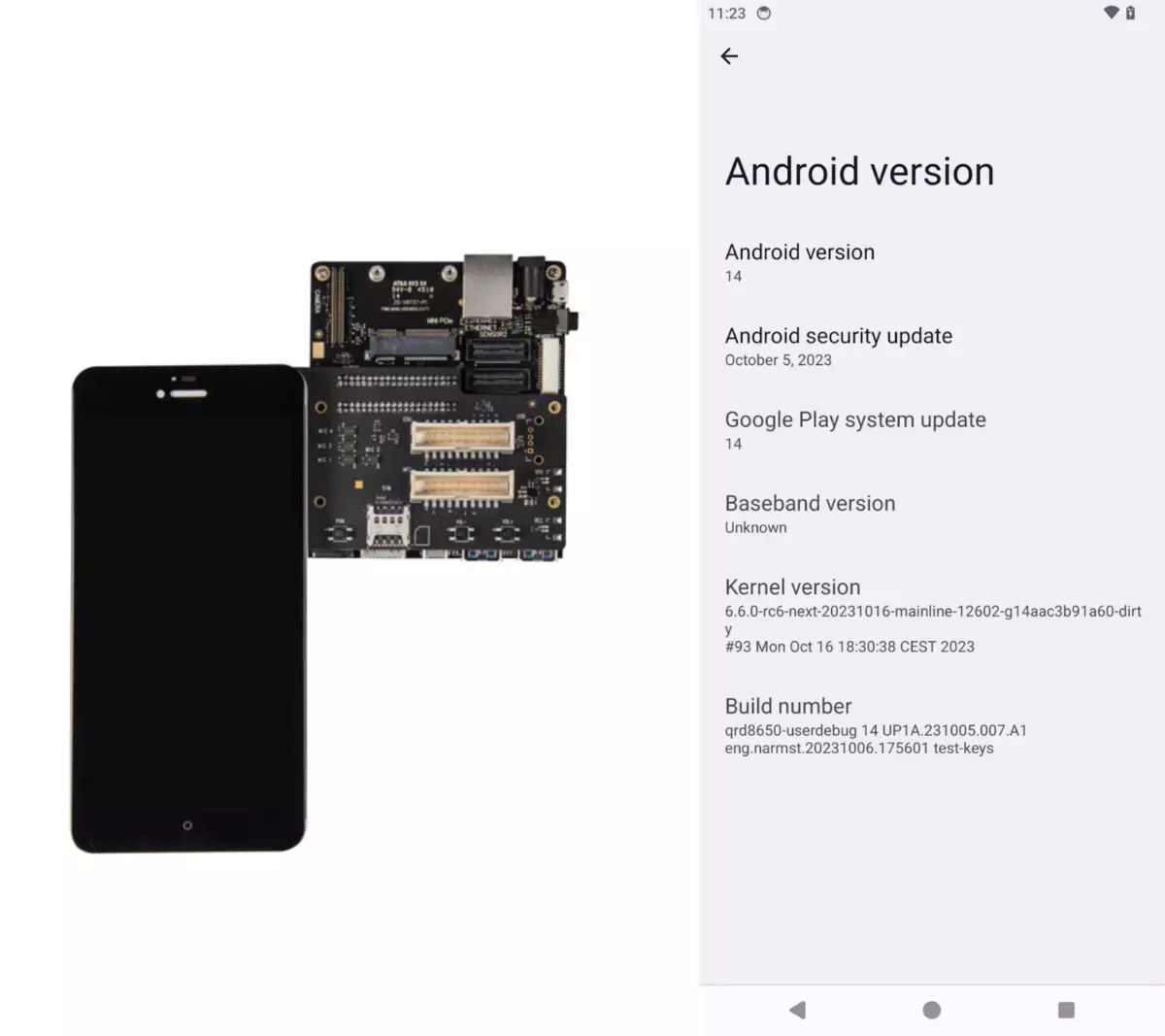
Linaro has announced upstream Linux support for the newly released Snapdragon 8 Gen 3 mobile platform also codenamed SM8650. The patchsets enable Android 14 AOSP to boot with mainline Linux on Snapdragon 8 Gen 3 hardware using Google SwiftShader CPU-based implementation of the Vulkan graphics API. While there is a lot of buzz around the announcement of the Snapdragon X Elite 12-core Arm processor for laptops in recent days, Qualcomm also introduced its latest premium processor with the Snapdragon 8 Gen 3 Mobile Platform for mobile phones featuring a 3.3 GHz Cortex-X4 core, five Cortex A720 Performance cores, and two Cortex A520 efficiency cores, as well as support for generative AI through AI accelerators. The announcement was made on October 25, and Linaro released the patchsets to the Linux Kernel Mailing List (LKML) on the same day. Android devices are often stuck to an older Linux kernel for their entire […]
Getting started with VOIPAC IMX8M Industrial development kit (Yocto Linux SDK)
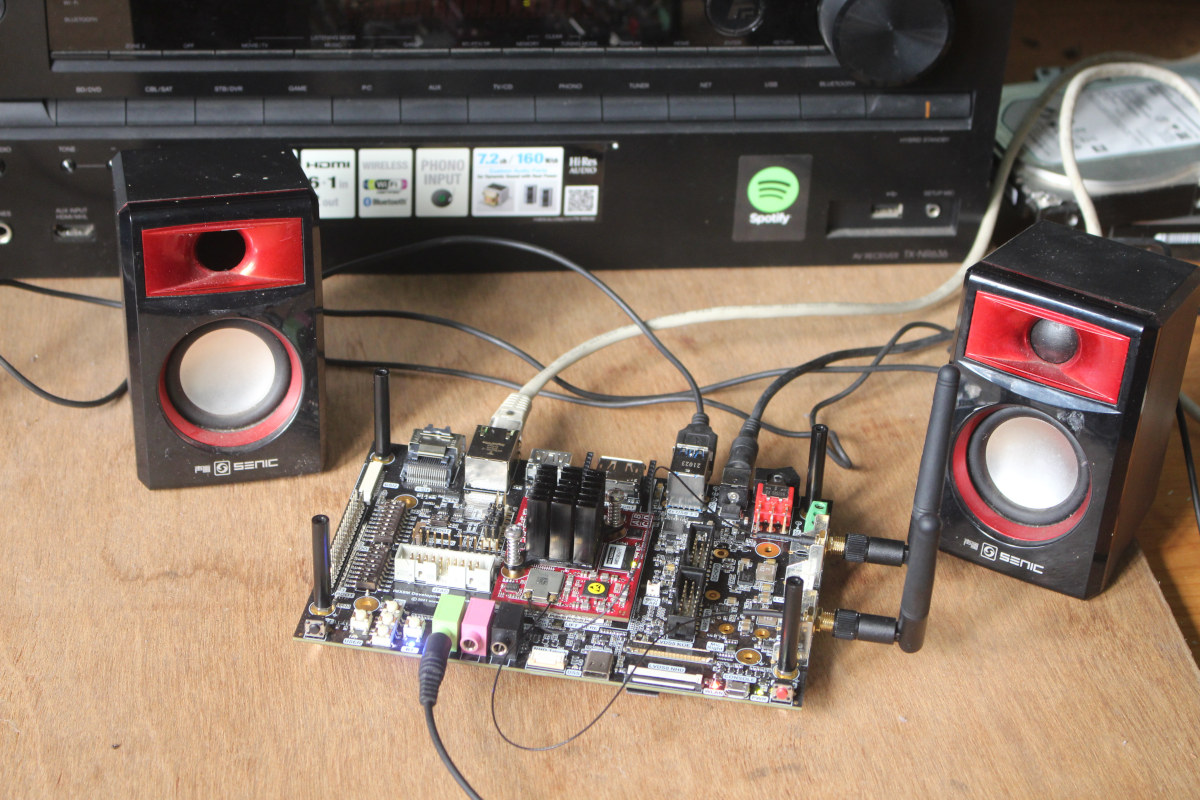
Last month I went through an unboxing of the VOIPAC iMX8M Industrial Development Kit with some specs and a quick try with the pre-loaded Yocto 3.1 Linux image. The kit is quite versatile with plenty of interfaces and headers, and eventually, it will support Android 12 and Ubuntu 22.04 LTS. but in the meantime, I played a bit with the Yocto Linux SDK for the NXP i.MX 8M board and will report by experience getting started with VOIPAC IMX8M Industrial development kit. WiFi antennas installation But before checking out Yocto Linux, I will install the two WiFi antennas since I did not do it last time around. We can attach the SMA connectors to the two metal plates on the side of the board securing them with the provided nuts and spacers. The other side of the antenna’s cable comes with a tiny u.FL (or is it MHF4) connector and […]
Setting up a private LoRaWAN network with WisGate Connect gateway
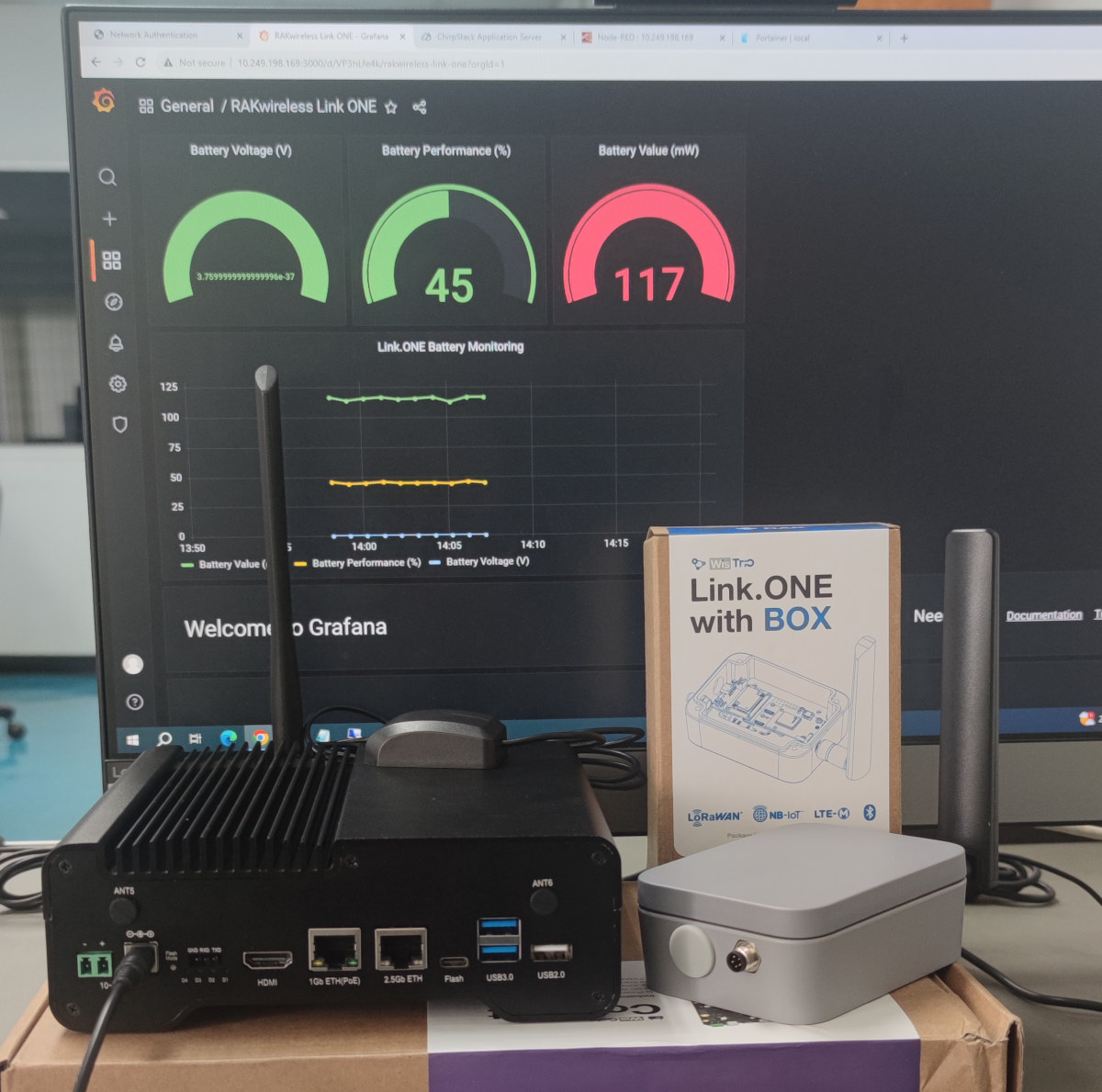
In this guide, we’ll explain how to set up a private LoRaWAN network using the Raspberry Pi CM4-based RAKwireless’ WisGate Connect gateway and Docker or Portainer to install NodeRED, InfluxDB, Grafana, and other packages required to configure our gateway. The WisGate Connect is quite a versatile gateway with Gigabit and 2.5Gbps Ethernet plus several optional wireless connectivity options such as LoRaWAN, 4G LTE, 5G, WiFi 6, Zigbee, WiFi HaLoW, and more that can be added through Mini PCIe or M.2 sockets, expansion through WisBlock IO connectors and a 40-pin Raspberry Pi HAT connector. We’ll start by looking at the gateway features in detail, but if you already know all that, you can jump to the private LoRaWAN network configuration section. WisGate Connect unboxing, specifications, and teardown RAKwireless sent us a model with a Raspberry Pi CM4 equipped with 4 GB of RAM and 32 GB of eMMC memory, GPS and […]
How to setup a WireGuard server on Ubuntu for remote login
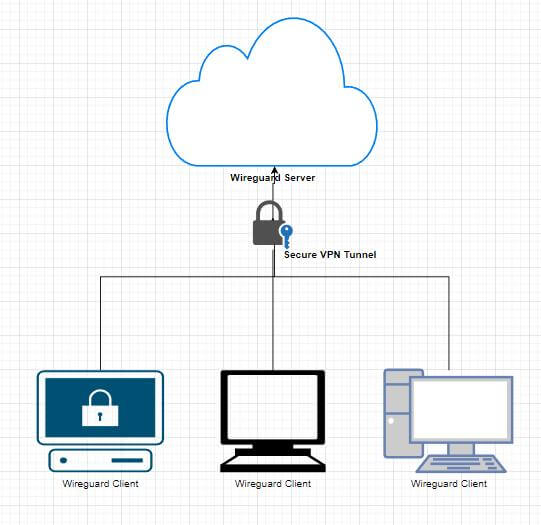
In this article, we will show you how to set up a WireGuard server on Ubuntu in order to use it for remote login. Introduction to WireGuard First of all, let’s first understand, what is WireGuard? WireGuard is a very simple and fast VPN tool with state-of-the-art encryption. Its goal is to be faster, simpler, more streamlined, and easy to use than IPsec, while avoiding the hassle of large-scale configuration. WireGuard is designed as a general-purpose VPN to run on embedded interfaces and supercomputers in many different environments. Originally released for the Linux kernel, WireGuard is now widely deployed and supported across platforms (Windows, macOS, BSD, iOS, Android). WireGuard is growing rapidly and is already considered the most secure, easiest-to-use, and simplest VPN solution in the industry. Basic Concepts of WireGuard Several basic concepts are involved in WireGuard: Peer: A node in WireGuard. Private key: Each node has its own […]
Wokwi – An Arduino, Raspberry Pi Pico, and ESP32 board simulator
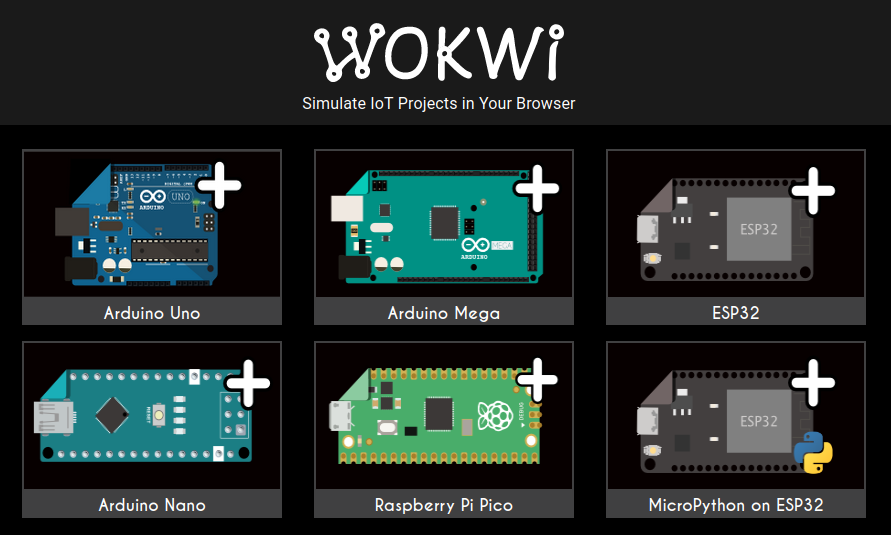
Wokwi is an online simulator for Arduino, Raspberry Pi Pico, and ESP32 boards, or even your own custom microcontroller board designed to learn programming without the actual hardware. My girlfriend’s daughter has just attended a free 5-day online course about AI, IoT, ESP32, MicroPython, and more organized by King Mongkut’s Institute of Technology Ladkrabang (KMITL) and IMAKE Innovation, a STEM education company in Thailand. I was told they had some homework for ESP32 as part of the course, so I asked her whether she wanted an ESP32 board. But she said no need. So then I asked how to program the ESP32 without the board, or do they have a simulator? And indeed I was sent the screenshot below along with a blurry video showing the LED display updated as the program runs in the web browser. Considering ESP32 boards are so cheap and external modules or a breadboard are […]