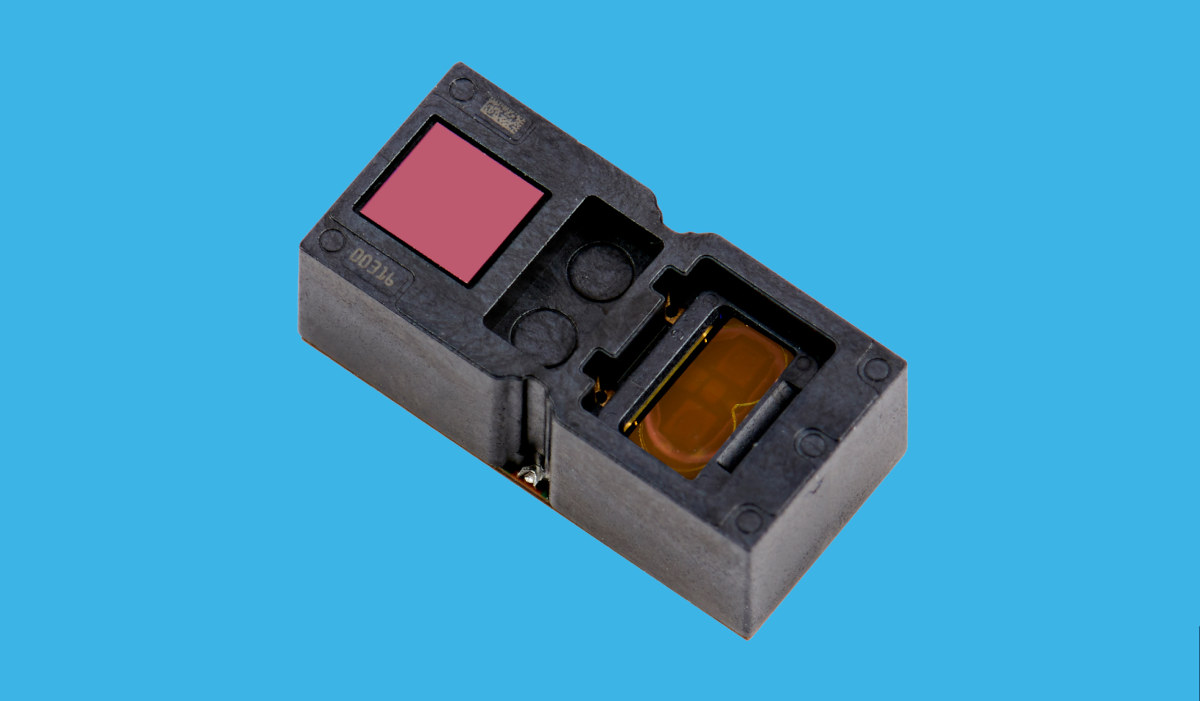
STMicroelectronics VL53L9CX, or VL53L9 for short, is the company’s first direct Time-of-Flight (dToF) 3D LiDAR all-in-one module. It offers a sensing range of 5 centimeters to 9 meters, a wide 72º field of view, a resolution of 2.3K zones, and up to 100 Hz frame rate. ST’s ToF sensors have gone a long way since we covered the VL53L0X sensor with a single zone and 2-meter range in 2017. Since then, the company has steadily improved its tiny ToF sensors with up to 64 zones and long range in recent sensors like the VL53L8CP. While the VL53L9CX is still tiny at 12.8 x 6.1 x 4.6 mm, it’s in a class of its own, acting like a mini 3D scanner with 2268 zones, and will be used for a range of applications in robotics, industrial automation, smart buildings, AR/VR, and healthcare. ST VL53L9CX 3D ToF camera module specifications: Multizone ranging […]
Creality Sermoon S1 review – Part 3: 3D scanning with Khadas Mind 2 and NVIDIA GeForce RTX 5060 Ti 16GB dock
At the end of last year, I received a Creality Sermoon S1 high-end 3D scanner for review. After checking the specifications and going through an unboxing in the first part of the review, I used the 3D scanner with an Intel Core i5-13500H laptop with 16GB of RAM running Creality Scan 4 software on Windows 11. The laptop specs were below the minimum hardware requirements (NVIDIA GPU, 32GB RAM), and while I managed to scan a face and bust using infrared mode, it was a struggle with 4 to 5 FPS scanning, and I wasn’t able to use Blue light scanning at all. Luckily, shortly after the review, Khadas informed me they planned to send a Khadas Mind Graphics 2 dock featuring an NVIDIA GeForce RTX 560 Ti 16GB graphics card and a Mind 2 mini PC with 32GB of RAM and an Intel Core Ultra 7 155H 16-core Meteor […]
OpenCV 5 release – New DNN engine with enhanced ONNX and LLM/VLM support, Intel, Arm, and RISC-V hardware optimizations
OpenCV 5 open-source computer vision library has recently been released with a brand-new DNN (Deep Neural Network) engine that provides better ONNX coverage and enables LLM/VLM support. The fifth version of the popular CV library also adds support for Intel, Arm, Qualcomm, and RISC-V hardware acceleration, improved 3D vision, and various new core features such as new data types, real N-dimensional and scalar support, and performance improvements. OpenCV 5’s DNN Engine OpenCV 4.x supports about 22% of ONNX operators, and the new DNN engine in OpenCV 5 brings coverage to over 80%. That means models with dynamic shapes that used to fail on OpenCV 4.x, should now work, as the 5.x engine was rebuilt around a typed operation graph with proper shape inference, constant folding, and operator fusion. The table below shows the main difference between OpenCV 4.x and OpenCV 5 Since it’s quite a big change, to make sure […]
Banana Pi BPI-OM7 AI 3D camera pairs BPI-M7 RK3588 SBC with ORBBEC Gemini 2 depth camera
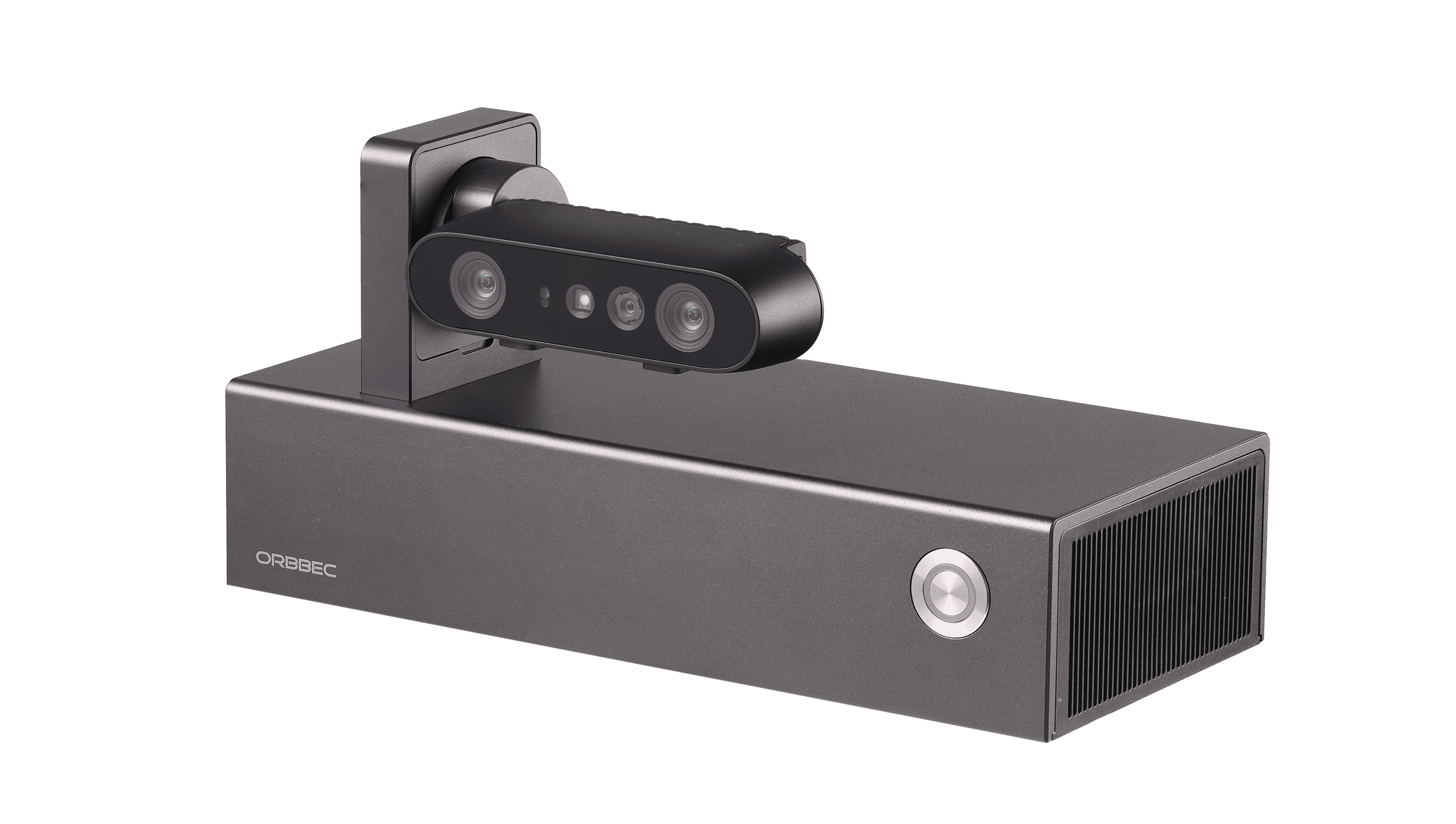
Banana Pi BPI-OM7 is an AI 3D depth camera that combines Banana Pi BPI-M7 low-profile Rockchip RK3588 SBC with an ORBBEC Gemini 2 depth camera, targeting applications in 3D vision, robotics, edge AI, and spatial perception. The solution ships with 8GB of RAM and a 64GB eMMC flash by default, offers HDMI and USB-C video outputs, dual 2.5GbE networking, and a few USB ports. It’s mounted on a tripod for convenience. Banana Pi BPI-OM7 specifications: SoC – Rockchip RK3588 octa-core processor with CPU – 4x Cortex‑A76 cores @ up to 2.4 GHz, 4x Cortex‑A55 core @ 1.8 GHz GPU – Arm Mali-G610 MP4 GPU Video decoder – 8Kp60 H.265, VP9, AVS2, 8Kp30 H.264 AVC/MVC, 4Kp60 AV1, 1080p60 MPEG-2/-1, VC-1, VP8 Video encoder – 8Kp30 H.265/H.264 video encoder AI accelerator – 6 TOPS NPU System Memory – 8GB (default), 16GB, or 32GB LPDDR4x Storage 32GB, 64GB (default), or 128GB eMMC flash […]
LooperRobotics Insight 9 standalone spatial AI camera features D-Robotics RDK X5 SoC, supports ROS 2 (Crowdfunding)
LooperRobotics Insight 9 is an autonomous plug-and-play spatial AI camera designed for embodied intelligence, quadruped robots, and dynamic mobile platforms. Compared to typical USB depth cameras like Intel RealSense D435i or Luxonis OAK-D, which rely on a host PC for processing, the Insight 9 integrates a D-Robotics RDK X5 octa-core Cortex-A55 processor with a 10 TOPS AI accelerator, allowing it to run Visual SLAM (V-SLAM) and depth mapping entirely on-device. The camera features a “Tri-Eye Perception Matrix,” which includes an 8.4MP Sony Starvis IMX415 RGB sensor with an ultra-wide 188° field of view, and two SmartSens SG0132 global shutter sensors for stereoscopic depth. Encased in a passively cooled CNC aluminum chassis, it is also equipped with an automotive-grade Bosch BMI088 IMU capable of 24g high-G tracking, making it suitable for the heavy vibrations of legged locomotion. LooperRobotics Insight 9 specifications: SoC – D-Robotics RDK X5 octa-core Arm Cortex-A55 processor @ 1.5 GHz; […]
Luxonis OAK4 standalone AI vision camera features Qualcomm QCS8550 SoC with up to 52 TOPS performance
Luxonis OAK 4 is a standalone AI vision system/camera powered by a Qualcomm DragonWing QCS8550 platform delivering up to 52 TOPS of AI performance for on-device real-time perception without relying on a host computer. Four variants are offered: OAK 4 S, OAK 4 D, OAK 4 D Pro, and OAK 4 CS. All four feature 8GB of RAM, 128GB of storage, and a 48 MP RGB camera sensor with rolling shutter, although the OAK 4 CS model can feature a 5MP global shutter camera thanks to support for wappable lenses. Depth sensing is implemented through an OV9282 sensor in the OAK 4 D and OAK 4 D Pro (dual camera) models, and the latter also adds a laser dot projector to improve depth perception. Luxonis OAK 4 specifications: SoC – Qualcomm DragonWing QCS8550 CPU – 1x GoldPlus core @ 3.2 GHz + 4x Gold cores @ 2.8 GHz + 3x […]
Kyocera triple lens AI depth camera enable recognition of thin and semi-transparent objects, wires
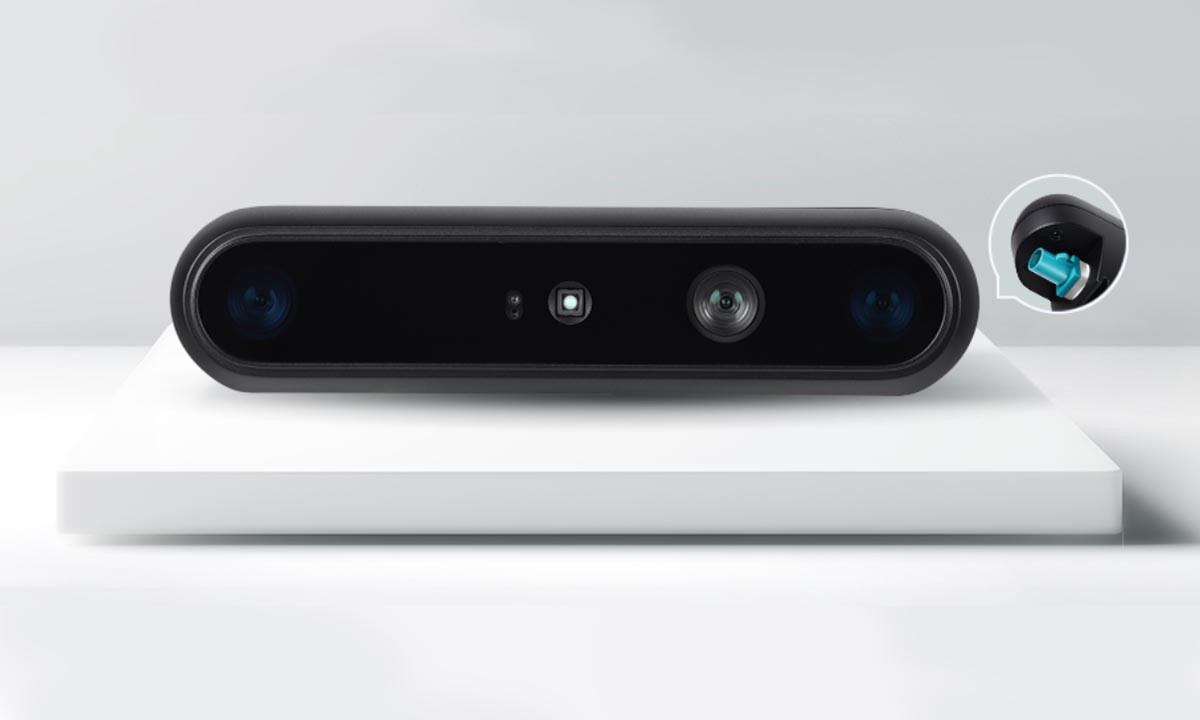
Kyocera has unveiled a triple lens AI depth camera capable of recognizing semi-transparent, thin, and fine line-shaped objects that are difficult to detect with the human eye and traditional stereo cameras. The camera can accurately measure the distance to and size of objects which are between 0.3 and 1mm thick, and is expected to be useful in robots for manufacturing, medical applications, and Smart Agriculture. Preliminary specifications: Sensors Left-center, center-right, and left-right cameras Focus distance – About 10 cm Proprietary AI combining multiple parallax data sets from the sensors Ideal for Thin, irregularly shaped linear objects, such as harnesses or ultra-fine wires as small as 0.3mm Reflective objects like metal Translucent objects like plastic Dimensions – 40 x 30 x 28mm It is an evolution of the company’s dual-lens AI depth camera that was already capable of high-precision distance measurement with 100μm resolution at a 10cm range, but struggled a […]
Giveaway Week 2024 – Orbbec Femto mega 3D depth and 4K RGB camera
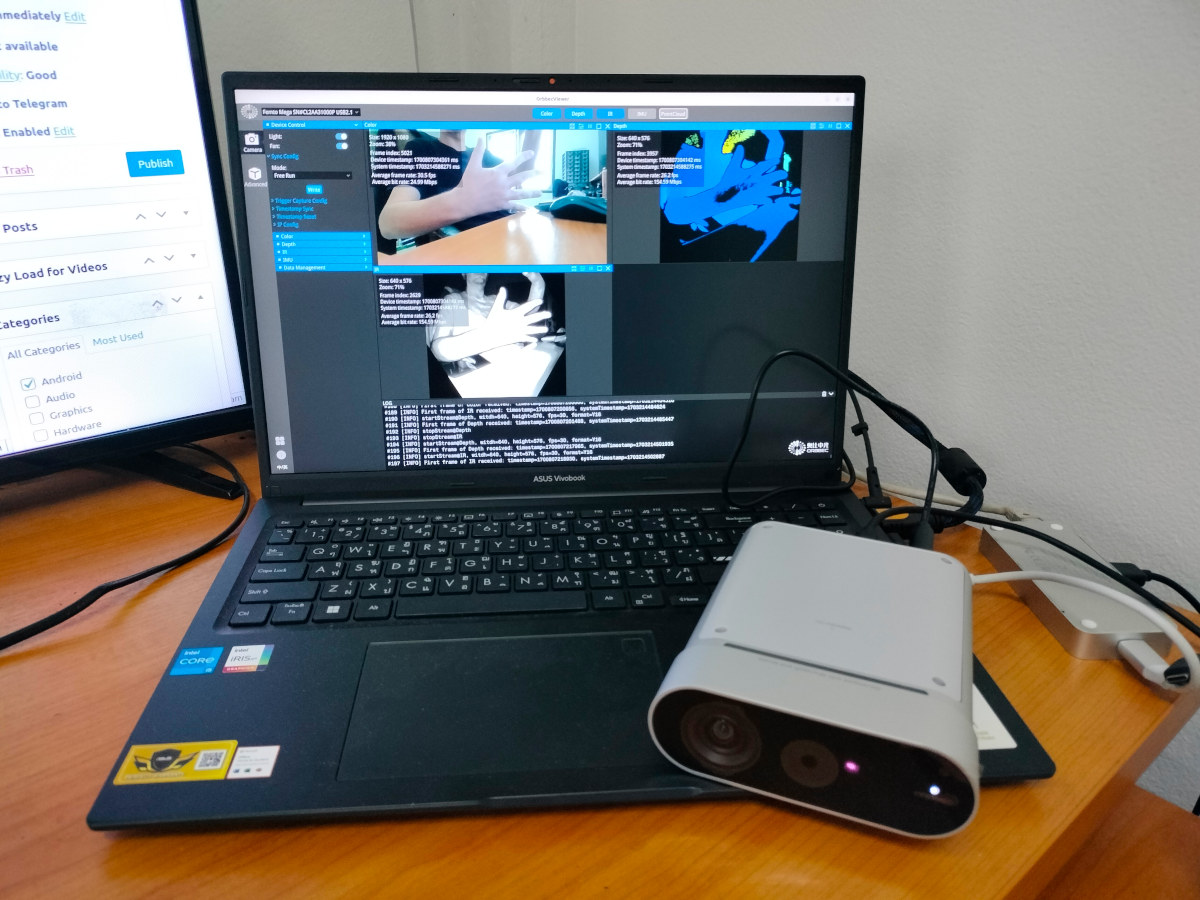
The second prize of Giveaway Week 2024 is the Orbbec Femto Mega 3D depth and 4K RGB camera powered by an NVIDIA Jetson Nano module and featuring Microsoft ToF technology found in Hololens and Azure Kinect DevKit. The camera connects to Windows or Linux host computers through USB or Ethernet and is supported by the Orbbec SDK with the NVIDIA Jetson Nano running depth vision algorithms to convert raw data to precise depth images. I first reviewed the Orbbec Femto Mega using the Orbbec Viewer for a quick test connected to an Ubuntu laptop (as shown above) before switching to a more complex demo using the Orbbec SDK for body tracking in Windows 11. Although it was satisfying once it worked, I struggled quite a lot to run the body tracking demo in Windows 11, so there’s a learning curve, and after you have this working, you’d still need to […]