
HackStar – An RP2040 or ESP32-S3-based USB hacking cable/dongle (Crowdfunding)

HackStar

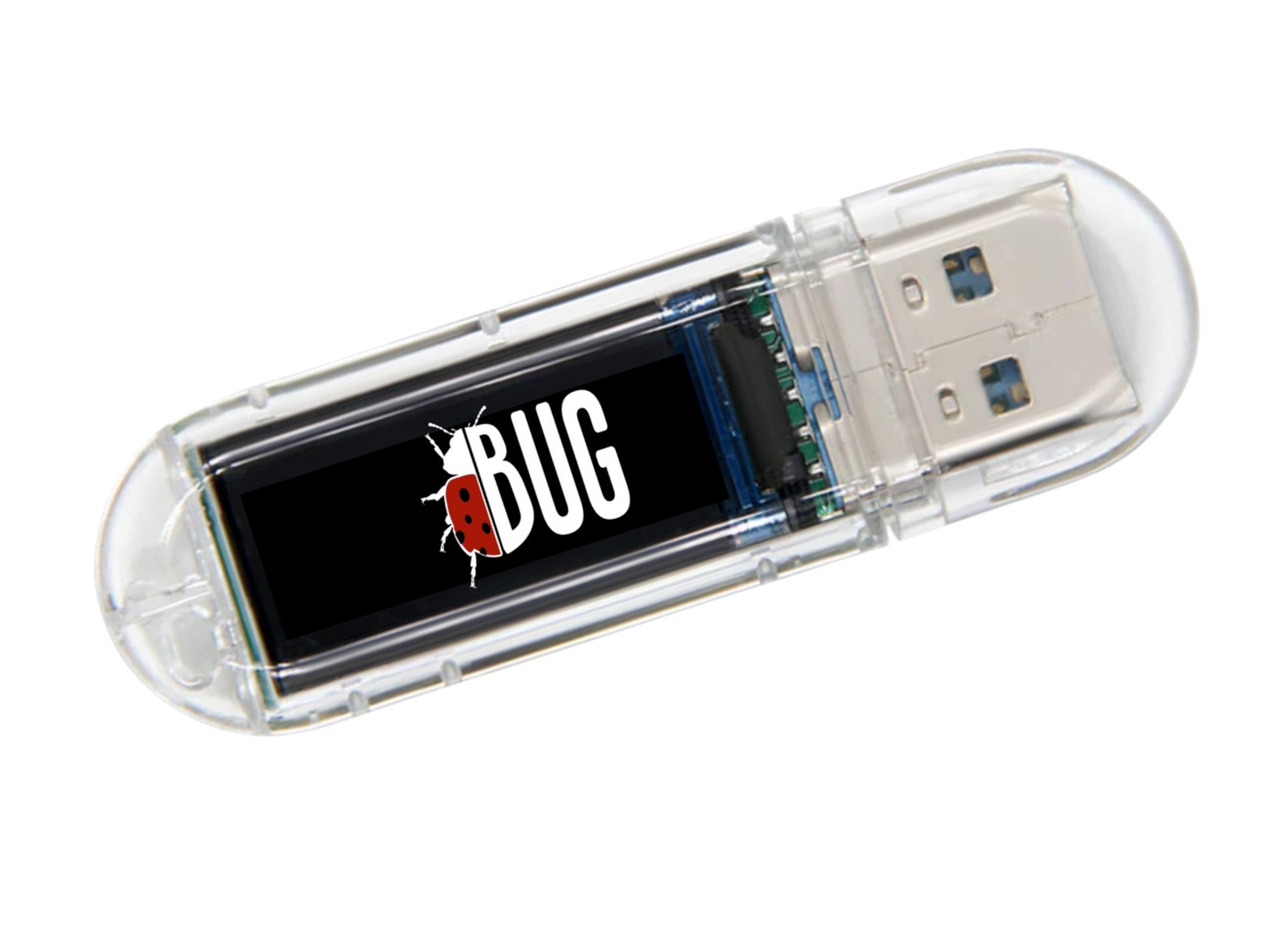
HackStar is an ethical hacking tool based on Raspberry Pi RP2040 or ESP32-S3 in a USB cable or dongle form factor for education, pentesters, and makers. While the email I received claimed the HackStar was the “first-ever production-ready ethical hacking product on Kickstarter”, we’ve written about a range of hacking devices based on ESP8266, ESP32, and/or RP2040 microcontroller(s) such as the popular Flipper Zero, the BUG USB stick, nRFBOX V2 ESP32 wireless hacking tool, ESP32 Marauder Double Barrel, HackyPi USB adapter, and many others. What’s relatively new, or at least less common (see HackCable project), here is that the HackStar is also available as a USB Type-A to USB Type-C WiFi hacking cable… HackStar Cable hardware specifications: Wireless SoC – Espressif Systems ESP32-S3 dual-core LX7 processor @ 240 MHz with 2.4 GHz WiFi 4 and Bluetooth LE/dual mode USB Type-A male connector USB Type-C male connector Length – TBD HackStar […]

pdsink – An open-source USB PD 3.2 sink stack for embedded devices

open-source USB PD Sink implementation for embedded devices

pdsink is an open-source USB Power Delivery (PD) 3.2 sink implementation for embedded devices released under an MIT license. Vitaly Puzrin noticed that most available USB PD stacks come with at least one hard constraint: vendor lock-in, NDA, no public sources, coupling to a specific OS or framework, incomplete sink feature set (e.g., no EPR), or difficulty extending to new Type-C Port Controller (TCPC)/MCU combinations. So he created pdsink is an attempt to provide a small, platform-agnostic, readable sink-only stack that’s easy to adapt to different controllers. pdsink highlights: USB PD 3.2, SPR (Extended Power Range), and EPR (Extended Power Range for 28V and up) support on the sink side. Platform-agnostic C++ core that does not depend on a specific HAL or RTOS. Reference implementation using OnSemi FUSB302B + FreeRTOS (ESP32-C3). MIT license enabling the project to be used in commercial products without conditions. pdsink can be found on any […]

FireBeetle 2 ESP32-C5 IoT development board offers GDI display interface, LiPo battery support

Firebeetle 2 ESP32-C5 IoT development board

Just the other day, I lamented the lack of options when it came to ESP32-C5 boards featuring dual-band WiFi 6 support. The FireBeetle 2 ESP32-C5 IoT development board made by DFRobot shows that I needed to be more patient… The ESP32-C5 board features 4MB flash, a USB-C port, a LiPo battery connector, and two GPIO headers for expansion, as well as a GDI display connector designed to add an SPI/I2C touchscreen display. The new RISC-V board has about the same features and form factor as the FireBeetle 2 ESP32-S3. It adds 5 GHz WiFi and an 802.15.4 radio for Zigbee, Thread, and Matter, but loses a camera connector, and comes with less memory and storage. FireBeetle 2 ESP32-C5 specifications: Wireless module –  ESP32-C5-WROOM-1-N4 SoC – Espressif Systems ESP32-C5 CPU Single-core 32-bit RISC-V processor @ up to 240 MHz Low-power RISC-V core @ 40 MHz acting as the main processor for […]

Windows 95 made to run on ESP32-S3 hardware with Tiny386 x86 PC emulator

Windows 95 on ESP32-S3 LCD board

He Chunhui (hchunhui) has developed the Tiny386 x86 PC emulator in C (C99) and managed to run Windows 3.1/3.2 and Windows 95 on an ESP32-S3 devkit with a 3.5-inch display. We had already seen Linux 5.0 boot on an ESP32 board, and Olimex ESP32-S3-DevKit-LiPo run a more recent Linux 6.3 image, but I think it might be the first time somebody has loaded Windows on ESP32 hardware. Bear in mind that since the Tiny386 is an emulator running SeaBIOS, it can also boot the Linux kernel directly. He Chunhui explains that the i386 CPU emulator is built from scratch and still lacks some features, such as debugging, hardware tasking, and certain permission checks. It also includes some 486 and 586 instructions to be able to boot a modern Linux kernel and Windows. The code is rather small as the CPU emulator is only about 6,000 lines of code (LOC) long, […]

Arduino Nesso N1 – An ESP32-C6 IoT wireless development kit with WiFi 6, BLE, 802.15.4, LoRa, and IR transmitter

Arduino Nesso N1

Arduino Nesso N1 is a new ESP32-C6 IoT development kit with not only 2.4 GHz WiFi 6, Bluetooth LE, and an 802.15.4 radio for Zigbee/Thread/Matter, but also a LoRa radio and an IR transmitter for smart home, industrial, and educational applications. Developed in collaboration with M5Stack, the Nesson N1 also features a 1.14-inch touchscreen display, a 6-axis motion sensor, a few LEDs and buttons, as well as Grove and Qwiic expansion connectors, and an 8-pin GPIO header. Nesso N1 specifications: SoC – Espressif Systems ESP32-C6 CPU Single-core 32-bit RISC-V clocked up to 160 MHz Low-power RISC-V core @ up to 20 MHz Memory/Storage – 320KB ROM, 512KB SRAM Wireless – 2.4 GHz WiFi 6, Bluetooth 5.3, and 802.15.4 radio for Thread/Zigbee Storage – 16MB NOR Flash Display – 1.14-inch touchscreen display with 240 x 135 resolution, 262K colors; ST7789P3 driver, FT6336U capacitive touch Wireless 2.4 GHz WiFi 6, BLE 5.3, Zigbee […]

Olimex ESP32-C5-Devkit-Lipo – A dual-band WiFi 6, BLE, and 802.15.4 IoT board with battery support, UEXT connector

Olimex ESP32-C5-DevKit-Lipo

Olimex ESP32-C5-Devkit-Lipo is a compact ESP32-C5 board with dual-band WiFi 6, Bluetooth LE, and a 802.15.4 radio for Zigbee, Thread, and Matter connectivity with support for LiPo battery for a charging circuit. It follows the company’s ESP32-C5-EVB board with isolated inputs and relays launched in September 2025, and offers a minimal design with two USB-C ports, a UEXT connector for expansion module, the usual breadboard-compatible GPIO headers, and not much else, which makes it ideal for space-constrained applications and prototyping. Olimex ESP32-C5-Devkit-Lipo specifications: Wireless module –  ESP32-C5-WROOM-N8R4 SoC – Espressif Systems ESP32-C5 CPU Single-core 32-bit RISC-V processor @ up to 240 MHz Low-power RISC-V core @ 40 MHz acting as the main processor for power-sensitive applications Memory – 384 KB SRAM on-chip, support for external PSRAM Storage – 320 KB ROM, support for external flash Connectivity Dual-band 802.11ax WiFi 6 in the 2.4GHz and 5 GHz bands, with 802.11b/g/n WiFi […]

Kode Dot – An easy-to-use, pocket-sized, battery-powered ESP32-S3 devkit (Crowdfunding)

Kode Dot motor control

Kode Dot is a pocket-sized ESP32-S3 maker device for prototyping with a built-in 2.13-inch AMOLED, a 500mAh battery, a 9-axis IMU, a microphone and a speaker, an RTC, a few buttons,  a GPIO header, and a magnetic connector for expansion. Kode Dot is designed to simplify the prototyping process. Users can still write code using the Arduino IDE, PlatformIO, or ESP-IDF framework and upload it via the kit’s USB-C port, but thanks to kodeOS firmware, each program becomes a standalone app with its own name, icon, and interface, accessible from the graphical user interface. Kode Dot specifications: SoC – Espressif Systems ESP32-S3 dual-core microcontroller with 2.4 GHz Wi-Fi, Bluetooth 5 LE, ESP-NOW peer-to-peer protocol System Memory – 8 MB octal PSRAM Storage 32 MB octal SPI flash microSD card slot Display – 2.13-inch Color AMOLED with 502 x 410 resolution Audio ICS-43434 MEMS microphone 1W MAX98357A speaker amp USB – […]

Giveaway Week 2025 winners announced!

CNX Software Giveaway Week 2025 Prizes

CNX Software’s Giveaway Week 2025 has just ended and we’ve now ready to announce the winners. We offered some of the review samples we tested, and three companies joined us offering new samples, namely Banana Pi with two router boards, VOIPAC with an industrial development kit, and RAKwireless offered two of their IoT development kits for the fifth year running. Besides the aforementioned prize, we also included an ESP32-P4 development kit, a dry switch from SONOFF, a Raspberry Pi CM4-based HMI with a 915MHz LoRa module, a 5-inch Raspberry Pi Touch Display, and two USB PD voltage indicators on both CNX Software “International” and CNX Software Thailand. You can see all prizes shown below. Without further ado, here are the seven winners of Giveaway Week 2025 on CNX Software (English): M5Stack M5Tab –  Ed, Canada Elecrow Pi Terminal – Tom, Finland Banana Pi BPI-R4 Lite router board – Stef, Belgium […]

Exit mobile version
Banana Pi BPI-R4 Pro networking SBC