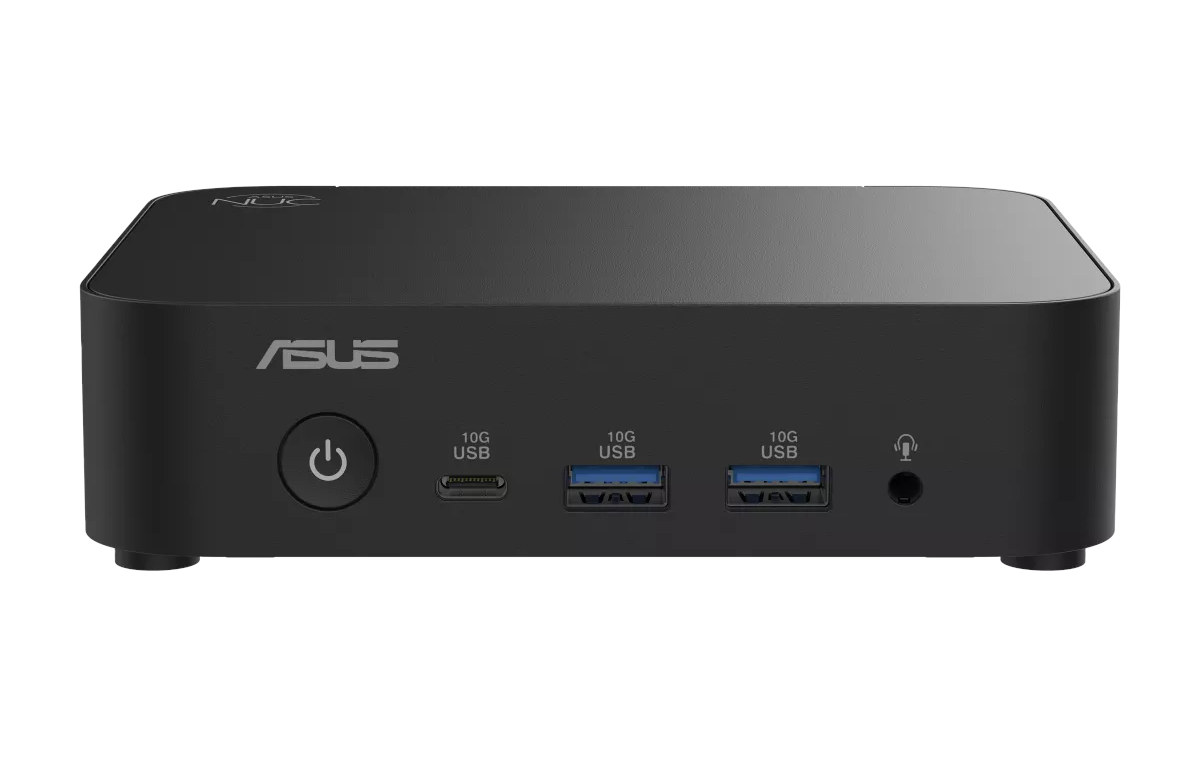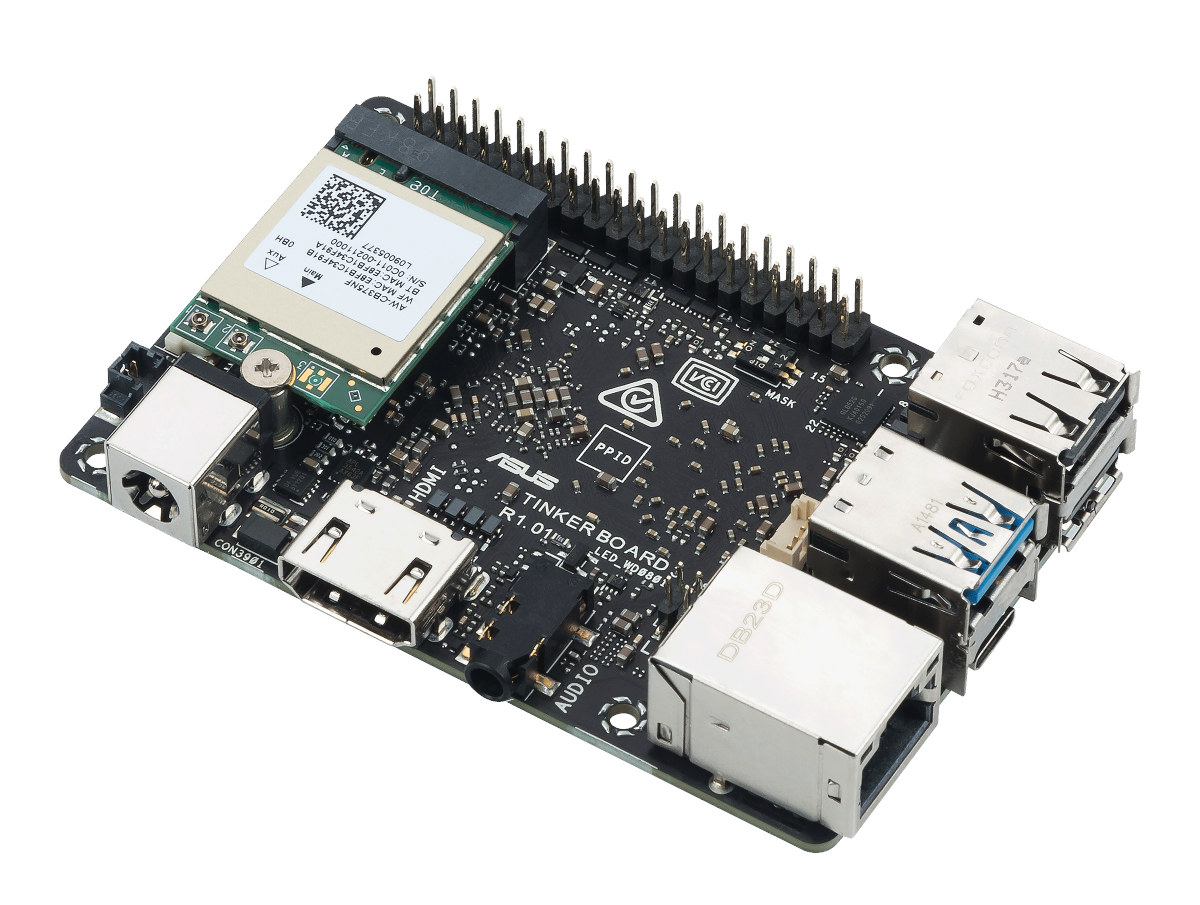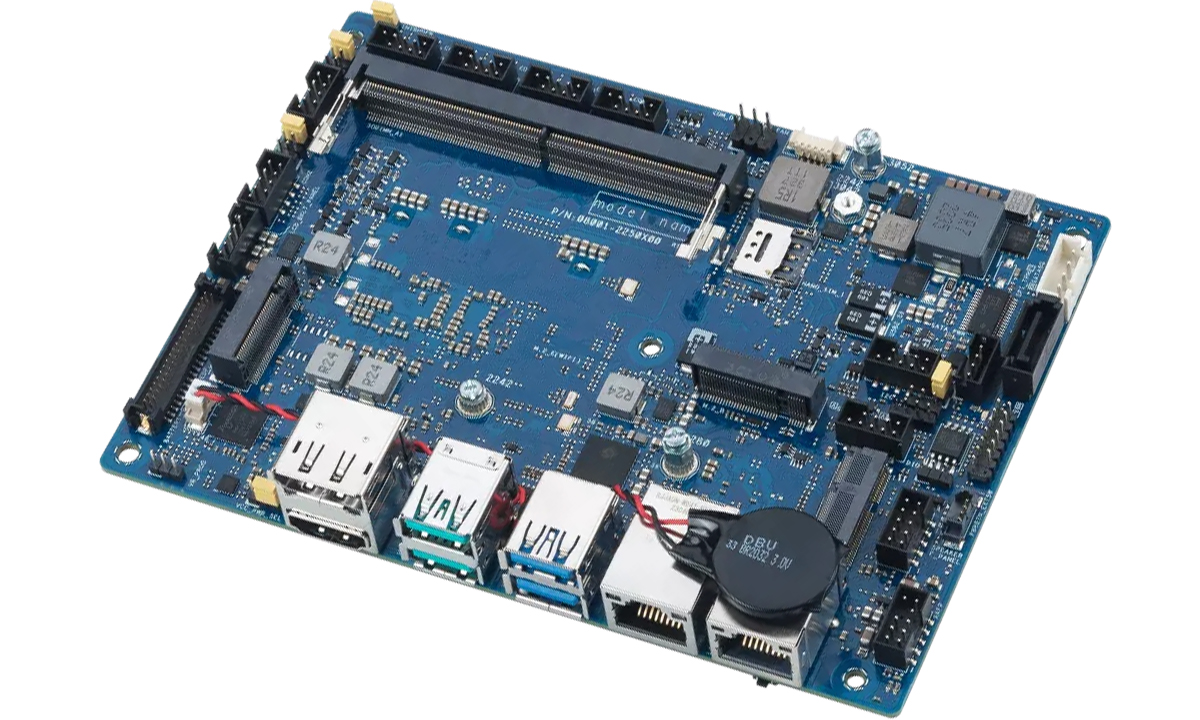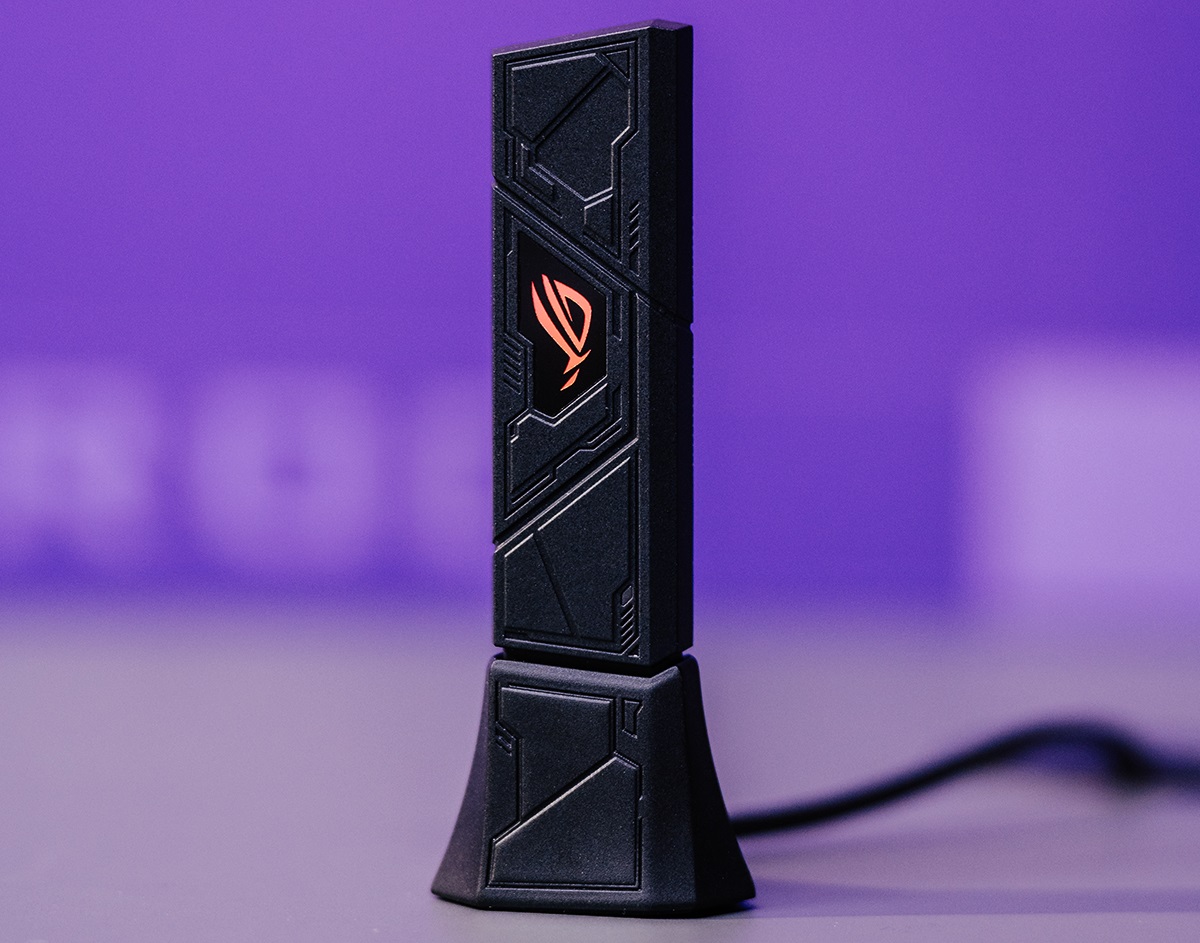
ASUS UGen300 USB AI accelerator features a 40 TOPS Hailo-10H AI processor and 8GB of LPDDR4 memory to support large language models (LLMs), vision language models (VLMs), and AI vision workloads while consuming less than 2.5 Watts. In some ways, the hardware is similar to the Raspberry Pi AI HAT+ 2, but in a slim dongle form factor (105 x 50 x 18mm) and a 10 Gbps USB 3.2 Gen1 USB-C Type-C port instead of a 5 or 8 GT/s PCIe interface. ASUS UGen300 USB AI accelerator (UGen300-USB-8G) specifications: AI accelerator – Hailo Hailo-10H delivering up to 40 TOPS (INT4) or 20 TOPS (INT8) inferencing performance Memory – 8GB LPDDR4 @ 4266 MT/s Host interface – USB 3.1 Gen2 (10 Gbps) Type-C port Power Supply – 5V via USB-C port Power Consumption – 2.5 Watts (typical) Dimensions – 105 x 50 x 18 mm Weight – 145 grams ASUS says the […]
Ubuntu Touch 24.04-2.0 updates Morph browser, adds notch and printing support, and more
UBPorts has announced the release of Ubuntu Touch 24.04-2.0 based on Ubuntu 24.04. It features an upgraded Morph Browser based on Chromium 134, supports smartphones with notches and rounded corners, a Widevine DRM installer, and more. Ubuntu Touch 24.04-2.0 highlights: Updated browser engine for Morph Browser from Chromium 87 to Chromium 134 for improved compatibility with websites and web applications Installer for Widevine DRM with the following note: Widevine installer is not endorsed by Google. UBports, Ubuntu Touch, or Morph Browser is not a licensed Widevine implementation. Extracting Widevine from another source is considered by some to be in legally grey area. You are responsible for your usage of Widevine installer. Support for notches and rounded corners; currently configured on Fairphone 4 and 5, all Volla devices, and several community devices Screenshot editor allowing users to crop, rotate, and adjust color; this can be disabled by the user Ubuntu Touch […]
Linux 7.1 Release – Main changes, Arm, RISC-V, and MIPS architectures
Linus Torvalds has just released Linux 7.1 on LKML: So it’s only Sunday morning back home, but it’s Sunday afternoon where I am right now, so I’m doing the 7.1 release at the regular time – just not in the regular timezone. This obviously means that the merge window opens tomorrow, but I’ll be in yet another timezone by then, so timing will all be a bit irregular. Normally I try to front-load the merge window and do as much as possible the first few days – this time I’m not sure that will work out with my laptop and a couple of long flights without internet, but I’ve made sure that I have fetched the early pull requests (thank you – you know who you are), so I will be able to do some of it off-line. Anyway, possible slight hiccups in the merge window aside, the news today […]
ASUS Zenbook A16 – A $1699 Qualcomm Snapdragon X2 Elite Extreme CoPilot+ laptop
ASUS Zenbook A16 is one of the first Copilot+ PCs/laptops based on the Qualcomm Snapdragon X2 Elite Extreme 18-core Armv9 SoC and is now available for $1,699 on BestBuy or $1,999 on the ASUS website. The laptop features a 16-inch “3K” OLED with touchscreen, 48GB of RAM, a 1TB NVMe SSD, HDMI 2.1 video output, WiFi 7 and Bluetooth connectivity, and a few Thunderbolt and USB ports. ASUS Zenbook A16 (UX3607) specifications: SoC – Snapdragon X2 Elite Extreme (X2E-96-100) CPU – 18x Armv9 cores with 12 Prime cores up to 5.0 GHz (single/dual core) / 4.4 GHz (multicore), and 6 Efficiency cores up to 3.6 GHz GPU – Adreno X2-90 @ 1.85 GHz with support for DirectX 12.2 Ultimate, Vulkan 1.4, OpenCL 3.0 VPU Encode: HEVC, AVC: Dual 8K UHD @ 30 FPS, AV1: 8K UHD @ 15 FPS, UHD @ 60 FPS Decode: AV1, HEVC, AVC: Dual 8K @ 60 […]
MediaTek MT7902 wireless chipset finally gets a Linux driver
MediaTek MT7902 wireless modules are used in many Windows laptops, but so far, a Linux driver has been missing. This is about to change, as Mediatek has finally committed a patchset for MT7902 to the mainline Linux mailing list. This is personal. I bought an ASUS Vivobook 16 in August 2023, and Ubuntu 22.04 worked pretty well out of the box, except for support for the Wi-Fi 6E and Bluetooth module, detected as “Network controller: MEDIATEK Corp. Device 7902” with lscpi but without working drivers. Since then, I’ve been using the laptop connected to the USB dock with Ethernet support when at home, or using USB tethering with my phone when on the road. I initially thought it might just be a matter of time before the driver is ported to Linux, but it took well over two years. I was far from being alone in my ordeal, and you […]
AsteroidOS 2.0 open-source smartwatch OS released, now supports around 30 devices
AsteroidOS 2.0 Linux-based, open-source smartwatch operating system has just been released with features such as always-on display support, Tilt-to-Wake, a customizable QuickPanel, multiple launcher styles, Nightstand mode, performance improvements, and support for about 30 devices. It’s been a long journey. We first noted the open-source project in 2016 when Florent Revest showcased a basic user experience on the LG G Watch, just before giving a talk at FOSDEM 2016 introducing AsteroidOS. This was followed by the launch of the Connect Watch (crowdfunded) AsteroidOS smartwatch in 2017 by a French company (which didn’t get funded), and AsteroidOS 1.0 was released in 2018. So it’s been ten years since it all started, and the developers have now released AsteroidOS 2.0. AsteroidOS 2.0 highlights: New features Always-on Display, Tilt-to-wake, Palm-to-sleep Heart rate monitor app Initial step counting support Music volume control Compass support Support for Bluetooth HID and Audio Design, Usability, and App Improvements […]
Linux 6.19 Release – Main changes, Arm, RISC-V, and MIPS architectures
Linus Torvalds has just released Linux 6.19 on the Linux Kernel Mailing List (LKML): No big surprises anywhere last week, so 6.19 is out as expected – just as the US prepares to come to a complete standstill later today watching the latest batch of televised commercials. The betting man would expect them all to be AI-generated, but maybe some enterprising company decides to buck the trend? Doubtful, but there’s always a slight chance. But for anybody outside the US, maybe taking the newest kernel out for a spin instead is an option? I have more than three dozen pull requests for when the merge window opens tomorrow – thank you to all the early maintainers. And as people have mostly figured out, I’m getting to the point where I’m being confused by large numbers (almost running out of fingers and toes again), so the next kernel is going to […]
Compact, fanless DIN-Rail Intel Core Ultra 5 235U/7 265U industrial PC targets AMR, robotics, and computer vision
ASUS IoT PE1000U is a compact (160 x 110 x 63 mm) fanless DIN-rail industrial Edge AI PC powered by an Intel Core Ultra 5 235U/ 7 265U (Series 2) processor and designed for AMR (Autonomous Mobile Robots), robotics, and computer vision applications. Housed in a fanless, MIL-STD-810H-rated, rugged IP40-rated chassis, the PE1000U supports SO-DIMM DDR5 memory, SATA and NVMe storage, features two 2.5GbE RJ45 ports, four USB ports, four COM ports, onboard CAN Bus and DIO interfaces, as well as DisplayPort and HDMI outputs for dual 4K display setups for HMI or machine-vision monitoring. As an industrial computer, it accepts a wide 9-36V DC power input, includes built-in ignition control, and can operate in environments with temperatures ranging between -25°C and 70°C. ASUS IoT PE1000U specifications: Arrow Lake SoC (one or the other) Intel Core Ultra 5 235U CPU – 12-core (2P+8E+2LPE) / 14 threads processor @ 2.0 GHz […]