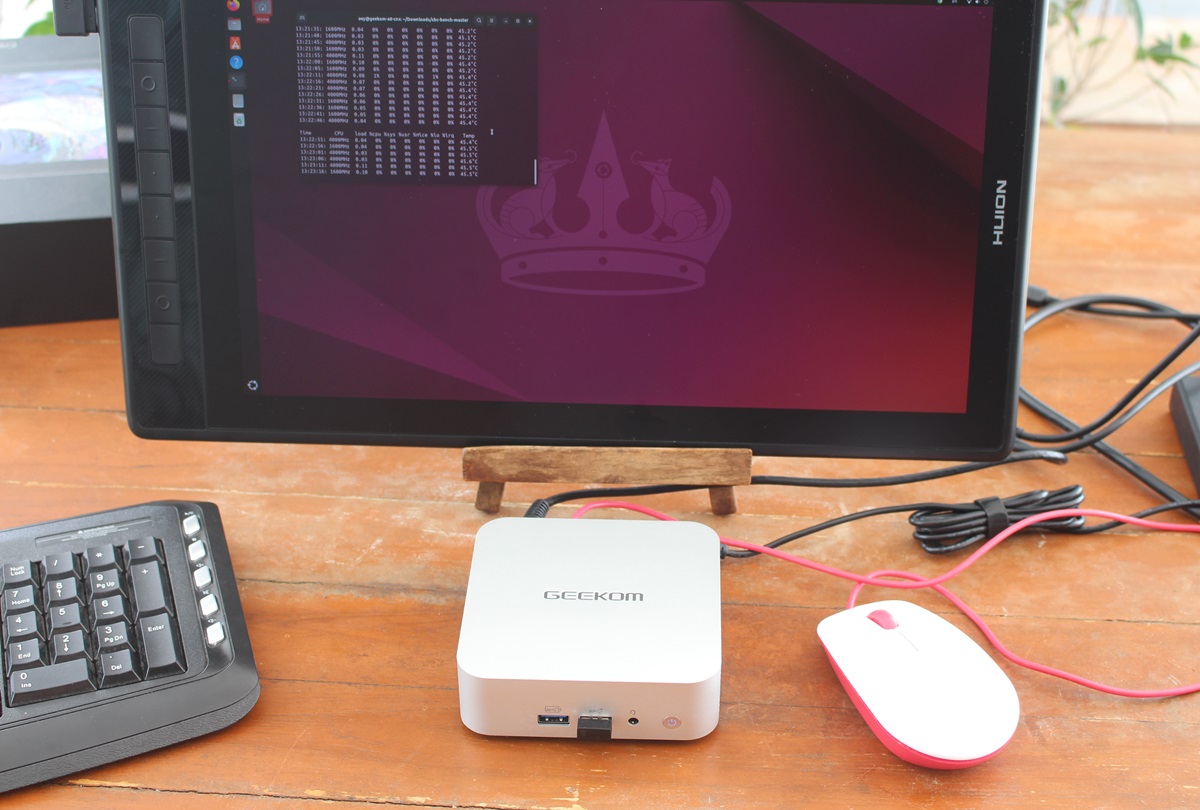
MediaTek MT7902 wireless modules are used in many Windows laptops, but so far, a Linux driver has been missing. This is about to change, as Mediatek has finally committed a patchset for MT7902 to the mainline Linux mailing list. This is personal. I bought an ASUS Vivobook 16 in August 2023, and Ubuntu 22.04 worked pretty well out of the box, except for support for the Wi-Fi 6E and Bluetooth module, detected as “Network controller: MEDIATEK Corp. Device 7902” with lscpi but without working drivers. Since then, I’ve been using the laptop connected to the USB dock with Ethernet support when at home, or using USB tethering with my phone when on the road. I initially thought it might just be a matter of time before the driver is ported to Linux, but it took well over two years. I was far from being alone in my ordeal, and you […]
LR2021 LoRa Plus board combines Semtech LR2021 and Nordic nRF54L15 for high-speed FLRC and LoRa connectivity
Last year, Semtech released the LR2021 LoRa Plus transceiver chip, designed to address the low data-rate issue associated with LoRa, but surprisingly, they didn’t release a development board for the chip. Now, almost a year later, Seeed Studio and Semtech have partnered to introduce the LR2021 LoRa Plus development kit targeting long-range high-speed LoRa and FLRC applications up to 2.6 Mbps. Not only does the board support LoRa Gen 4 technology, providing Sub-GHz, 2.4 GHz ISM, and S/L-band operation, but a XIAO nRF54L15 board also adds dual-core processing (Arm Cortex-M33 + RISC-V) and supports other short-range protocols, including NFC, Bluetooth LE 6.0, Matter, Thread, and 2.4 GHz proprietary protocols. The development board also features a 0.96-inch 128×64 OLED, three Grove connectors for expansion, a USB Type-C for power, SWD debugging, and two Sub-GHz and 2.4 GHz SMA connectors. It is compatible with Arduino Uno, STM32 Nucleo, and Nordic DK boards. […]
Open Stack standalone 4G LTE IoT board runs RTOS on Quectel EC200U LTE module (Crowdfunding)
Open Stack is a standalone 4G LTE IoT connectivity board designed to run RTOS-based C applications directly on the Quectel EC200U series LTE module, meaning you don’t need an external MCU like Arduino, ESP32, or Raspberry Pi. By removing the MCU, the board reduces power consumption, bill-of-materials (BOM) cost, and physical footprint. The board supports multi-band LTE with GSM fallback, GNSS, and Bluetooth 4.2, as well as IPv4/IPv6 client and server modes. It also includes a USB Type-C port, a Nano SIM card slot, LTE/GNSS/BLE antenna connectors, an OLED information display, status LEDs, control buttons, and a 40-pin Raspberry Pi HAT-compatible GPIO header. Networking support includes TCP/UDP, SSL/TLS, HTTP/HTTPS, MQTT, LwM2M, CoAP, FTP/FTPS, and PPP, making it suitable for asset tracking, industrial monitoring, BLE-to-LTE gateways, remote infrastructure, and always-connected IoT deployments without additional controller hardware. Open Stack specifications: Cellular Module – Quectel EC200U-CN series (EC200UCNAA-N05-SGNSA) module Cellular Connectivity: LTE FDD […]
Add a tiny desktop monitor to your PC with the ESP32 Desktop Monitor project
While searching AliExpress for new products, I found the TENSTAR T-Display ESP32-D0WD with a 1.14-inch IPS color IPS LCD and 16MB of QSPI flash that’s used by some as a tiny secondary mirrored monitor for their PC. The board appears to be a low-cost alternative to the original LilyGo T-Display, and also integrates a USB-to-TTL converter (CH9102F), a battery charging circuit, a toggle switch, and two user-programmable buttons, which makes it suitable for projects like the NerdMiner and small-scale dashboards for home automation. The hardware does not seem special, yet they sold over 10,000 pieces of the board. After looking into it, the ESP32 Desktop Monitor project is probably the “culprit” for the high sales number, as it transforms the board into a regular monitor, albeit with a tiny 1.14-inch LCD. More on that after the specifications. TENSTAR T-Display Specifications: SoC – Espressif Systems ESP32-D0WDQ6-V3 MCU cores – Dual-core Xtensa LX6 32-bit […]
86-type Smart Home control panel features a 3.5-inch display, physical buttons, Bluetooth SIG Mesh gateway
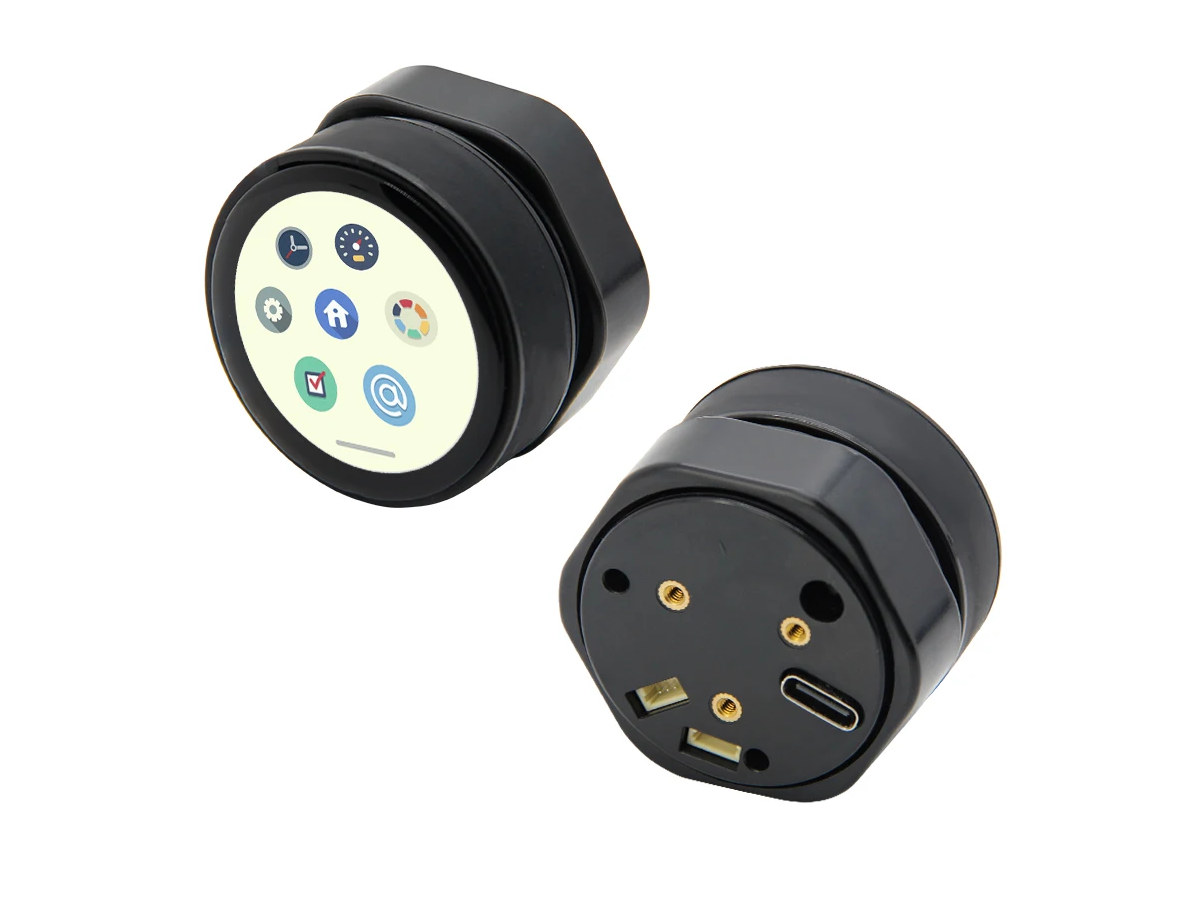
The Tuya WiFi 3.5-inch Smart Center Control Panel (CCP-S05) is designed to replace traditional 86-type switches while adding a Bluetooth SIG Mesh gateway, a touchscreen interface, and three buttons for smart homes, apartments, and small commercial spaces. Compared to other 86-type control panels such as the Luckfox-Pico-86-Panel, Dusun DSGW-130, and Waveshare’s ESP32-P4 Smart 86 Box, the Tuya device follows a hybrid approach, combining a capacitive touchscreen with three physical buttons for instant local control. Tuya WiFi 3.5-inch Smart Center Control Panel (CCP-S05) specifications: SoC – Unknown (potentially based on Allwinner F1C100s ARM9 application processor, slightly more powerful Rockchip or Allwinner SoC) Display – 3.5-inch capacitive touchscreen Audio – Built-in microphone and speaker Networking Wi-Fi (2.4 GHz) Bluetooth Mesh USB – USB Type-C port for debugging only Relays – 3x independent relay channels (200 W per channel max 600W) Misc 3x programmable physical buttons Reset button (on the bottom side) RTC […]
ACEBOTT QD023 ESP32-based gesture control glove tracks finger movements with potentiometers
ACEBOTT QD023 is an ESP32-based wearable gesture control glove that tracks finger movements with potentiometers instead of more traditional flex sensors. The glove transmits data via Bluetooth Low Energy (BLE) to control various robotics kits, such as bipedal walkers, mecanum-wheeled cars, and robotic arms. The glove integrates five potentiometers for finger bending detection, and a 6-axis MPU6050 IMU for wrist rotation, tilt, and hand posture detection in real time. Other Hardware features include a USB Type-C port for programming and debugging, four AAA batteries for power, buttons, LEDs, and more. Tutorials and assembly guides make it suitable for K-12 education, classrooms, and hobbyist robotics projects. ACEBOTT QD023 specifications: Wireless Module – ESP32-WROOM-32D (soldered on the backside of the PCB) SoC – ESP32 dual-core wireless microcontroller CPU – Dual-core Xtensa 32-bit microprocessor @ 240MHz Memory – 520KB internal SRAM Wireless – Wi-Fi 802.11b/g/n, and Bluetooth (4.2 and BLE) PCB antenna USB – […]
Infineon AIROC ACW741x Wi-Fi 7 ultra-low power tri-radio IoT SoC family support MLO, Wi-Fi sensing, BLE 6.0, and Thread
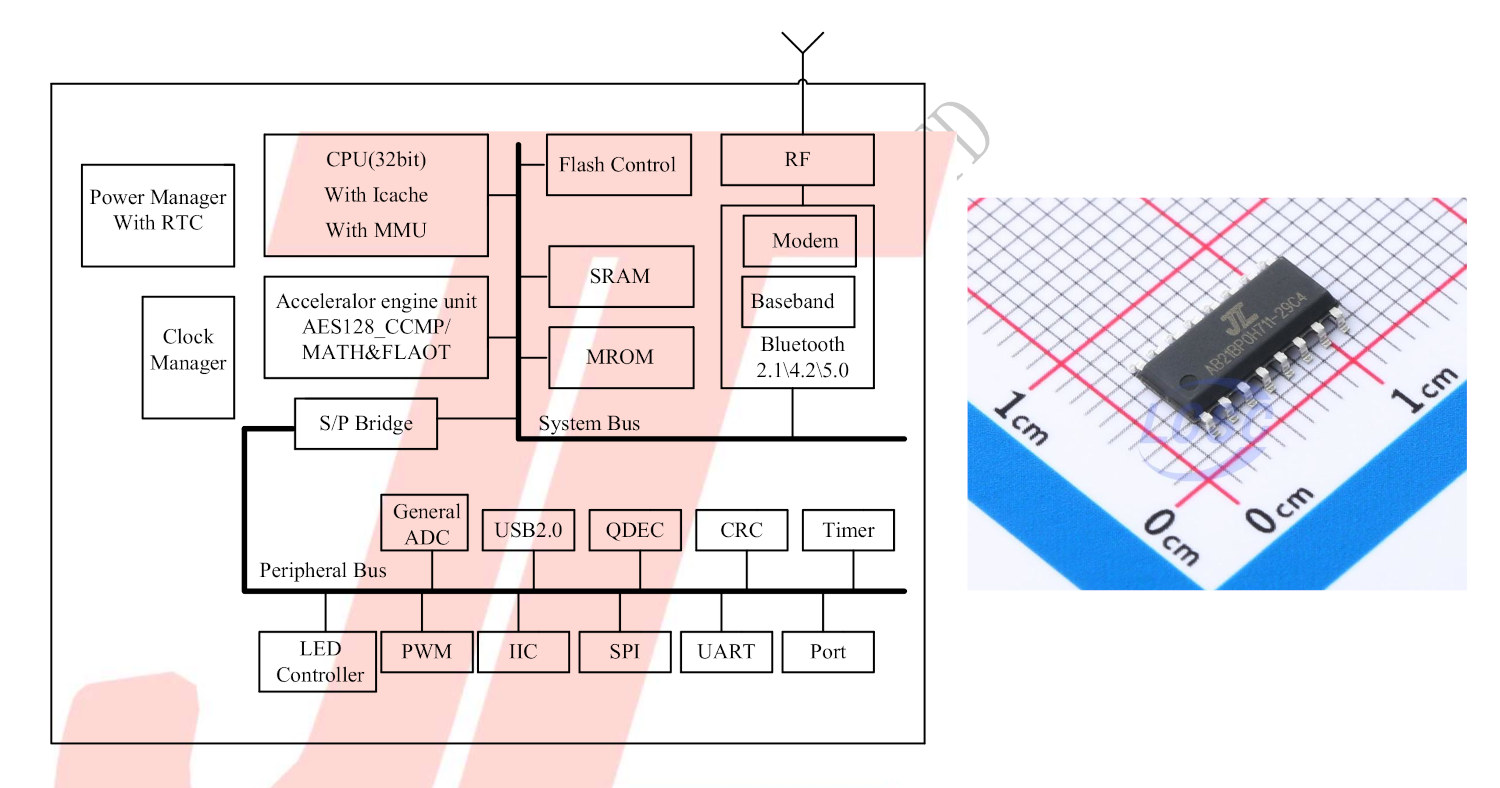
Infineon has introduced the AIROC ACW741x tri-radio Wi-Fi 7 wireless SoC family designed for IoT and smart home devices. The company mentions it’s the first Wi-Fi 7 solution with a “20 MHz” 1×1 Wi-Fi 7 radio, Bluetooth 6.0 (including Channel Sounding), and an 802.15.4 radio for Thread and Matter support, in a 7×7 mm QFN package. When we think of Wi-Fi 7 (802.11be), we usually picture high-end routers and smartphones with gigabits of data over the huge 320 MHz channels. But the standard also includes features specifically designed for low-power IoT devices. Infineon’s new AIROC ACW741x family, which they claim is the “industry’s first” Wi-Fi 7 SoC specifically optimized for IoT applications, including smart home, battery-powered sensors, access control systems, asset tracking, video doorbells, IP cameras, smart locks, thermostats, and other always-connected devices requiring secure, low-power wireless connectivity. Infineon AIROC ACW741x specifications : Wireless Connectivity Wi-Fi 7 (802.11be) 1×1 SISO, […]
M5MonsterC5 hacking tool adds ESP32-C5 and 5 GHz Wi-Fi 6 support to M5Stack Cardputer ADV and Tab5
Developed by Laboratorium in Poland, the M5MonsterC5 is an ESP32-C5-based “Marauder” hacking tool designed to work with M5Stack Cardputer ADV or M5Stack Tab5. It gets connected to the Cardputer ADV or Tab5 via a Grove connector and runs JanOS and Project Zero for wireless security research, experimentation, and rapid prototyping with minimal setup. Built around the ESP32-C5, the device supports dual-band Wi-Fi 6 (2.4/5-GHz) and 802.15.4 (Thread/Zigbee) to the M5Stack devices. Key features include multi-channel deauthentication with 5 GHz support, Evil Twin and phishing captive portals, WPA3 SAE overflow attacks, wardriving with GPS logging and WiGLE-compatible exports, passive sniffing, Karma attacks, whitelist management, and persistent “blackout” modes. The platform uses a two-stage web-based flashing process (JanOS on the Monster board and a Cardputer app flasher), offers microSD card and optional GPS support, and is intended strictly for authorized Wi-Fi auditing, offensive security research, and educational use under the Project Zero […]