cpu News - CNX Software - Embedded Systems News

VEGA AS2161 “DHRUV64” – A 1GHz dual-core 64-bit RISC-V microprocessor designed in India

VEGA AS2161 block diagram

The Government of India has been investing to spur up its semiconductor design and manufacturing industry at least since 2018/2019 with the SHAKTI and AJIT microprocessors. In 2022, they decided to focus on the RISC-V architecture with the VEGA processor family, starting with the THEJAS32 (VEGA ET1031) and THEJAS64 (VEGA AS1061) microprocessors, and the former was eventually found in the ARIES v3.0 Arduino UNO-inspired development board. Things continue to progress nicely, albeit slowly, and the government has now announced the launch of the DHRUV64 (VEGA AS2161) dual-core 64-bit RISC-V MPU clocked at 1 GHz and supporting Linux, which it describes as “a fully indigenous microprocessor developed by the Centre for Development of Advanced Computing (C-DAC) under the Microprocessor Development Programme (MDP)”. VEGA AS2161 (DHRUV64) specifications highlights: Architecture – RISC-V 64G (RV64IMAFD) Instruction Set 13-16 stage out-of-order pipeline implementation. Advanced branch predictor – BTB, BHT, RAS. Harvard architecture, separate Instruction and […]

5 Ways Embedded AI Processors are Revolutionizing Device Performance (Sponsored)

Synaptics Astra

Artificial intelligence (AI) is moving from cloud-first architectures to edge-first designs, so more processing now runs on phones, cameras, and embedded controllers. Running inference on-device cuts latency and keeps sensitive data local. This momentum is reshaping product roadmaps, all due to different revolutions driven by edge AI. The Core Revolutions Driven by Edge AI Instead of routing every model and signal to the cloud, devices are processing more data locally to act faster and protect sensitive information. Because edge AI is changing where intelligence runs, IDC estimates global spending on edge computing reached about $261 billion in 2025. This rapid enterprise investment is due to several reasons. 1. Enabling Real-Time, On-Device Decisions Eliminating the cloud round-trip lets devices turn sensor input into action in milliseconds. This capability is essential for industrial automation and control loops because embedded AI processors run optimized models on-device, so decisions happen continuously. 2. Strengthening Privacy […]

Arm introduces Lumex platform with SME2-enabled C1 CPU for Edge AI, Mali-G1 GPU

Arm Lumex C1-Ultra Mali G1-Ultra

Arm Lumex CSS (Compute SubSystem) platform for mobile devices combines high-performance Arm C1 CPUs with Scalable Matrix Extension version 2 (SME2) and Mali-G1 GPUs to enable real-time on-device AI use cases like assistants, voice translation, and personalization. Lumex is part of Arm’s new product naming architecture announced last May, and targets specifically mobile devices. Arm says SME2-enabled Arm CPUs can deliver up to 5x faster AI performance, 4.7x lower latency for speech-based workloads, and 2.8x faster audio generation. Lumex components: Next-generation SME2-enabled Armv9.3 CPU cluster: C1-Ultra for flagship peak performance with +25% single-thread performance vs Cortex-X925; suitable for large-model inference, computational photography, content creation, generative AI C1-Premium with C1-Ultra performance, but greater area efficiency (35% smaller area than C1-Ultra); suitable for sub-flagship mobile segments, voice assistants, multitasking C1-Pro for sustained efficiency; +16% sustained performance vs Cortex-A725; ideal for video playback, streaming inference C1-Nano for maximum efficiency, smaller area for wearables, […]

Three high-performance RISC-V processors to watch in H2 2025: UltraRISC UR-DP1000, Zhihe A210, and SpacemIT K3

UR-DP1000 Block Diagram

Some high-performance RISC-V processors are in the pipeline for the rest of the year 2025, namely UltraRISC UR-DP1000, Zhihe A210, and SpacemIT K3. We currently have limited information about each of those processors, but let’s see what information we can gather from the web, mostly as a result of the recent RISC-V Summit in China. UltraRISC UR-DP1000  – Octa-core 64-bit RISC-V SoC The first SoC is the UR-DP1000 octa-core from UltraRISC (the website loads slowly, and I could not find anything about the UR-DP1000 there). It will be used in Shenzhen Milk-V Technology’s Titan mini-ITX motherboard, and Sipeed also posted the slide above on X. Preliminary UR-RP1000 specifications: CPU 8x 64-bit RISC-V UR-CP100 “RV64GCBHX” cores up to 2.0 GHz Two 4x core cluster design with 4MB L3 cache each, and a total of 16MB cache. SPECCPU2006 single-core INT @ 10.4/GHz; single-core FP @ 12/GHz Fully RVA22 compliant, and “Compliant with […]

Rockchip unveils RK3668 10-core Arm Cortex-A730/Cortex-A530 SoC with 16 TOPS NPU, RK182X LLM/VLM co-processor

Rockchip RK3668

The Rockchip Developer Conference 2025 (RKDC!2025) is now taking place in Fuzhou, China, with some interesting announcements such as the Rockchip RK3668 10-core Arm Cortex-A730/A530 processor with a 16 TOPS NPU and the RK182X RISC-V co-processor with support for up to 7B parameters LLM (large Language Model)or VLM (Vision Language Model). Rochchip RK3668 10-core Armv9 SoC Let’s have a look at the Rockchip RK3668 SoC, which looks quite similar to the RK3688 SoC unveiled last year, but with some differences. Preliminary Rockchip RK3668 specifications: CPU – 4x Cortex-A730 + 6x Cortex-A530 Armv9.3 cores delivering around 200K DMIPS; note: neither core has been announced by Arm yet GPU – Arm Magni GPU delivering up to 1-1.5 TFLOPS of performance AI accelerator – 16 TOPS RKNN-P3 NPU VPU – 8K 60 FPS video decoder ISP – AI-enhanced ISP supporting up to 8K @ 30 FPS Memory – LPDDR5/5x/6 up to 100 GB/s […]

iBASE IB996 full-size PICMG 1.3 CPU card features Intel Q670E chipset, supports 12th to 14th Gen Intel Core desktop processors

iBASE IB996 CPU Card

The iBASE IB996 full-size PICMG 1.3 CPU card, built on the Intel Q670E chipset, supports 12th to 14th Gen Intel Core desktop processors. It is designed for industrial and embedded applications with dual 2.5GbE LAN, DDR5 support, and extensive I/O options including PCI and PCIe x16 interfaces. We haven’t covered this type of card on CNX Software before, so some basic explanations are needed. PICMG 1.3, or SHB Express, is an industrial standard for System Host Boards (SHBs) supporting PCIe, PCI, and PCI-X interfaces first ratified in 2005 (PCIMG 1.0). It uses a backplane to separate the processing unit from I/O, enabling modular design and easy integration. Commonly used in industrial automation, medical systems, and embedded computing, it ensures compatibility and scalability for high-performance applications. iBASE IB996 CPU card specifications: Supported SoC – 14th, 13th, and 12th Gen Intel Core i9/i7/i5/i3 desktop processors (LGA1700 socket) based on the Raptor Lake-S […]

Qualcomm Snapdragon X Plus 8-core – A 4 GHz octa-core processor for entry-level Copilot+ PCs and laptops
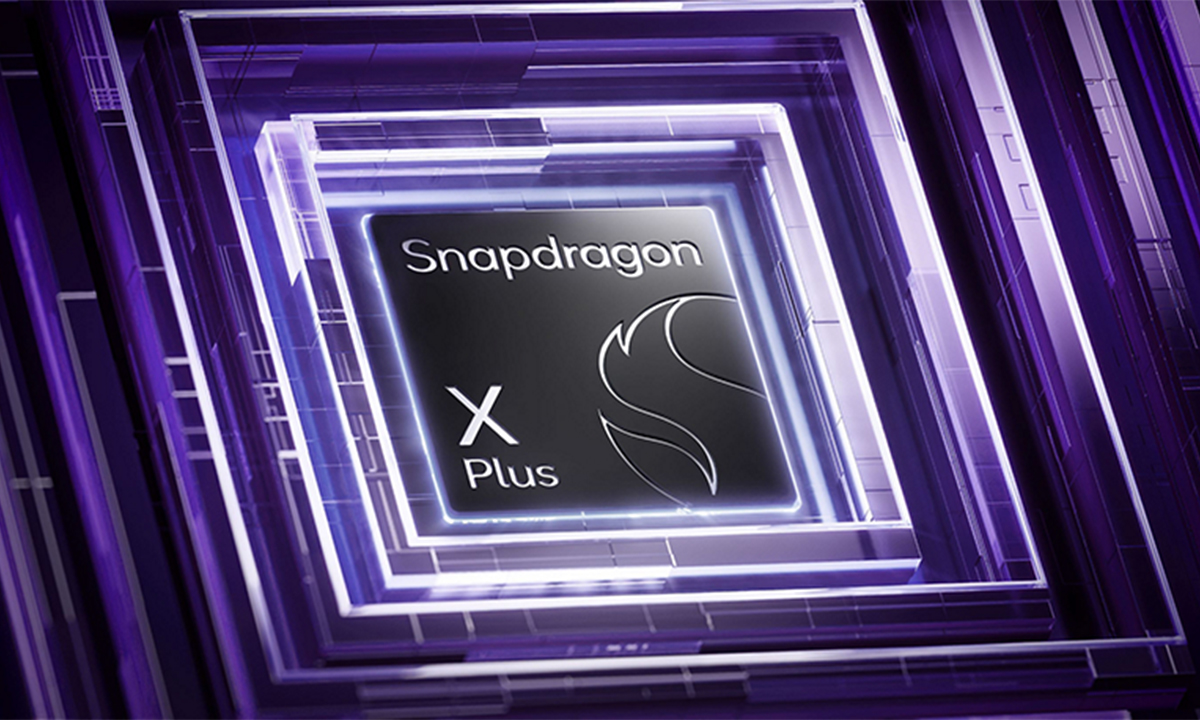
Snapdragon X Plus

Qualcomm’s Snapdragon X line of ARM-based processors is designed for Windows laptops, offering CPUs capable of competing with Intel and AMD processors. The Snapdragon X Plus (10 core) and Snapdragon X Elite, announced last year, include high-performance NPUs for AI processing. Qualcomm has now introduced the entry-level Snapdragon X Plus 8-core processor, targeting the $700 to $900 laptop market instead of the ~$1,300+ asked for something like the Microsoft Surface Laptop 15. It reduces CPU and graphics performance while maintaining the same AI features as the higher-end models. The Qualcomm Snapdragon X Plus lineup includes two octa-core processors: the X1P-46-100 and X1P-42-100, both built on a 4nm process. These processors come with eight Oryon CPU cores, clocked at 4GHz and 3.4GHz respectively, and are equipped with the Qualcomm Hexagon NPU, delivering 45 TOPS for AI tasks like Copilot+ PC. They also integrate Qualcomm Adreno GPUs offering 2.1 TFLOPS for the […]

SiFive announces Essential Gen4 RISC-V CPUs for embedded applications

SiFive Essential Gen4 RISC-V CPU IP

As the RISC-V Summit Europe 2024 is underway, SiFive has announced the fourth generation of its “Essential” RISC-V CPUs (Essential Gen4) with improved power efficiency and more flexible interfaces for SoCs used in embedded devices. The update covers 32-bit and 64-bit RISC-V cores including the U6 and U7-series 64-bit application processors, the S2, S6, and S7 64-bit real-time embedded processors, and the E2, E6, and E7 32-bit real-time embedded processors. Essential Gen4 IP keys features: Up to 40% runtime power reduction 8x different baseline embedded 32-bit and 64-bit cores From 2-stage single-issue to 8-stage superscalar Improved L2 cache and enhanced L1 memory Configuration and integration options CPU type, profile, and options On-chip memories selection System, peripheral, and front ports Advanced power management and security Debug and trace Software support includes embedded Linux and FreeRTOS operating systems and Eclipse-based IDE for C/C++ development. That’s another low-quality, light-on technical details announcement from […]