
LILYGO T-Echo Card – A weatherproof, solar-powered, nRF52840-based LoRa + GPS development kit

LILYGO T-Echo Card

LILYGO T-Echo Card is a thin development kit based on Nordic Semi nRF52840 wireless MCU and a Semtech SX1262 LoRa transceiver with a solar panel for charging an 800 mAh battery. It supports Bluetooth 5, NFC, Bluetooth Mesh, ANT, 802.15.4 (Zigbee/Thread), LoRaWAN, and GNSS (L76K module) connectivity. The board also features a 0.42-inch OLED information display, a magnetic USB interface, a 9-axis motion sensor, a digital microphone, a speaker, and an RGB LED for status/notifications. It’s mainly useful for off-grid communication (text and audio), GNSS location sharing, personal/asset tracking, and as a compact mesh network node. T-Echo Card specifications: SoC – Nordic Semiconductor nRF52840 CPU – 32-bit Arm Cortex-M4F microcontroller @ 64 MHz Memory/Storage – 1 MB Flash, 256 KB RAM Wireless – Bluetooth 5, NFC, Bluetooth Mesh, 802.15.4 (Zigbee/Thread), ANT, 2.4 GHz proprietary Storage – 32 Mbit SPI flash (ZD25WQ32CEIGR) LoRa transceiver – Semtech SX1262 with global coverage support: […]

SensWear – An open-source modular Nordic nRF54L15 development platform for wearables

SensWear nRF54L15 wearables development platform

SensWear is an open-source hardware development platform for wearables based on Nordic nRF54L15 Bluetooth LE SoC and a range of sensors designed for researchers, developers, and companies building smart rings, wristbands, patches, and other custom devices. The solution is mainly comprised of flexible boards, including the SensWear core board with an nRF54L15 MCU and a 6-axis IMU sensor, and daughter boards with either PPG and optical sensing,  temperature sensing, capacitive touch sensing, or haptic feedback. SensWear key features and specifications: Core mainboard SoC – Nordic Semi nRF54L15 CPU Arm Cortex-M33 @ up to 128 MHz RISC-V coprocessor for “software-defined peripheral” Memory – 256 KB SRAM Storage – 1.5MB Non-volatile Memory (NVM) Wireless Bluetooth LE 6.0 Thread, Zigbee (IEEE 802.15.4-2020) Matter Amazon Sidewalk Proprietary 2.4 GHz protocols with a new 4 Mbps mode NFC support Sensors Bosch BHI360 six-axis smart IMU and sensor hub Standardized interface for interchangeable daughter boards I2C and […]

CirkitScape Top HAT adds extra GPIOs, RS-485, 3-channel ADC, four USB 2.0 ports to Raspberry Pi SBCs

CIRKITSCAPE Top HAT

CirkitScape Top HAT (also written as TopHAT) is a multi-function expansion board for the Raspberry Pi that adds 16 extra GPIOs through an I2C expander, an RS-485 header, a 3-channel, 12-bit ADC, and four extra USB 2.0 ports through a USB hub. The company told us it’s designed to “make prototyping, sensing, automation, and real-world Raspberry Pi builds cleaner and easier without stacking as many separate add-ons”. A Top HAT Sensor Kit is also offered with a few sensors for environmental monitoring builds. CirkitScape Top HAT specifications: Supported SBCs – Raspberry Pi boards and compatible SBCs with 40-pin GPIO header, including the Pi 5, 4, 3B+, and Zero USB 4x USB 2.0 (480 Mbps) ports 4-port USB 2.0 hub Per-port current-limited switches (500mA per port) I/O Expansion 16x GPIOs via MCP23017 I²C expander Analog Input – 3-channel 12-bit ADC via ADS1015 chip RS-485 interface via MAX485 half-duplex transceiver Communication Interfaces […]

AMD launches Ryzen AI Embedded X100 processors, Kria AI SoM, and physical AI/robotics developer platform

AMD Ryzen AI Embedded X100

AMD has announced a range of new AI solutions at Advanced AI 2026, including 6th Gen AMD EPYC CPUs, AMD Instinct MI400 Series GPUs, and AMD Helios AI rackscale solutions designed for data centers. In this article, we’ll focus instead on embedded and physical AI solutions like the new Ryzen AI Embedded X100 processor family and a new Kria AI SoM integrated into the Kria AI Robotics Developer Platform pairing an X100 embedded CPU with a Kria FPGA. AMD Ryzen AI Embedded X100 AMD first introduced the Ryzen AI Embedded X100 family when it launched the Ryzen AI Embedded P100 family in January 2026, delivering up to 50 TOPS of AI performance. However, at the time there were very few details about the X100 family, just that it would offer higher CPU core counts and AI TOPS performance, and this latest announcement fixes that. AMD claims the new X100 series […]

NVIDIA increases the price of Jetson modules and devkits by up to 101%

NVIDIA Jetson price increase

A few months ago, NVIDIA phased out several Jetson modules due to high LPDDR4 prices, and now the company has decided to increase the prices on all its Jetson modules and developer kits by up to 101%. There was no specific announcement about the price, but the updated prices are available in the FAQ on the NVIDIA developer website. This was initially spotted by a reader at VideoCardz, and the table below shows the old and new prices, as well as the percentage increase. The table above is sortable. The highest price increases in percentage terms are for the Jetson Nano module (101% from $99 to $199) and the Jetson AGX Orin 32GB module (100% from $899 to $1,799). The Jetson Nano module is still the cheapest option, and the most powerful and expensive part is the Jetson AGX Thor Developer Kit. The popular Jetson Orin Nano Super Developer Kit, […]

u-blox F11 low-power dual-band GNSS chips and modules consume just 7mW in LEAP mode

u blox UBX F11270 KB and UBX F11170 CC L1,L5 dual band GNSS with just 7mW power consumption

u-blox has introduced the F11 platform, a new family of low-power GNSS chips and modules that includes the UBX-F11270-KB and UBX-F11170-CC dual-band GNSS chips, the UBX-M11070-KB  chip (L1-only), the MAX-M11N module (L1-only), and the EVK-F112 evaluation kit. These are designed for battery-powered applications such as aftermarket telematics, asset tracking, wearables, drones, micromobility, and other industrial and consumer devices. Among those, the UBX-F11270-KB and UBX-F11170-CC support dual-band L1/L5 GNSS that automatically switch between L1/L5 operation based on signal conditions. The UBX-M11070-KB chip and MAX-M11N module are L1 band only, but all the modules and chips in the series support LEAP (Low Energy Accurate Positioning) mode with a typical power consumption of around 7 mW. Other features include indoor detection, polygonal geofencing, and multipath mitigation. u-blox UBX-F11270-KB and UBX-F11170-CC specifications: GNSS Engine – u-blox F11 platform Memory / Storage UBX-F11270-KB – Embedded flash memory supports firmware upgrade UBX-F11170-CC – Optional external SPI […]

Qualcomm promises a major reset with upstream-first, Qualcomm Linux 2.0 for Dragonwing IoT platforms

Qualcomm Linux 2.0 upstream kernel Dragonwing platforms

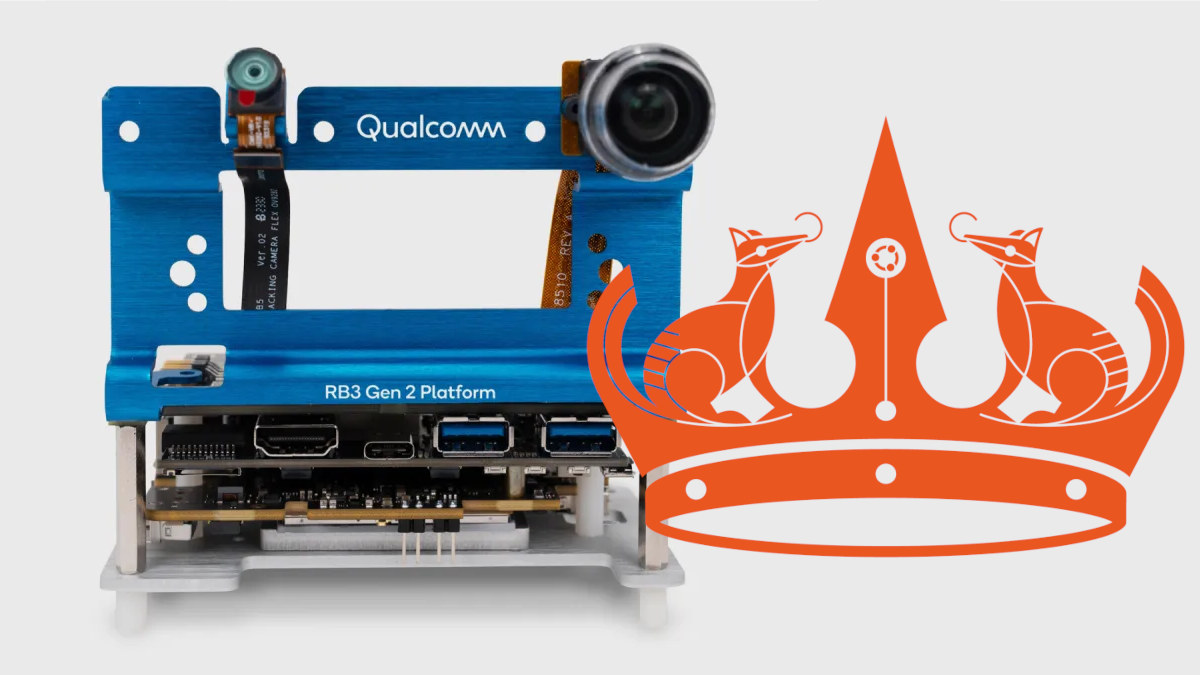
Linux on Qualcomm SoCs has been a roller coaster, with hope often followed by disappointment, at least for the Snapdragon family. The company aims to change that with Qualcomm Linux 2.0 for Dragonwing IoT platforms, as announced on LinkedIn: With Qualcomm Linux 2.0, we’re shifting to an upstream-first, open development model that is unified and scalable across all Qualcomm Dragonwing IoT platforms. This means an upstream‑first model with a BSP that tracks mainline to minimize friction and enables you to make more predictable builds. Tune in to see our first-ever live demo, along with a lifecycle and release strategy, core architecture and Yocto changes, and practical migration paths from previous versions The video is embedded below, but will only be live on June 30. In the meantime, the description provides a few more details: If you’ve dealt with fragmented BSPs, platform-specific kernel forks, or painful bring‑up across Qualcomm SoCs, this […]

$4,000 AMD Ryzen AI Halo Developer Platform features 126 TOPS Ryzen AI Max+ 395 processor

AMD Ryzen AI Halo Developer Platform Ryzen AI Max+ 395

Last month, AMD introduced the Ryzen AI Halo Developer Platform based on the Ryzen AI Max+ 395 processor, delivering up to 126 TOPS, and pre-orders are now available for $3,999.99 at MicroCenter (US only, in-store pickup). The computer ships with 128GB LPDDR5x memory and a 2TB NVMe SSD. It offers 10GbE and WiFi 7 networking, HDMI 2.1 and USB-C DisplayPort video output, and a few extra USB-C ports Ryzen AI Halo developer kit specifications: SoC – AMD Ryzen AI Max+ 395 CPU – 16 cores, 32 threads, “Zen 5” Architecture clocked up to 5.1 GHz GPU – AMD Radeon 8060S Integrated Graphics with 40 CUs, RDNA 3.5 architecture NPU – AMD XDNA™ 2 NPU TDP – 120W Process – TSMC 4nm FinFET Memory – 128GB LPDDR5x up to 8,000 MT/s speed, 256GB/s bandwidth Storage – 2TB M.2 SSD Video Output HDMI 2.1b DisplayPort via USB-C port Networking 10GbE RJ45 port […]

Exit mobile version