Designed by StillFixing in Normandy (France), the EKOS is a local-first, low-power ePaper dashboard built around an ESP32-S3 SoC. It operates without any cloud dependency, subscriptions, or external accounts, offering full privacy, faster response times, and direct local control. The device comes in two variants: the EKOS Pure is a minimalist, non-touch version with two physical buttons for basic control, and the EKOS Sense adds a capacitive touch layer for smart home control, such as toggling devices, triggering scenes, or managing tasks. Both models feature a repair-friendly design with no adhesives, using four screws for assembly and a user-replaceable lithium-polymer battery. Additionally, the dashboard can be updated entirely over your home network without needing the internet. You can push data to the screen using a local API from a phone or PC, link it straight to Home Assistant, or use it to control other ESPHome devices around your house. EKOS […]
ESPHome 2026.5.0 released with new ESPHome Device Builder (beta), performance/memory optimizations
ESPHome 2026.5.0 has just been released with the beta version of the new ESPHome Device Builder web app that replaces the legacy in-tree dashboard with a real configuration editor, a firmware job queue, multi-select bulk actions, labels and areas, out-of-sync detection, cross-config search, distributed builds, and a proper settings UI. The firmware itself gains optimizations of the main loop, scheduler, and task watchdog to lower CPU and power usage on supported platforms, and a range of other memory/performance optimizations across the API, audio, and helper hot paths. The audio decoder pipeline has been improved and features new microMP3, microWAV, and microFLAC streaming libraries. OTA has also been enhanced with partition-table and bootloader updates, web-server OTA, and soft-brick recovery, and ESP32 MCUs are now handled by up to the ESP-IDF v6.0.1 framework natively, while Zigbee support has been expanded to ESP32 H2 and ESP32-C6, among other features. Key features of the […]
MiciMike’s open-source drop-in PCB converts Google Home Mini into a local voice assistant (Crowdfunding)
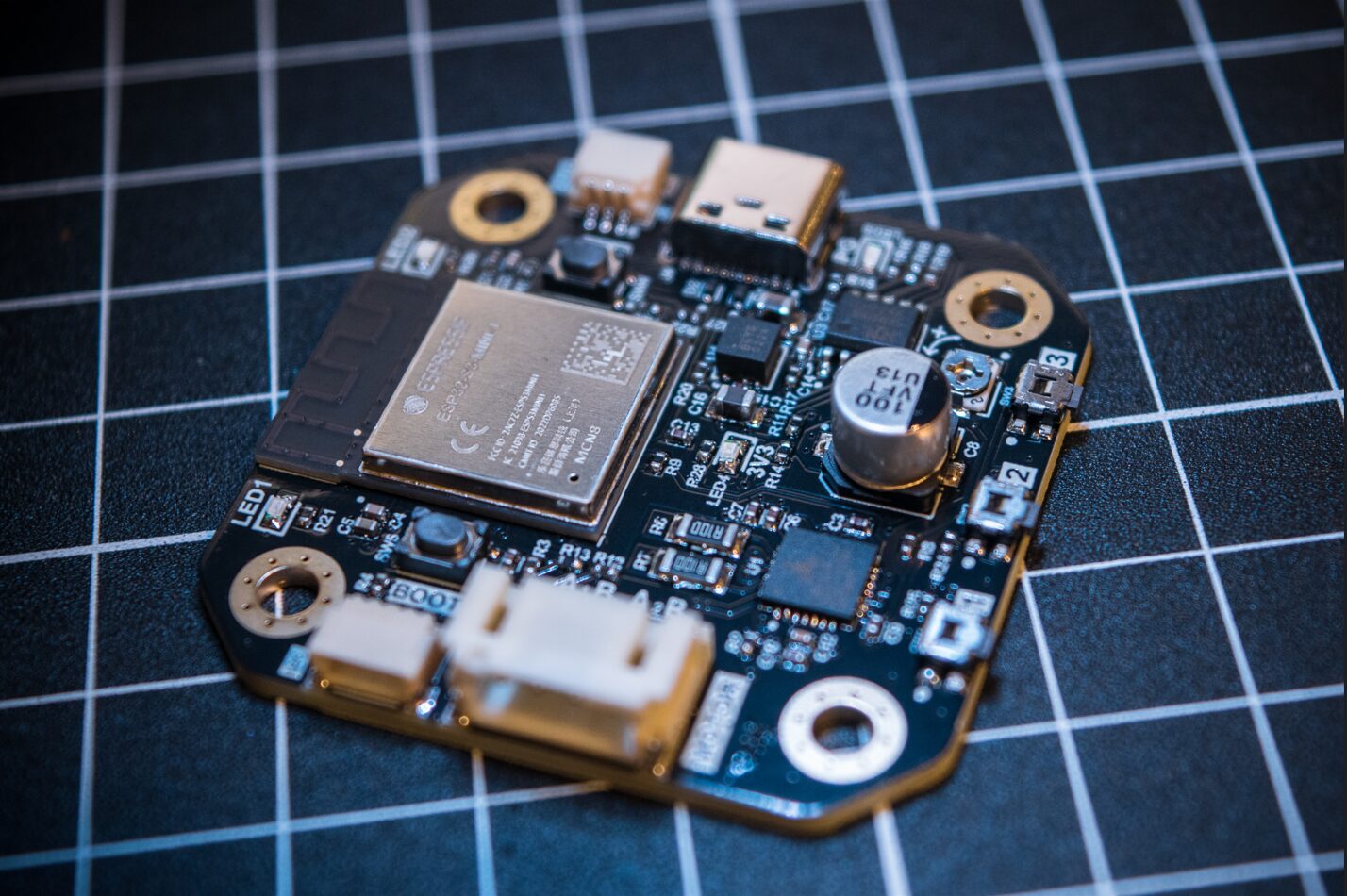
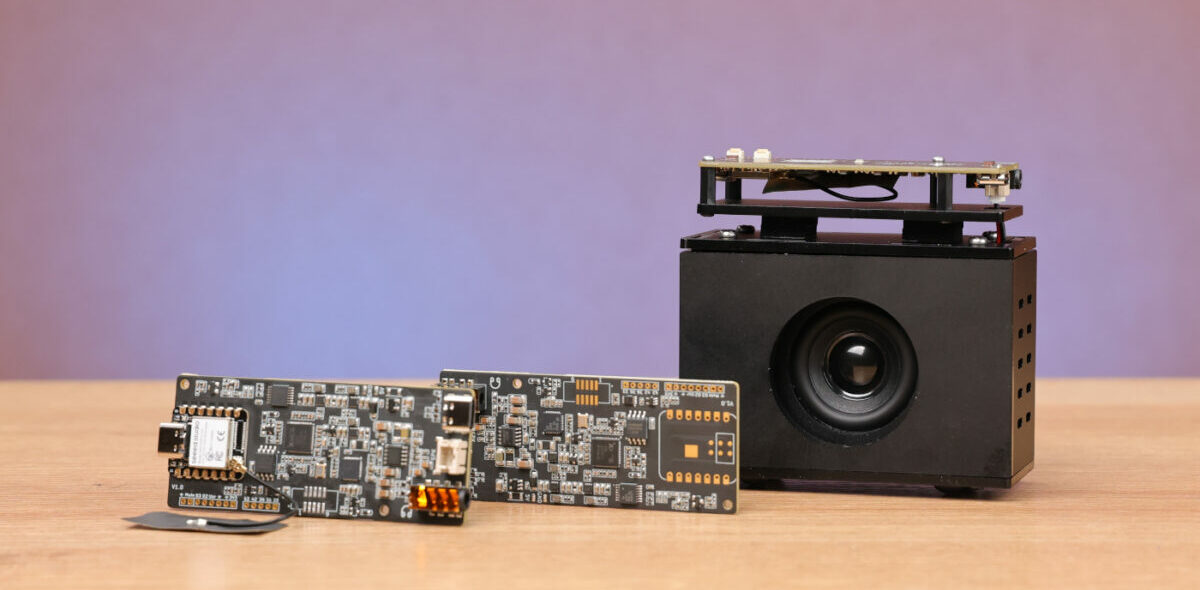
The MiciMike Home Mini Drop-In PCB is an open-source replacement mainboard designed to convert a 1st Gen Google Home Mini into a fully local, privacy-focused voice assistant running Home Assistant Voice. Built around an ESP32-S3 MCU and an XMOS XU316 audio processor, it removes cloud dependencies without any case modifications or soldering. The board offers on-device wake word detection, echo cancellation, and noise suppression via two MEMS microphones, and comes pre-flashed with ESPHome for easy Home Assistant integration. The PCBA fully supports local voice processing, optional cloud LLM integration, media playback, and Snapcast. It’s released as open hardware under the CERN-OHL-S v2 license, with complete design files available, making it suitable for privacy-focused smart-home automation, DIY voice assistants, and hardware-reuse projects. MiciMike Home Mini Drop-In PCB specifications: Compatibility – Google Home Mini 1st generation Wireless MCU – Espressif Systems ESP32-S3 CPU – Dual-core Xtensa LX7 microcontroller @ up to 240 […]
DIY Sendspin audio receiver supports multi-room audio synchronization, integrates with Home Assistant
SendspinZero is an open-source, DIY Sendspin audio receiver for your amplifier that relies on off-the-shelf parts costing around $10 and a 3D printed enclosure. It integrates with Home Assistant for multi-room audio synchronization. It sounds good, but what is Sendspin exactly? It’s a royalty-free, open protocol developed by the Open Home Foundation for synchronized audio playback across multiple devices and rooms. Besides audio, it also supports screens for album art and control music, and sound-activated lights (coming soon feature). The protocol enables open-source products that compete against proprietary systems like Sonos, AirPlay, or Google Cast, and integrates nicely with the Music Assistant add-on for Home Assistant. Sendspin audio receiver key components: Waveshare ESP32-S3-Zero board with 2MB PSRAM (About $4-$6 on AliExpress, $12 on Amazon), ideally the version without pre-soldered headers Optional 1.54-inch LCD screen (About $5 on AliExpress) Optional 3-6V, 22mm bi-color button (About $2 to $3) Audio output options: […]
DeskUp Pro smart standing desk controller integrates with Home Assistant and Homey Pro Smart Home hubs
Designed by SmartHomeGuys in the UK, the DeskUp Pro is an ESP32-based standing desk controller compatible with Home Assistant, Homey Pro, and other Smart Home hubs, using the desk’s standard RJ11/RJ12 connection. Many modern standing desks come with a controller from Jiecang or another company featuring an RJ12 port. The DeskUp Pro plugs directly into this port, draws power without an external USB supply, and bridges the desk’s controls to your 2.4 GHz Wi-Fi network. This allows you to automate your desk height, set health-focused standing reminders, or use voice assistants like Google Home and Alexa, all while keeping the desk’s original physical keypad fully functional. DeskUp Pro specifications: MCU – Espressif Systems ESP32-C6 or ESP32-S3 microcontroller with 2.4GHz Wi-Fi and Bluetooth LE Desk connectivity – Built-in RJ11/RJ12 cable for data and power USB – USB Type-C port for initial setup and firmware flashing Misc Supported Jiecang control boxes JCB36NE2 (used […]
SN1 Solar Node – An ESP32-C3-based board with IP67 enclosure, solar charging, ESPHome firmware
Designed by Granz Scientific LLC, the SN1 Solar Node is an ESP32-C3-based IoT node/development board designed specifically for off-grid IoT projects. Development boards like Seeed Studio Wio Tracker, or industrial controllers like DFRobot LoRaWAN Control Terminal, allow you to handle your own battery management and weatherproofing, or on the other end, you have products like SenseCAP Solar Node P1 that come with everything integrated but do not allow adding custom hardware. This is where the SN1 Solar Node is different; it features an IP67-rated enclosure with an integrated solar panel on the lid, 18650 battery support, and prototyping strip-board areas for custom circuitry. It also includes a smart power switch that allows the battery to continue charging from the solar panel even when the board is powered off. Additionally, it provides battery voltage monitoring, breaks out most GPIOs for easy access, and includes optional jumpers for an onboard LED and […]
Inkplate 13SPECTRA 13.3-inch E-ink Spectra smart color display supports Arduino, MicroPython, ESPHome (Crowdfunding)
Soldered Electronics has made ESP32-based e-paper displays for years, starting with the launch of the Inkplate 6 in 2019. The Inkplate 13SPECTRA is their latest model based on an ESP32-S3 WiFi and Bluetooth SoC and a 13.3-inch E-Ink Spectra color display with 1600 x 1200 resolution. More specifically, it’s powered by an ESP32-S3-WROOM-2-N32R16V module with 32MB SPI flash and 16MB PSRAM, features a microSD card slot for data storage, a USB-C port for data and power, a JST connector for an optional 3,000 mAh LiPo battery, and expansion capabilities through three Qwiic connectors and GPIO expander pins. Inkplate 13SPECTRA specifications: Wireless module – ESP32-S3-WROOM-2-N32R16V SoC – ESP32-S3 dual-core Xtensa LX7 processor (up to 240 MHz) with wireless connectivity System Memory – 16 MB PSRAM Storage – 32 MB flash Wireless – Wi-Fi 802.11 b/g/n (2.4 GHz), Bluetooth 5 (LE), Storage – MicroSD card slot Display 13.3-inch E-Ink SPECTRA color e-paper […]
Olimex HoT aims to be lightweight, easier-to-use alternative to Home Assistant
Olimex HoT (Home of Things) is a lightweight Smart Home solution designed to run on low-end hardware (128MB RAM, 128MB flash) and interface with nodes running ESPHome. It can serve as an easier-to-use alternative for people who don’t need all the bells and whistles provided by powerful home automation frameworks such as Home Assistant or OpenHAB. Home Assistant open-source home automation software is great, but it requires a system with at least 2GB of RAM, and 4GB of RAM is often recommended for most users. There’s also a steep learning curve. This is what Tsvetan Usunov, Olimex CEO, realized last year when he tried Home Assistant, and he decided to start working on a low-cost, easy-to-use solution for IoT and Smart Home applications. That’s why the Olimex HoT project was created. Tsvetan gave a talk about the project entitled “Designing EUR 20 Open Source Hardware running Free/Libre Open Source Software […]