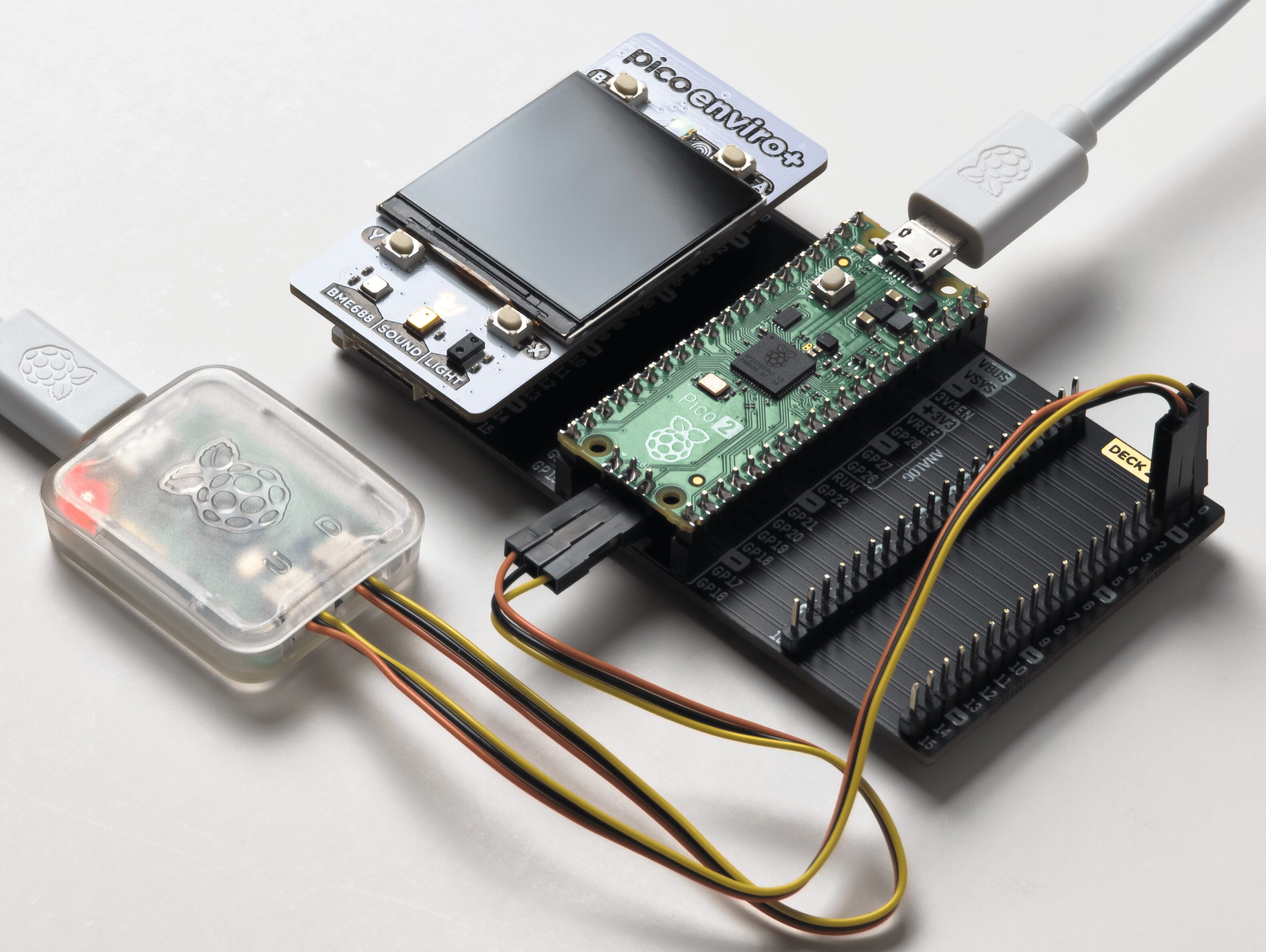
Collabora announced a partnership with MediaTek to bring upstream support to the Genio IoT SoCs and boards in November 2024, but since the announcement was new at the time, no work had been done, and I didn’t write about it. However, almost one year later, Collabora can now report very good progress, especially for MediaTek MT8395 boards like Genio 1200 EVK and Radxa NIO 12L, which are now usable with mainline/upstream Linux since most features are implemented. But improvements also extend to MediaTek Genio 510 and Genio 700 EVKs, and the collaboration will continue with work on newer MediaTek Genio and Kompanio processors for IoT solutions and Chromebooks. The two MediaTek Genio 1200 boards can now boot mainline Linux without any out-of-tree patches while providing support for the Audio DSP, JPEG, video hardware encoders and decoders, the Arm Mali-G57 MC5 GPU (via the open source Panfrost driver), as well as […]
Google’s open-source, RISC-V-based Coral NPU is integrated into Synaptics SL2610 Edge AI SoCs
Google has very recently introduced Coral NPU full-stack, open-source RISC-V-based platform for always-on AI on low-power edge devices and wearables. The first chip to integrate the Coral NPU is the upcoming Synaptics Astra SL2610 family. Google Coral NPU The Coral NPU aims to address the software fragmentation on entry-level AI accelerators that makes them difficult to program. By releasing an open-source NPU and associated source code, Google hopes its design will be adopted by silicon vendors, reduce software fragmentation over time, and help machine learning (ML) developers bring products to market faster. Building on the works on the Coral platform, the new, open-source Coral NPU is comprised of three main components: A scalar core – A lightweight, C-programmable RISC-V core that manages data flow to the back-end cores. It uses a simple “run-to-completion” model for ultra-low power consumption and traditional CPU functions. A vector execution unit – A single instruction […]
Embedr Arduino IDE features Gemini-powered AI assistant with local code completion
Embedr is an AI-powered Arduino-like IDE designed to simplify development for Arduino-compatible microcontrollers. It looks very similar to the Cursor code editor and uses Microsoft’s Monaco Editor and Arduino CLI tools to enable features such as intelligent code suggestions, project skeleton generation, and visual debugging. Embedr has all the Arduino features that you are familiar with, and on top of that, you can add other LLMs and experiment just by adding the required plugin and connecting them via API keys. We’ve previously seen Arduino release their Claude-based Arduino Cloud Editor, which runs in the browser for context-aware coding assistance. But the problem with that is, if you don’t have internet, you can’t use the IDE. Embedr runs locally and uses Google’s Gemini 2.5 Flash LLM, meaning you can compile and debug your code offline without needing a constant internet connection. Additionally, Embedr gives you greater control and privacy compared to […]
Linux 6.15 Release – Main changes, Arm, RISC-V and MIPS architectures
Linus Torvalds has just announced the release of Linux 6.15: So this was delayed by a couple of hours because of a last-minute bug report resulting in one new feature being disabled at the eleventh hour, but 6.15 is out there now. Apart from that final scramble, things looked pretty normal last week. Various random small fixes all over, with drivers as usual accounting for most of it. But we’ve got some bcachefs fixes, some core networking, and some mm fixes in there too. Nothing looks particularly scary. And this obviously means that the merge window opens tomorrow as usual, and I see the usual people being proactive and having sent me their pull requests. It’s memorial day tomorrow here in the US, but like the USPS, “neither snow nor rain nor heat nor gloom of night” – nor memorial day – stops the merge window. [ Actually, thinking back […]
Nuvoton introduces the first security chip based on OpenTitan open-source silicon Root of Trust
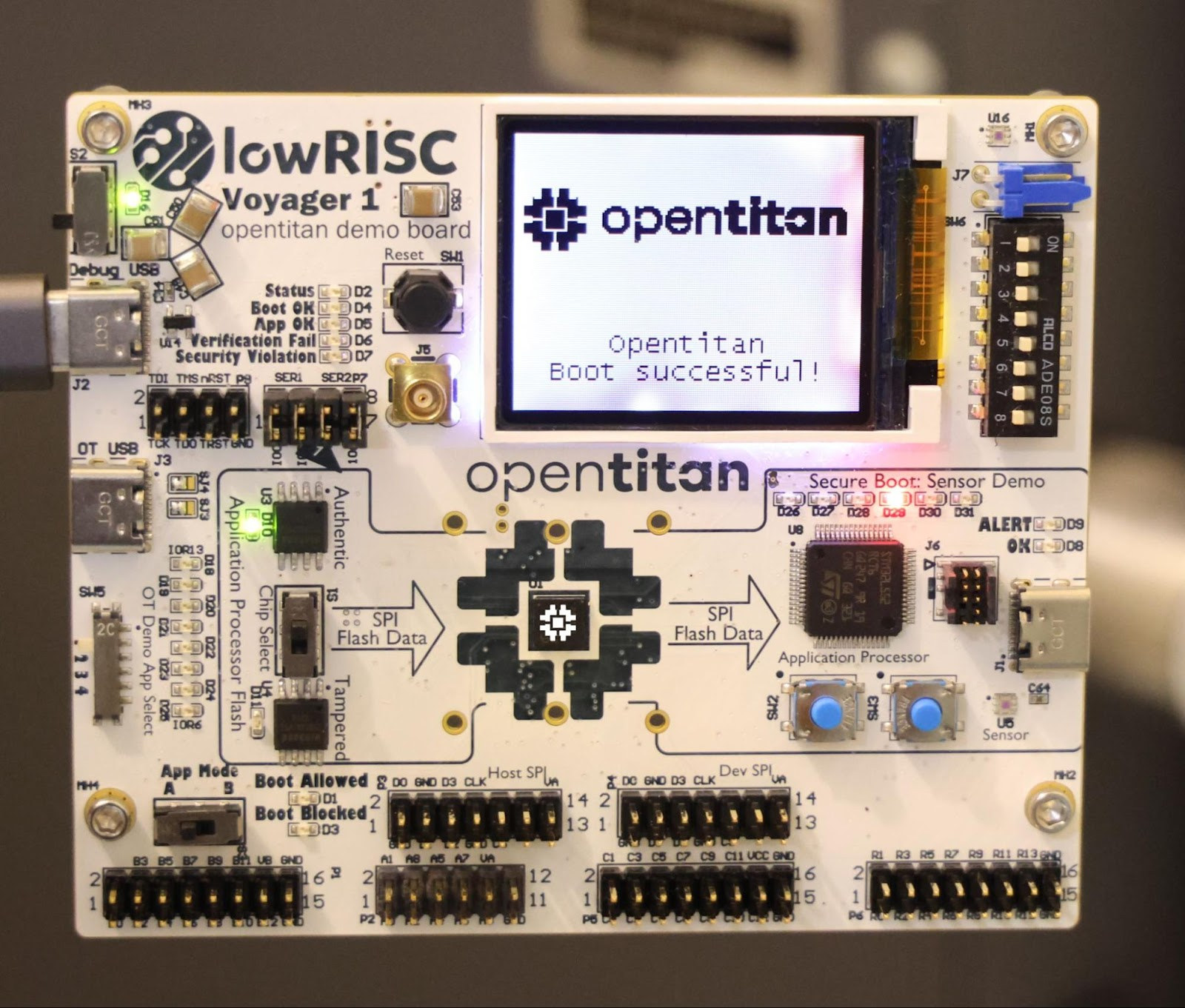
Google has announced the start of the fabrication of a Nuvoton security chip featuring OpenTitan open-source silicon Root of Trust (RoT), the first such production-ready chip. It will soon be available in lowRISC’s Voyager 1 demo board, and later this year in Chromebooks and data centers. We first wrote about OpenTitan open-source Root of Trust (RoT) chips in 2020 as a collaboration between Google, Seagate, Nuvoton, Western Digital, lowRISC, as well as some other companies, projects, and universities that aimed at “building a transparent, high-quality reference design and integration guidelines for silicon root of trust (RoT) chips”. OpenTitan itself reached commercial availability last year, after the first engineering samples were released in 2023, and Google now says the Nuvoton chip (yet to have a proper name) is the first production-ready OpenTitan chip. Hardware Root of Trust (RoT) are small secure microcontrollers that are the equivalent of Certificate Authorities (CAs) to […]
Eclipsa Audio is an open, royalty-free alternative to Dolby Audio
Samsung announced Eclipsa Audio 3D technology, a royalty-free alternative to Dolby Audio, would be integrated into TVs and Soundbars in its 2025 lineup at CES 2025. The press release explains the 3D audio technology was developed in partnership with Google and that “Eclipsa Audio allows creators to adjust audio data such as the location and intensity of sounds, along with spatial reflections, to create an immersive three-dimensional sound experience”. Like 90% of announcements at CES 2025, Eclipsa Audio appeared to be mostly fluff. I also noticed it was developed through the Alliance for Open Media which manages the now-widely-used AV1 video codec, but a search for Eclipsa did not return anything. Luckily the “Arm Editorial Team” saved the day with an interesting article published a couple of days ago with more information about Eclipsa Audio. So let’s have a look. Eclipsa Audio is a multi-channel audio surround format that leverages […]
The first Android 16 developer preview is out (much) earlier than expected
Google releases a new Android version every year, and while the first Android 15 developer preview was released this year in February, the company has already announced the first Android 16 developer preview just a couple of months after the official release of Android 15 on AOSP in an “effort to drive faster innovation in apps and devices”. More specifically, Google plans to release two Android APIs next year: a major SDK release in Q2 2025 instead of Q3 followed by a minor SDK release in Q4 2025 that won’t include behavior changes that may require changes in apps, but only pick up feature updates, optimizations, and bug fixes. The change was mostly made to better accommodate the device launch schedule of smartphone manufacturers. That almost means many more changes are expected between the preview and the beta release. As of now, Google has only announced a few new features […]
AirCard Pro and AirNotch Pro Bluetooth trackers support Google/Apple network integration (Crowdfunding)
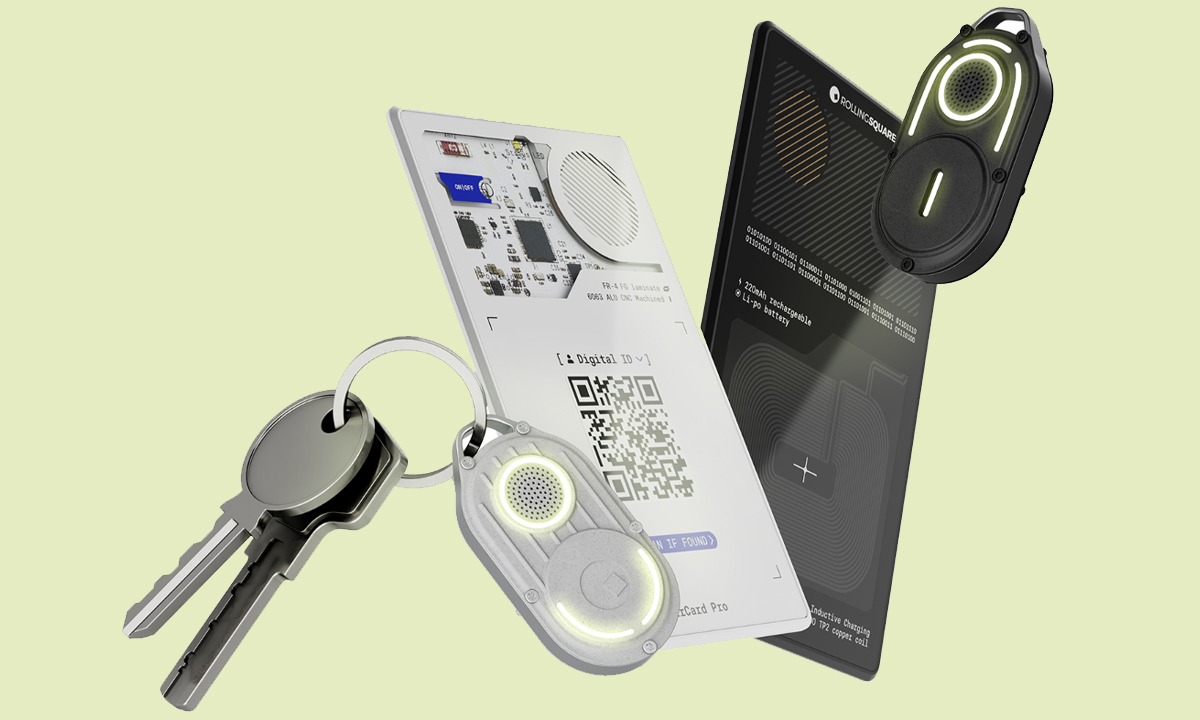
Rolling Square introduces its latest Bluetooth trackers – AirNotch Pro and AirCard Pro – designed for use with personal items like keys, wallets, bags, and more. Both trackers are designed for portability, and the AirNotch Pro is designed as a keyring, while the AirCard Pro suits wallets with a thinner, credit card-like design. The products integrate into Apple and Google’s tracking networks, with some features currently limited to Apple. Previously, we covered the SenseCAP T1000, a credit card-sized LoRaWAN GPS tracker powered by Semtech’s LR1110. Several years ago we covered some Bluetooth beacons such as the Puck.js or RuuviTag, but we have yet to explore Bluetooth-only trackers with wireless charging capabilities. Rolling Square AirCard Pro Bluetooth trackers AirCard Pro technical features: Network White version – Operates on Google’s Android Find My Device network (Android 6 or above) Black version – Operates on Apple Find My network (iOS 14 or above) […]