Orange Pi AI Studio is a USB4 box designed for artificial intelligence applications, equipped with up to two Huawei Ascend 310 AI octa-core ARM 64-bit processors, delivering up to 176 TOPS per chip, as well as up to 192GB RAM. This follows the Orange Pi AIPro introduced last year, with an unnamed Huawei Ascend SoC delivering up to 20 TOPS NPU. The basic version of AI Studio has up to 96GB of LPDDR4X memory and 32MB of SPI Flash. The interface of the device is very simple, featuring a 12V 10A DC power interface, a USB 4.0 Type-C port, a power switch, and an indicator light. The only disadvantage is the limited number of ports provided, even do not include an HDMI port or an Ethernet port. Orange Pi AI Studio and AI Studio Pro specifications: SoC AI Studio – Huawei Ascend 310 octa-core 64-bit processor delivering up to 176 TOPS AI […]
Linux 6.15 Release – Main changes, Arm, RISC-V and MIPS architectures
Linus Torvalds has just announced the release of Linux 6.15: So this was delayed by a couple of hours because of a last-minute bug report resulting in one new feature being disabled at the eleventh hour, but 6.15 is out there now. Apart from that final scramble, things looked pretty normal last week. Various random small fixes all over, with drivers as usual accounting for most of it. But we’ve got some bcachefs fixes, some core networking, and some mm fixes in there too. Nothing looks particularly scary. And this obviously means that the merge window opens tomorrow as usual, and I see the usual people being proactive and having sent me their pull requests. It’s memorial day tomorrow here in the US, but like the USPS, “neither snow nor rain nor heat nor gloom of night” – nor memorial day – stops the merge window. [ Actually, thinking back […]
Huawei Matebook Pro is the first laptop sold with HarmonyOS operating system
Huawei Matebook Pro (HAD-W24 / HAD-W32) resembles a typical laptop with a 14.2-inch display, 24GB to 32GB RAM, and 1TB or 2TB SSD storage. What’s less common is that the processor is not named, and the laptop is the first to run Huawei’s HarmonyOS operating system. Those two are due to Western countries’ sanctions against the Chinese company. Huawei used to sell Intel-based laptops with Windows and Android smartphones, but they’ve not made hardware based on US technology for a while. As software support would eventually run out, they had to work on an alternative named HarmonyOS, which has been used on smartwatches, smartphones, and tablets for a while, but the Matebook Pro is the first computer sold with the new OS. While we don’t know the processor used, reports mention the Kirin X90 10-core (4+4+2) / 20-thread Arm SoC as an “Apple Silicon” solution. MateBook Pro specifications: SoC – […]
Linux 6.14 release – Main changes, Arm, RISC-V, and MIPS architecture
Linus Torvalds has just announced the release of Linux 6.14 on LKML: So it’s early Monday morning (well – early for me, I’m not really a morning person), and I’d love to have some good excuse for why I didn’t do the 6.14 release yesterday on my regular Sunday afternoon release schedule. I’d like to say that some important last-minute thing came up and delayed things. But no. It’s just pure incompetence. Because absolutely nothing last-minute happened yesterday, and I was just clearing up some unrelated things in order to be ready for the merge window. And in the process just entirely forgot to actually ever cut the release. D’oh. So yes, a little delayed for no good reason at all, and obviously that means that the merge window has opened. No rest for the wicked (or the incompetent). Below is the shortlog for the last week. It’s nice and […]
Orange Pi AIPro (8T) SBC features a 8 TOPS Huawei Ascend AI SoC, runs Ubuntu or openEuler
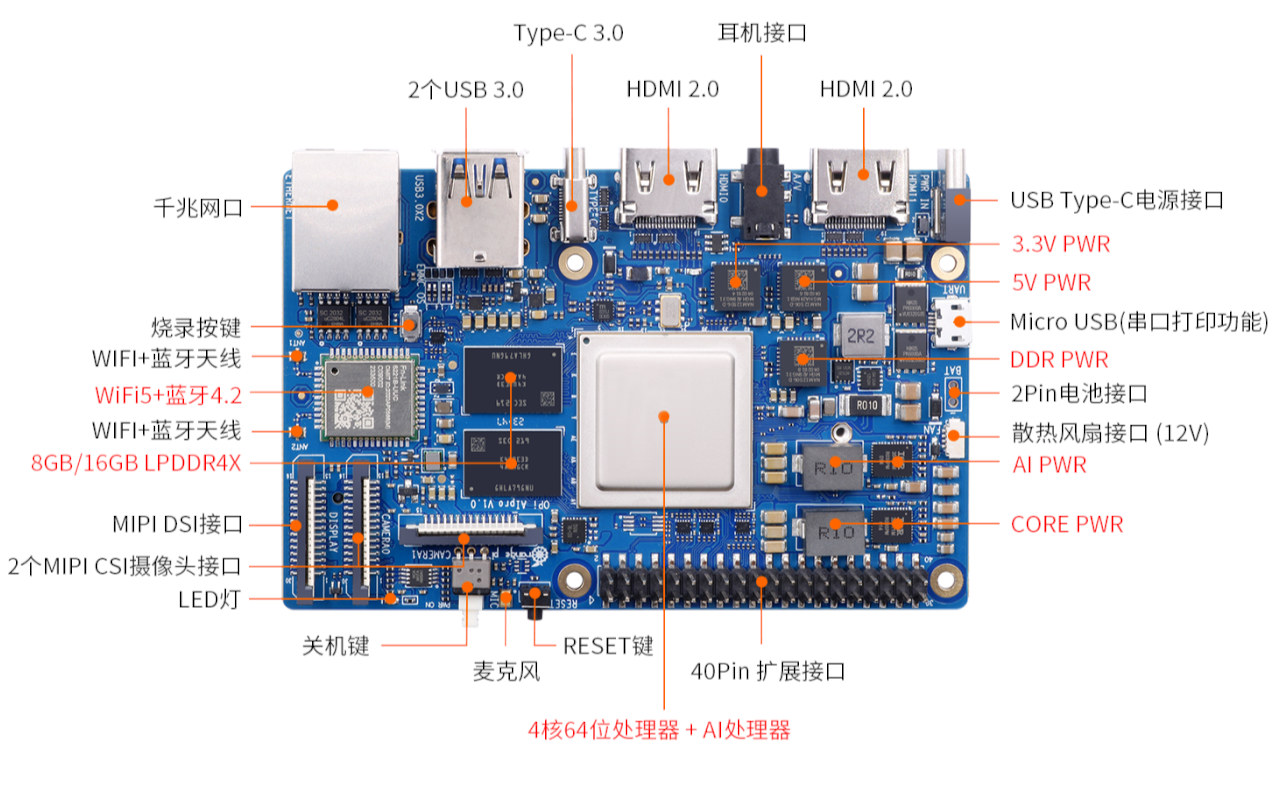
Orange Pi AIPro (8T) is a new single board computer for AI applications that features an unnamed Huawei Ascend AI quad-core 64-bit processor delivering up to 8 TOPS (INT8) of AI inference performance, although there’s also a 20 TOPS (INT8) variant of the SoC. The SBC comes with up to 16GB LPDDR4X and a 32MB SPI flash but also supports other storage options such as a microSD card, an eMMC flash module, and/or an M.2 NVMe or SATA SSD. The board also features two HDMI 2.0 ports, one MIPI DSI connector, a 3.5mm audio jack, two MIPI CSI camera interfaces, Gigabit Ethernet and WiFi 5 connectivity, a few USB ports, and a 40-pin GPIO header for expansion. Orange Pi AIPro specifications: SoC – Huawei Ascend quad-core 64-bit processor delivering up to 8 TOPS (INT8) AI performance and equipped with an unnamed 3D GPU; Likely Ascend 310B with Arm Cortex-A76 equivalent […]
Orange Pi KunPeng Pro SBC features a quad-core Huawei CPU with an 8 TOPS AI accelerator
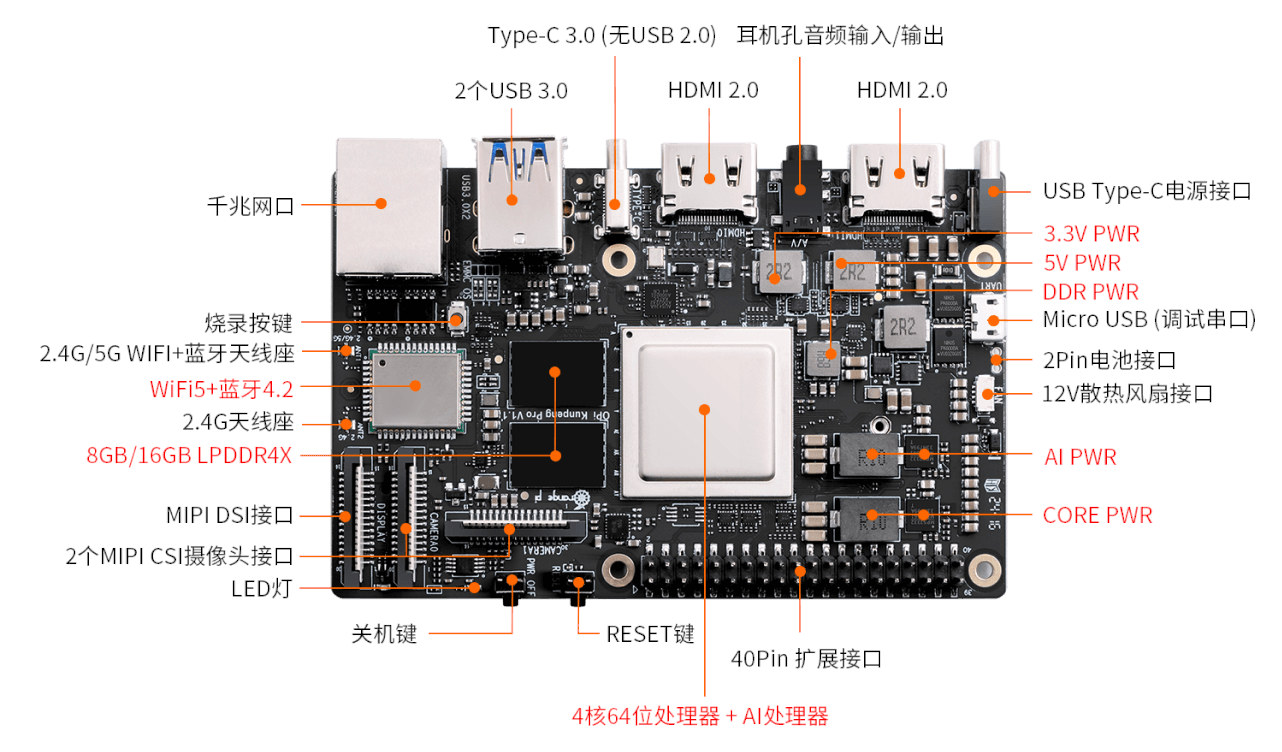
Orange Pi KunPeng Pro is a single board computer powered by an unnamed KunPeng quad-core processor from Huawei that features an 8 TOPS NPU for AI workloads. It’s not the first time Orange Pi has launched an SBC based on a Huawei SoC, as the company introduced the Orange Pi AIPro last year with another unnamed Huawei Ascend SoC with a 20 TOPS NPU. The new Orange Pi KunPeng Pro board has basically the same layout as the AIPro model, but with lower specs overall, although it still comes with 8GB or 16GB LPDDR4x memory. Orange Pi KunPeng Pro specifications: SoC – Unnamed Huawei Kunpeng quad-core 64-bit SoC with unnamed GPU, 8 TOPS AI accelerator System Memory – 8GB or 16GB LPDDR4X Storage 32MB SPI flash connector for 32GB, 64GB, 128GB, or 256GB eMMC flash module MicroSD card slot M.2 2280 socket for SATA/NVMe drive Video Output 2x HDMI 2.0 […]
Scrcpy 2.0 Android screen mirroring and control utility for PCs released with audio forwarding support
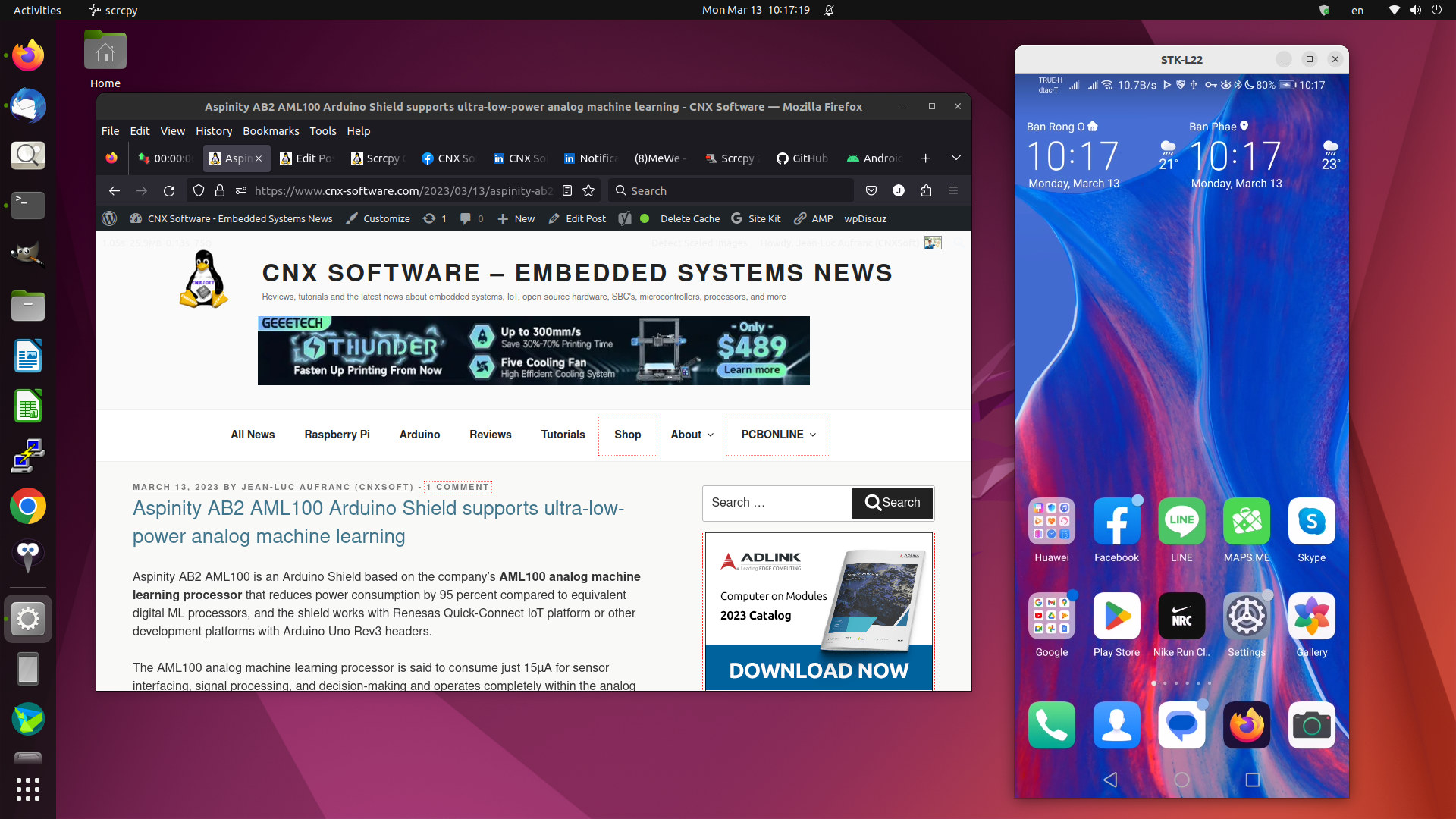
Scrcpy 2.0 Android screen mirroring and control utility for Windows, Linux, and macOS has just been released with support for audio forwarding that enables audio to be played back into the computer/laptop, instead of the smartphone, at least for mobile devices running Android 11 or greater. We first reported about Scrcpy open-source utility in 2018, and at the time, it worked relatively well in Ubuntu 16.04 but required quite a few steps for the installation, and it would lag from time to time. I could still use the mouse and keyboard to control my phone, send SMS, chat, browse the web, play games, switch between landscape and portrait modes, and so on. Five years later, Scrcpy 2.0 has been released, the installation is much easier, and new features have been implemented. Scrcpy 2.0 highlights: Quality – 1920×1080 or above Performance – 30~120fps, depending on the device Latency – 35~70ms Startup […]
HarmonyOS development board shows up for $11
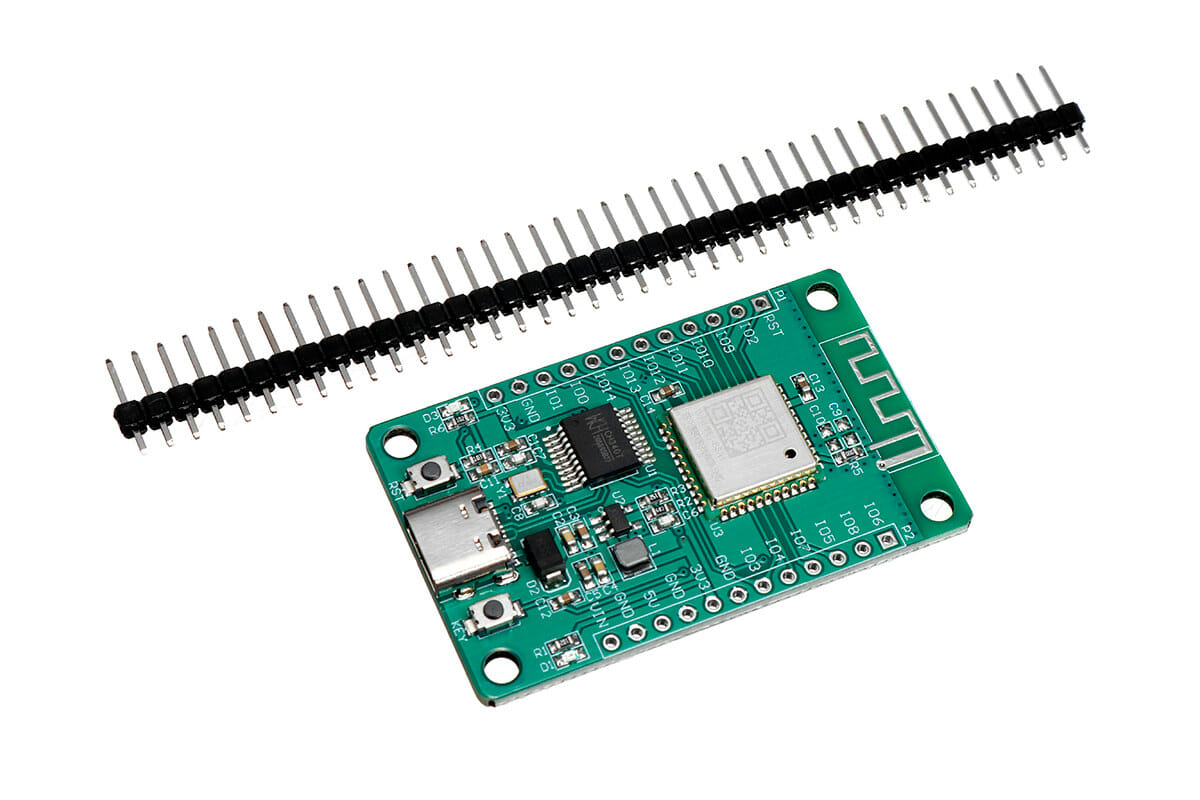
Last year, we noted the Hisilicon Hi3861 based HiSpark WiFi IoT development board with supports LiteOS and HarmonyOS that was available in China for just under $10, or as part of a devkit with baseboard and modules for around $60. Although not very practical, buying from Taobao was possible, but there’s now what appears to be a new revision of the Hi3861V100 based HarmonyOS development board in a wider form factor on Banggood for $10.99. Hi3861 development board specifications: MCU – Hisilicon Hi3861V100 32-bit RISC-V microcontroller @ up to 160 MHz with 352 KB SRAM and 288 KB ROM, 2 MB flash memory, and WiFI 4 connectivity; QFN-32 5x5mm package WiFi 802.11b/g/n standard up to 72.2 Mbps @ HT20 2.4 GHz frequency band (ch1-ch14). Station (STA) and access point (AP) modes with up to 6 clients for the latter WiFi mesh with up to 256 nodes Security – WPA, WPA2 […]