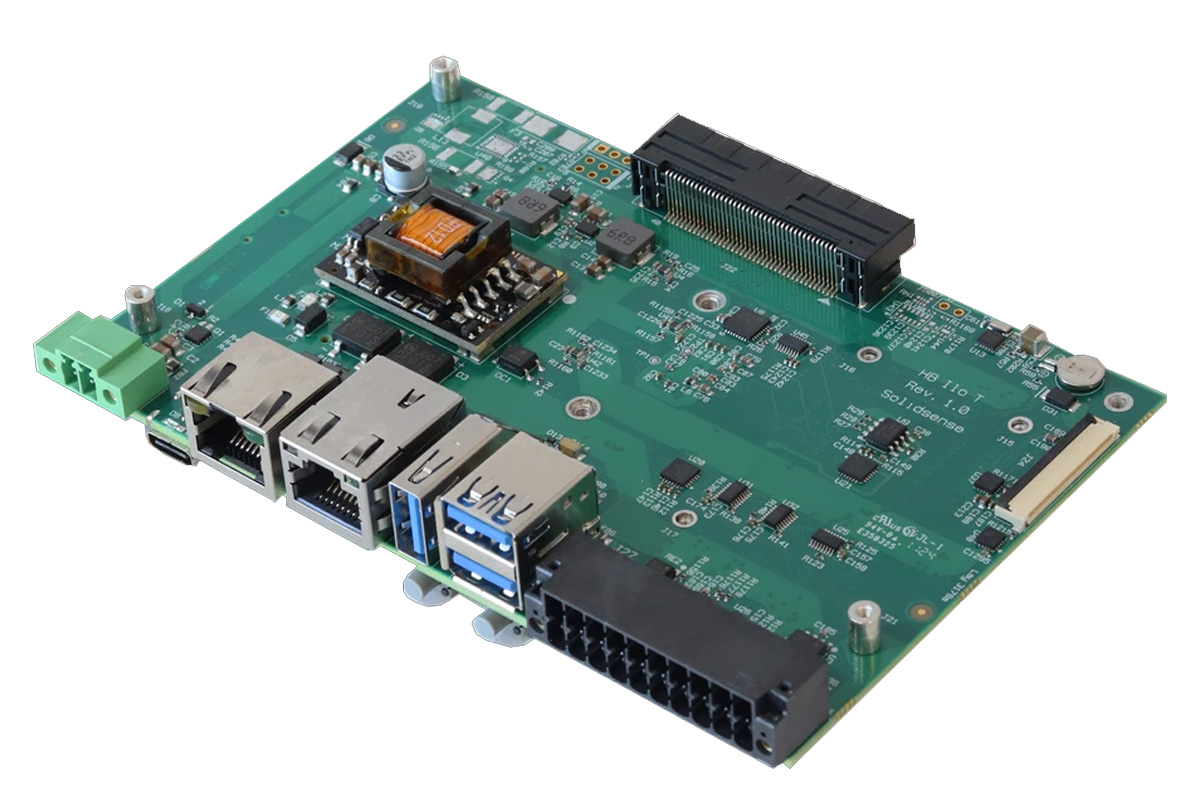
Erqos EQSP32CE is a DIN rail-mountable industrial IoT PLC based on an ESP32-S3 WiFi and Bluetooth SoC and offering Ethernet, RS-485, RS-232, and CAN bus industrial communication interfaces. The IIoT logic controller also features several protected digital (16x) and analog (8x) inputs, eight current inputs, eight “special mode” analog inputs, and sixteen digital outputs with PWM support. A USB-C port is used for firmware flashing and monitoring, and the PLC takes a wide 7V – 26V DC input voltage and outputs 5V/1A for I/O expansion modules. Erqos EQSP32CE specifications: SoC – Espressif ESP32-S3 dual-core LX7 processor @ 240 MHz with 8MB Flash, 512kB RAM, wireless connectivity (so probably ESP32-S3FN8) Communication interfaces 10/100 Mbps Ethernet RJ45 port Wi-Fi + Bluetooth Low Energy (on ESP32-S3) with internal antenna RS232 (protected) and RS485 half-duplex (protected) with support for Modbus RTU, DMX512, and custom serial protocols CAN Bus (protected) USB – 1x USB-C power for […]
Silex SX-SDMAX6E tri-band Wi-Fi 6E + Bluetooth LE module features NXP IW623 SoC, comes in M.2 or LGA package
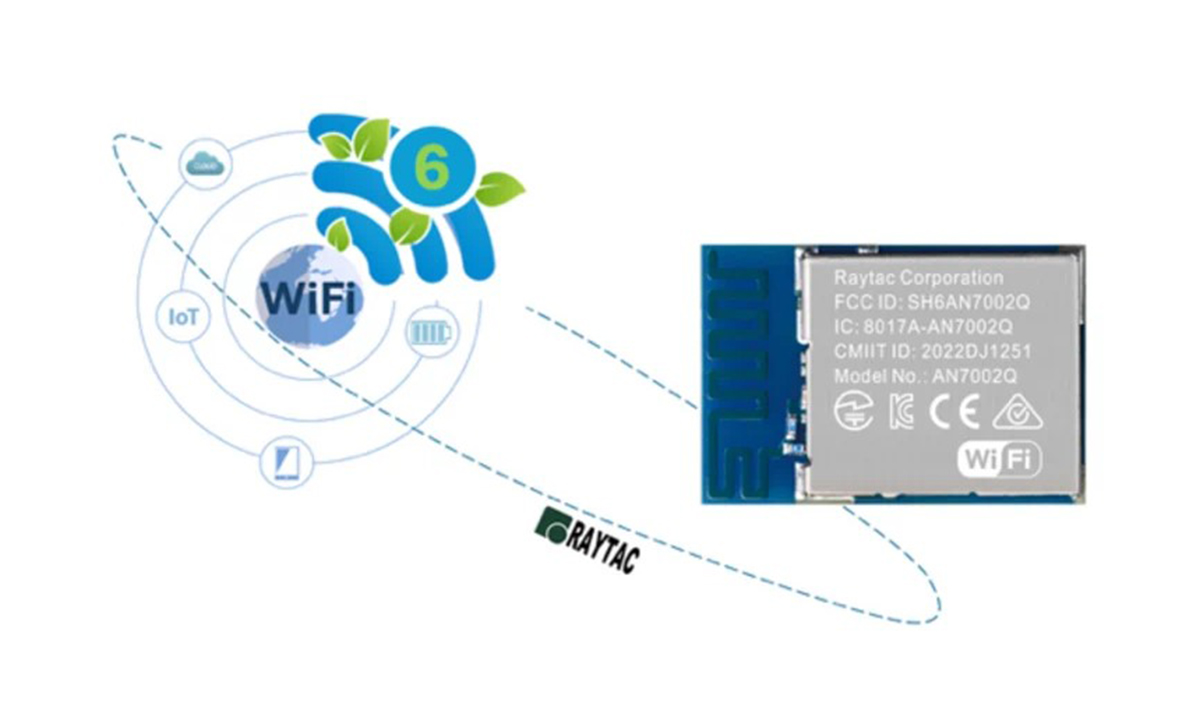
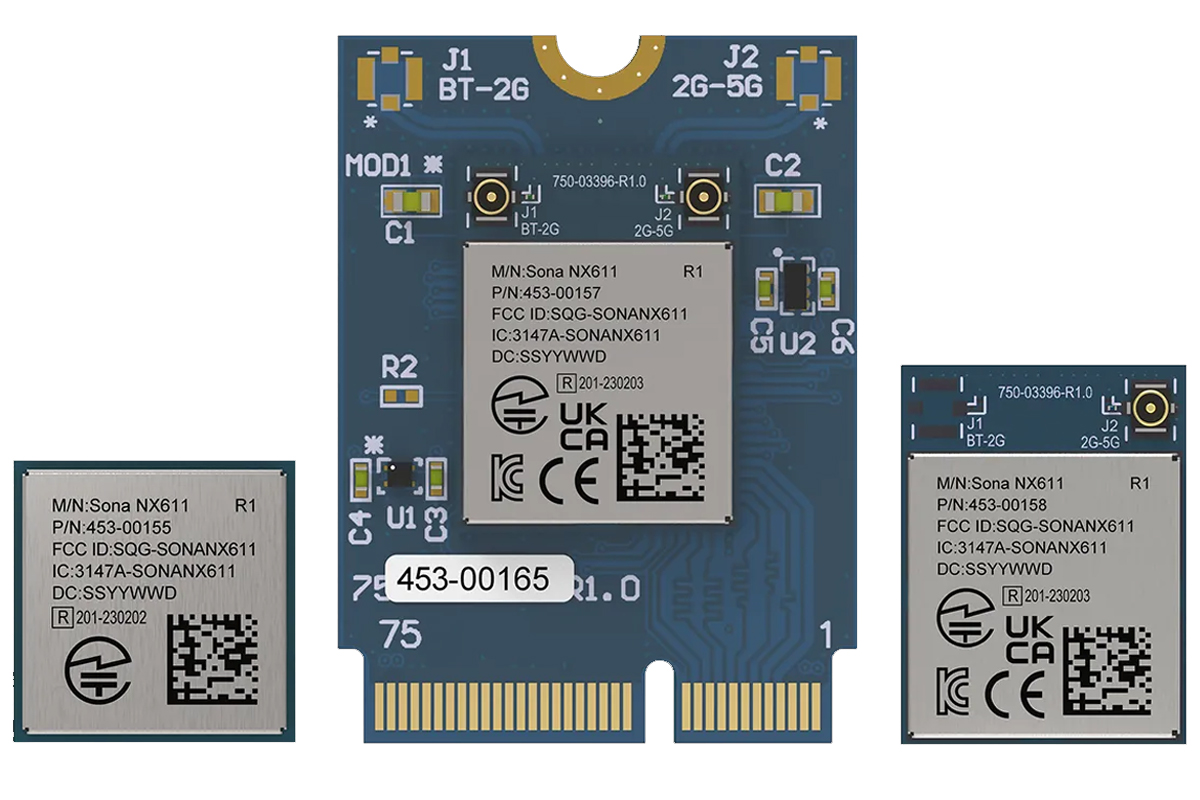
Back in August last year, we wrote about NXP’s IW623 tri-band (2.4GHz, 5GHz, 6GHz) Wi-Fi 6E and Bluetooth LE Audio SoC, but at the time, there was no ready-to-use module based on it. Now, NXP has partnered with Silex Technology to launch the SX-SDMAX6E module, available in a surface-mount LGA package or an M.2 2230 Key-E card. The module supports Bluetooth 5.x connectivity via UART and Wi-Fi via SDIO. It operates from a 3.3V supply with 1.8V support on the LGA version. It has an industrial operating temperature range of -40°C to +85°C and is designed for both high-throughput applications, such as video streaming, and low-power, battery-operated devices in harsh environments. It also supports various antenna options, fast roaming, and long-term lifecycle backing through Silex and NXP. Silex SX-SDMAX6E specifications: Wireless chipset – NXP IW623 tri-band SoC Connectivity Wi-Fi Tri-band Wi-Fi 6E (2.4 GHz, 5 GHz, 6 GHz) IEEE 802.11a/b/g/n/ac/ax […]
Maxell PSB2032 35 mAh all-solid-state coin cell battery targets industrial IoT devices
Maxell PSB2032 is a rechargeable “all-solid-state” coin cell battery for industrial IoT devices, which more than quadruples the capacity of the earlier PSB401010H ceramic-packaged solid-state battery, increasing it from 8mAh to 35mAh. As its name implies, it measures 20 mm in diameter and 3.2 mm in height, and delivers key benefits of solid-state batteries such as a wide discharge temperature range, high reliability, and high safety. It’s also easier to install than ceramic-packaged batteries requiring reflow soldering, since it comes pre-equipped with two connection terminals suitable for mounting into small-sized devices. The company shared a comparison table between its two solid-state batteries. For reference, the capacity of a typical CR2032 battery is 220–240 mAh, so the PSB2032 has a much lower capacity. However, it can be recharged and works in demanding environments with a wide temperature range and high safety requirements. The last time we wrote about solid-state batteries was […]
Silicognition ManT1S ESP32 board supports T1S single-pair Ethernet for robotics and automation (Crowdfunding)
Silicognition ManT1S is an ESP32 board with a 4-pole terminal block for T1S single-pair Ethernet (SPE) communication and daisy-chaining, as well as unpopulated headers for GPIOs and programming, and a Qwicc connector for I2C expansion. The IEEE 802.3cg 10BASE-T1S networking standard enables engineers and users to easily network and distribute power to up to eight T1S nodes over a single pair of wires, which makes it suitable for robotics, industrial/home automation, and other projects that benefit from a reduction in the number of cables and associated weight. The company also designed the ManT1S Bridge to interface a standard Ethernet RJ45 to a single-pair T1S mixing segment. ManT1S specifications: System-in-Package – ESP32-PICO-V3-O2 SoC – ESP32 CPU – Xtensa dual-core 32-bit LX6 microprocessor up to 240 MHz Memory – 520B SRAM Storage – 448 KB ROM Wireless – WiFi 4 and Bluetooth 4.2/5.x Memory – 2 MB PSRAM Storage – 8 MB […]
DIN-rail mountable LoRaWAN control terminal offers RS485, analog input, and digital I/Os
The DFRobot LoRaWAN Control Terminal is a compact, DIN-rail mountable industrial IIoT terminal that features long-range LoRaWAN connectivity with local sensing and control capabilities. It’s designed for industrial, agricultural, and building-automation scenarios that need reliable, low-power wireless communication up to 4 km. The terminal supports the standard LoRaWAN protocol (OTAA/ABP, Class A/C) with up to 4 km line-of-sight range and works with private gateways or public networks like TTN. It integrates a 0–10V analog input, optically isolated digital inputs, and RS485/Modbus sensor support, along with a built-in relay output for direct actuation. There’s also support for visual rule-based automation for relay switching, RS-485 commands, or uplink messages; the device continues operating offline using preset logic. The unit operates from 12–24V, includes adjustable transmission parameters, and supports firmware upgrades and factory resets. DFRobot LoRaWAN Control Terminal specifications: SoC/Main Controller – TBD Wireless LoRaWAN 863–870 MHz, 16 dBm Tx power (EU, DFR1120-868) LoRaWAN […]
AMD Spartan UltraScale+ SU35P FPGA evaluation kit supports Raspberry Pi, Arduino, Mikrobus, and Pmod expansion
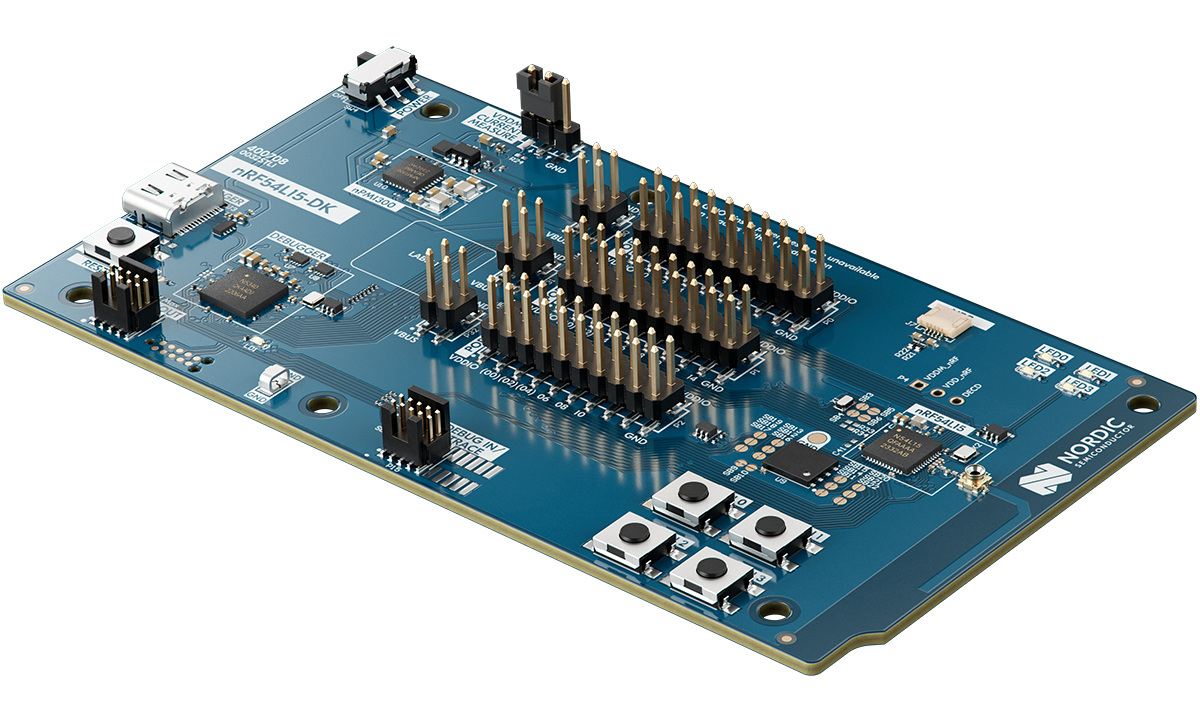
AMD’s SCU35 Evaluation Kit is an affordable ($229) development board powered by the AMD Spartan UltraScale+ SU35P FPGA device, which targets low-power industrial, medical, and data center applications requiring I/O expansion and board management capabilities. Designed for headless applications, the board features a 10/100 Mbps Ethernet port and a USB-C port for power, as well as plenty of headers and connectors compatible with off-the-shelf expansion boards or modules, including Arduino UNO headers, two 40-pin Raspberry Pi GPIO headers, two Mikrobus headers, four Pmod connectors, and an HSIO board-to-board connector. AMD SCU35 evaluation kit specifications: FPGA – AMD Spartan Ultrascale+ SU35P (XCSU35P-2SBVB625E) 36K Logic Cells 304 Max Total I/O• Board Management Controller Memory – 1.93 Mb on-chip memory Memory – 64 Mbit HyperRAM Storage 128 Mbit QSPI flash 64 Kbit EEPROM Networking – 10/100Mbps Ethernet RJ45 port Sensor – 3-axis linear accelerometer Expansion Arduino UNO headers 2x 40-pin Raspberry Pi […]
LILYGO T-2CAN upgrades TTGO T-CAN485 with ESP32-S3, dual Isolated CAN Bus
LILYGO T-2CAN is an updated version of the earlier TTGO T-CAN485, with a more powerful ESP32-S3 MCU and two isolated CAN bus interfaces. Like its predecessor, it is designed for vehicle diagnostics, industrial CAN monitoring, and wireless CAN-to-cloud gateways. The board features an ESP32-S3 MCU with 16MB Flash and 8MB PSRAM, along with two MCP2515 CAN controllers supporting CAN V2.0B at up to 1 Mb/s. It also offers Qwiic connectors and a 26-pin GPIO header (unpopulated) for expansion, and supports both USB Type-C (5V) and DC (12–24V) power inputs. Additional features include BOOT and RESET buttons, an external antenna connector, and onboard debugging via USB. LILYGO T-2CAN specifications: ESP32-S3-WROOM-1U wireless module SoC – ESP32-S3 dual-core Tensilica LX7 microcontroller @ up to 240 MHz with 2.4 GHz 802.11n WiFi 4 and Bluetooth 5.0 LE connectivity Memory – 8MB PSRAM Storage – 16MB SPI flash IPEX antenna connector Industrial control interfaces via 2x […]
NXP IW623 SoC supports 2×2 tri-band Wi-Fi 6E, Bluetooth LE audio
NXP has recently launched the IW623, a Tri-band Wi-Fi 6E and Bluetooth LE Audio SoC, which can be considered as the 4th member of the IW62x family, as back in 2020, NXP launched the IW620, with Wi-Fi 6 and Bluetooth 5.1 connectivity. After that, in January 2022, they released the IW612 tri-radio SoC, adding 802.15.4 support for Matter-enabled smart home gateways, and later in September 2025, they launched the IW693 Wi-Fi 6E SoC with concurrent dual-Wi-Fi and Bluetooth for industrial IoT and automotive markets. The IW623 Wi-Fi 6E Bluetooth SoC also includes features like 2×2 MU-MIMO, OFDMA, Target Wake Time (TWT), wireless multi-streaming, adaptive scheduling, and agile channel switching for congested environments. A dedicated Wi-Fi/Bluetooth coexistence engine with hardware and software arbitration ensures smooth operation when both radios are active, while the integrated PA/LNA/Switch reduces external RF components and improves range. Host connectivity is available over PCIe and SDIO for […]