
6-core Intel Wildcat Lake Core Series 3 CPUs to succeed Alder Lake-N and Twin Lake families

Widlcat Lake processor

When I wrote the Year 2025 in review post, I expected an announcement for the Wildcat Lake CPUs at CES 2026, but instead, Intel initially introduced the high-end Core Ultra Series 3 “Panther Lake” family. I assumed the Wildcat Lake announcement was postponed, but some users’ reports on X indicate the company did demonstrate the new Core Series 3 (no “Ultra” there) “Wildcat Lake” processors as lower-end Core Series 3 “Panther Lake” SKUs. Intel has yet to disclose part names, and there’s nothing about the Wildcat Lake on Intel Ark at the time of writing. However, some information was shared through slides and X users. Intel Core Series 3 “Wildcat Lake” key features and specifications: CPU – Hexa-core processor with 2x Cougar Cover P-cores (Performance cores), 4x Darkmont LPE-cores (Low-Power Efficient cores) GPU – 2x Xe-core Intel Xe3 graphics (no ray tracing, not designed for gaming) AI accelerator – Intel […]

MUSE Book laptop review – Testing an octa-core RISC-V Linux laptop in 2026

MUSE Book RISC-V Laptop Review 2026

SpacemiT sent me a sample of the MUSE Book RISC-V Linux laptop for review. It’s based on the SpacemiT K1/M1 octa-core 64-bit RISC-V SoC, ships with up to 16 GB of RAM, eMMC flash and/or NVMe SSD, and features a 14.1-inch IPS display with 1920×1080 resolution, WiFi 6 connectivity, a few USB ports, and more. I won’t go through all the hardware specifications since Leo already did that when he wrote about the MUSE Book Laptop in April 2024, along with a teardown, and additional details about the SpacemiT K1/M1 SoC. I’ll still do an unboxing and quickly check the hardware, but I’ll focus on the software part to show the progress with Bianbu OS 2.3 (Ubuntu 24.04-based) on RISC-V hardware, as I just did for the low-end StarFive JH7110S-based VisionFive 2 Lite SBC. It’s quite a long review, so if you are short on time, you can jump directly […]

Snapdragon X2 Plus 6-core and 10-core processors target low-power Windows Copilot+ PCs

Snapdragon X2 Plus

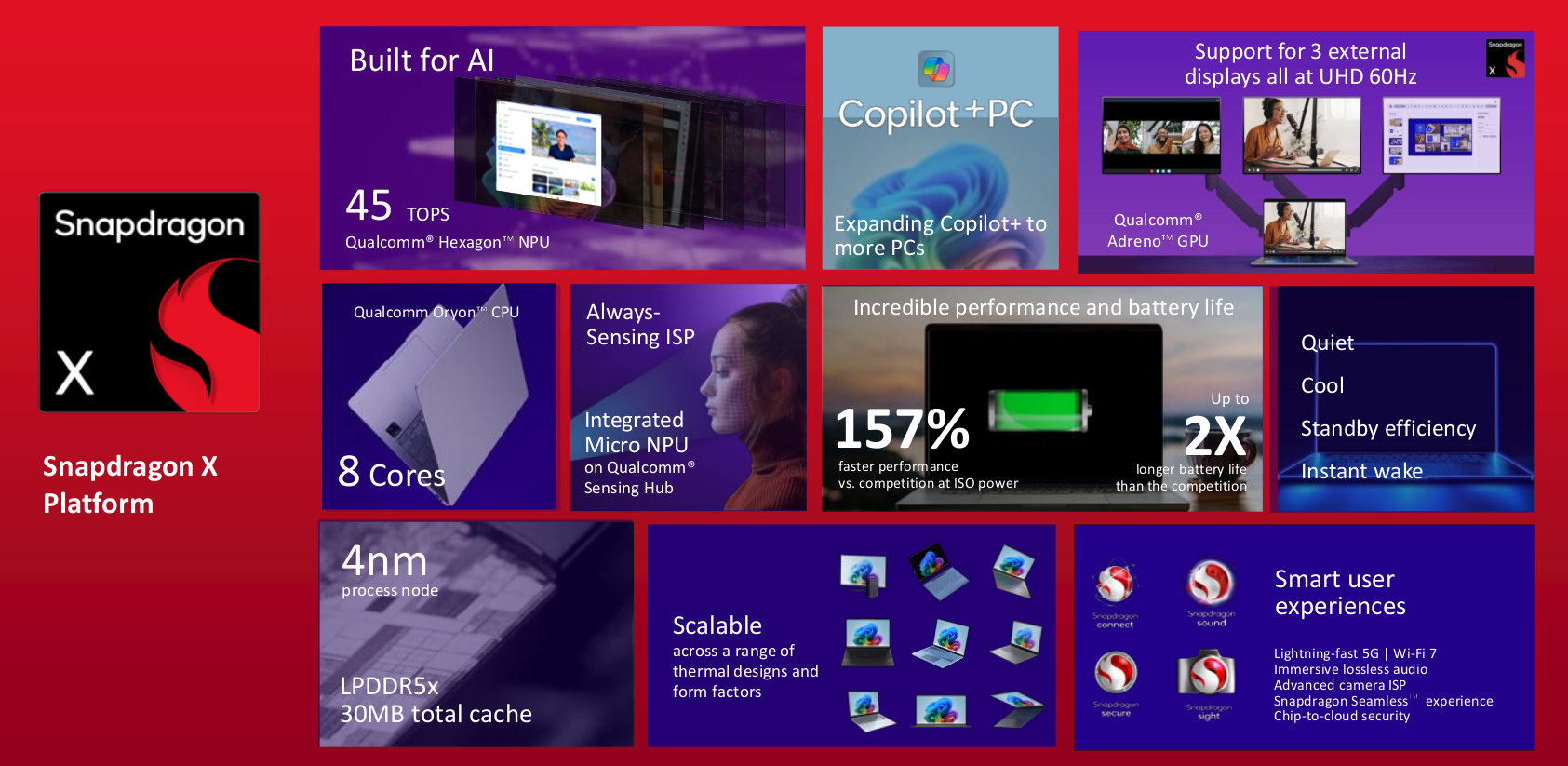
After announcing the high-end Snapdragon X2 Elite Extreme and X2 Elite processors last year, Qualcomm has now introduced the mid-range Snapdragon X2 Plus platform at CES 2026. While the Elite SKUs target premium laptops, the X2 Plus series is designed for affordable, mainstream Windows 11 Copilot+ PCs. The new lineup includes the X2P-64-100 (10-core) and the X2P-42-100 (6-core), both manufactured on a 3nm process. What’s interesting is that they share the same 80 TOPS AI accelerator, 9523 MT/s LPDDR5x memory support, Snapdragon X75 5G modem, and FastConnect 7800 WiFi 7 and Bluetooth 5.4 as the flagship Elite models. This means that the X2 Plus reduces CPU core counts and GPU frequencies to maximize battery life for thin-and-light Windows 11 Copilot+ laptops, but it does not compromise on I/O, media capabilities, or AI performance, as it features the same USB4, PCIe Gen5, and AV1 video support as the top-tier models. Snapdragon […]

Mini review of JOYROOM PODIX 140W 5-port USB GaN charger with power meter function

JOYROOM PODIX 140W 5 port charger review

I’ve just received a review sample of the JOYROOM PODIX 140W 5-port USB GaN charger, which I found interesting because it integrates a power meter function for the whole charger and for each individual port, which could be useful for reviews of USB-powered boards and devices. In this short review, I’ll go through an unboxing, before testing the features with a smartphone, and trying to stress it a little with five devices, including a laptop, a USB-C powered HDMI display, a wireless display, an Android smartphone, and a Raspberry Pi 5 SBC. JOYROOM PODIX 140W charger unboxing I received the device in its retail package, reading “JOYROOM PODIX” “140W 5-port desktop GaN charger” and listing key features like fast charging, 80cm retractable cables, and a 1.54-inch “ultra large” display, as well as compatibility with standards such as USB PD 3.1, PPS, AFC, SCP, FCP, and QC 3.0. The side of […]

MetaComputing AI PC with Framework Laptop 13 features CIX P1 12-core Arm processor with up to 45 TOPS

CIX P1 Framework laptop

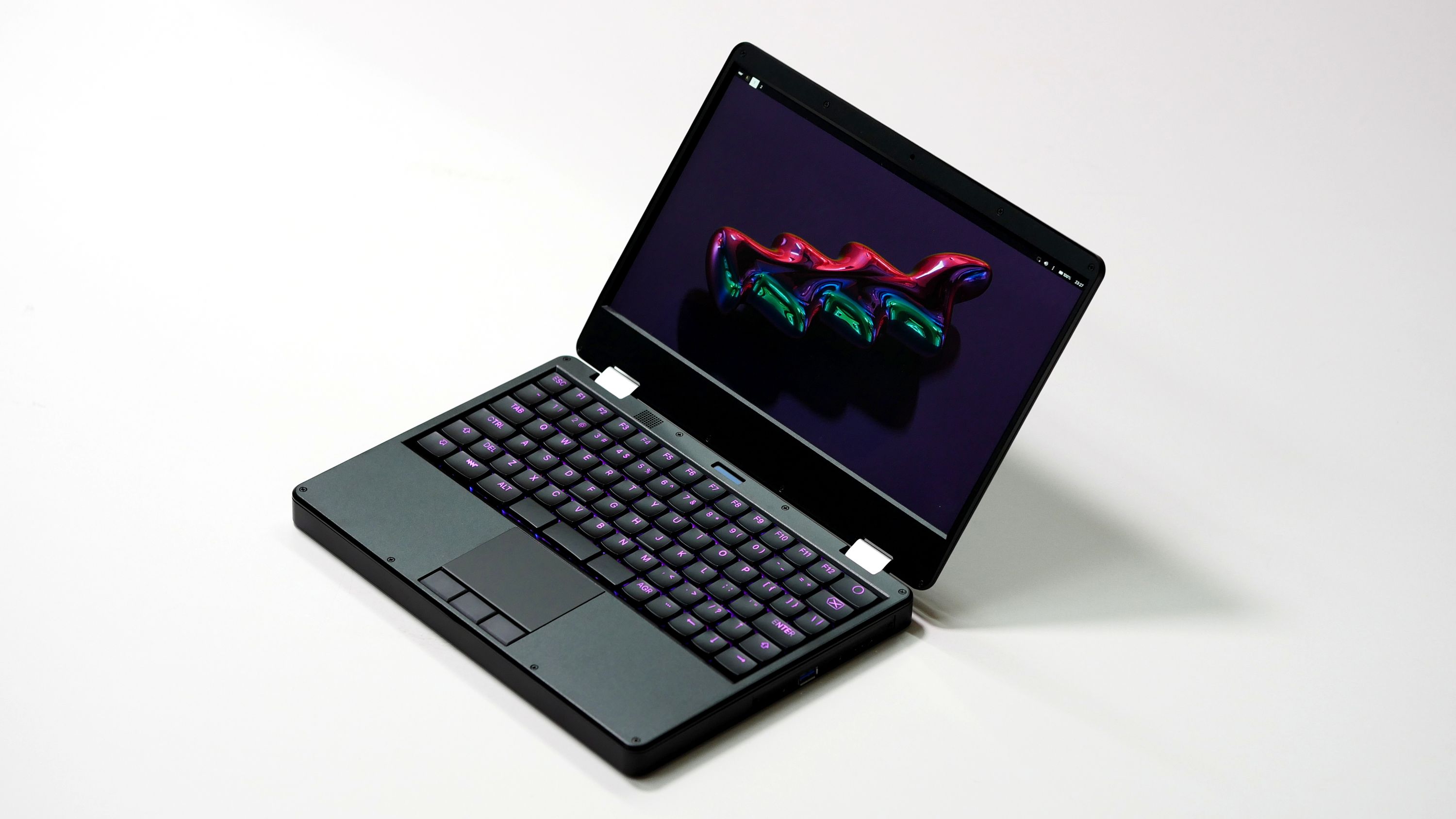
MetaComputing, a Switzerland-based company founded in 2024, has announced the “MetaComputing AI PC with Framework Laptop 13” featuring the same CIX P1 12-core Cortex-A720/A520 SoC with 45 TOPS found in SBCs like the Orion O6 and Orange Pi 6 Plus, or the MINISFORUM MS-R1 mini PC. As far as I know, it’s the first laptop based on CIX P1. It features 16GB or 32GB of RAM and a 1TB SSD and ships with the Framework Laptop 13 chassis (Pro model). There’s also a “Standard” model with a co-branded Framework and Cooler Master Case. MetaComputing AI PC specifications (preliminary): SoC – CIX P1 (CP8180) 12-core DynamIQ processor 4x Cortex‑A720 big cores @ up to 2.6 GHz 4x Cortex‑A720 medium cores 4x Cortex‑A520 LITTLE cores Cache – 12MB shared L3 cache GPU – Arm Immortalis G720 MC10 with hardware ray-tracing support, graphics APIs: Vulkan 1.3, OpenGL ES 3.2, OpenCL 3.0 VPU Video […]

Linux 6.18 LTS release – Main changes, Arm, RISC-V, and MIPS architectures

Linux 6.18

Linus Torvalds has just announced the release of Linux 6.18 on the Linux Kernel Mailing List (LKML), which will likely become the next LTS kernel [update: it’s now official]: So I’ll have to admit that I’d have been happier with slightly less bugfixing noise in this last week of the release, but while there’s a few more fixes than I would hope for, there was nothing that made me feel like this needs more time to cook. So 6.18 is tagged and pushed out. Most of the last-minute fixes are minor fixes to drivers, with some random noise elsewhere (bluetooth, ceph, afs..). Nothing strikes me as standing out, but hey, there’s a shortlog appended if you want to see the details. And this obviously means that the merge window will open tomorrow, and I already have three dozen pull requests pending. Thanks. And as I already mentioned a couple of […]

Banana Pi BPI-CM6 – A SpacemiT K1 RISC-V system-on-module compatible with Raspberry Pi CM4/CM5 carrier boards

Banana Pi BPI-CM6 and carrier board

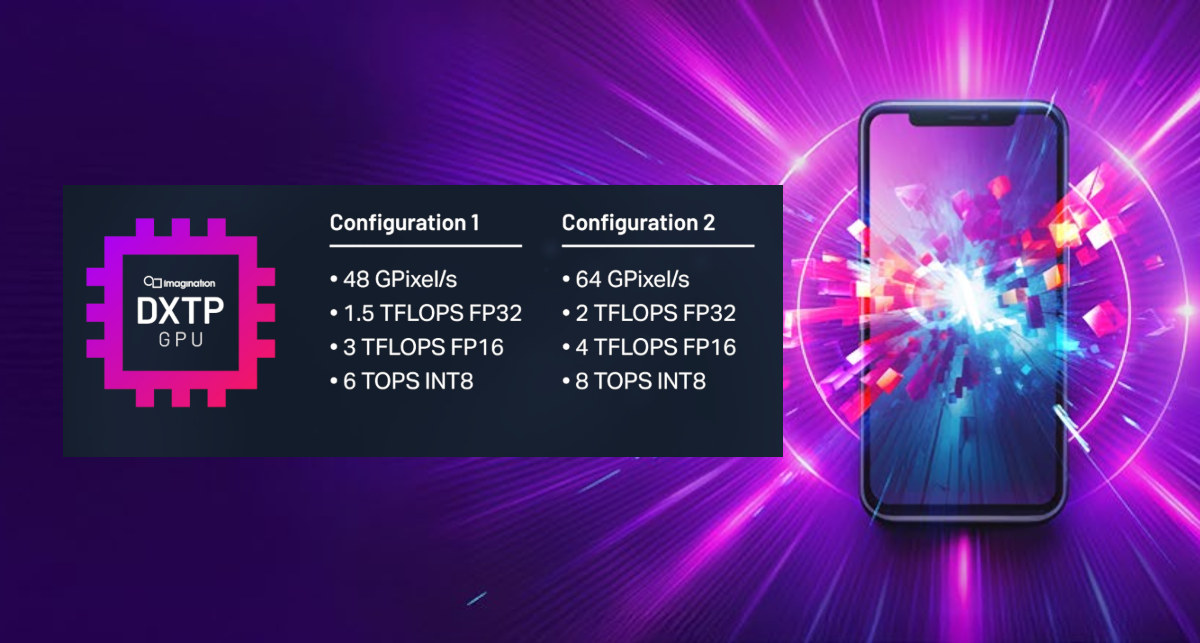
Banana Pi BPI-CM6 system-on-module (SoM) is powered by a SpacemiT K1 octa-core RISC-V processor and compatible with most carrier boards for the Raspberry Pi CM4 or CM5 modules. It ships with 8GB LPDDR4 and 16GB eMMC flash by default, a Gigabit Ethernet PHY, and a WiFi 5 and Bluetooth 4.1 wireless module. It exposes most interfaces through three 100-pin board-to-board connectors with HDMI 1.4, MIPI DSI, three MIPI CSI, five PCIe 2.1 lanes, USB 3.2/2.0 interfaces, and more. While it can work with Raspberry Pi CM4/CM5 carrier boards using two of the B2B connectors, the company also designed the BPI-CM6 IO carrier board to make full use of all the interfaces, especially the PCIe lanes. Banana Bi BPI-CM6 SoM Let’s check the module itself first. Banana Pi BPI-CM6 specifications: SoC – SpacemIT K1 CPU – 8-core X60 RISC-V (RV64GCVB) processor @ 1.6 GHz (roughly Cortex-A55 equivalent) GPU – Imagination IMG […]

$149 Allwinner A733 development board offers HDMI Input, eDP, Android 15 support

X733 Development Board

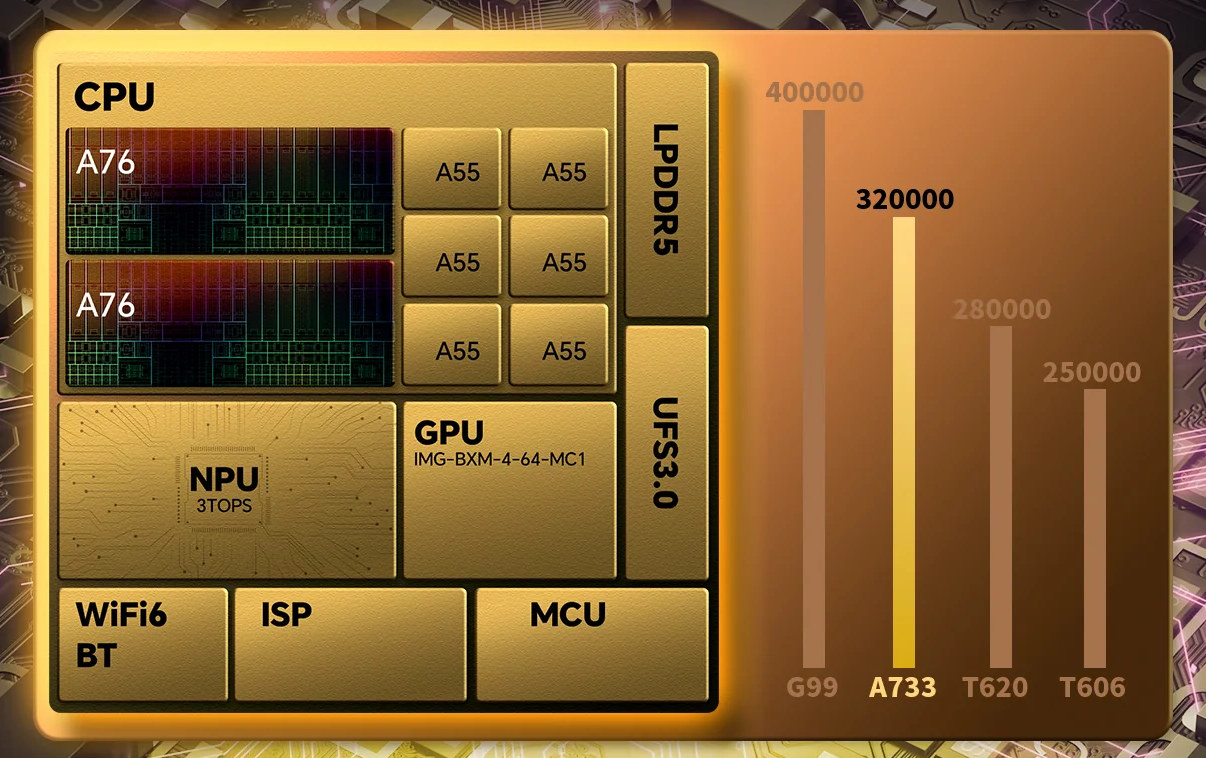
While browsing AliExpress, I came across an Allwinner A733 development board (A733MAIBORADBV1) priced at $149, which piqued my interest as the price tag was much higher than other A733 boards, such as the $35+ Orange Pi 4 Pro or Radxa Cubie A7Z/A7A. It turns out that this board not only supports up to 16GB of RAM, and Android 15. It also includes features like HDMI input and output, MIPI-CSI/DSI, eDP, capacitive touch, and M.2 expansion, making it a development platform for tablets, laptops, and AI prototypes rather than low-cost maker projects. A733MAIBORADBV1 board specifications: SoC – Allwinner A733 CPU Dual-core Arm Cortex-A76 @ up to 2.00 GHz Hexa-core Arm Cortex-A55 @ up to 1.79 GHz Single-core RISC-V E902 real-time core GPU – Imagination Technologies BXM-4-64 MC1 GPU VPU 8Kp24 H.265/VP9/AVS2 decoding 4Kp30 H.265/H.264 encoding AI accelerator – Optional, up to 3 TOPS NPU System Memory – 2GB, 4GB, 8GB, or 16GB […]

Exit mobile version