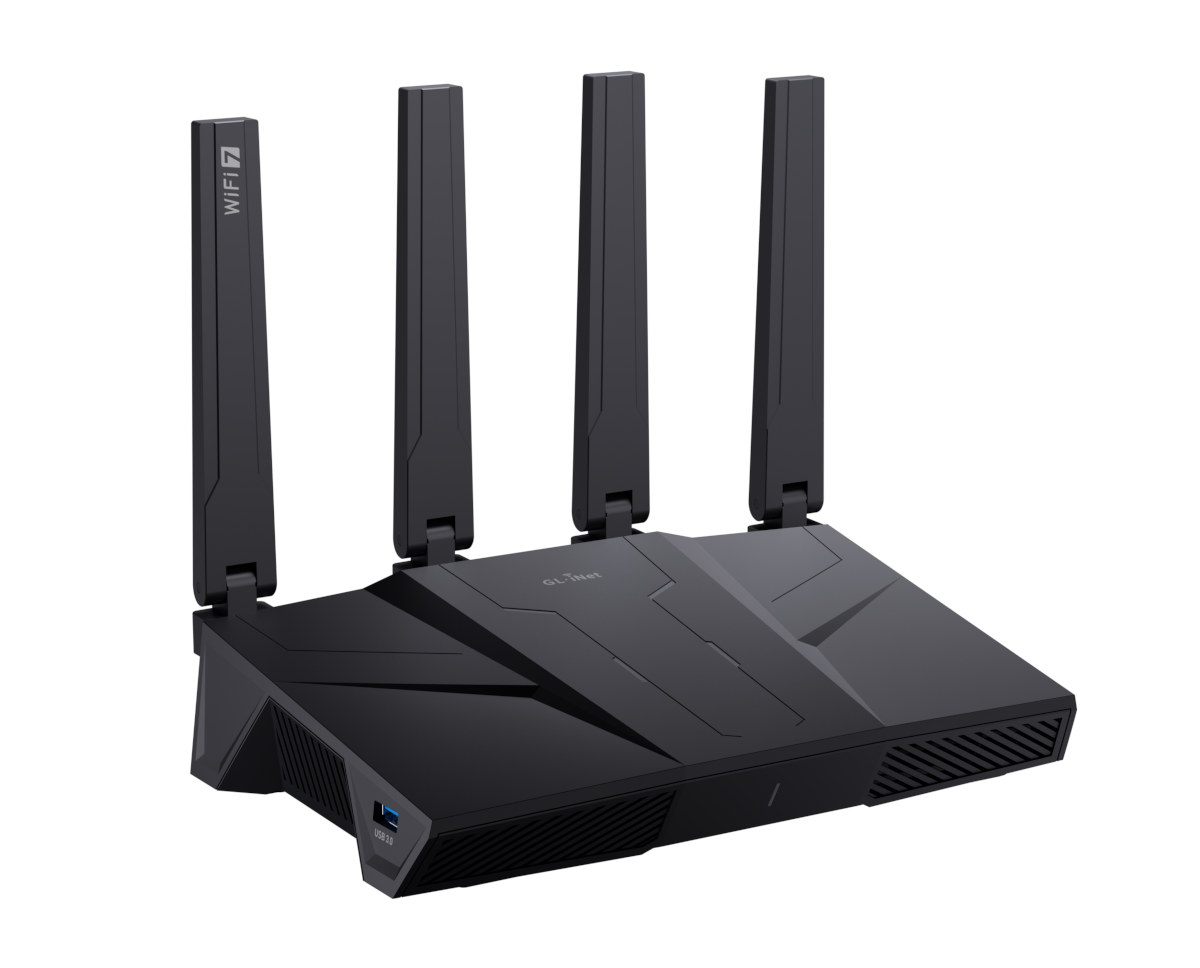

Designed in collaboration with Morse Micro, GL.iNet’s HalowLink 2 is a Wi-Fi HaLow (802.11ah) access point and extender that offers up to 1 km range and supports up to 1,000 IoT end devices. It’s an update to the earlier HaLowLink 1 Wi-Fi HaLow gateway with the exact same functionality, except it replaces a Morse Micro MM6108-based module with an MM8108-based module that offers a higher max link rate (43.3 Mbps vs 32.5 Mbps), broader region support, higher device capacity, and potentially better /performance range with up to 26 dBm Tx power (vs 23dBm in the first generation model). HalowLink 2 specifications: SoC – Mediatek MT7621 dual-core, quad-thread MIPS1004K processor @ up to 880MHz System Memory – 256MB DDR3 Storage – 32MB NAND Flash Connectivity Wi-Fi HaLow (802.11ah) AzureWave AW-HM677 module with Morse Micro MM8108 HaLow chipset supporting Wi-Fi HaLow, IEEE 802.11ah, Sub-GHz, 43.3 Mbps, ultra-low power, WPA3 Sub-GHz frequency range […]
Radxa launches NX4 SoM with Rockchip RK3576(J) industrial SoC and NX4IO carrier board
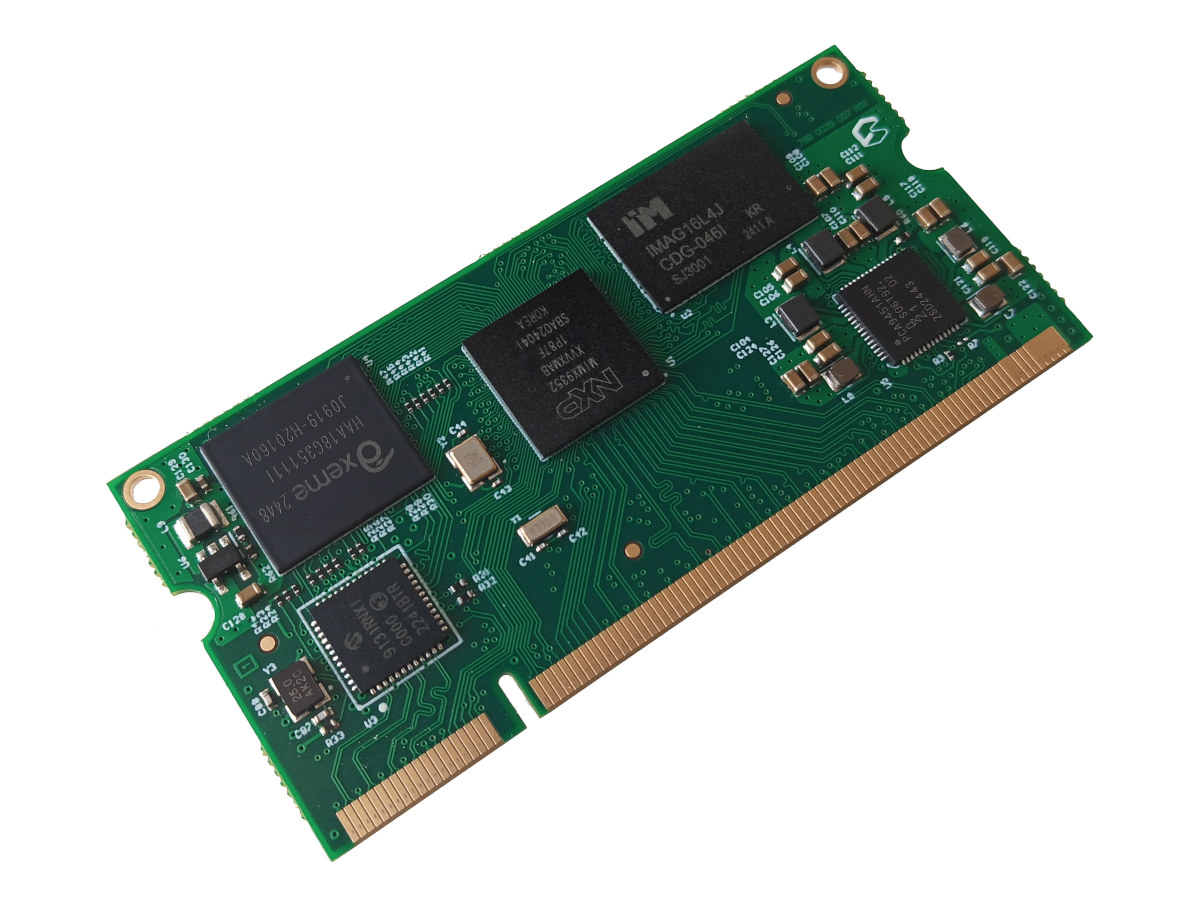
Radxa NX4 is a 260-pin SO-DIMM SoM built around the Rockchip RK3576(J) octa-core Cortex-A72/A53 industrial SoC with a 6 TOPS NPU for edge AI workloads. It supports up to 16GB LPDDR5 memory along with optional SPI flash, eMMC 5.1 (up to 256GB), or UFS 2.0 storage (up to 1TB). Radxa has also introduced the NX4 IO carrier board for the module with an HDMI video output, two 4-lane MIPI CSI camera interfaces, four USB 3.2 Type-A ports, one USB 3.2 Type-C port, Gigabit Ethernet with optional PoE, and an M.2 M-key 2280 slot for storage, along with various I/Os. Radxa NX4 SoM specifications: SoC – Rockchip RK3576J (industrial-grade version) CPU – Octa-core CPU with 4x Cortex-A72 cores at 2.2 GHz, 4x Cortex-A53 cores at 2.0 GHz GPU – Arm Mali-G52 MC3 GPU with support for OpenGL ES 1.1, 2.0, and 3.2, OpenCL 2.0, and Vulkan 1.2 NPU – 6 TOPS […]
Milk-V Titan – A $329 octa-core 64-bit RISC-V mini-ITX motherboard with a PCIe Gen4 x16 slot
We first noted the UltraRISC UR-DP1000-powered Milk-V Titan mini-ITX motherboard when we wrote an article about three high-performance RISC-V processors to watch in H2 2025. There have been some delays, as there often are, but the Titan board finally appears to be in stock, so it’s probably a good time to have a closer look. Powered by a 2 GHz UR-DP1000 octa-core RISC-V CPU, the Titan mini-ITX motherboard supports up to 64GB DIMM memory and M.2 NVMe storage (PCIe Gen4 x4), and features a PCIe Gen4 x16 slot for a graphics card or other expansion, Gigabit Ethernet, four USB 3.0 ports, a BMC, and more. Milk-V Titan specifications: CPU – UltraRISC UR-DP1000 8x 64-bit RISC-V UR-CP100 “RV64GCBHX” cores up to 2.0 GHz Two 4x core cluster design with 4MB L3 cache each, and a total of 16MB cache. Fully RVA22 compliant, and “Compliant with RVA23 excluding V extension.” Supports Hardware […]
Xibo open-source digital signage solution now works with Raspberry Pi 5 thanks to the Arexibo project
Xibo digital signage solution is now compatible with the Raspberry Pi 5 thanks to Axeribo, an unofficial alternative to the digital signage player for Xibo, that is implemented in Rust, and designed for Linux platforms. Long-time readers of CNX Software may remember that I played around with the Xibo open-source digital signage player many years ago (2011-2012). I notably managed to run Xibo for Arm in QEMU, test Xibo digital signage in the Raspberry Pi emulator, and even try it on real hardware: a MeLE A1000 Android TV box to which I installed Linux. It kind of works, but without hardware video decoding and no 3D graphics acceleration, performance was rather on the low side. I eventually stopped playing around with Xibo Arm Linux once Xibo for Android was released in late 2012, and the developers decided to drop support for the Linux client (although they relaunched it in 2019 […]
AMD Embedded+ mini-ITX Board features Ryzen AI Embedded P132 CPU, Versal AI Edge Gen2 VE3558 SoC FPGA
At CES 2026, Sapphire Technology introduced the EDGE+VPR-7P132, an “AMD Embedded+” Mini-ITX motherboard built around AMD’s newly announced Ryzen AI Embedded P100 series of SoCs, namely the hexa-core Ryzen P132 (V4526iX) CPU, and an AMD Versal AI Edge Gen 2 VE3558 SoC FPGA, which features octa-core Arm Cortex-A78AE + ten Cortex-R52 real-time cores beyond FPGA fabric. It’s the first AMD Ryzen AI Embedded motherboard we’ve seen. It represents a massive update from last year’s Edge+ VPR-5050 motherboard, which relied on Zen 2-based Ryzen Embedded V2000 series and first-generation Versal silicon. The new VPR-7P132 skips multiple generations, jumping straight to Zen 5 CPU cores and RDNA 3.5 graphics, with an upgraded Versal Gen 2 adaptive Edge AI SoC for real-time inference, along with faster LPDDR5 (4266MHz) memory and 40 Gbps USB4 connectivity. SapphireTech EDGE+ VPR-7P132-MB specifications: AMD Embedded+ Architecture Adaptive SoC Subsystem Adaptive SoC – AMD Versal AI Edge Gen 2 […]
SECO’s COM Express Type 6 module features Intel Core Ultra Series 3 Panther Lake-H processor with up to 180 TOPS
We have just covered Vecow’s new TGS-2000 series of Edge AI computers built around Intel’s new Panther Lake-H SoCs, and now SECO has announced the SOM-COMe-BT6-PTL, a COM Express Type 6 Basic module which supports the higher-end 16-core Core Ultra X9 series processors and can deliver up to 180 TOPS of AI performance. The module follows the COM Express Release 3.1 Type 6 Basic form factor (125 × 95 mm), supports up to 128GB DDR5 memory via dual SO-DIMM slots, offers high-speed expansion through PCIe Gen4/Gen5, USB 4.0/Thunderbolt, and 2.5Gbps Ethernet, and provides multiple display interfaces including eDP, DP++, and HDMI. It is available with an optional industrial temperature range and is designed for rugged and mission-critical applications. SECO SOM-COMe-BT6-PTL Specifications: Panther Lake SoC (one or the other) Intel Core Ultra X9 388H – 16-core (4P + 8E + 4LPE) processor up to 1.6 GHz / 5.1 GHz (Turbo), 18MB cache, […]
Quectel SRG091X and SRG093X NXP i.MX 9 industrial AIoT modules integrates Wi-Fi 6, Bluetooth 5.4, and 802.15.4 radios
After releasing the very powerful P895BD-AP AIoT module at CES 2026, Quectel now released two new low-power industrial AIoT modules based on NXP’s i.MX 9 series SoCs. The module integrates Wi-Fi 6, Bluetooth 5.4, and 802.15.4 radios through the IW610G chipset, so it can simply be dropped into a PCB to create a fully compliant Matter Border Router without any RF design or coexistence concerns. While both modules share the same 46 x 41.5 mm form factor and wireless capabilities, they are different in terms of CPU power as the SRG091X is an entry-level solution built around a single-core NXP i.MX 91 processor, while the SRG093X features dual-core NXP i.MX 93 SoC, which includes a Cortex-M33 real-time core and a neural processing unit (NPU) for edge AI workloads. The module supports LPDDR4/LPDDR4X memory, eMMC storage, and various I/O options, including dual Gigabit Ethernet, USB 2.0, CAN-FD, SPI, UART, I²C/I³C, ADC, […]
MUSE Book laptop review – Testing an octa-core RISC-V Linux laptop in 2026
SpacemiT sent me a sample of the MUSE Book RISC-V Linux laptop for review. It’s based on the SpacemiT K1/M1 octa-core 64-bit RISC-V SoC, ships with up to 16 GB of RAM, eMMC flash and/or NVMe SSD, and features a 14.1-inch IPS display with 1920×1080 resolution, WiFi 6 connectivity, a few USB ports, and more. I won’t go through all the hardware specifications since Leo already did that when he wrote about the MUSE Book Laptop in April 2024, along with a teardown, and additional details about the SpacemiT K1/M1 SoC. I’ll still do an unboxing and quickly check the hardware, but I’ll focus on the software part to show the progress with Bianbu OS 2.3 (Ubuntu 24.04-based) on RISC-V hardware, as I just did for the low-end StarFive JH7110S-based VisionFive 2 Lite SBC. It’s quite a long review, so if you are short on time, you can jump directly […]