m.2 News - CNX Software - Embedded Systems News

LimeSDR Micro M.2 2280 SDR card pairs NXP LA9310 baseband processor with LMS7002M RF transceiver (Crowdfunding)

LimeSDR Micro

The LimeSDR Micro M.2 2280 software-defined radio (SDR) card combines an NXP LA9310 baseband processor and a Lime Microsystems LMS7002M transceiver, and targets integration into portable or embedded solutions with a spare M.2 PCIe Gen3 x1 socket. The module is offered in a 1T2R configuration by default, but can be expanded to 1T4R via an FPC connector, supports a 30 MHz to 3.8 GHz frequency range, and up to 100 MHz bandwidth. Target applications include 4G LTE/5G, future RAN research, custom user equipment/modems, drone communications, IoT, satellite communications, and custom waveform generation. LimeSDR Micro M.2 SDR card specifications: SoC – NXP LA9310 programmable baseband processor Vector Signal Processing Accelerator (VSPA) Gen 2 up to 80 GFLOPs Control Processor – Arm Cortex-M4 at up to 307 MHz Storage – 512 Kbit EEPROM memory for NXP LA9310 initial configuration RF Lime Microsystems LMS7002M RF transceiver Channels – 1T2R expandable to 1T4R via […]

SupTronics X1208 – A UPS + M.2 NVMe SSD HAT for the Raspberry Pi 5

SupTronics X1208 Raspberry Pi 5 UPS + M.2 HAT

The SupTronics X1208 is a UPS and M.2 NVMe SSD HAT for Raspberry Pi 5 designed to offer fast storage and protect the system against data loss during power outages for Edge Computing, NAS, data logging, and other always-on applications. The HAT draws up to 5V/5A from the USB-C port, which charges a 21700 lithium-ion battery (1.5A) and powers the Raspberry Pi 5 directly through the 40-pin GPIO header, eliminating the need for extra cables. It also features an M.2 M-key NVMe slot supporting 2230/2242/2280 SSDs up to 4TB with PCIe 2.0/3.0 speeds. The UPS supports power switching, auto power-on, safe shutdown on low battery, and GPIO-based power/charging control, along with power loss detection. The X1208 board is also equipped with a Maxim fuel gauge I2C chip for battery voltage and capacity monitoring. SupTronics X1208 UPS + M.2 HAT specifications: Compatibility – Raspberry Pi 5 Model B Storage – M.2 M-key […]

Radxa AICore DX-M1M M.2 2242 low-power AI module delivers 25 TOPS of edge AI performance for just 3W of power

Radxa AICore DX M1M M.2 module

Radxa AICore DX-M1M is a compact, low-power M.2 edge AI acceleration module built around the DeepX DX-M1M neural processing unit (NPU) and delivers up to 25 TOPS (INT8) of AI performance while consuming only 3W of power. Designed for industrial robot arms, autonomous mobile robots (AMR), edge servers, drones, and AIoT devices, the module delivers high-performance AI and ML capabilities without blowing the power budget. It relies on a PCIe Gen3 x2 interface and works with both x86 and Arm systems, including the Raspberry Pi 5 and Radxa ROCK SBCs. AICore DX-M1M specifications: AI Accelerator – DeepX DX-M1M neural processing unit (NPU) with up to 25 TOPS AI System Memory – 1GB LPDDR4X @ 4266 MT/s (on-chip, supports up to 8GB according to DeepX) Storage – 1Gbit QSPI NAND / NOR flash Host Interface – PCIe Gen 3.0 x4 (supports Gen 1/2/3 and x1/x2) via M.2 M + B Key connector […]

Quectel RM255C mid-tier 5G RedCap M.2 and LGA modules support LTE Cat 4 fallback, multi-constellation GNSS

Quectel RG255C NA (Left) and RM255C GL (Right) mid tier 5G RedCap GPP release 17 modules

Quectel has just announced two new 5G RedCap modules, the RM255C-GL (Global, M.2) and RG255C-NA (North America, LGA), both of which are 3GPP Release 17-compliant 5G RedCap (Reduced Capability) modules designed to bridge the gap between LTE Cat 4/6 and full-featured 5G. Both the modules support 5G Sub-6GHz SA with LTE Cat 4 fallback, peak data rates of up to 223 Mbps downlink and 123 Mbps uplink, and backward compatibility with Rel-15/16 networks. Additionally, the modules support optional multi-constellation GNSS via Qualcomm IZat Gen 9VT technology along with various interfaces such as USB 2.0 and PCIe 2.0 (plus UART, SPI, I2C, SGMII, PCM on the RG255C-NA). Both support dual SIM, DFOTA, and embedded protocol stacks, and are suitable for industrial IoT, smart grids, video surveillance, mobile hotspots, wearables, and other medium-speed applications. Quectel RM255C-GL and RG255C-NA specifications: Connectivity 5G NR – 3GPP Release 17 RedCap (Reduced Capability) Sub-6 GHz Standalone (SA) […]

Silex SX-SDMAX6E tri-band Wi-Fi 6E + Bluetooth LE module features NXP IW623 SoC, comes in M.2 or LGA package

Silex SX SDMAX6E tri band Wi Fi 6E + Bluetooth LE module LGA(Right) M.2(Left)

Back in August last year, we wrote about NXP’s IW623 tri-band (2.4GHz, 5GHz, 6GHz) Wi-Fi 6E and Bluetooth LE Audio SoC, but at the time, there was no ready-to-use module based on it. Now, NXP has partnered with Silex Technology to launch the SX-SDMAX6E module, available in a surface-mount LGA package or an M.2 2230 Key-E card. The module supports Bluetooth 5.x connectivity via UART and Wi-Fi via SDIO. It operates from a 3.3V supply with 1.8V support on the LGA version. It has an industrial operating temperature range of -40°C to +85°C and is designed for both high-throughput applications, such as video streaming, and low-power, battery-operated devices in harsh environments. It also supports various antenna options, fast roaming, and long-term lifecycle backing through Silex and NXP. Silex SX-SDMAX6E specifications: Wireless chipset – NXP IW623 tri-band SoC Connectivity Wi-Fi Tri-band Wi-Fi 6E (2.4 GHz, 5 GHz, 6 GHz) IEEE 802.11a/b/g/n/ac/ax […]

xSDR – A tiny M.2 2230 SDR module with Artix-7 FPGA and LMS7002M RFIC (Crowdfunding)

xSDR single sided M.2 software defined radio with 2× RX TX channels up to 3.8 GHz

Wavelet Lab’s xSDR is a tiny, single-sided M.2 2230 software-defined radio (SDR) module designed for integration into laptops, embedded systems, and edge computing devices. A successor to the company’s previous uSDR, the “x” in xSDR stands for “extended,” adding 2×2 MIMO support and a wider frequency range to the same tiny footprint. The module is built around the Lime Microsystems LMS7002M RFIC and an AMD Artix-7 XC7A50T FPGA as found in the LimeNET Micro 2.0 Developer Edition board. This combination allows for a tuning range of 30 MHz to 3.8 GHz and a sample rate of up to 122.88 MSPS, making this SDR suitable for cellular research (LTE/5G), spectrum analysis, satellite tracking, and high-speed data links (with two modules). Wavelet Lab’s xSDR specifications: RFIC – Lime Microsystems LMS7002M programmable RF (FPRF) transceiver IC FPGA – AMD Embedded XC7A50T (Artix-7) with 52,160 logic cells RF capabilities Channels – 2×2 MIMO (2x […]

Compex Wi-Fi 7 Dual-Band Dual-Concurrent Modules: High-Performance Solutions for Next-Gen Connectivity (Sponsored)

Compex Wi-Fi 7 Dual-Band Dual-Concurrent Modules

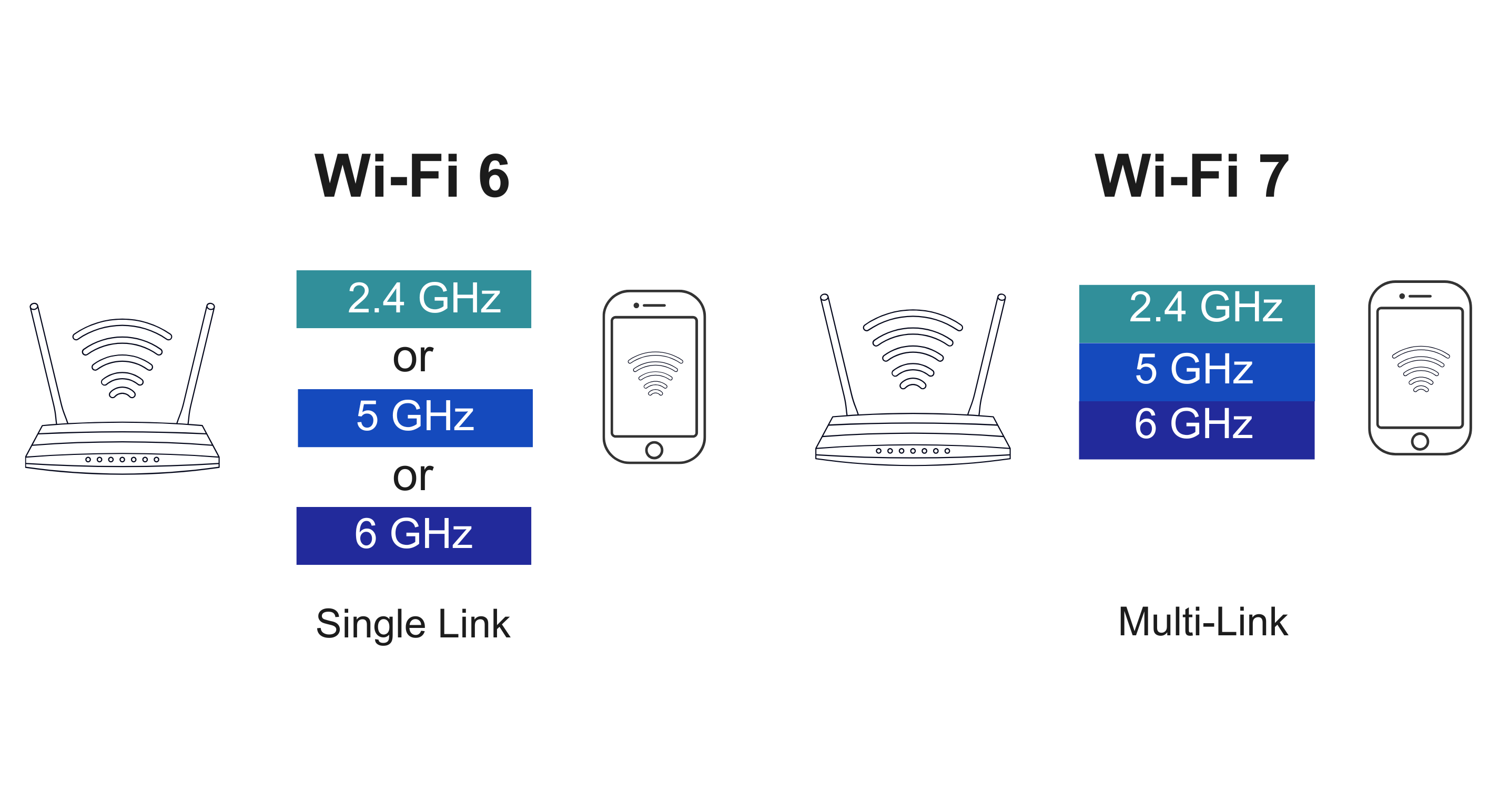
Compex has been a Qualcomm Authorized Design Centre (ADC) since 2014, helping customers design specialized, high-specification Wi-Fi products for demanding and mission-critical applications. For Wi-Fi 7 (802.11be), Compex has introduced a family of standard modules for system designers who are looking for flexible module options that support different band combinations, form factors, and deployment scenarios. The Compex Wi-Fi 7 Dual-Band Dual-Concurrent Module family is designed to address these requirements by offering a versatile set of dual-band configurations across 2.4GHz, 5GHz, and 6GHz, delivering high performance and adaptability for a wide range of applications. Qualcomm-Powered Dual-Band Dual-Concurrent Modules Powered by Qualcomm’s QCN6224, QCN6274, and QCN9274 ‘Waikiki’ radio chipsets, the Compex Wi-Fi 7 Dual-Band Dual-Concurrent Module family features dual-band combinations across 2.4GHz, 5GHz, and 6GHz bands. These modules support advanced Wi-Fi 7 functions such as Multi-Link Operation (MLO), OFDMA, and 4096-QAM. These 2×2 MU-MIMO modules are available in standard MiniPCIe, M.2 E-Key, […]

Intel Core Ultra Series 3 Panther Lake-H CPU powers TGS-2000 series stackable Edge AI computers

Vecow TGS 2000 Series Panther Lake Edge AI computers

At CES 2026, Intel unveiled the Core Ultra Series 3 processors, codenamed Panther Lake-H, built on the Intel 18A (1.8-nanometer class) process, and targeting both consumer and industrial applications. Vecow introduced one of the first industrial Panther Lake-H platforms with the TGS-2000 series, a new family of ultra-compact, stackable Edge AI computers designed for high-performance space-constrained applications and based on either the 16-core Intel Core Ultra 9 386H or 12-core Intel Core Ultra 5 336H SoC. This new 2000 series is an upgrade of the previous TGS-1000 series, which was launched in 2024 with Intel Meteor Lake processors. While the overall design stays mostly the same, the transition to Core Ultra Series 3 enhances AI performance, reaching up to 100 TOPS combined performance with the selected SKUs (note: the top-end Panther Lake-H CPU can deliver up to 180 TOPS). The TGS-2000 Series is available in three variants, including the fanless […]