Renesas RL78/L23 16-bit MCU features segment LCD interface, SMS for low-power HMI systems

Renesas ultra Low Power RL78L23 MCU

Renesas’ RL78/L23 is a low-power 16-bit MCU with built-in segment LCD, capacitive touch, dual-bank flash for FOTA, and a wide 1.6–5.5 V operating voltage range. It targets HMI appliances, metering, and low-cost IoT products with support up to 2037. Key features include up to 512 KB dual-bank flash, 32 KB SRAM, 8 KB data flash, with ~1 µs wake-up, and SMS (Snooze Mode Sequencer) to run LCD/touch tasks without waking the CPU. It integrates a segment LCD controller with a new VL4 reference mode that cuts LCD current by ~30% compared to the RL78/L1x. Connectivity and sensing options include UART/I²C/CSI, a temperature sensor, and an internal oscillator. With an industrial operating temperature range and a wide supply range, this MCU is suitable for induction cooktops, HVAC panels, utility meters, and battery-powered HMI devices. Renesas RL78/L23 MCU Specifications: CPU core – Renesas RL78 16-bit CISC core, 3-stage pipeline, 0.03125 µs/instruction at […]

Ambiq Apollo510B ultra-low-power Cortex-M55 Edge AI MCU adds Bluetooth LE 5.4

Ambiq Apollo510B

After the release of Apollo510, Ambiq has released Apollo510B, an ultra-low power Edge AI MCU that adds a 48 MHz network coprocessor for Bluetooth 5.4 LE (BLE) support. The new SoC combines Cortex-M55 with Helium MVE for AI/ML acceleration, secureSPOT 3.0 security, and graphiqSPOT 2.0 graphics for connected wearables, healthcare devices, and industrial IoT applications. The Apollo510B features 3.75MB of system RAM, 4MB of non-volatile memory, and a 12-bit ADC. It supports MIPI DSI and Quad SPI interfaces for displays, and offers audio capabilities such as always-on low-power ADC, a PDM stereo microphone interface, and dual multichannel I²S ports with asynchronous sample rate conversion. Peripheral options extend to USB 2.0 HS/FS, dual SDIO/eMMC controllers, multiple SPI and I²C masters, UART interfaces with flow control, and various GPIOs. Ambiq Apollo510B specifications: MCU Core Arm Cortex-M55 core at up to 250 MHz with Helium (MVE) vector instructions, FPU, TrustZone, MPU Caches/TCM – […]

NXP MCX A34 mixed-signal Cortex-M33 MCU delivers 17x faster math acceleration for motor control and HVAC systems

FRDM-MCXA346 development board

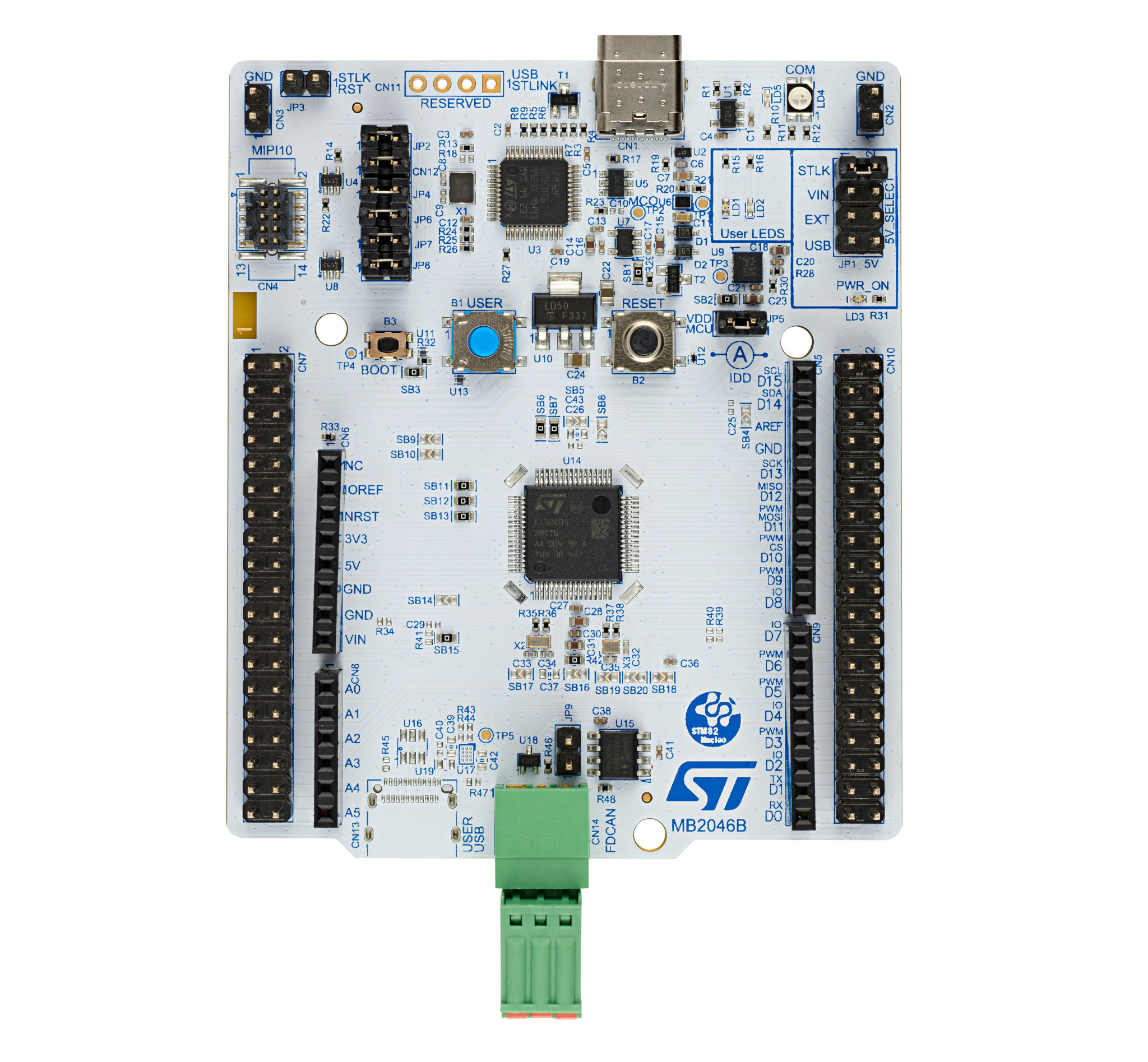
NXP has launched the MCX A34 mixed-signal Arm Cortex-M33 industrial MCU, an upgrade of the MCX A14x and MCX A15x MCUs, which were introduced in 2024. While the A14x/A15x offered Cortex-M33 cores up to 96 MHz, 128 KB Flash, 32 KB SRAM, a 12-bit ADC, the A34 scales up with a 180 MHz core, up to 1 MB Flash, 256 KB SRAM, four 16-bit ADCs (3.2 Msps), four OpAmps, a 12-bit DAC, and FlexPWM with enhanced quadrature decoding. It also features a dedicated Math Acceleration Unit (MAU) that executes trigonometric, reciprocal, and square root operations up to 17x faster than CMSIS-DSP, a SmartDMA coprocessor for offloading data transfers, and advanced security features with tamper detection and secure boot. Connectivity is also richer, with up to six UARTs, four I²C, two SPI, and a CAN FD interface. MCX A34 specifications: MCU core – Arm Cortex-M33 core clocked at up to 180 […]

Renesas RA4C1 Arm Cortex-M33 MCU targets Smart Meters and energy-efficient IoT applications

Renesas RA4C1

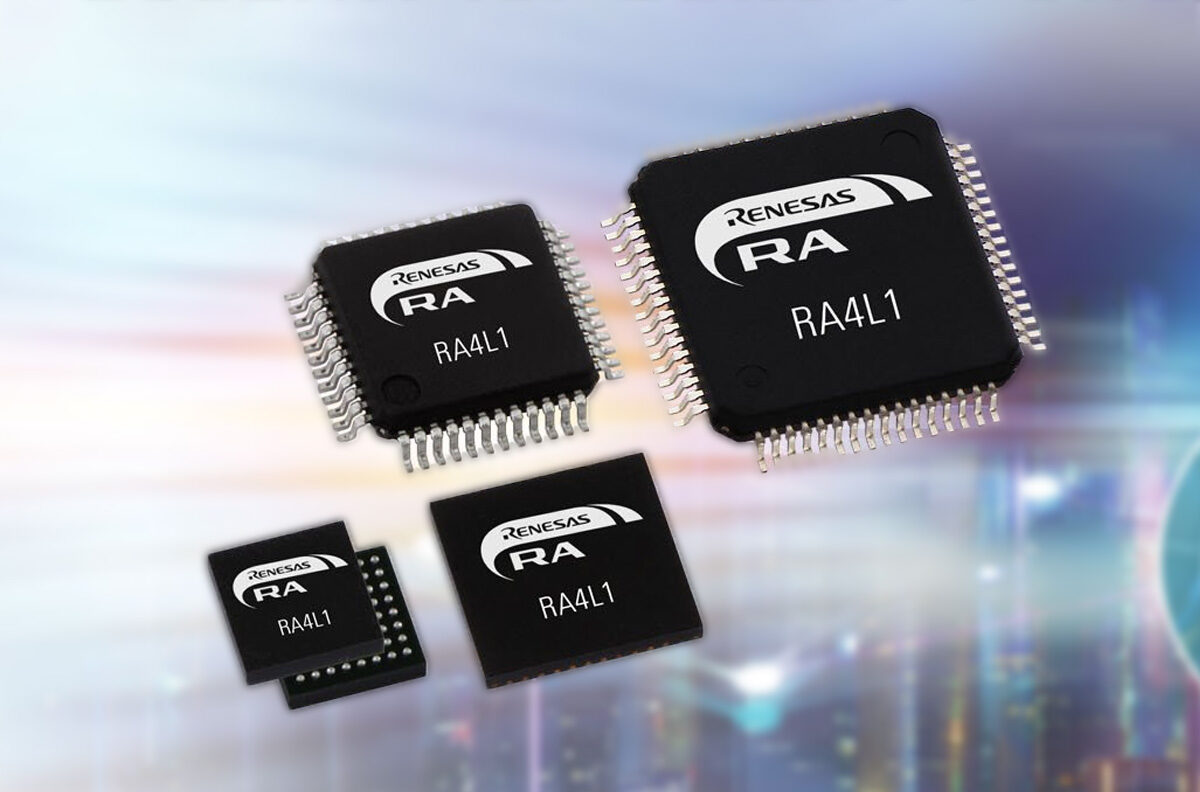
Renasas RA4C1 microcontroller (MCU) group is based on an 80-MHz Arm Cortex M33 core and designed for utility meters and battery-powered IoT applications. It’s especially suited to devices that require advanced security and segment LCD support, such as smart locks, thermostats, building controls, and industrial user interfaces. The RA4C1 is very similar to the Renesas RA4L1 MCU designed for HMI applications, but it comes with more RAM (96KB vs 64KB), and being optimized for Smart Meters lacks features like capacitive touch and audio output. The new MCU group still comes with up to 512KB code flash, 8KB data flash, plenty of I/Os, and a low-power consumption down to 168 µA/MHz in active mode, and a standby current of less than 1.79 µA with all SRAM retained. Renesas RA4C1 specifications: MCU core – Arm Cortex-M33 Armv8-M core up to 80 MHz Memory – 96 KB SRAM Storage 256 KB or 512 KB […]

Pico2-Ice development board combines Raspberry Pi RP2350B with Lattice iCE40UP5K FPGA

pico2 ice Raspberry Pi RP2350B + iCE40UP5K FPGA development baord

tinyVision.ai has recently released the second-generation ot its open-source hardware pico-ice FPGA development board, upgrading the Raspberry Pi RP2040 to the newer RP2350B along with dedicated user LEDs and buttons for both the MCU and the FPGA. The Pico2-Ice also exposes the RP2350B’s HSTX interface through a 22-pin connector, while keeping the same Lattice iCE40UP5K FPGA. The onboard iCE40UP5K FPGA features 5.3k LUTs, 1 MB SPRAM, and 120 KB DPRAM, along with 4MB SPI flash and 8MB low-power PSRAM. The board also exposes all RP2350 pins and 32 FPGA GPIOs via 2.54mm pitch headers in Pmod format. It includes two RGB LEDs and two pushbuttons (separately mapped to the MCU and the FPGA), and integrates onboard 3.3V/1.2V regulators for power. These features make this board suitable for exploring HDLs, embedded systems, and FPGA programming with open-source tools. Pico2-Ice specifications: Microcontroller – Raspberry Pi RP2350B MCU CPU – Dual-core Arm Cortex-M33 processor @ […]

Alif Ensemble E4, E6, and E8 Cortex-M55/A32 MCUs and MPUs feature Ethos-U85 NPU for small language models (SLM)

Alif Ensemble E4 E6 E8 Ethos U85 MCU small language models

Alif Semiconductor unveiled the Ensemble E4, E6, and E8 dual-core Cortex-M55 Edge AI microcontrollers and fusion processors, all equipped with Arm Ethos-U85 with the ability to run small language models (SLM) on-device while consuming just 36mW of power on the E4 SKU. Besides the ability to handle generative AI workloads, the new microcontrollers also integrate two power-efficient Ethos-U55 NPUs for AI vision. They can perform power-efficient object detection in less than 2ms and image classification in less than 8ms. Other highlights include support for up to two MIPI CSI image sensors, a fully hardware-accelerated image signal processor (ISP) pipeline operating at up to 60 FPS at 2MP resolution, and a new wide memory subsystem to enable an inferencing speed of well under a millisecond. Alif Ensemble E4 Ensemble E4 specifications: CPU High-Performance Arm Cortex-M55 core @ up to 400 MHz High-Efficiency Arm Cortex-M55 core @ up to 160 MHz GPU […]

Nuvoton MG51 8-bit 8051 MCU family features with up to 64KB flash, 4KB SRAM

NuMaker-MG51FC MG51 8-bit 8051 MCU development board

Nuvoton MG51 Series is a new family of 8-bit 8051 microcontrollers clocked at up to 24 MHz with up to 64KB flash, 4KB SRAM, 5V operation, industrial temperature range, and a range of peripherals such as UART, I2C, SPI, 12-bit ADC, as well as up to 46 GPIOs. Some may have assumed 8-bit microcontrollers may be dead by now, but Nuvoton is not giving up, and after the MUG51 8-bit 8051 microcontroller family was introduced in 2023, the company is at it again with the MG51 Series, offering a higher clock speed, higher memory and storage capacity, and additional I/Os. Target applications include home appliances, LED lighting control, motor control, and industrial automation. Nuvoton MG51 specifications: MCU core – 8-bit 1T 8051-based CMOS microcontroller up to 24 MHz; fully compatible with MCS-51 Memory 256 bytes on-chip RAM Up to 4 KB auxiliary RAM (XRAM) Storage Up to 64 KB Flash […]

Raspberry Pi RP2350 A4 stepping fixes E9 GPIO Erratum, glitching bugs, introduces 2MB flash variants

Raspberry Pi RP2350 A4 stepping

The Raspberry Pi RP2350 dual-core Arm/RISC-V has gotten a new version – A4 stepping – addressing bugs and security vulnerabilities, notably the infamous E9 GPIO erratum and glitching bugs in the A2 stepping identified by the 2024 Hacking Challenge. Both RP2350A and RP2350B variants will benefit from the new stepping and be marked RP2350A0A4 and RP2350B0A4, respectively. The company also announced the availability of the 2MB flash variants, the RP2354A and RP2354B (unveiled in March 2025), that do not require flash on the board. RP2350 A4 stepping highlights: Fixes Glitching bugs identified in the 2024 Hacking Challenge. Exploits required physical access to the chip. The E9 GPIO erratum related to GPIO pull-ups. A4 stepping is a drop-in replacement for the earlier A2 stepping. 5V-tolerant GPIOs; Note: the chip must remain powered while 5V IOs are used (See updated datasheet for details) RP2354A and RP2354B variants with 2MB of stacked-in-package QSPI […]

Exit mobile version
Banana Pi BPI-R4 Pro networking SBC